The Massachusetts Institute of Technology, renowned globally for its scientific prowess and engineering innovations, also harbors a cherished, decades-long tradition of elaborate student pranks, affectionately termed "hacks." These carefully orchestrated feats often blend intellectual rigor with whimsical humor, leaving an indelible mark on campus lore and the surrounding Cambridge landscape. Among the pantheon of legendary MIT hacks, which includes the dramatic Baker House Piano Drop and the audacious placement of an MIT weather balloon at the 1982 Harvard-Yale football game, one stands as a monumental testament to enduring ingenuity: the 1958 measurement of the Massachusetts Avenue Bridge in "smoots." Nearly seven decades later, this spirit of unconventional measurement and playful homage has been rekindled, with an ambitious MIT team embarking on a new expedition to measure the historic Longfellow Bridge in "kleins," a unit named in honor of Oliver Smoot’s classmate and pioneering oceanographer, Martin Klein ’62.
A Legacy of Ingenuity: The Enduring MIT "Hack" Tradition
The culture of "hacks" at MIT is far more than mere mischief; it is a profound expression of the institution’s ethos, embodying creativity, problem-solving, and a good-natured subversion of the conventional. These acts, often executed with meticulous planning and considerable engineering skill, serve as a rite of passage for students and a continuous thread connecting generations of alumni. They demonstrate a unique blend of intellectual curiosity and a playful spirit, challenging perceived boundaries and often drawing national attention. The famous "smoot" measurement, for instance, transcended the realm of a simple college prank to become a semi-official unit of measurement, a testament to its widespread acceptance and the indelible mark it left on local consciousness. Street signs along the Massachusetts Avenue Bridge (fondly known as the "Mass Ave Bridge") still bear the iconic "smoot" markings, maintained and repainted over the years by successive classes and the Lambda Chi Alpha fraternity, ensuring the perpetuation of this distinctive piece of MIT heritage. This ongoing tradition underscores the importance of such events not just as isolated incidents, but as integral components of the MIT identity, fostering a sense of community, shared history, and a continuous legacy of unconventional thought.
The Genesis of a Legend: Oliver Smoot and the Mass Ave Bridge
The story of the smoot began on a fateful night in October 1958. Oliver R. Smoot Jr. ’62, then a first-year pledge at the Lambda Chi Alpha fraternity, found himself at the center of a historical endeavor. The challenge, posed by his fraternity brothers, was to measure the length of the Massachusetts Avenue Bridge using only his body. With a height of 5 feet, 7 inches, Smoot became the living standard. Hundreds of times, he laid down end-to-end across the entire span of the bridge, a gruelling task that saw his peers meticulously marking each "smoot" length with paint. The final count famously came to 364.4 smoots, with the humorous addition of "plus 1 ear" to denote the fractional remainder. This act of sheer endurance and creative measurement immediately entered MIT legend.
The initial motivation for the prank was likely a blend of youthful exuberance, fraternity hazing, and a desire to leave a unique mark on the MIT experience. However, its longevity and widespread recognition far exceeded its origins. The smoot markings became a permanent fixture, serving as a quirky navigational aid and a point of pride for the MIT community. Oliver Smoot himself would go on to have a distinguished career, eventually becoming president of both the American National Standards Institute (ANSI) and the International Organization for Standardization (ISO) – a fitting trajectory for a man whose name became synonymous with a unit of measurement, albeit an unofficial one. The "smoot" embodies the MIT spirit: taking a seemingly absurd idea and executing it with such precision and commitment that it gains an almost official status, challenging conventional norms with a smile. The continued maintenance of these markings by new generations of Lambda Chi Alpha members ensures that Smoot’s legacy, and the pioneering spirit of that 1958 night, remains vibrant and visible.
Honoring a Pioneer: Martin Klein and the Klein Measurement
Decades later, on April 4, the spirit of the smoot was invoked once more, this time in a celebratory tribute to Oliver Smoot’s classmate, Martin Klein ’62. The occasion was Klein’s 85th birthday, providing a perfect opportunity to honor his remarkable contributions to marine technology while echoing the beloved tradition of the "smoot." The new unit of measurement, aptly named the "klein," was defined by Martin Klein’s own height: 4 feet, 9.5 inches (or 57.5 inches). For those seeking precise conversions, one klein is equivalent to 0.85820896 smoots.
The target for this new expedition was the iconic Longfellow Bridge, which spans the Charles River connecting Boston and Cambridge, much like the Massachusetts Avenue Bridge. Known for its distinctive "salt and pepper" towers and historic significance, the Longfellow Bridge offered a fresh canvas for this unique form of academic homage. The choice of Klein as the subject for this new unit was not arbitrary; it was a deeply meaningful recognition of his profound impact on scientific exploration and his enduring connection to MIT. This new measurement served as a dual celebration: acknowledging the original "smoot" prank as a foundational piece of MIT culture, while simultaneously spotlighting one of its most distinguished alumni in a manner that perfectly captured the institution’s blend of intellectual rigor and playful inventiveness.
The Science and Spectacle of the "Klein" Expedition
The expedition to measure the Longfellow Bridge in "kleins" was a carefully planned operation that ingeniously mirrored Martin Klein’s own professional legacy. Klein is widely recognized as the "father of commercial side-scan sonar," a technology that revolutionized underwater exploration. Appropriately, the MIT team employed a "side-scan" method for their bridge measurement, albeit with a humorous twist. Instead of sonar pulses, Klein himself served as the official observation device. Reclined on a custom-engineered wooden cart, complete with a mission-specific chaise lounge pillow for comfort, Klein was pulled along the bridge by the team. His "side-scan" was literal: he looked to the sides, observing the environment and offering commentary, transforming him into a living, breathing, and highly engaged measurement instrument.
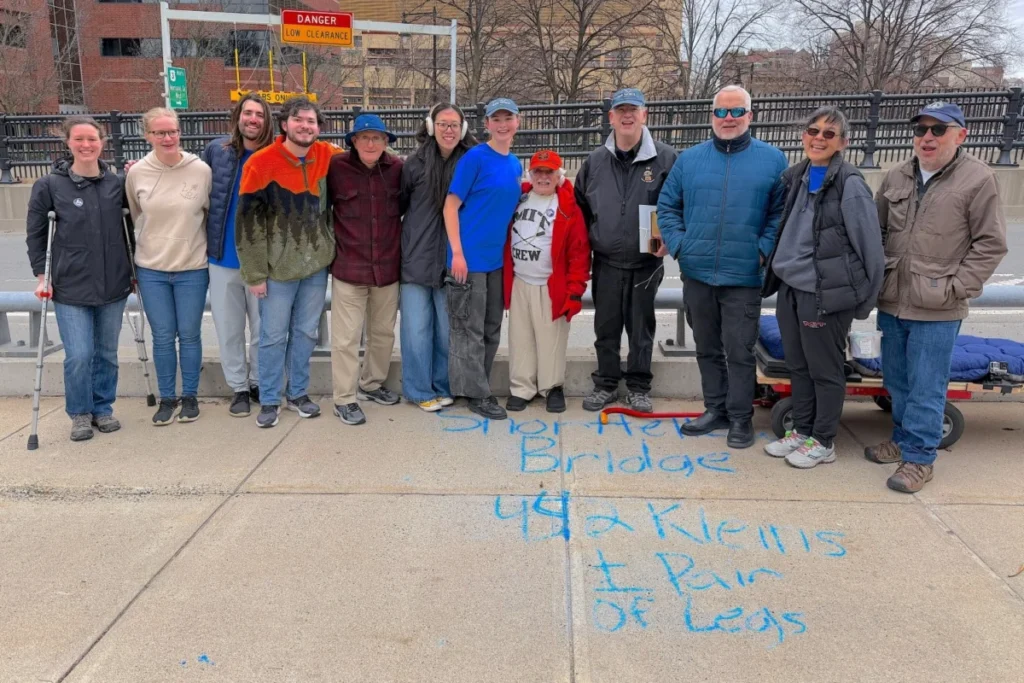
This unique methodology underscored the playful yet precise nature of MIT hacks. The initiative was spearheaded by Makenna Reilly, a second-year undergraduate in mechanical engineering, demonstrating the enduring student-led nature of these traditions. She was joined by Andrew Bennett ’85, PhD ’97, an MIT Sea Grant education administrator and senior lecturer in the Department of Mechanical Engineering (MechE), who provided invaluable guidance and expertise. The measurement team was a diverse and collaborative assembly, comprising over a dozen surveyors. This group included a rich mix of alumni, faculty, and staff from various prestigious institutions and departments affiliated with MIT, such as MechE, MIT Sea Grant, MIT Edgerton Center, and the MIT Museum Hart Nautical Collections. The involvement extended beyond MIT’s immediate ecosystem, drawing participants from Harvard Extension School and the Woods Hole Oceanographic Institution, highlighting the broad appeal and academic legitimacy of the project. MIT students also played a crucial role, including senior Teagan Sullivan, junior Adrienne Lai, and graduate students Ansel Garcia-Langley, Erin Menezes, Manuel Valencia, and Gerardo Berlanga Molina, ensuring that the torch of tradition was passed to a new generation.
The journey across the Longfellow Bridge was not without its own unique discoveries and "anomalies," adding to the anecdotal charm of the event. As Klein was "scanned" across the bridge, the team noted a variety of unexpected sightings, including a Duck Boat passing underneath, a stray mermaid tail (perhaps a prop or a lost toy), a kayak paddle, and even a serenely sleeping goose. These incidental observations, meticulously recorded, contributed to the expedition’s narrative, making it not just a measurement, but an exploratory journey in itself, filled with unexpected delights and the tenacious spirit of the survey team.
Martin Klein’s Enduring Scientific Legacy
The playful nature of the "klein" measurement should not overshadow the profound scientific contributions of Martin Klein. Known globally as the "father of commercial side-scan sonar," Klein’s innovations dramatically advanced humanity’s ability to map and explore the ocean floor. Side-scan sonar technology works by emitting sound pulses sideways from a towed vehicle (or "towfish") and recording the echoes that return from the seabed. These echoes create a detailed acoustic image of the seafloor, revealing features, objects, and geological structures that would otherwise remain hidden. Before Klein’s work, this technology was largely confined to military applications. His pioneering efforts in the 1960s, however, led to the development of affordable, robust, and user-friendly side-scan sonar systems that democratized underwater exploration.
Klein’s technology has had an immeasurable impact on marine archaeology, geological surveying, cable laying, and search and recovery operations worldwide. His systems have been instrumental in locating countless famous shipwrecks, bringing lost history to light. Among the most celebrated finds attributed to sonar technology, which owe a debt to Klein’s commercialization, are the RMS Titanic, the majestic World War I ocean liner RMS Lusitania, and the treasure-laden Nuestra Señora de Atocha. The discovery of these vessels provided invaluable historical data, spurred further archaeological research, and often recovered significant artifacts, fundamentally changing our understanding of maritime history.
Beyond his technological innovations, Martin Klein has remained deeply engaged with the scientific and educational communities. He serves on the MIT Sea Grant Advisory Board, contributing his expertise to programs focused on marine research and education. He is also a vital member of the MIT Museum Collections Committee, helping to preserve and interpret the institution’s rich history of scientific and technological achievement. His commitment to exploration is further evidenced by his status as a life fellow of both the Marine Technology Society, a professional organization dedicated to advancing ocean science and engineering, and the Explorers Club, an international multidisciplinary professional society promoting scientific exploration and field study. These affiliations underscore Klein’s lifelong dedication to pushing the boundaries of human knowledge and exploration, making him a truly deserving honoree for this unique MIT tribute.
The Measurement Unveiled: Longfellow Becomes "Shortfellow"
Upon the successful completion of the expedition, the Longfellow Bridge was officially determined to be 442 kleins in length, with the addition of "plus 2 legs" to humorously account for the fractional remainder, echoing the original "plus 1 ear" of the smoot measurement. For those seeking to contextualize this in more conventional units, 442 kleins, each measuring 57.5 inches, translates to approximately 25,415 inches, or roughly 2,117.9 feet (about 645.5 meters). This detailed, yet playfully presented, measurement further solidified the "klein" as a legitimate, albeit unconventional, unit within MIT’s unique lexicon.
The conclusion of the measurement was celebrated with a ceremony, where the Longfellow Bridge was affectionately dubbed the "Shortfellow Bridge." This renaming, a clever play on words, not only commemorated the successful hack but also created a new, informal moniker for a historic landmark, ensuring that the "klein" measurement, like the "smoot," will become an enduring part of local lore and MIT’s rich tradition of innovative humor. The new name adds a layer of whimsical identity to the bridge, cementing its place in the annals of MIT’s creative expressions.
Units of Legacy: The Broader Cultural Impact
The "klein" measurement of the Longfellow Bridge, much like its "smoot" predecessor, represents more than just a quirky academic prank. It is a vibrant reaffirmation of MIT’s distinctive institutional culture, one that champions intellectual curiosity, collaborative problem-solving, and a healthy irreverence for convention. These hacks serve as crucial cultural touchstones, bridging generations of students and alumni, reinforcing a shared identity rooted in ingenuity and a spirit of playful challenge. They demonstrate that profound scientific and engineering principles can be applied in the most unexpected and humorous ways, fostering an environment where creativity and critical thinking are paramount.
The official acceptance and maintenance of these non-standard units within the MIT community and even by local municipalities (in the case of the smoot markings) highlights a broader implication: the power of a community to define its own metrics and traditions. It underscores the idea that innovation doesn’t always have to be solemn; it can be joyful, communal, and even a little absurd. These events are crucial for student morale, fostering teamwork, and providing a memorable experience that defines their time at MIT. For alumni, they serve as a nostalgic reminder of the institution’s unique character and a powerful incentive for continued engagement and support. By blending meticulous planning with a sense of fun, the "klein" measurement reinforces the notion that the pursuit of knowledge at MIT is not just about rigorous academics, but also about fostering a vibrant, creative spirit that can measure the world in entirely new, and wonderfully human, ways.
The Unofficial Metrics: A Comprehensive Look at the "Klein" Unit
To fully appreciate the whimsical yet surprisingly detailed nature of these MIT-born units, it is worth exploring the comprehensive conversions provided for "one klein." This extensive list showcases the playful scientific rigor applied to even the most unconventional measurements, connecting it to a vast array of historical and contemporary units, some practical, others purely for intellectual amusement.
One klein is precisely defined as:
- 57.5 inches
- 146.05 centimeters
- 1.4605 meters
- 0.0009075126 miles
- 1.597222 yards
- 4.791667 feet
- 0.0007886069 nautical miles
- 0.007260087 furlongs
- 0.7986111 fathoms
- 172.5 barleycorns (an ancient English unit of length, traditionally the length of a single grain of barley)
- 292,100,000 beard seconds (a humorous unit of length defined as the distance an average beard grows in one second, highlighting the blend of the absurd and the precise)
- 647.4421 Ligne (a traditional French unit of length)
- 14.375 horse hands (a unit used to measure the height of horses, traditionally from the ground to the highest point of the withers)
- 4.819655 shaku (a traditional Japanese unit of length)
- 0.85820896 smoots (the direct lineage to its famous predecessor).
This detailed breakdown of the "klein" unit, encompassing everything from modern metric units to archaic measurements and purely whimsical constructs, perfectly encapsulates the MIT spirit: an unwavering commitment to precision and data, combined with a boundless capacity for humor and a deep appreciation for the history of measurement itself. It is a testament to the institution’s unique ability to merge serious scientific inquiry with a lighthearted approach to understanding the world, one "smoot" and "klein" at a time.