Munich-based German defense technology company Helsing SE has announced plans for a significant $50 million investment to establish a cutting-edge factory in Martinsburg, West Virginia, dedicated to the mass production of its advanced HX-2 strike drone. This strategic move is poised to substantially bolster the United States’ defense industrial base, with the facility projected to achieve an impressive output of over 2,000 units per month, signaling a new era for autonomous systems manufacturing on American soil. The decision underscores a growing international recognition of the critical need for scalable, efficient production of modern defense technologies, particularly in the wake of evolving global security challenges.
A New Era of Defense Manufacturing in West Virginia
The selection of Martinsburg, West Virginia, as the site for Helsing’s new facility is a testament to the region’s strategic advantages, including its accessible location within the Mid-Atlantic, potential workforce availability, and state-level incentives aimed at attracting high-tech manufacturing. The $50 million investment represents a substantial economic injection into West Virginia, promising the creation of numerous high-skilled manufacturing and engineering jobs. While specific job numbers have not been released, projects of this scale typically generate hundreds of direct and indirect employment opportunities, contributing to local economic diversification and growth. The facility itself is designed to be a "state-of-the-art" operation, incorporating advanced manufacturing techniques and automation to achieve its ambitious production targets. This commitment to advanced manufacturing aligns with broader U.S. efforts to reshore critical industries and enhance domestic production capabilities, thereby reducing reliance on potentially vulnerable global supply chains. The construction timeline for the facility is anticipated to span several months, with operations expected to commence within the next 18 to 24 months, subject to regulatory approvals and construction progress. This rapid deployment strategy reflects the urgency expressed by defense leaders for increased industrial capacity.
The HX-2: Designed for Modern Combat
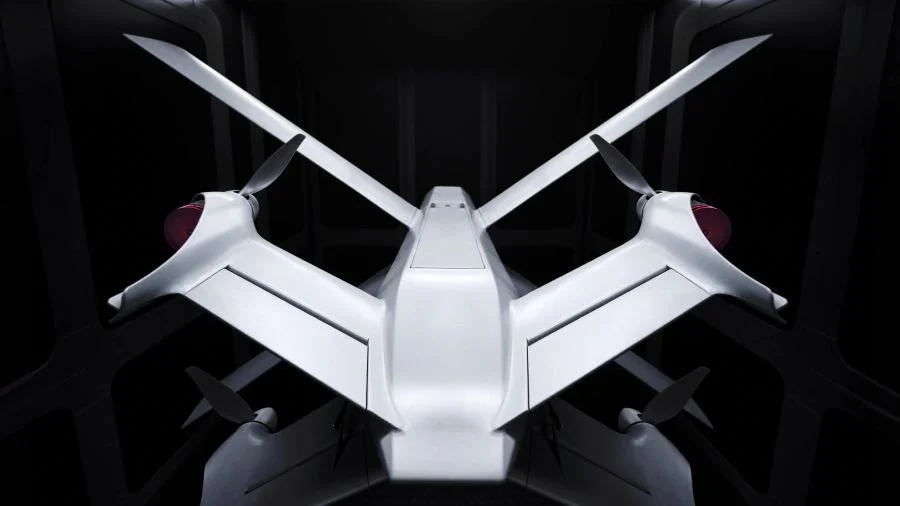
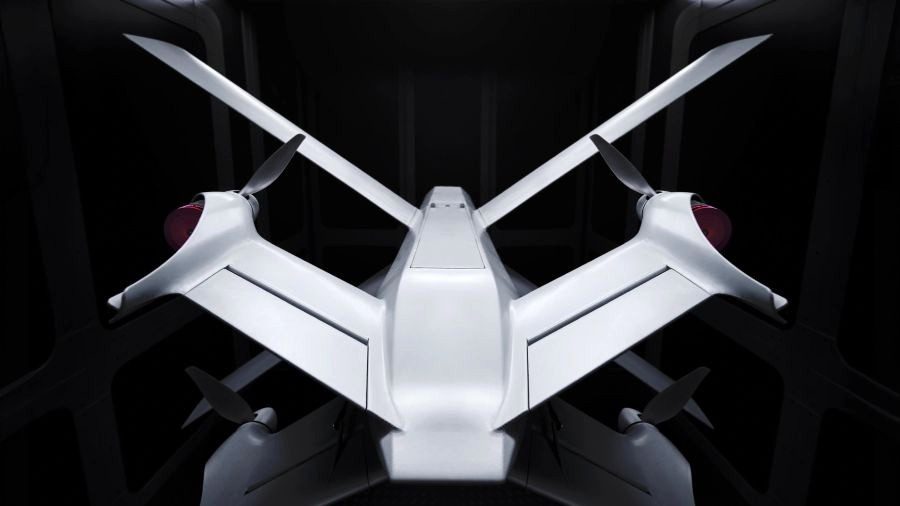
At the heart of this new manufacturing endeavor is the HX-2 strike drone, an unmanned aerial system engineered for high-volume production and rapid deployment in contested environments. Weighing a mere 26 pounds, the HX-2 is a lightweight yet formidable asset, capable of reaching speeds up to 137 mph. Its distinctive X-wing configuration is not merely an aesthetic choice but a design element contributing to its aerodynamic efficiency and maneuverability. A critical feature highlighted by Helsing is its exceptionally low acoustic signature, a characteristic vital for evading detection and enabling the weapon to penetrate enemy targets up to 60 miles away with a high degree of stealth. Powering the HX-2 are four electric motors, driving four propellers strategically located at the rear of the aircraft, a configuration that further contributes to its quiet operation and potentially reduces its thermal signature.
Jennifer McArdle, Ph.D., general manager of Helsing Inc., emphasized the HX-2’s strategic importance, stating, "Designed for high-volume production and rapid deployment, the HX-2 represents a new generation of affordable precision capabilities built for the challenges of modern combat." This statement underscores a significant shift in military procurement, where the demand for cost-effective, yet highly capable, expendable systems is rapidly increasing. The HX-2’s design philosophy prioritizes simplicity and manufacturability without compromising on critical performance attributes like range, speed, and stealth. This approach allows for the production of these systems at scales previously unseen for autonomous drones, addressing a critical gap in contemporary defense strategies. The ability to deploy a large number of these drones, potentially in swarms, could overwhelm adversary defenses and provide a decisive advantage on the battlefield.
Strategic Vision: "Resilience Factories" and Industrial Capacity
Helsing’s investment in Martinsburg is not an isolated project but a cornerstone of its broader global strategy centered on what McArdle terms "resilience factories." These facilities are envisioned as a new paradigm of high-efficiency production sites, specifically designed to ensure local and sovereign manufacturing capabilities for nation-states. This concept directly addresses the lessons learned from recent geopolitical conflicts, particularly the ongoing war in Ukraine, which has unequivocally demonstrated that industrial capacity is as crucial as technological superiority in sustained military operations. The ability to produce defense systems at speed, at scale, and in sustained volumes has emerged as a critical strategic advantage.
McArdle further elaborated on this innovative manufacturing philosophy: "HX-2 and resilience factories have been designed with high throughput and scale from the outset. Through the systematic choice of components, materials and manufacturing techniques, HX-2 can be produced in volumes that are unprecedented for modern autonomous drones. In both system and manufacturing design, complexity of hardware has been absorbed by software, thereby drastically reducing the number of components and assembly steps." This "software-defined hardware" approach is revolutionary in defense manufacturing. By abstracting complexity into software, Helsing can simplify the physical drone structure, minimize the number of unique parts, and streamline the assembly process. This not only accelerates production but also enhances reliability and reduces manufacturing costs, making advanced autonomous systems more accessible and deployable in large quantities. This strategy also implies a greater degree of adaptability and upgradability through software updates, allowing the HX-2 to evolve rapidly to meet emerging threats without requiring extensive hardware modifications.
Economic and Geopolitical Implications
The establishment of Helsing’s factory in West Virginia carries significant economic and geopolitical implications. Economically, it represents a substantial diversification for West Virginia’s economy, traditionally reliant on sectors like coal and energy. Attracting a high-tech defense manufacturer like Helsing brings not only direct jobs but also fosters an ecosystem for related industries, supply chain development, and technological innovation within the state. It positions West Virginia as a growing hub for advanced manufacturing, potentially attracting further investment in the aerospace and defense sectors.
From a geopolitical standpoint, this factory strengthens the U.S. defense industrial base by increasing domestic production capacity for critical autonomous systems. While Helsing is a German company, manufacturing within the United States contributes to American strategic autonomy and reduces potential vulnerabilities associated with overseas production. This aligns with broader U.S. defense policy objectives to reinforce domestic manufacturing capabilities, particularly for advanced technologies that are vital for national security. The partnership also symbolizes the deepening transatlantic defense cooperation, demonstrating how European innovation can directly contribute to U.S. defense readiness and technological superiority. The ability to rapidly produce thousands of advanced drones monthly addresses a key vulnerability identified in modern conflicts: the attrition rate of drones and the need for continuous resupply.
West Virginia’s Role in an Evolving Defense Landscape
West Virginia has actively sought to attract advanced manufacturing and technology companies, and Helsing’s decision is a significant validation of these efforts. State and local economic development agencies likely played a crucial role in securing this investment through various incentives, including tax breaks, workforce training programs, and infrastructure support. Governor Jim Justice and other state officials are expected to welcome the announcement with enthusiasm, highlighting the job creation and economic diversification benefits for the state. This project could serve as a powerful example for other high-tech firms considering expansion or relocation within the United States, showcasing West Virginia’s growing appeal as a manufacturing destination. The state’s proximity to Washington D.C. and major defense contractors also offers strategic advantages for supply chain integration and collaboration.
The global military drone market has seen exponential growth in recent years, driven by their proven effectiveness in intelligence, surveillance, reconnaissance (ISR), and strike missions. Projections indicate that the market will continue its upward trajectory, with autonomous capabilities and swarm technology becoming increasingly prevalent. The U.S. Department of Defense has significantly increased its investment in autonomous systems, recognizing their potential to transform warfare and provide asymmetric advantages. Helsing’s Martinsburg facility positions the U.S. to capitalize on these trends, ensuring a steady domestic supply of cutting-edge drone technology.
Looking Ahead: The Future of Autonomous Systems
The arrival of Helsing’s "resilience factory" in Martinsburg marks a pivotal moment in the evolution of defense manufacturing and the deployment of autonomous systems. It reflects a clear understanding that future conflicts will be characterized by the rapid deployment and sustained operation of networked, intelligent platforms. The HX-2, with its focus on affordability, precision, and mass production, embodies this future. The shift towards software-defined hardware and highly efficient manufacturing processes will likely set a new standard for defense contractors globally, pushing the industry towards greater agility and scalability.
Beyond the immediate economic benefits, this investment signals West Virginia’s emergence as a significant player in the national defense technology ecosystem. It underscores a broader trend where states are actively competing to attract high-value manufacturing that promises long-term growth and contributes directly to national security objectives. As the global security landscape continues to evolve, the ability to produce advanced defense technologies at scale, with speed and resilience, will remain a paramount strategic imperative, and Helsing’s new Martinsburg facility is poised to be at the forefront of this critical effort.