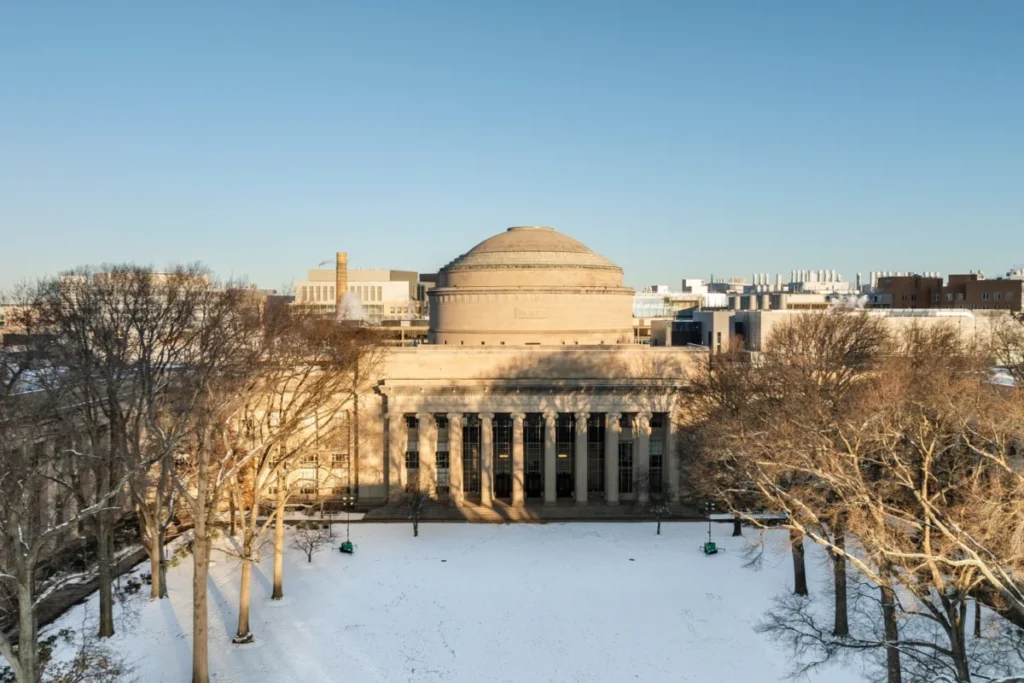
The Massachusetts Institute of Technology (MIT) School of Engineering proudly announces a distinguished array of accolades bestowed upon its faculty and researchers in Winter 2026, celebrating their profound and diverse contributions across numerous fields of inquiry. These honors, ranging from national academy inductions to international prizes and early-career grants, underscore MIT’s enduring commitment to pioneering research, technological advancement, societal impact, and educational excellence. The recognition reflects a vibrant ecosystem of innovation, where foundational science converges with practical application to address some of the world’s most pressing challenges.
The Apex of Engineering Achievement: National Academy of Engineering Inductions
A cornerstone of professional recognition in the engineering world, election to the National Academy of Engineering (NAE) signifies an individual’s exceptional contributions to "engineering research, practice, or education," or their role in "the pioneering of new and developing fields of technology, making major advancements in traditional fields of engineering, or developing/implementing innovative approaches to engineering education." In 2026, six esteemed faculty members from the MIT School of Engineering were inducted into this elite body, reflecting the breadth and depth of expertise housed within the institution.
Among the newly elected are Charles Harvey, a professor in the Department of Civil and Environmental Engineering, recognized for his groundbreaking work in environmental fluid mechanics and hydrologic systems, particularly his research on groundwater contamination and wetland hydrology. His insights are crucial for understanding and mitigating environmental degradation and informing sustainable water resource management.
Piotr Indyk, the Thomas D. and Virginia W. Cabot Professor in the Department of Electrical Engineering and Computer Science (EECS), was honored for his seminal contributions to algorithms, particularly in the areas of data streaming, computational geometry, and high-dimensional data analysis. His work has profound implications for large-scale data processing, machine learning, and efficient algorithm design, forming the backbone of many modern computational systems.
From the Department of Mechanical Engineering, John Henry Lienhard, the Abdul Latif Jameel Professor of Water and Mechanical Engineering, was recognized for his transformative research in thermodynamics, heat transfer, and desalination technologies. His efforts are vital in addressing global water scarcity, developing more efficient energy systems, and pushing the boundaries of thermal science.
Frances Ross, the TDK Professor in Materials Science and Engineering, received her NAE induction for innovative advancements in electron microscopy, particularly her real-time imaging of materials growth and processes at the nanoscale. Her techniques provide unprecedented insights into material behavior, crucial for developing next-generation materials for electronics, energy, and biomedical applications.
Zoltán Sandor Spakovszky, the T. Wilson (1953) Professor in Aeronautics, was elected for his significant contributions to aerospace propulsion systems, including turbomachinery aerodynamics and aeromechanics. His research is instrumental in designing more efficient, reliable, and environmentally friendly aircraft engines, shaping the future of air travel and aerospace technology.
Rounding out the NAE inductees is Ram Sasisekharan, the Alfred H. Caspary Professor of Biological Physics and Physics in the Department of Biological Engineering. His election acknowledges his pioneering work in glycobiology and biophysics, particularly in understanding the structure and function of complex carbohydrates and their role in disease. His research has opened new avenues for drug discovery and therapeutic development, especially in areas like cancer and infectious diseases.
These inductions not only celebrate individual brilliance but also underscore MIT’s pivotal role in advancing the frontiers of engineering across diverse disciplines, influencing policy, and driving technological progress on a national and global scale.
Pioneering Biological Understanding: The Tel Aviv University International Prize in Biophysics
The interdisciplinary nature of scientific inquiry was prominently highlighted with the awarding of the 2026 Laureate of the Tel Aviv University International Prize in Biophysics to two distinguished MIT faculty members: Arup K. Chakraborty and James J. Collins. This prestigious international award recognizes outstanding scientists whose work has significantly advanced the understanding of biological systems through physical principles.
Arup K. Chakraborty, the John M. Deutch (1961) Institute Professor, holds appointments across Chemical Engineering, Chemistry, and Physics, and serves as the founding director of the Institute for Medical Engineering and Science (IMES). His groundbreaking research employs theoretical and computational methods to understand complex biological phenomena, particularly in immunology and infectious diseases. His work has provided critical insights into T-cell activation, HIV pathogenesis, and vaccine design, bridging the gap between molecular physics and clinical outcomes.
Alongside him, James J. Collins, the Termeer Professor of Medical Engineering and Science in the Department of Biological Engineering and IMES, was recognized for his foundational contributions to synthetic biology and biomedical engineering. A pioneer in the field, Professor Collins is renowned for his work in creating synthetic gene networks, developing novel antibiotic strategies, and harnessing gene editing technologies for therapeutic purposes. His research epitomizes the application of engineering principles to unravel and reprogram biological systems, offering innovative solutions to medical challenges.
The Tel Aviv University International Prize in Biophysics, established to honor researchers who illuminate life’s processes through the lens of physics, highlights the critical importance of quantitative and mechanistic approaches in modern biology. The selection of Professors Chakraborty and Collins reinforces MIT’s leadership in this rapidly evolving field, where physics and engineering are indispensable tools for biological discovery and medical innovation.
Enduring Impact in Electronics and Computing: Recognizing Sustained Excellence
The digital age, characterized by rapid technological evolution, places a premium on research that not only innovates but also demonstrates sustained relevance and foundational impact. Several MIT faculty members were honored for their enduring contributions to electronics and computing.
Anantha Chandrakasan, MIT provost and the Vannevar Bush Professor in EECS, received the 2025 IEEE Journal of Solid-State Circuits (JSSC) Test of Time Award. This award is particularly significant as it recognizes an outstanding paper published in the IEEE Journal of Solid-State Circuits at least 10 years prior that has had a profound and lasting impact on its field. Professor Chandrakasan’s recognition underscores the seminal nature of his work in low-power circuit design, which has been fundamental to the development of energy-efficient portable electronics, embedded systems, and the ubiquitous Internet of Things (IoT). His research has not merely advanced the state-of-the-art but has shaped the very architecture of modern computing devices, making them smaller, faster, and more power-efficient.
In the realm of theoretical and applied computing, Antonio Torralba, the Delta Electronics Professor and faculty head of AI+D in EECS, was elected to the 2025 cohort of Association for Computing Machinery (ACM) Fellows. As the highest honor bestowed by the ACM, fellowship recognizes outstanding accomplishments in computing and information technology. Professor Torralba is a world-renowned expert in computer vision, machine learning, and artificial intelligence, whose work has significantly advanced our understanding of visual recognition, scene understanding, and multimodal AI. His contributions have been instrumental in pushing the boundaries of how machines perceive and interact with the world, impacting areas from autonomous vehicles to advanced robotics.
Further strengthening MIT’s leadership in digital security, Vinod Vaikuntanathan, the Ford Foundation Professor of Engineering in EECS, was named a 2026 fellow of the International Association for Cryptologic Research (IACR). The IACR Fellows Program acknowledges outstanding technical and professional contributions to cryptology. Professor Vaikuntanathan’s work has been transformative in the field of cryptography, particularly in fully homomorphic encryption and lattice-based cryptography, which are critical for secure computation in cloud environments and post-quantum security. His research provides the mathematical underpinnings for protecting sensitive data in an increasingly interconnected and quantum-threatened digital landscape.
Fostering Future Leaders: Early Career Accolades
Recognizing the vital role of supporting emerging talent, several MIT faculty members received prestigious early-career awards, signaling their potential to become future leaders and innovators. These awards provide crucial funding and recognition during the formative stages of an academic career.
Michael Howland, the Jeffrey Cheah Career Development Professor and assistant professor in the Department of Civil and Environmental Engineering, received a 2026 Faculty Early Career Development (CAREER) Award from the National Science Foundation (NSF). The CAREER award is the NSF’s most prestigious award in support of early-career faculty who have the potential to serve as academic role models in research and education and to lead advances in the mission of their department or organization. Professor Howland’s research focuses on atmospheric science and renewable energy systems, particularly on improving the efficiency and predictability of wind energy through advanced modeling and data analysis, addressing critical challenges in sustainable energy transitions.
The Alfred P. Sloan Foundation annually awards Sloan Research Fellowships to early-career researchers whose creativity, innovation, and research accomplishments make them stand out as the next generation of leaders. In 2026, three associate professors from EECS were named Sloan Research Fellows: Yoon Kim, Anand Natarajan, and Mengjia Yan. Professor Kim’s work delves into natural language processing and machine learning, pushing the boundaries of how computers understand and generate human language. Professor Natarajan specializes in quantum information theory and quantum computing, exploring the fundamental limits and capabilities of future computational paradigms. Professor Yan, the ITT Career Development Professor in Computer Technology, focuses on computer architecture and security, designing robust and secure computing systems that resist emerging threats. These fellowships empower these scholars to pursue fundamental research that could lead to breakthroughs with long-term societal benefits.
The Office of Naval Research (ONR) recognized Carlos Portela, the Robert N. Noyce Career Development Professor and associate professor in the Department of Mechanical Engineering, with a 2026 Young Investigator Award. The ONR Young Investigator Program identifies and supports academic scientists and engineers in their early tenure-track careers who show exceptional promise for creative research relevant to naval capabilities. Professor Portela’s research focuses on the mechanics of materials, particularly in understanding and designing architected materials with extraordinary properties, which has significant implications for defense applications, from protective structures to advanced sensors.
Tess Smidt, an associate professor in the Department of EECS, received dual recognition for her early-career promise. She was named co-principal investigator on a National Science Foundation (NSF) AI Research Institute award and also received a 2025 Department of Energy (DoE) Office of Science Early Career Research Program Award. The NSF AI Materials Institute (AI-MI), where Professor Smidt is a key contributor, aims to propel foundational AI research past the limitations of existing algorithms by pursuing materials discovery and conquering knowledge- and data-centric challenges. Her DoE award supports five-year research projects from exceptional early-career researchers at U.S. academic institutions in mission-critical areas. Professor Smidt’s work lies at the intersection of AI, machine learning, and materials science, developing novel computational methods to accelerate the discovery and design of new materials, a critical enabler for various technological advancements, including clean energy and advanced manufacturing.
Impacting Society and the Planet: Specialized Recognitions
Beyond general excellence, some awards specifically highlight research with direct societal and environmental benefits, or recognize particular achievements within specialized scientific communities.
Ellen Roche, the Abby Rockefeller Mauzé Professor and associate department head for research in the Department of Mechanical Engineering and a professor in the Institute for Medical Engineering and Science, received the 2026 Sony Women in Technology Award with Nature. This prestigious award recognizes exceptional early- to mid-career women researchers in technology who, through their research, are driving a positive impact on society and the planet. Professor Roche’s pioneering work in biomedical engineering focuses on soft robotics and implantable devices, particularly for cardiac assistance. Her innovations aim to develop less invasive and more effective treatments for heart disease, significantly improving patient quality of life and outcomes. The award underscores the critical role of women in STEM fields and the potential of technology to address global health challenges.
In the highly specialized field of materials science, Harry L. Tuller, a professor in the Department of Materials Science and Engineering, received The Senior Scientist Award from the International Society for Solid State Ionics. As the most prestigious award of the society, it is presented to a senior solid-state ionics researcher who has made outstanding contributions to the science and engineering of solid-state ionics. Professor Tuller is a world leader in the field, renowned for his work on ionic and mixed ionic-electronic conducting materials. His research has been foundational for the development of advanced electrochemical devices, including solid oxide fuel cells, chemical sensors, and next-generation batteries, all critical technologies for energy conversion, storage, and environmental monitoring. His sustained impact has shaped the landscape of materials science for decades.
Broader Implications and Institutional Pride
The sheer volume and diversity of these awards in Winter 2026 serve as a powerful testament to the intellectual vitality and innovative spirit embedded within the MIT School of Engineering. These recognitions are not merely individual achievements; they reflect a collective ethos of pushing boundaries, fostering interdisciplinary collaboration, and committing to research that yields tangible benefits for humanity.
The awards span critical areas from climate change and sustainable energy (Howland, Lienhard) to advanced materials (Ross, Tuller, Portela, Smidt), artificial intelligence and computing (Indyk, Chandrakasan, Torralba, Kim, Natarajan, Yan, Smidt, Vaikuntanathan), and biomedical engineering and health (Chakraborty, Collins, Sasisekharan, Roche). This breadth highlights MIT’s comprehensive approach to addressing complex global challenges through scientific discovery and technological innovation.
From the foundational insights into biological systems recognized by the Tel Aviv University Prize to the enduring impact of solid-state circuits celebrated by the IEEE, these accolades demonstrate that MIT faculty are not only at the forefront of their respective fields but are also shaping the trajectory of future technological and scientific progress. The significant representation in the National Academy of Engineering further solidifies MIT’s role as a national resource for engineering excellence and strategic counsel.
Moreover, the numerous early-career awards—the NSF CAREER, Sloan Fellowships, ONR Young Investigator, and DoE Early Career awards—underscore MIT’s success in nurturing the next generation of scientific leaders. These investments in emerging talent are crucial for sustaining a pipeline of innovation and ensuring that future challenges will be met with ingenuity and rigorous inquiry.
The Sony Women in Technology Award, specifically recognizing Ellen Roche, emphasizes the importance of diversity in STEM and highlights the impactful contributions of women researchers who are driving positive change for society and the planet.
Collectively, these awards reinforce MIT’s unparalleled reputation as a global hub of scientific and engineering leadership. They validate the institution’s strategic investments in research infrastructure, its cultivation of a collaborative academic environment, and its unwavering pursuit of knowledge that serves the greater good. As the world navigates increasingly complex technological, environmental, and societal landscapes, the continued achievements of MIT’s faculty demonstrate the profound and lasting impact that dedicated scholarship and innovation can have on shaping a better future.