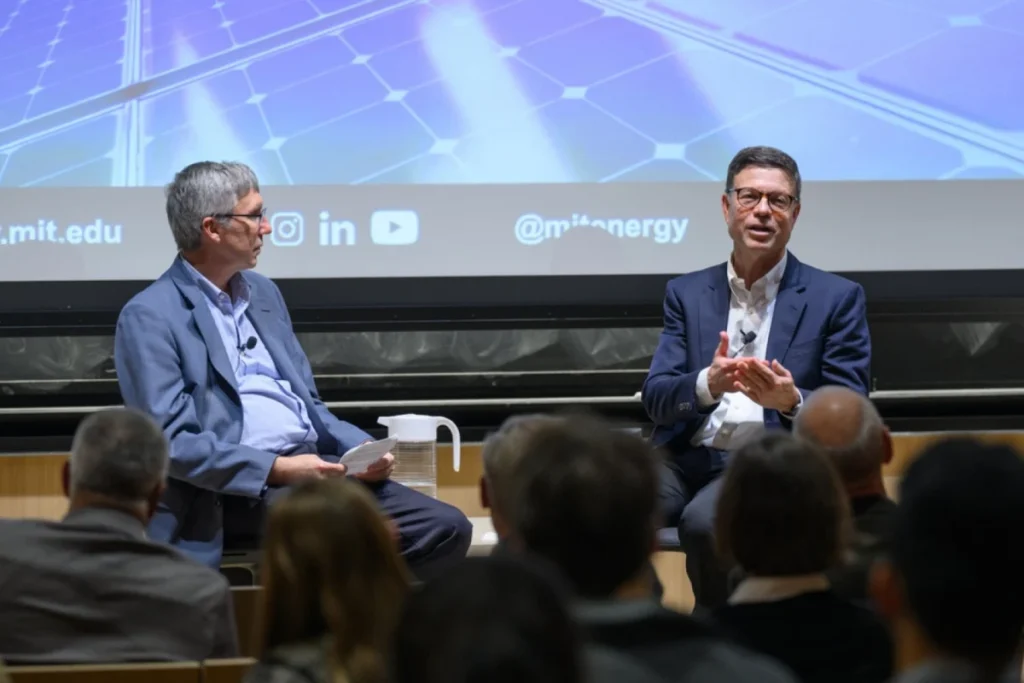
The landscape of personal mobility and the broader energy infrastructure is undergoing a profound transformation, driven significantly by breakthroughs in battery technology. Kurt Kelty, Vice President of Battery, Propulsion, and Sustainability at General Motors (GM), articulated this paradigm shift during his address at the prestigious MIT Energy Initiative (MITEI) Fall Colloquium. His presentation, a cornerstone of the ongoing MITEI Presents: Advancing the Energy Transition speaker series, offered an in-depth look into GM’s strategic approach to translating cutting-edge battery innovations from laboratory concepts to widespread commercial application, a crucial endeavor for bolstering domestic battery manufacturing and expertise.
The MITEI Fall Colloquium, a recurring event that convenes leading minds in energy research, policy, and industry, serves as a vital platform for discussing the most pressing challenges and promising solutions in the global transition to sustainable energy. This year’s focus on accelerating this transition highlighted the critical role of advanced battery systems, a field where GM is making significant strides. Kelty’s participation underscored the automotive giant’s commitment to not only developing advanced electric vehicles (EVs) but also to establishing a robust and independent North American battery supply chain.
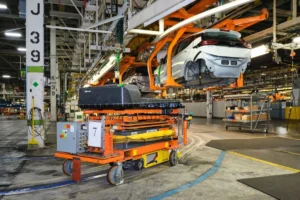
At the heart of GM’s battery strategy, as outlined by Kelty, are three primary objectives. The first and arguably most impactful for widespread EV adoption is the relentless pursuit of affordability. "How do you drive down the cost?" Kelty posed to the assembled audience of academics, researchers, and industry professionals. His immediate answer pinpointed the battery pack itself: "It’s the batteries. The batteries make up about 30 percent of the cost of the vehicle." This stark statistic underscores the fundamental challenge and opportunity in making EVs accessible to a broader consumer base. Reducing the per-kilowatt-hour cost of battery cells and packs is paramount to achieving price parity with internal combustion engine vehicles.
The second key objective is the enhancement of battery performance. This encompasses not only increasing the energy density, which directly translates to greater vehicle range and potentially smaller, lighter battery packs, but also significantly improving charging speeds. The convenience of rapid charging is a critical factor in alleviating range anxiety and making EV ownership more practical for daily use. Faster charging times can reduce the perceived inconvenience of refueling, bringing EVs closer to the refueling experience of gasoline-powered cars.
Thirdly, and of critical strategic importance, is the localization of the battery supply chain. Kelty emphasized the need for enhanced resilience and independence in North America, stating, "We’ve got to build up our resilience and our independence here in North America, so we’re not relying on materials coming from China." This statement reflects a global trend towards de-risking supply chains, particularly for critical minerals and components essential for advanced technologies. Geopolitical considerations, trade dynamics, and the desire to foster domestic industrial capacity are all contributing factors to this push for localized manufacturing. The COVID-19 pandemic and subsequent supply chain disruptions further amplified the urgency of this objective for many industries, including the automotive sector.
To accelerate progress on these fronts, GM is making substantial investments in virtualization and advanced simulation tools. Kelty revealed that his team is leveraging artificial intelligence (AI) and sophisticated modeling techniques to drastically reduce the time required for research and development. What once took months of iterative physical testing can now be accomplished in a matter of days through advanced computational methods.
"If you want to modify… the nickel content ever so slightly, we can very quickly model: ‘OK, how’s that going to affect the energy density? The safety? How’s that going to affect the charge capability?’" Kelty explained, illustrating the power of these virtual tools. This ability to rapidly prototype and test material compositions and design variations virtually allows engineers to explore a much wider design space and identify optimal solutions with unprecedented speed. The insights gained can then be applied at multiple levels, from the individual cell to the battery pack and ultimately to the performance of the entire vehicle. This virtual approach not only speeds up innovation but also potentially reduces the material waste associated with extensive physical prototyping.
A significant breakthrough announced by Kelty concerns a new battery chemistry that addresses the critical triad of affordability, accessibility, and commercialization: Lithium Manganese-Rich (LMR) batteries. Historically, the industry has focused on reducing battery costs by lowering cobalt content and increasing nickel. These high-nickel chemistries have become prevalent in many EVs currently on the road in the United States, largely due to their superior energy density and resulting long driving ranges. However, LMR batteries represent a strategic shift, further reducing nickel content while incorporating a greater proportion of manganese. Manganese is a more abundant and less expensive material than cobalt or nickel, contributing to a significant reduction in battery manufacturing costs. Crucially, LMR batteries have demonstrated the capability to maintain a competitive driving range, making them a compelling alternative to high-nickel chemistries.
Kelty drew a direct comparison with Lithium Iron Phosphate (LFP) batteries, which are widely adopted in China and are known for their low cost, exceptional cycle life (meaning they can be charged and discharged many times without significant degradation), and inherent safety. He stated that LMR batteries offer a cost profile comparable to LFP but with a driving range that rivals that of high-nickel batteries. "That’s what’s really a breakthrough," Kelty emphasized, highlighting the potential of LMR to offer a compelling balance of cost, performance, and range, thereby democratizing EV access.
While the fundamental chemistry of LMR batteries is not entirely new, Kelty acknowledged that commercializing them has presented significant hurdles for the industry. "People knew about it, but they didn’t know how to commercialize it. They didn’t know how to make it work in an EV," he stated. This suggests that the challenges were not in the basic scientific principles but in the complex engineering and manufacturing processes required to scale up production and ensure reliable performance and longevity in real-world automotive applications. GM’s success in overcoming these commercialization challenges positions them to be the first to bring LMR batteries to market in their EVs, with an anticipated rollout in 2028. This strategic move could provide GM with a significant competitive advantage in the rapidly evolving EV market.
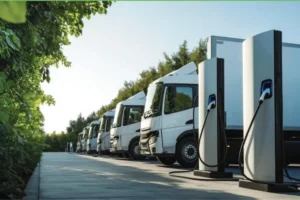
Beyond the immediate improvements in EV performance and cost, Kelty also expressed considerable enthusiasm for the future integration of vehicle-to-grid (V2G) technologies. V2G systems, utilizing bidirectional chargers, enable EVs not only to draw power from the grid but also to discharge stored energy back to it. This capability transforms EVs into mobile energy storage units, offering numerous benefits for both consumers and the grid.
"Customers can charge their vehicles at night when the electricity prices are really low, and they can discharge it during the day when electricity rates are really high," Kelty explained. This dynamic energy management can lead to significant cost savings for EV owners by allowing them to take advantage of off-peak electricity rates. Furthermore, V2G technology can help stabilize the electrical grid by providing a distributed source of power that can be called upon during periods of high demand or when renewable energy sources like solar and wind are not actively generating power. This could reduce reliance on peak power plants, which are often fossil fuel-based, thereby contributing to a cleaner and more resilient energy system. The widespread adoption of V2G could fundamentally alter the relationship between transportation and the energy sector, creating a more integrated and intelligent energy ecosystem.
GM’s ambitions extend beyond the transportation sector, with the company actively exploring the application of its battery expertise to grid-scale energy storage solutions. This diversification leverages GM’s deep understanding of battery technology and manufacturing to address the growing demand for stationary energy storage. Kelty noted the significant market potential and rapid growth in this area, partly driven by the escalating demand from data centers, which require reliable and substantial power supplies. Grid-scale battery storage is also crucial for integrating higher penetrations of renewable energy, smoothing out the intermittent nature of wind and solar power, and enhancing the overall reliability of the electricity grid.
Looking ahead to the future of battery manufacturing and the EV industry in the United States, Kelty conveyed a strong sense of optimism. "We’ve got the technology here to make it happen. We’ve always had the innovation here. Now, we’re getting more and more of the manufacturing. We’re getting that all together," he stated. This vision highlights a potential renaissance in American manufacturing, with a focus on high-tech industries. The confluence of technological prowess, innovative spirit, and expanding manufacturing capabilities is, in Kelty’s view, creating "tremendous opportunity." He expressed hope that the nation will capitalize on this momentum to establish a formidable and expansive battery industry.
The MITEI Presents: Advancing the Energy Transition speaker series serves as a crucial forum for disseminating such insights and fostering collaboration among those driving the energy revolution. By featuring prominent figures like Kurt Kelty, the series illuminates the scientific, technological, and policy solutions essential for a sustainable energy future. Information on upcoming events and past colloquia can be found on the MIT Energy Initiative’s events page, providing a valuable resource for anyone interested in the ongoing transformation of our energy systems. The implications of GM’s advancements, particularly with LMR batteries and V2G technology, are far-reaching, promising to accelerate the adoption of electric vehicles, enhance energy grid stability, and solidify North America’s position as a leader in the global battery industry.