Würzth Additive Group Business Unit Announces Closure Amidst Strategic Realignments
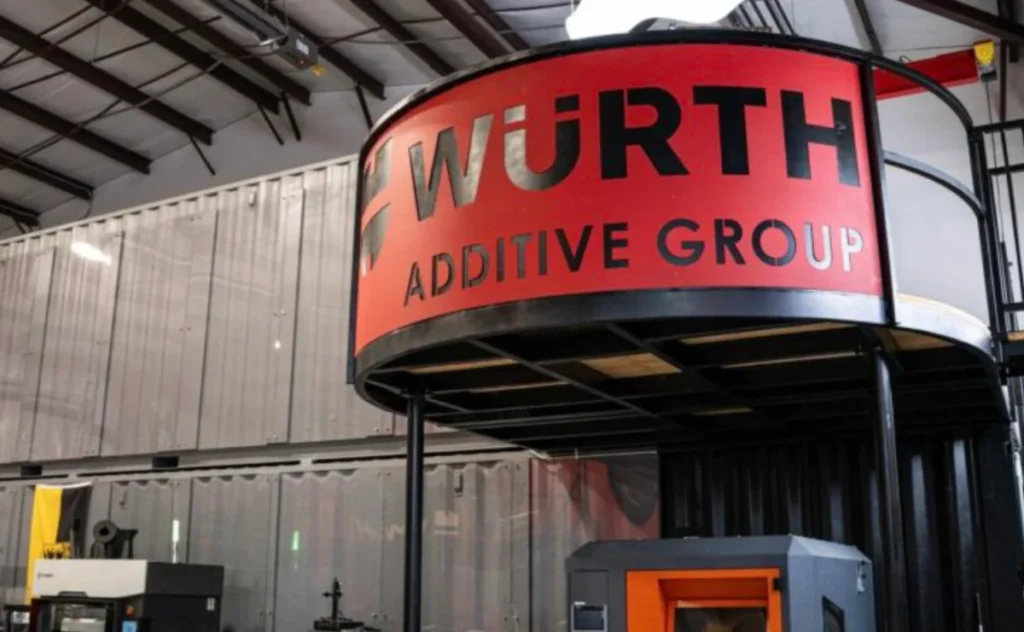
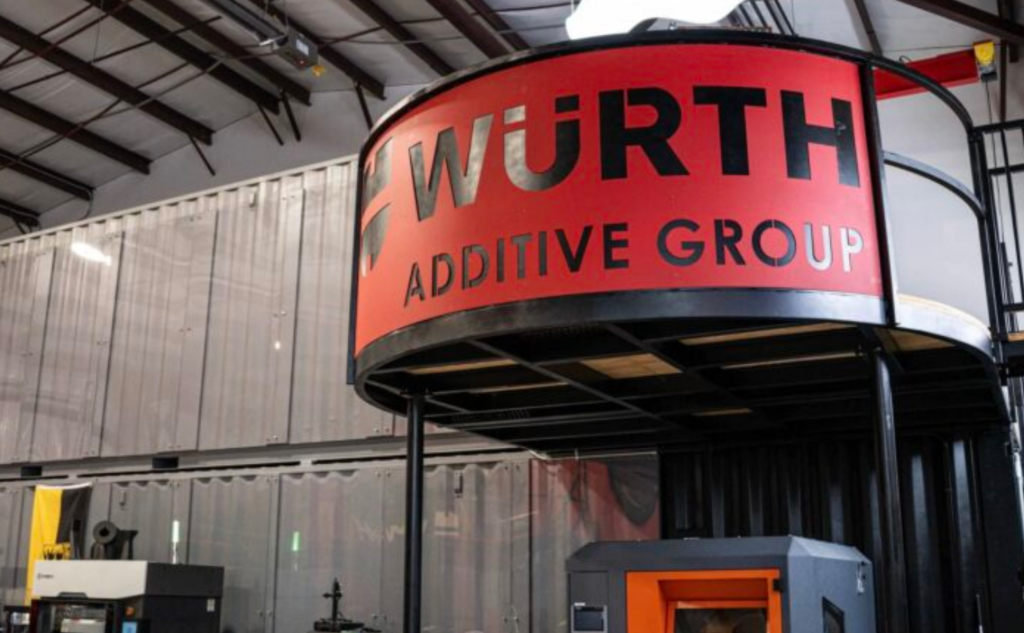
The global additive manufacturing landscape experienced a notable contraction with the confirmed closure of Würzth Additive Group (WAG), a business unit of the German multinational conglomerate Würzth Group. The announcement, delivered via a concise LinkedIn post, signals the end of WAG’s dedicated efforts in the 3D printing materials and hardware distribution sector, as well as its ambitious Digital Inventory Services (DIS) platform. While the precise reasons for the closure have not been publicly disclosed, the move follows a series of strategic shifts within the organization, including the departure of key leadership figures.
Würzth Group, renowned for its extensive portfolio of assembly and fastening materials, ventured into additive manufacturing in 2017. WAG was formally established in 2021 with the objective of not only distributing 3D printing consumables and equipment but also of providing innovative inventory management solutions for its clientele. The DIS platform, a core initiative of WAG, was designed to leverage 3D printing for more efficient and responsive inventory control, a concept that garnered positive attention within the industry. WAG actively promoted its DIS platform, showcasing it at industry events like AMUG and even announcing a strategic partnership with B9Creations at AMUG 2026, suggesting a trajectory of growth and commitment.
However, subtle indicators of internal changes began to surface prior to the official closure announcement. AJ Strandquist, the CEO of Würzth Additive, publicly announced his departure two months prior to the closure, hinting at the initiation of a new professional chapter. Subsequently, Mikhail Gladkikh, Director of Global Technology and Technical Projects at WAG, shared his own professional transition plans three weeks before the official statement, explicitly referencing the "wind-down" of the WAG division. These departures, coupled with the succinct nature of the closure announcement, suggest a carefully managed, albeit abrupt, strategic decision by the Würzth Group.
In its official statement, WAG expressed its commitment to an "orderly closure of all operations" and referred to the decision as a "carefully considered business decision." The company has indicated that stakeholders with active accounts or outstanding arrangements will be contacted directly by its Closing Office. Those with general inquiries are directed to email [email protected]. The industry will undoubtedly feel the absence of WAG’s contributions, particularly its innovative approach to digital inventory solutions, prompting a search for alternative providers in this specialized niche.
BigRep SE Delists from Frankfurt Stock Exchange, Parent Company Liquidated Amidst Financial Challenges
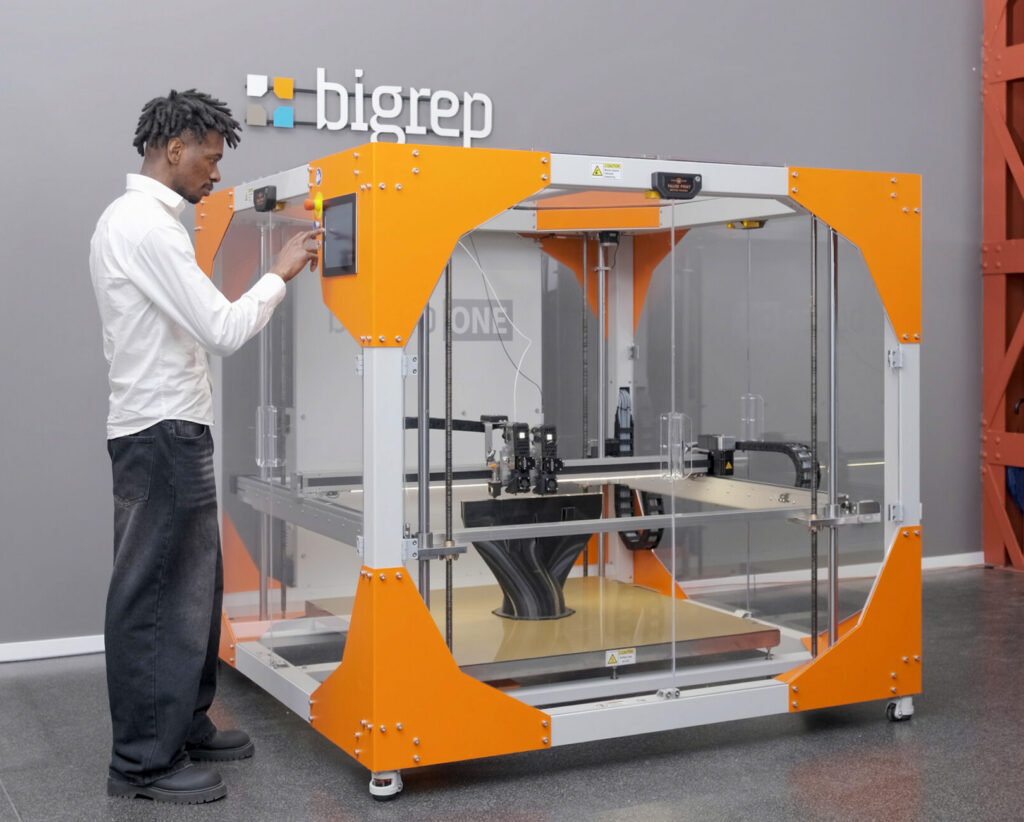
The volatile nature of the special purpose acquisition company (SPAC) market has once again impacted the additive manufacturing sector, with large-format 3D printing pioneer BigRep GmbH, now operating as BigRep SE, announcing its delisting from the Frankfurt Stock Exchange and the liquidation of its parent company. This development marks a significant turning point for a company that had aimed to leverage public market access for aggressive expansion.
BigRep, a prominent player in the large-format 3D printing arena, went public through a SPAC merger with SMG Technology Acceleration SE in 2024. The intention behind this move was to fuel a "buy-and-build" strategy, aimed at consolidating market share and enhancing shareholder value. A key component of this strategy was the acquisition of Austrian competitor HAGE3D, a move designed to bolster BigRep’s market presence and facilitate substantial expansion.
Following the public listing, BigRep pursued several strategic initiatives, including forming a partnership with Phillips Federal, entering the automotive aftermarket, and launching its ONE.5x 3D printer at RAPID + TCT 2026. Despite these efforts, the company has faced persistent financial headwinds, reporting annual losses and undertaking a corporate reorganization the previous year. These ongoing financial challenges appear to have culminated in the decision by BigRep’s management and supervisory boards to pursue a sale and delisting.
An extraordinary general meeting of shareholders was convened to approve the sale and liquidation of the holding company. The transaction is structured to ensure the sale of BigRep SE at fair market value, determined by an independent valuation of BigRep GmbH. The shares are slated for acquisition by De Krassny GmbH, Koehler Invest GmbH, and Hage Holding GmbH, though the specific purchase price has not been disclosed. Any surplus proceeds or assets remaining after the sale will be distributed to shareholders.
While the sale is expected to proceed, BigRep is anticipated to continue operations under new management. Details regarding future personnel and organizational structure remain undisclosed, leaving industry observers to await further announcements on the company’s path forward. The delisting and liquidation underscore the significant risks associated with SPAC-driven growth strategies, particularly in rapidly evolving technological sectors.
RA Wind Secures Innovation Norway Grant for Robotic 3D Printing of Wind Turbine Blades
In a significant stride towards sustainable energy innovation, RA Wind AS, an Energy Transition Norway (ETN) member, has been awarded a 500,000 NOK (approximately $52,000 USD) grant from Innovation Norway. This funding will accelerate the company’s pioneering project focused on the onsite, robot-controlled 3D printing of wind turbine blades. The initiative aims to revolutionize the manufacturing and logistics of wind energy components, addressing key challenges in the offshore wind sector.
The traditional manufacturing of wind turbine blades is a complex and resource-intensive process. It typically involves large, fixed molds, labor-intensive composite layup procedures, and significant logistical hurdles in transporting the finished blades to installation sites. RA Wind, founded in 2023 with a focus on developing rotor and nacelle technology for offshore wind energy, is leveraging additive manufacturing to overcome these limitations.
The grant from Innovation Norway will support crucial commercial and technical evaluations, including advanced 3D printing techniques, process simulations, and the analysis of small composite material prototypes. By enabling large-scale industrial robotic 3D printing directly at wind farm sites, RA Wind aims to achieve several key objectives:
- Site-Specific Blade Design: The ability to print blades on-demand at the installation location allows for customization to site-specific wind conditions and environmental factors, potentially optimizing energy capture.
- Elimination of Long-Distance Transport: Reducing or eliminating the need for transporting massive blades across long distances significantly cuts down on logistical costs, emissions, and the risk of damage during transit.
- Development of Lighter and Reusable Materials: Additive manufacturing opens possibilities for utilizing advanced, lighter-weight composite materials, potentially leading to more sustainable and reusable blade designs.
Beyond blade manufacturing, RA Wind is developing a patented modular turbine design with the overarching goal of reducing installation, operation, and maintenance costs for offshore wind farms by an ambitious 50%. Lars Raunholt, CEO of RA Wind, emphasized the critical role of the Innovation Norway project in advancing their innovative concepts into the prototype stages.
Complementing the Innovation Norway grant, RA Wind has also successfully completed a capital increase through local investors, matching the value of the grant. The company’s next phase involves the establishment of a pilot factory equipped with up to four large additive robots, signaling a clear commitment to scaling this transformative technology. This development positions RA Wind at the forefront of innovation in the renewable energy sector, showcasing the tangible impact of additive manufacturing on the development of cleaner and more efficient energy solutions.
Ampera Completes Full-Scale 3D Printed Nuclear Reactor Module, Paving the Way for Emission-Free Power
Ampera, a Florida-based company dedicated to developing advanced microreactor systems, has achieved a significant milestone with the completion of the first full-scale 3D printed nuclear reactor module. This accomplishment marks a critical step forward in their mission to deliver scalable, factory-built, and emission-free power solutions for a range of demanding applications, including defense, maritime, industrial, and data centers.
The company’s core technology centers on subcritical thorium-based, energy-dense microreactors designed for extended operational lifespans without the need for refueling. Ampera’s innovative approach integrates neuron-source technology, a proprietary tri-structural isotropic (TRISO) fuel platform, and advanced additive manufacturing processes.
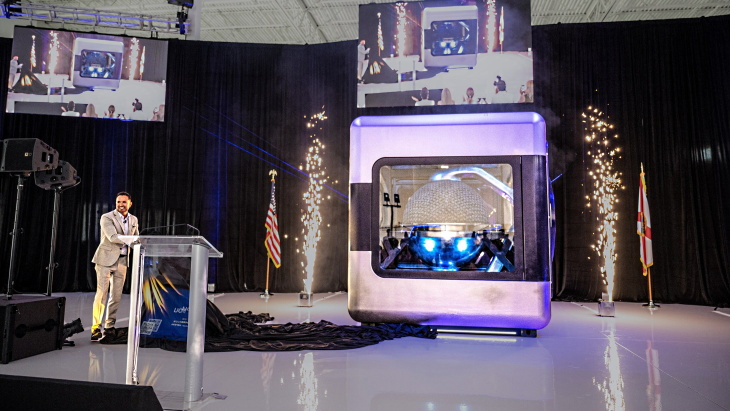
This groundbreaking reactor module, unveiled at Ampera’s innovation center in Palm Beach Gardens, incorporates both the pressure vessel and a unique spherical monolithic gyroid core. Both components were meticulously 3D printed from silicon carbide, a high-performance ceramic material known for its exceptional thermal and mechanical properties. The design is engineered for a remarkable operational period of up to 30 years without requiring refueling, a testament to the efficiency and longevity of Ampera’s technology.
The development follows a series of strategic advancements for Ampera. In the winter, the company formally communicated its intention to initiate the pre-application process with the U.S. Nuclear Regulatory Commission (NRC) for its containerized microreactor. By April, Ampera had solidified a strategic collaboration with Monaco-based shipping company Scorpio Tankers Inc. to jointly develop and commercialize advanced microreactors tailored for maritime and related applications.
Brian Matthews, Founder and CEO of Ampera, highlighted the significance of this achievement, stating, "This next-generation nuclear core and pressure vessel sets the foundation for factory-built, mass-produced nuclear energy. The advanced technology and additive manufacturing used demonstrate a clear commercial path for new nuclear technology coming to market in an accelerated manner." He further elaborated on the targeted markets, emphasizing the critical need for reliable power in sectors such as AI data centers, defense, industrial operations, and maritime activities, and expressed confidence that Ampera will be a leader in industrializing factory-built nuclear power with near-term deployment timelines.
Ampera’s vision extends to providing a scalable and deployable source of clean energy, addressing the growing global demand for reliable and sustainable power solutions. The successful production of this full-scale 3D printed module underscores the transformative potential of additive manufacturing in accelerating the development and deployment of next-generation nuclear energy technologies.