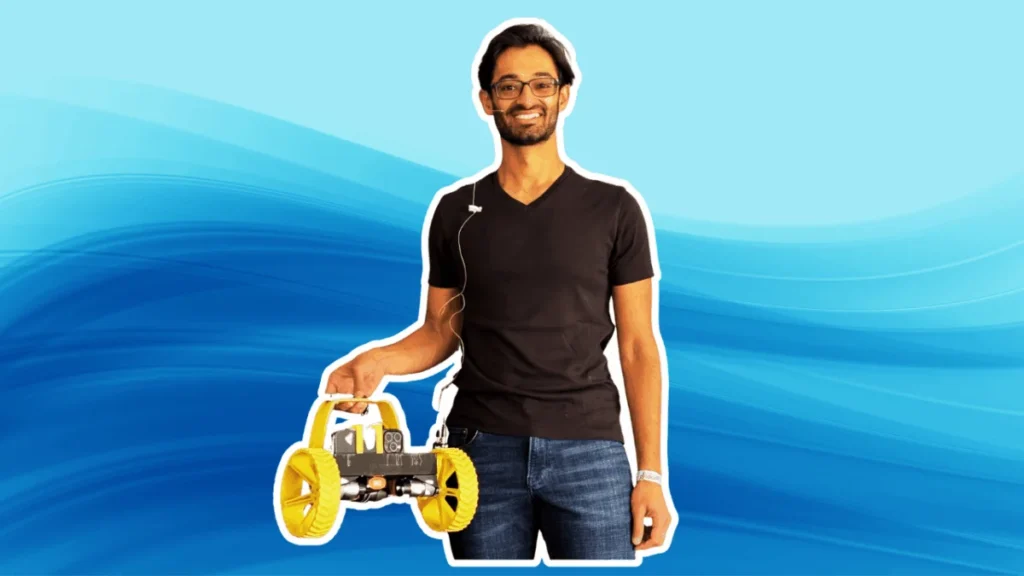
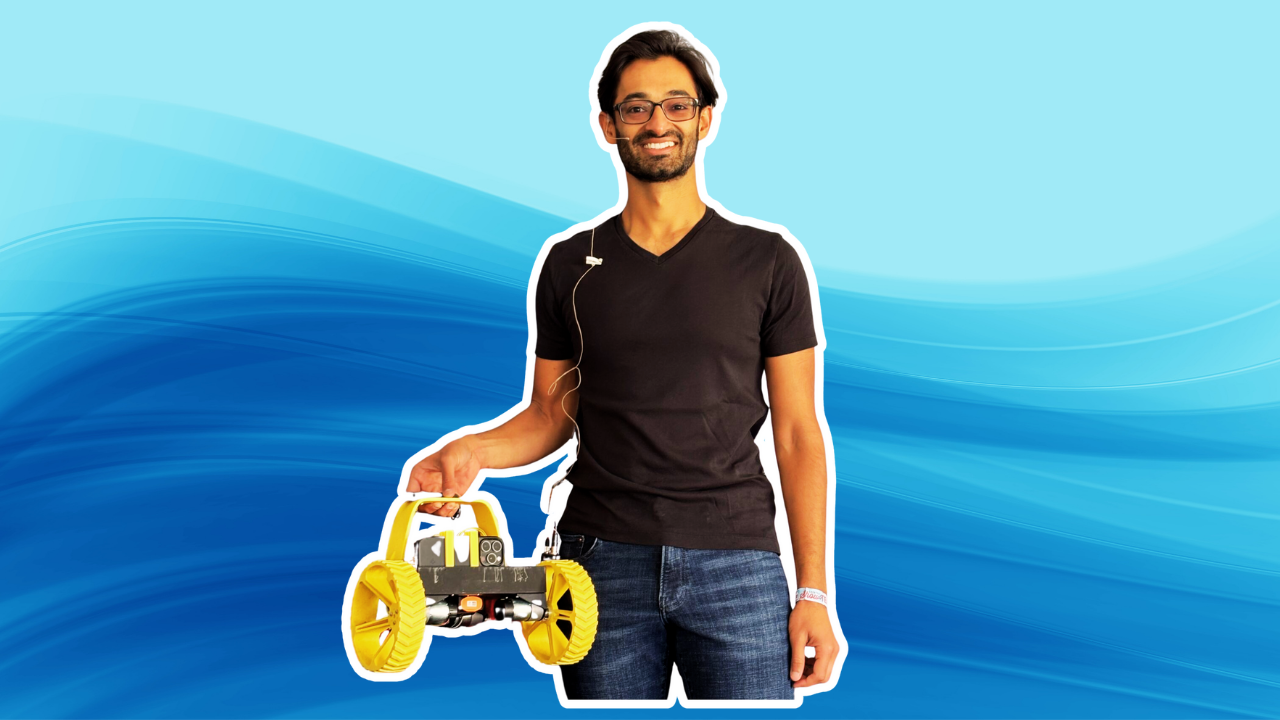
The realm of autonomous robotics, once exclusively the domain of heavily funded research institutions and industrial giants, is undergoing a profound transformation, increasingly becoming accessible to individual innovators. This democratization of technology was vividly demonstrated at a recent Maker Faire Bay Area event, where Survy Vaish unveiled his remarkable journey of transforming a rudimentary shoe box into a sophisticated, phone-powered outdoor robot capable of independent navigation and object identification. Vaish’s project stands as a testament to the maker ethos: that groundbreaking innovation can emerge from humble beginnings, driven by curiosity, iterative problem-solving, and readily available technology, rather than requiring exorbitant budgets or specialized laboratories.
The Genesis of Innovation: Embracing the Maker Movement
Survy Vaish’s presentation at Maker Faire Bay Area underscored the core principles of the global maker movement, a burgeoning cultural trend that celebrates invention, creativity, and self-reliance across various technological and artistic domains. Maker Faire, often described as "the Greatest Show (and Tell) on Earth," serves as a vital platform for individuals like Vaish to showcase their creations, share knowledge, and inspire others. Originating in 2006 in the San Francisco Bay Area, Maker Faire has grown into an international phenomenon, fostering a community where engineers, artists, scientists, and hobbyists converge to demonstrate their DIY projects, ranging from intricate electronics to handcrafted goods. It embodies the spirit of learning by doing, open-source collaboration, and the belief that anyone can be a creator.
Vaish’s ambition to build an autonomous robot, initially a vague aspiration, found its practical footing within this supportive ecosystem. His journey debunks the myth that complex robotics demand advanced degrees or a dedicated research facility. Instead, he championed an approach rooted in iterative design and accessible components, proving that the most significant barrier to innovation is often not resources, but the courage to simply begin. This philosophy resonates deeply with the maker movement’s emphasis on breaking down perceived barriers to entry in fields traditionally seen as exclusive.
The Humble Genesis: From Concept to First Movement
The initial phase of Vaish’s project exemplified the engineering principle of the Minimum Viable Product (MVP). Rather than attempting to construct a fully functional robot from the outset, he began with the simplest possible iteration: a shoe box fitted with basic motors and wheels. This seemingly unimpressive contraption served a singular, crucial purpose: to validate the fundamental concept of mobility. In engineering, proving core functionality early in the development cycle is paramount. It allows creators to quickly identify and address foundational issues related to power, mechanical stability, and basic locomotion before investing significant time and resources into more complex features. This initial, unglamorous prototype was not about capability but about demonstrating potential, proving that the abstract idea of "an autonomous robot" could physically manifest and move. It allowed Vaish to gain immediate, tangible feedback on his initial design choices for the chassis and drive system, setting the stage for subsequent enhancements.
The Iterative Heartbeat: Test, Fix, and Refine
The true essence of engineering and scientific discovery lies not in achieving perfection on the first attempt, but in embracing a continuous cycle of testing, identifying flaws, implementing solutions, and refining the design. Vaish’s development process meticulously followed this iterative paradigm, transforming each failure into a valuable learning opportunity. This disciplined approach is a cornerstone of modern product development and agile methodologies, allowing for flexible adaptation and robust problem-solving.
- Initial Movement and Obstacles: After the shoe box on wheels proved basic locomotion, the next challenge emerged: the robot needed to interact with its environment. Simply moving forward was insufficient for autonomy. It needed to perceive its surroundings to avoid collisions and navigate effectively.
- Environmental Perception through Sensors: The realization that the robot needed to "understand" its environment led to the integration of sensors. These crucial components act as the robot’s eyes and ears. Vaish likely experimented with various sensor types, such as ultrasonic sensors for basic distance measurement (detecting obstacles directly in front), infrared sensors, or even simple bump switches for contact detection. More advanced iterations might have incorporated LiDAR (Light Detection and Ranging) for 3D mapping or depth cameras, depending on the desired level of environmental detail and budget. Each sensor addition was a direct response to a real-world problem encountered during testing, such as repeatedly bumping into objects or failing to detect drop-offs.
- The Brain: Integrating a Raspberry Pi: With environmental data streaming in from sensors, the robot required a processing unit—a "brain"—to interpret this information and make decisions. This led to the integration of a Raspberry Pi, a compact, low-cost single-board computer widely favored by makers and educators for its versatility and powerful capabilities. The Raspberry Pi runs a Linux-based operating system, allowing Vaish to write custom software (likely in Python, a popular language for robotics) to process sensor data, control motors, and implement navigation algorithms. Its General Purpose Input/Output (GPIO) pins make it ideal for interfacing with a wide array of sensors and actuators, serving as the central hub for the robot’s intelligence.
- Enhanced Vision and Localization: The Smartphone Advantage: A truly autonomous outdoor robot needs precise localization (knowing where it is) and advanced object recognition. This is where Vaish made a particularly innovative choice: leveraging the power of an everyday smartphone. Modern smartphones are packed with sophisticated technology: high-resolution cameras, GPS modules, accelerometers, gyroscopes, and powerful processors capable of running complex AI algorithms. By integrating a smartphone, Vaish gained access to:
- GPS: For accurate outdoor positioning, allowing the robot to follow predefined paths or navigate to specific waypoints.
- Camera Vision: The smartphone’s camera enabled advanced computer vision tasks. Using libraries like OpenCV (Open Source Computer Vision Library) and potentially machine learning frameworks, the robot could perform object detection (identifying specific objects like trees, benches, or even people in a park), object tracking, and potentially Simultaneous Localization and Mapping (SLAM) to build a map of its environment while simultaneously tracking its own position within that map. This provided a rich, detailed understanding of the environment far beyond what simple range sensors could offer.
- Refinement and Algorithm Development: Each iteration involved not just hardware additions but also significant software development. Vaish would have continuously refined his algorithms for path planning, obstacle avoidance, and object recognition. This often involves trial-and-error, adjusting parameters, and collecting vast amounts of data to train machine learning models for more accurate performance. The "test, fix, iterate" cycle, therefore, encompasses both physical modifications and algorithmic improvements, ensuring the robot’s increasing sophistication and reliability.
Supporting Data and Technical Underpinnings

The success of Survy Vaish’s project relies on a careful selection of readily available, cost-effective components, a hallmark of the maker movement’s approach to advanced technology. While specific component lists were not detailed, the typical architecture for such a robot would include:
- Chassis: Initially a shoe box, later likely evolved into a more robust, perhaps 3D-printed or laser-cut, frame made from materials like plywood, acrylic, or aluminum, designed for outdoor resilience.
- Motors and Drivers: DC gear motors, chosen for their torque, are typically used for locomotion, paired with motor drivers (e.g., L298N or more advanced H-bridge drivers) that allow the Raspberry Pi to control motor speed and direction.
- Power System: A rechargeable battery pack (e.g., LiPo or Li-ion) with appropriate voltage regulators to power the Raspberry Pi, motors, and sensors, ensuring sufficient runtime for outdoor missions.
- Sensors: As discussed, a combination of ultrasonic (HC-SR04), infrared, and potentially IMU (Inertial Measurement Unit – accelerometer and gyroscope) sensors for basic navigation and stability. The smartphone provides a high-fidelity camera and GPS.
- Microcontroller/SBC: The Raspberry Pi (e.g., Raspberry Pi 3 or 4) serves as the central processing unit, running a lightweight Linux distribution (like Raspberry Pi OS).
- Software Stack:
- Operating System: Raspberry Pi OS (formerly Raspbian).
- Programming Language: Python is highly favored due to its readability, extensive libraries, and ease of integration with hardware.
- Robotics Frameworks: While not explicitly stated, open-source frameworks like ROS (Robot Operating System) could be employed for managing complex robotic systems, providing tools for communication between different components, data visualization, and algorithm development.
- Computer Vision Libraries: OpenCV is essential for processing camera feeds, performing image manipulation, object detection, and feature tracking. Machine learning libraries like TensorFlow Lite or PyTorch Mobile, if used with the smartphone, would enable on-device inference for advanced AI tasks.
The strategic decision to integrate a smartphone is particularly noteworthy. A typical modern smartphone possesses computing power comparable to desktop computers of a few years ago, often exceeding that of a Raspberry Pi for certain tasks, especially those optimized for its mobile architecture (e.g., camera processing, GPU acceleration for AI). This significantly reduces the need for custom, expensive components, making advanced robotics more financially accessible. The total material cost for a project of this nature, excluding the smartphone itself, could potentially range from a few hundred to under a thousand dollars, a stark contrast to commercial autonomous robots costing tens of thousands.
The Thrilling Payoff: Autonomy in Action
The culmination of Vaish’s meticulous, iterative development process was the successful deployment of his robot in an outdoor environment. The video demonstration, which captured the journey from concept to reality, showcased the robot’s ability to navigate a park, avoid obstacles, and identify specific objects—a significant achievement for a project built with accessible technology. This successful execution validates the efficacy of his design philosophy and the power of iterative development. It provides tangible proof that complex challenges in robotics can be tackled effectively through modular design, open-source tools, and a persistent, problem-solving mindset. The robot’s ability to operate autonomously outdoors highlights the robustness of the integrated hardware and software, demonstrating its capacity to handle real-world variables like uneven terrain, changing light conditions, and dynamic environments.
Broader Impact and Implications

Survy Vaish’s project extends beyond a personal achievement; it carries significant implications for various sectors:
- Democratization of Robotics and AI: Vaish’s robot serves as a powerful example of how advanced technologies, particularly artificial intelligence and autonomous systems, can be made accessible to a broader audience. By demonstrating that sophisticated robotics can be built with off-the-shelf components and an ordinary smartphone, he lowers the barrier to entry for aspiring engineers, hobbyists, and students worldwide. This democratization fosters innovation from diverse backgrounds, potentially leading to novel applications and solutions that might not emerge from traditional, resource-intensive research environments.
- Educational Value and STEM Inspiration: The project offers immense educational value. It provides a tangible, relatable example for teaching core STEM concepts: mechanical design, electronics, programming, sensor integration, data processing, and artificial intelligence. Educators can use Vaish’s journey to inspire students to pursue careers in STEM fields, demonstrating that complex challenges are surmountable with creativity and perseverance. It promotes hands-on learning, critical thinking, and problem-solving skills, which are crucial for the next generation of innovators.
- Future of DIY and Open-Source Robotics: Vaish’s work contributes to the growing ecosystem of DIY and open-source robotics. Such projects often lead to the development of new open-source libraries, hardware designs, and tutorials that benefit the entire community. As more individuals build and share their robotic creations, the collective knowledge base expands, accelerating the pace of innovation. This collaborative environment is particularly vital for advancing fields like personal robotics and specialized autonomous agents.
- Potential for Low-Cost Applications: The principles demonstrated by Vaish’s robot could be applied to various real-world scenarios requiring low-cost autonomous solutions:
- Environmental Monitoring: Robots equipped with specific sensors could monitor air quality, water conditions, or wildlife in remote areas without constant human intervention.
- Security Patrols: Simple autonomous robots could provide basic surveillance for small properties or perimeters.
- Agricultural Assistance: In developing regions, low-cost robots could assist with tasks like crop monitoring, targeted watering, or pest detection.
- Delivery Systems: While not as sophisticated as commercial delivery drones, similar platforms could handle short-range, small-scale deliveries in controlled environments.
- Accessibility Aids: Autonomous mobility aids for individuals with specific needs could be developed at a fraction of the cost of existing commercial solutions.
Reactions and Community Engagement
The reception at Maker Faire Bay Area would have undoubtedly been enthusiastic. Organizers and attendees at such events actively seek projects that encapsulate the spirit of accessible innovation. Vaish’s robot, transitioning from a simple concept to a functional outdoor autonomous system, perfectly aligns with Maker Faire’s mission to inspire and educate. Representatives from Maker Faire would likely commend such projects for demonstrating the power of the individual maker, fostering a culture of experimentation, and proving that complex technology can be demystified and made approachable. The community’s reaction, evident in the sharing of the video and the subsequent discussions, underscores a collective hunger for practical examples of how to engage with advanced technologies like AI and robotics without significant institutional backing. The availability of the full build journey online serves as an invaluable resource, encouraging others to embark on similar creative and engineering endeavors.
Conclusion: The Enduring Power of the Maker Spirit
Survy Vaish’s journey from a shoe box to a smart, autonomous robot is more than just a successful engineering project; it is a compelling narrative about the transformative power of the maker spirit. It stands as a powerful reminder that true innovation often begins not with vast resources, but with a simple idea, a willingness to experiment, and the discipline to iterate through challenges. By demonstrating how readily available technologies, particularly the ubiquitous smartphone, can be harnessed to create sophisticated autonomous systems, Vaish has not only built an impressive robot but has also inspired countless others to look at common items with a renewed sense of possibility. His work reinforces the core tenet of the maker movement: that anyone, regardless of background or budget, possesses the potential to build, create, and contribute to the ever-evolving landscape of technology. This project serves as a beacon for aspiring creators, proving that the most advanced frontiers of technology are increasingly within reach, waiting for those bold enough to take the first, simple step.