Water, the ubiquitous solvent and life-sustaining liquid, covers approximately 71% of Earth’s surface, yet its fundamental behavior continues to perplex scientists. Unlike nearly every other known liquid, water exhibits a peculiar array of properties, none more famous than its expansion upon freezing, defying the typical contraction observed in most substances as they solidify. This singular trait, alongside its remarkably high specific heat capacity, surface tension, and boiling point for a molecule of its size, has long been attributed to the intricate and ever-changing network of hydrogen bonds at its microscopic core. However, precisely describing and comparing these dynamic structural changes across varying temperatures and pressures has remained an enduring challenge, hindering a comprehensive understanding of H2O’s enigmatic nature.
Now, a significant breakthrough from researchers at the University of Osaka promises to shed new light on these mysteries. Leveraging the power of artificial intelligence (AI), their newly developed system offers a unified and consistent framework for evaluating different methods used to characterize the microscopic structure of supercooled water. This innovative approach, detailed in their recent publication in Communications Chemistry, marks a crucial step toward identifying the most effective descriptors for capturing water’s essential structural features, thereby unlocking deeper insights into its anomalous behavior.
The Enduring Enigma of Water’s Anomalies
For centuries, water has stood as an outlier in the world of liquids. Its density anomaly, where liquid water is densest at approximately 4°C before expanding as it cools further to 0°C and freezes, is fundamental to life on Earth. Without this property, ice would sink, lakes and oceans would freeze solid from the bottom up, and aquatic life as we know it would cease to exist. This is just one of over 70 known anomalies that distinguish water from other liquids, including its unusually high melting point, boiling point, and heat of vaporization compared to hydrides of similar molecular weight like hydrogen sulfide (H2S). These properties are all intricately linked to the unique ability of water molecules to form extensive, yet transient, networks of hydrogen bonds.
The historical quest to understand water’s structure has been fraught with difficulties. Early models, dating back to the work of Bernal and Fowler in the 1930s, attempted to describe the arrangement of molecules. As experimental techniques advanced, particularly with neutron and X-ray diffraction, scientists gained glimpses into the average molecular arrangements. However, the dynamic nature of hydrogen bonds, constantly forming and breaking on femtosecond timescales, makes a static description inadequate. The challenge lies in developing theoretical and computational models that can accurately capture this fluidity and its macroscopic consequences. For decades, researchers have relied on various computational techniques, primarily molecular dynamics (MD) simulations, to model water’s behavior at the atomic level, generating vast datasets of molecular positions and interactions. Yet, interpreting these complex datasets and deriving meaningful structural descriptors has been a highly specialized and often fragmented endeavor.
Supercooled Water: Pushing the Boundaries of Liquid States
The anomalies of water become even more pronounced and intriguing when it is cooled below its normal freezing point of 0°C without solidifying – a state known as supercooled water. This metastable liquid state can exist down to temperatures as low as approximately -40°C under ambient pressure before it inevitably freezes into ice, a phenomenon known as homogeneous nucleation. Supercooling occurs when the necessary nucleation sites – microscopic impurities, dust particles, or imperfections on container surfaces – are absent, preventing the water molecules from arranging themselves into the orderly crystal lattice required for ice formation.
Studying supercooled water presents immense experimental challenges due to its inherent instability and rapid crystallization. This region of the phase diagram, often referred to as the "no man’s land," is crucial for understanding water’s fundamental properties because it is here that the competing structural forms of liquid water are believed to become most distinct. The prevailing scientific hypothesis posits the existence of two distinct forms of liquid water: a high-density liquid (HDL) and a low-density liquid (LDL).
At the molecular level, water molecules are constantly engaging in a dynamic dance of forming and breaking hydrogen bonds. The LDL state is characterized by more open, tetrahedral-like arrangements, where each water molecule is hydrogen-bonded to roughly four neighbors, creating a relatively low-density, ice-like local structure. Conversely, the HDL state involves more distorted and compact arrangements, allowing molecules to pack more closely together, leading to a higher density. As the temperature rises, the more compact HDL structures become increasingly dominant over the more open LDL arrangements. In supercooled water, the delicate balance between these two competing forms is thought to be responsible for many of its intensified anomalies, including its rapidly increasing compressibility and specific heat capacity as temperature decreases. The idea of a "liquid-liquid critical point" (LLCP) where these two liquid phases might become indistinguishable, similar to a gas-liquid critical point, has been a subject of intense debate and research for over two decades, driving much of the effort to probe water’s structure in this extreme regime.
AI’s Transformative Role in Unraveling Molecular Structures
The complexity of water’s molecular arrangements has led researchers over the years to propose a multitude of different ways to describe the local ordering of water molecules. These "structural descriptors" include various metrics such as tetrahedral bond order parameters (which quantify how closely a molecule’s neighbors resemble a perfect tetrahedron), local density, radial distribution functions, and various angular correlation functions. Each descriptor aims to capture a specific aspect of the molecular environment.
However, the independent development of these descriptors has resulted in a fragmented landscape. They often employ different scales, dimensions, and types of information, making direct comparisons and assessments of their relative utility incredibly difficult. This lack of a standardized, unified evaluation method has been a major impediment to advancing a consistent structural understanding of water.
This is where the University of Osaka team, led by corresponding author Kang Kim and senior author Nobuyuki Matubayasi, has introduced a paradigm shift. Recognizing the limitations of traditional analytical methods in sifting through high-dimensional structural data, they turned to artificial intelligence, specifically a neural network model, to tackle this challenge. AI and machine learning have rapidly emerged as powerful tools in materials science and chemistry, excelling at identifying subtle patterns and relationships within vast datasets that might elude human analysis. Their ability to "learn" from data without explicit programming makes them ideal for complex, multi-variable problems like characterizing molecular structures.
"Past studies have shown that using machine learning to classify and understand structural data is effective," explains Kang Kim. "We specifically wanted to incorporate a neural network model into this study to evaluate how accurate the descriptors were at capturing key structural information, in a way that is like human cognition."
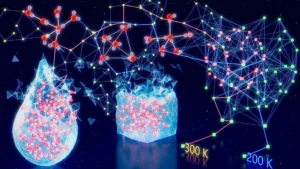
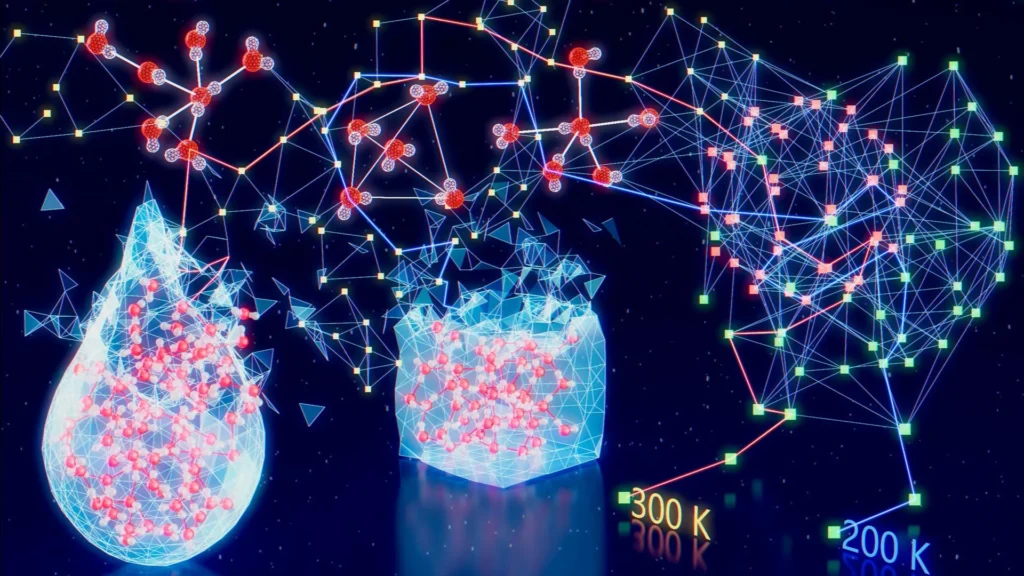
The methodology involved training the AI system on structural data generated from sophisticated molecular dynamics simulations of supercooled water. These simulations computationally model the movement and interactions of water molecules over time, providing a detailed, atomistic view of their behavior under various conditions. Through repeated trials and error, the neural network learned to recognize meaningful patterns within these molecular structures. Essentially, it was taught to distinguish between the signatures of HDL and LDL configurations, and then to evaluate how well each of the 16 different structural descriptors could differentiate between these two states across a range of temperatures. This process allowed the AI to objectively assess the effectiveness of each descriptor based on its ability to capture the most salient features distinguishing the high and low-density liquid forms.
New Clues and a Unified Framework for Water Science
The results of this AI-driven analysis provided unprecedented clarity. "The network used what it had learned to compare how 16 descriptors differentiated between LDL and HDL structures at different temperatures," reports Nobuyuki Matubayasi. "In this way, we determined the most efficient descriptors." This doesn’t necessarily mean the AI created new descriptors, but rather provided a powerful, objective metric for comparing existing ones, identifying which ones are truly "efficient" in conveying critical structural information. The efficiency here refers to their ability to accurately and succinctly distinguish between the subtle structural differences that define HDL and LDL, which are believed to underpin water’s macroscopic anomalies. This rigorous, data-driven evaluation helps scientists prioritize which structural parameters are most valuable for future research and model development.
The implications of this research extend far beyond the academic understanding of water. The framework developed by the Osaka researchers offers a robust, data-driven methodology that could significantly improve scientists’ ability to connect microscopic structural changes to the macroscopic thermodynamic behavior of water. By identifying the most effective descriptors, future molecular simulations and experimental studies can focus on measuring and analyzing the most informative aspects of water’s structure, leading to more accurate models and predictions.
Broader Impact and Future Directions
This breakthrough has wide-ranging implications across various scientific and technological fields:
- Fundamental Chemistry and Physics: A deeper, more consistent understanding of water’s structure can refine theories of hydrogen bonding, liquid-state physics, and phase transitions, potentially resolving long-standing debates about the liquid-liquid critical point. This could lead to a more universal theory of liquids.
- Materials Science and Engineering: Water’s interaction with materials is critical in many applications. Better understanding of its molecular structure can guide the design of novel materials with tailored properties, such as advanced membranes for water purification and desalination, anti-icing surfaces for aircraft and infrastructure, and smart hydrogels for biomedical applications.
- Biology and Biochemistry: Water is not merely a passive solvent; it actively participates in biological processes. Its unique properties influence protein folding, enzyme activity, and cellular functions. Insights from this research could improve our understanding of how water behaves in biological environments, potentially impacting drug discovery, cryopreservation techniques for organs and tissues, and the study of extremophiles.
- Atmospheric and Climate Science: Water plays a central role in Earth’s climate system, from cloud formation to atmospheric moisture transport. Understanding ice nucleation in the atmosphere, for instance, which often involves supercooled water droplets, is crucial for accurate climate modeling and weather prediction.
- Energy Storage and Conversion: Water is involved in various energy technologies, including fuel cells and batteries. A more precise structural understanding could lead to more efficient electrolytes or better designs for electrochemical interfaces.
Looking forward, the Osaka team’s framework is not limited to water. It could be applied to evaluate structural descriptors for other complex liquids, amorphous solids, or even biological macromolecules, accelerating discovery in these areas. The work also opens avenues for developing even more sophisticated AI models that could not only evaluate but potentially generate new, optimized structural descriptors, further pushing the boundaries of scientific inquiry. As AI continues to integrate into scientific research, its capacity to parse complex data and reveal hidden patterns promises to accelerate our understanding of the natural world, starting with the most fundamental and ubiquitous of all liquids: water.