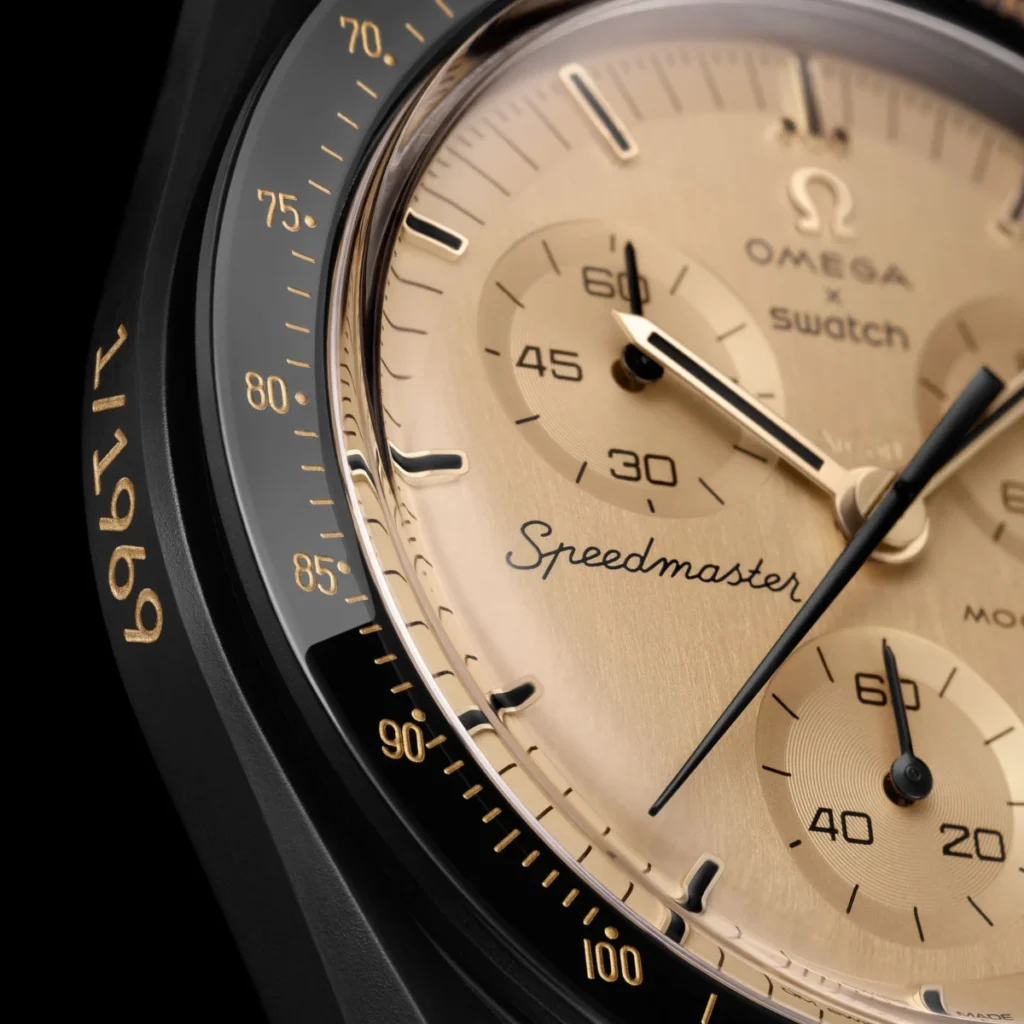
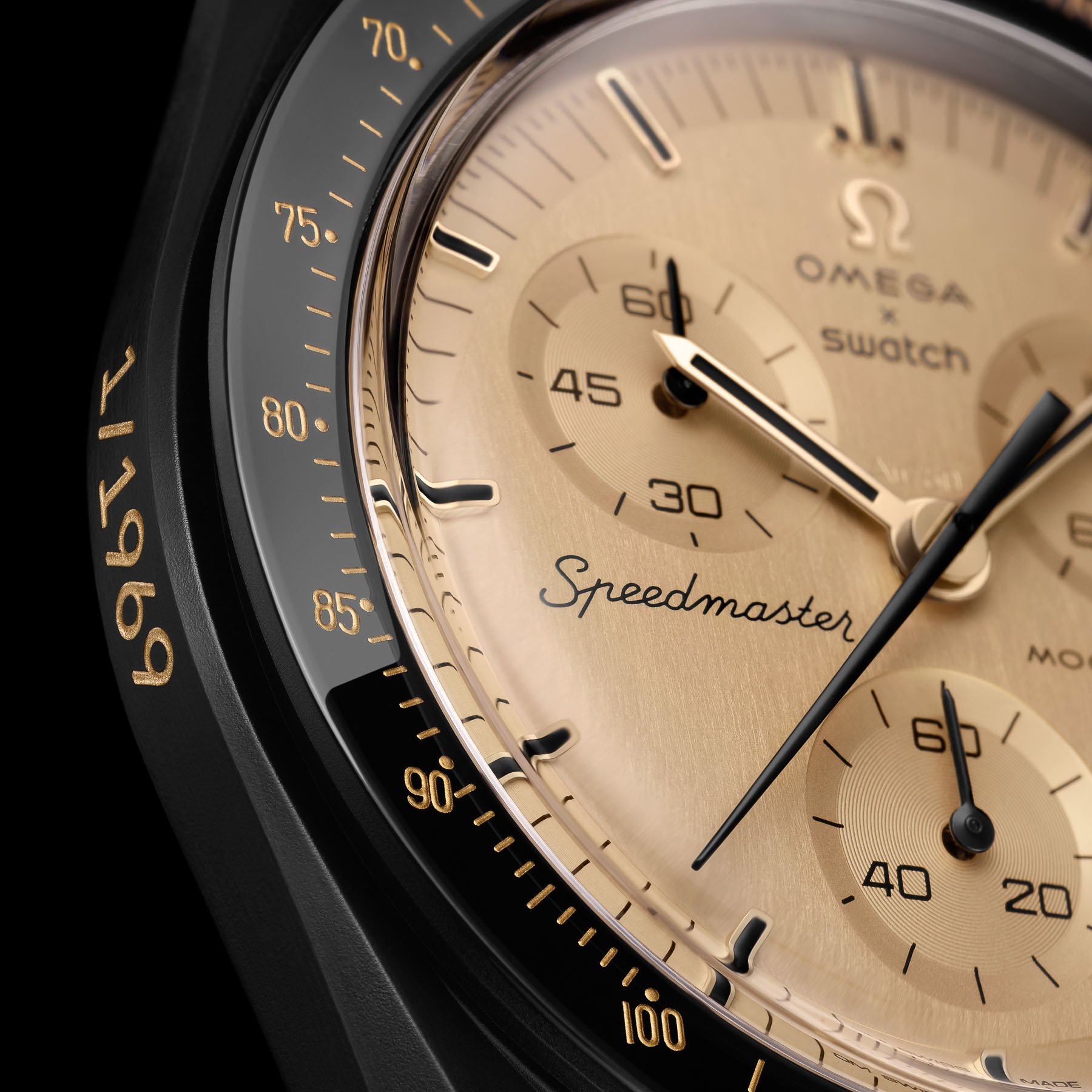
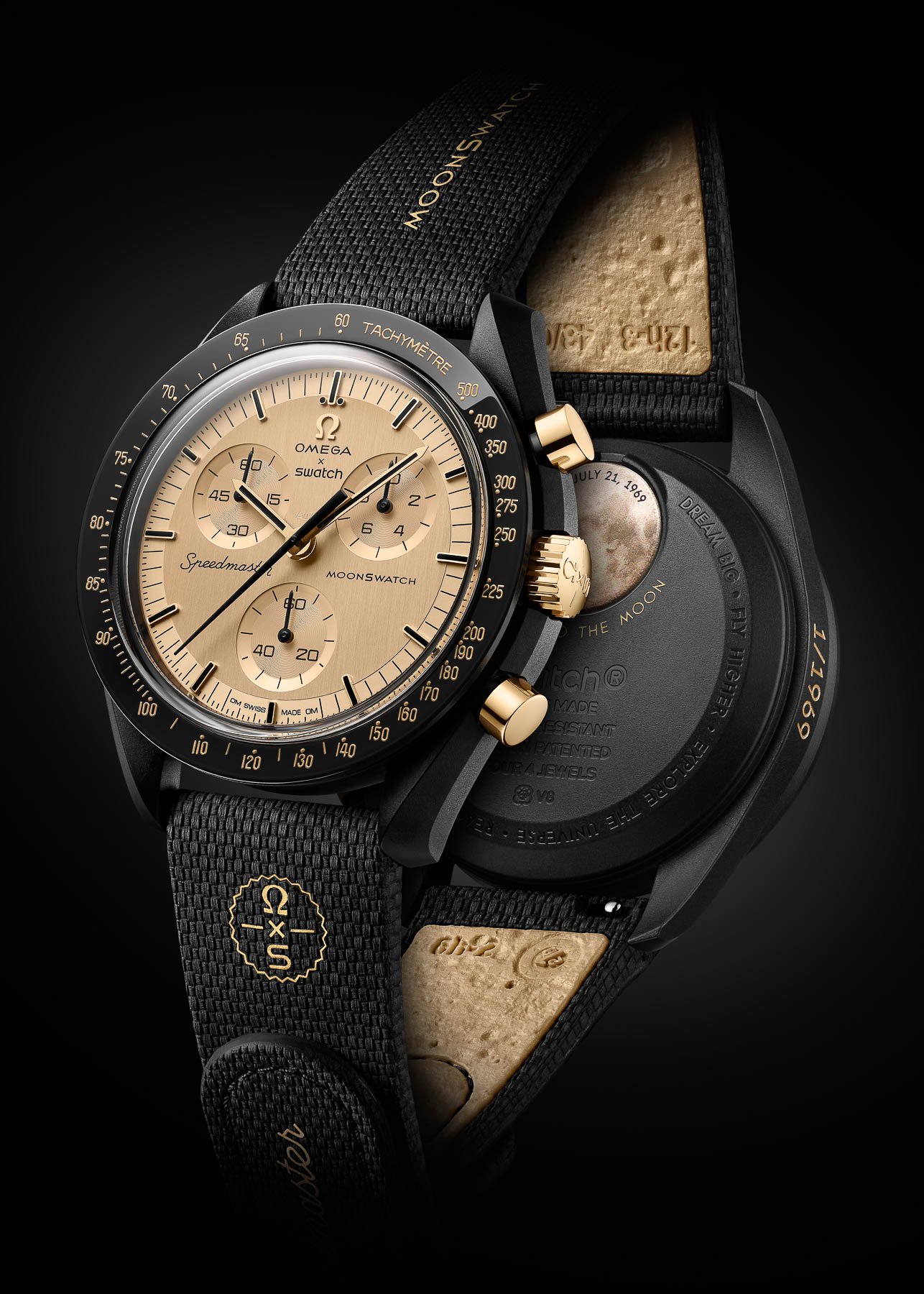
The horological world is once again abuzz, not just with the allure of a new timepiece, but with the audacious marketing prowess of Swatch CEO Nick Hayek. In a move that has simultaneously captivated and amused watch enthusiasts, Swatch has unveiled an ultra-exclusive edition of its wildly popular MoonSwatch, commemorating the 54th anniversary of the Apollo 11 Moon landing. This limited release, capped at precisely 1,969 pieces worldwide, carries a price tag of CHF 500 and, in a significant nod to luxury, incorporates 11 grams of Moonshine Gold, Omega’s proprietary 18K alloy, into each watch. This strategic release, steeped in historical significance and laced with a subtle yet pointed jab at luxury competitor Rolex, underscores Swatch’s continued dominance in generating immense hype and demand.
The genesis of this latest Swatch phenomenon can be traced back to the overwhelming success of the initial Omega x Swatch MoonSwatch collaboration. Launched in March 2022, the collection, which reimagined the iconic Omega Speedmaster Moonwatch in Swatch’s vibrant and accessible Bioceramic material, caused unprecedented queues and sold-out events globally. The "Mission to the Moon" model, in particular, became a symbol of this cultural moment, blending accessible design with the aspirational legacy of a legendary timepiece. Recognizing the enduring public fascination, Swatch has strategically leveraged this momentum for subsequent releases.
This latest iteration, the "Mission to the Moon 1969," is not merely another colorway; it is a meticulously crafted narrative designed to amplify exclusivity and generate fervent desire. The decision to produce exactly 1,969 units is a direct and powerful tribute to the historic year Neil Armstrong and Buzz Aldrin achieved humanity’s first steps on the lunar surface. This number choice immediately imbues the watch with historical gravitas, transforming it from a mere accessory into a tangible piece of a monumental event. The inclusion of Moonshine Gold, a material typically reserved for higher-end Omega creations, further elevates the perceived value and desirability of this limited edition, bridging the gap between Swatch’s accessible brand identity and Omega’s luxury positioning.

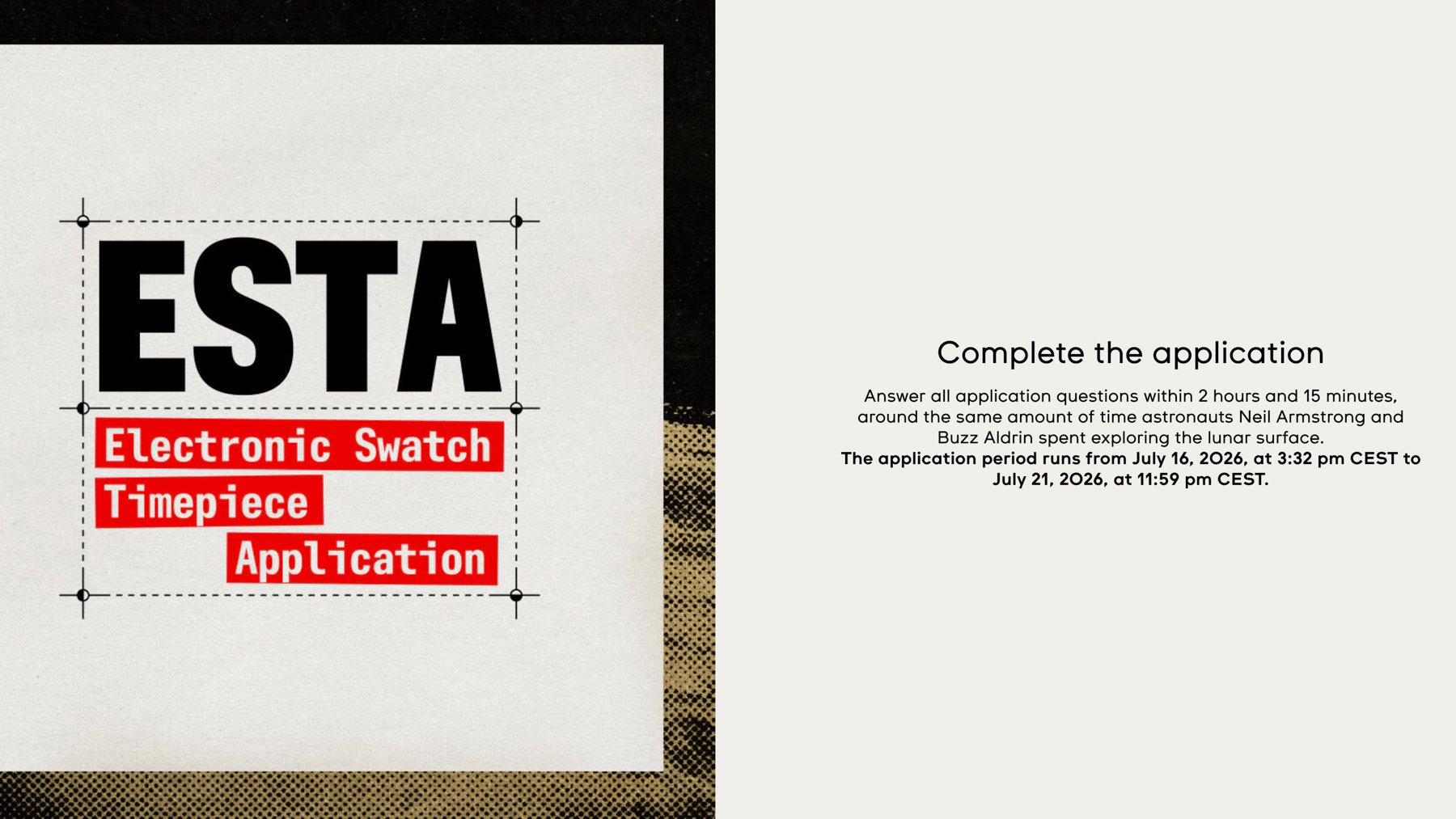
The application process itself has been a masterstroke of controlled chaos and strategic engagement. From July 16th to midnight on July 21st, Swatch opened an online application portal. The demand was so colossal that the brand’s servers experienced significant strain on the opening night, a testament to the sheer volume of interest. According to Swatch’s official figures, an astonishing 1.2 million watch enthusiasts submitted applications. This translates to a staggering competitive landscape, with over 600 hopeful buyers vying for each of the 1,969 available watches. To put this into perspective, the statistical probability of securing one of these timepieces is significantly lower than gaining admission to prestigious academic institutions like Harvard University.
Beyond the sheer numbers, Swatch introduced a novel and rather ingenious selection mechanism: the ESTA application. This acronym, standing for Electronic Swatch Timepiece Application, is a deliberate and cheeky play on the U.S. Electronic System for Travel Authorization. This naming convention serves as a subtle, yet unmistakable, political commentary from Swatch CEO Nick Hayek, known for his bold and often provocative public statements. The "ESTA" questionnaire comprised 32 probing questions, designed not as a simple first-come, first-served lottery, but as a sophisticated screening process intended to identify truly dedicated and perhaps even discerning enthusiasts.
The true audacity of the ESTA application, however, lies in its content. Question #1, a direct and unvarnished inquiry, asks: "Have you ever given a president a golden table clock?" This question is a thinly veiled, yet unmistakable, reference to a widely publicized event involving Rolex CEO Jean-Frédéric Dufour. Dufour had presented a golden table clock to then-U.S. President Donald Trump during a high-profile visit to the White House. By posing this question, Hayek not only injects humor and personality into the application process but also positions Swatch as a more down-to-earth, perhaps even more socially aware, entity compared to the traditional luxury establishment. It’s a calculated move to generate conversation, differentiate Swatch, and subtly underscore its own brand values.
The multi-stage review process for the 1,969 winners is not entirely detailed by Swatch, but it is confirmed to extend beyond a random selection. While the exact criteria remain proprietary, it is understood that applicants must successfully navigate a series of evaluations. This approach aims to create a sense of meritocracy, however elusive, within the overwhelming demand. The revelation of the questionnaire’s answers on the Swatch website further engages the community, allowing applicants to gauge their performance and fostering a sense of transparency, albeit within a highly controlled framework.
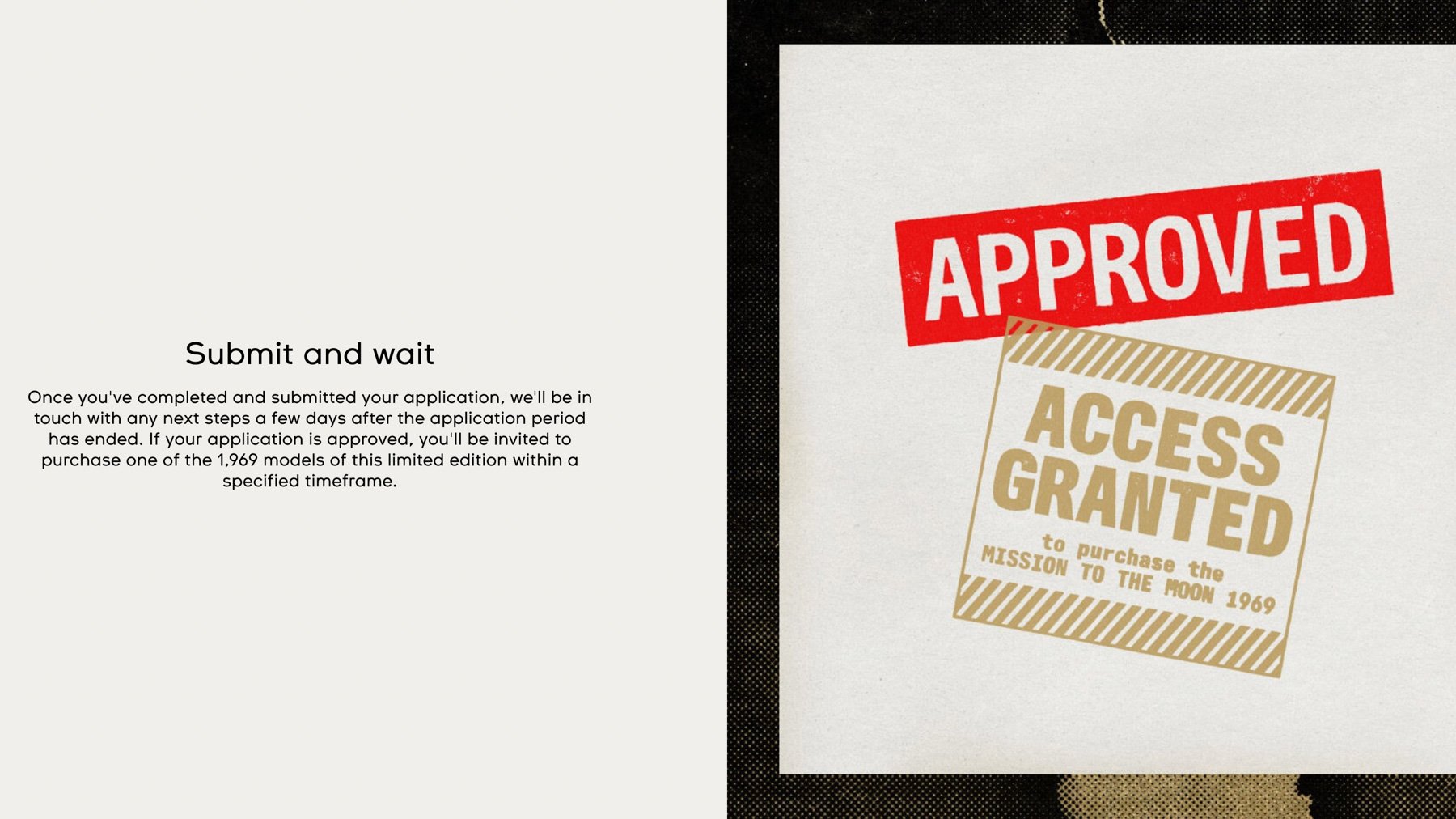
The timeline for this exclusive release is tightly managed, adding another layer of anticipation. Notifications for the successful applicants are scheduled to be sent out starting July 27th. Those who receive the coveted "golden email" will have a stringent 48-hour window to complete their purchase at the CHF 500 price point (approximately €600 or $650 USD, subject to exchange rates). This tight deadline ensures immediate action and prevents the resale market from immediately capitalizing on potential buyer indecision, although the secondary market for such a hyped item is almost guaranteed to be robust.
The implications of this release are multifaceted. Firstly, it solidifies Swatch’s position as a master of modern marketing, capable of generating massive global attention with limited resources compared to established luxury giants. By tapping into the historical significance of the Moon landing and the enduring appeal of the Speedmaster, Swatch has created a narrative that resonates deeply with consumers. Secondly, the strategic jab at Rolex, a titan of the luxury watch industry, highlights Swatch’s disruptive approach. This is not merely about selling watches; it’s about playing the game of horological perception and subtly challenging the established hierarchy. It demonstrates a confidence that allows Swatch to engage in playful rivalry, knowing its brand appeal and reach are substantial.
Furthermore, this limited edition serves as a potent reminder of the collaborative power between Swatch and Omega. While the initial MoonSwatch collection democratized access to a beloved design, this exclusive release elevates it, incorporating precious materials and a hyper-limited production run. It caters to a different segment of the market – collectors, enthusiasts, and those who appreciate the narrative and the exclusivity, while still remaining within a more accessible price bracket than a traditional gold Omega Speedmaster. The CHF 500 price point, while higher than the standard MoonSwatch, is still a fraction of the cost of a comparable luxury timepiece, making it an attractive proposition for those seeking a piece of horological history with a touch of opulence.
The success of this "Mission to the Moon 1969" release is not merely about the sales figures; it’s about the sustained engagement and conversation it generates within the watch community and beyond. It keeps the MoonSwatch brand relevant, exciting, and constantly in the public eye. Nick Hayek’s strategy is a testament to understanding consumer psychology, blending nostalgia, aspiration, and a touch of playful defiance. As the notifications begin to roll out on July 27th, the watch world will undoubtedly be watching closely, observing the reactions, the resale prices, and the ongoing impact of Swatch’s audacious marketing playbook. Whether one loves or loathes the approach, there is an undeniable respect to be paid to Swatch and Nick Hayek for their ability to consistently capture imaginations and dominate headlines in the competitive landscape of watchmaking. This latest endeavor ensures that the MoonSwatch saga continues to be one of the most talked-about stories in contemporary horology, a true testament to innovative branding and strategic storytelling.