The Defense Advanced Research Projects Agency (DARPA), in a significant stride toward achieving highly capable autonomous software for aerial combat, has initiated a groundbreaking program allowing artificial intelligence agents to pilot modified F-16 fighter jets under the exact same operational conditions as their human counterparts. This pioneering initiative, a joint effort between DARPA and the U.S. Air Force, known as the AI Reinforcements (AIR) program, recently conducted its inaugural autonomous flight, marking a pivotal moment in the evolution of military aviation technology. The program’s ultimate aim is to develop robust combat autonomy for complex, beyond-visual-range, multi-ship engagements in realistic operational environments, a goal that promises to redefine the future of air warfare.
A New Era of Autonomous Flight Begins at Eglin Air Force Base
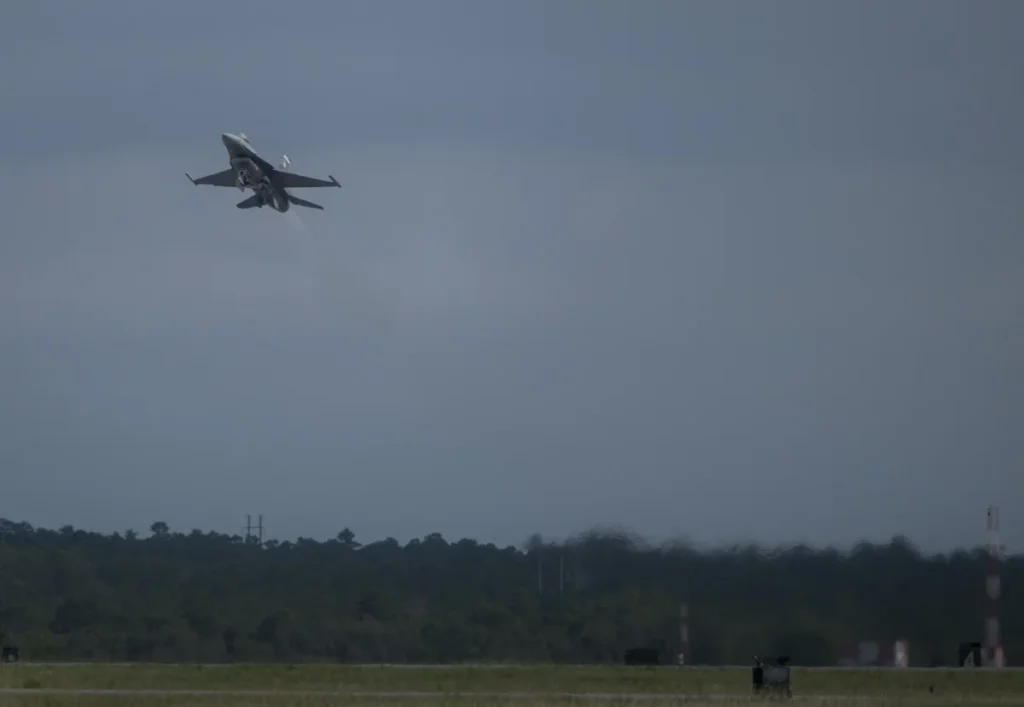
The historic first autonomous flight took place earlier this month at Eglin Air Force Base in Florida. During this mission, a seasoned test pilot successfully took off in a specially modified F-16, then relinquished control to the sophisticated onboard AI software. After the artificial intelligence demonstrated its capabilities in flight, the pilot resumed command to bring the aircraft safely back to the runway. This meticulous process, involving a human pilot in the loop for critical phases of takeoff and landing, underscores a commitment to safety and rigorous testing as the AI’s operational envelope is progressively expanded.
Brig. Gen. James Valpiani, the DARPA program manager overseeing the AIR initiative, emphasized the revolutionary nature of this program. "What distinguishes this program from all the previous programs is that we are operating autonomy on operationally representative aircraft," Valpiani stated. This statement highlights a critical departure from prior research, where AI systems often operated in highly controlled, simulated environments or on specialized testbeds.
From Simulations to the Skies: The Evolution of AI in Combat Aviation
Previous efforts by DARPA to test AI agents in flight scenarios, notably aboard the X-62A VISTA – a heavily modified F-16 testbed – primarily involved scenarios where the AI possessed "perfect" information and interacted with simulations rather than live sensors. While these endeavors provided invaluable data and laid essential groundwork, they did not fully replicate the dynamic, unpredictable, and sensor-limited reality of actual combat missions.
The AIR program fundamentally changes this paradigm. It leverages a select number of F-16s that have been retrofitted with the Viper Experimentation and Next-generation Operations Model (VENOM) kit. This advanced kit is specifically designed to enable AI-controlled flight without altering the jets’ original flight control software. This integration ensures that the AI agents operating the VENOM-equipped aircraft must contend with the same real-world constraints as human pilots.
"The agents piloting VENOM-equipped aircraft must engage with exactly the same sensors, exactly the same weapons flyout models, exactly the same dynamics and communication systems as every other aircraft that’s in the operational fleet," explained Valpiani. This means the AI must make critical decisions based on incomplete or degraded information, mirroring the challenges faced by human aviators. They will also operate with the same limitations in situational awareness and knowledge, which are inherent to any operational combat environment.
Valpiani characterized this advancement as a "sea change," noting that "All the previous research that DARPA has done and the Air Force has done up to this point with AI-based combat autonomy has involved some kind of white card – or some kind of simulation – standing in for what the real human experience is." The AIR program, by contrast, is designed to bridge this gap, moving AI from the realm of simulated perfection to the messy, complex reality of operational flight.
Significant Investment and a Phased Approach to Complex Scenarios
The development and implementation of the AIR program represent a substantial investment by DARPA. Budget documents indicate that the agency has allocated over $132 million to the initiative. The VENOM autonomy kit itself took approximately three years to develop and integrate, a process that ran in parallel with extensive training of AI agents through thousands of hours of simulation and modeling. While DARPA has declined to publicly identify the specific contractors responsible for developing the AI agents, the sheer scale of the investment underscores the strategic importance of this research.
With the initial autonomous VENOM flight successfully completed, the focus now shifts to the next phase of the AIR program: a comprehensive campaign of increasingly complex flight scenarios. This phased approach closely mirrors the rigorous training protocols used for human pilots, ensuring a systematic progression of AI capabilities.
The initial phase will concentrate on fundamental aerial combat maneuvers, often referred to as "basic fighter maneuvers" or dogfighting. Once the AI agents demonstrate proficiency in these foundational skills, the program will advance to more challenging one-versus-one scenarios. These will progressively increase in distance, initially within the traditional visual range of a human pilot and subsequently extending beyond it, simulating engagements at greater ranges where sensor data and communication become even more critical.
The complexity will further escalate with the introduction of multi-ship engagements. Two-versus-two scenarios will be the next step, a progression that Valpiani noted "adds a whole extra degree of complexity" by demanding sophisticated coordination in communication, deconfliction of aircraft, synchronized targeting, weapons management, and strict adherence to safety and training regulations.
The ultimate goal within this phased training regimen is to reach four-versus-four scenarios. These complex engagements, involving eight aircraft, are considered highly challenging and are projected to require one to two years for a new human pilot to achieve proficiency. By subjecting AI agents to these demanding scenarios, DARPA aims to develop a level of combat autonomy that can operate effectively alongside, or even in place of, human pilots in the most critical situations.
Beyond tactical maneuvering, the AI pilots will eventually face electronic warfare scenarios. This will involve engaging with simulated enemy weapons and missiles, forcing the AI to contend with jamming, spoofing, and other sophisticated countermeasures, further testing its resilience and decision-making under duress.
Transitioning Advanced AI to the Future Air Force
The AIR program is not an isolated research effort; it is strategically designed to feed directly into the U.S. Air Force’s future operational capabilities. Upon the conclusion of the DARPA program, the advanced AI-based combat agents developed through these live flights are slated for transition to the Air Force’s Collaborative Combat Aircraft (CCA) program. This program aims to field a new generation of autonomous and semi-autonomous aircraft designed to operate in conjunction with manned platforms, augmenting air power and expanding mission envelopes.
The successful integration of AI into operational aircraft like the F-16 represents a significant step towards realizing the vision of a networked and intelligent air combat force. This transition suggests a future where AI plays a crucial role in missions ranging from reconnaissance and strike to air superiority, potentially reducing risks to human pilots in high-threat environments.
The Ultimate Test: Operating in the Fog of War
The overarching objective of these upcoming flights, as articulated by Valpiani, is to "explore how effectively combat agents can operate in the conditions of uncertainty, deception and degradation that normal human pilots operate under." This speaks to the core challenge of developing AI for warfare: creating systems that can not only execute pre-programmed tasks but also adapt, learn, and make sound judgments in chaotic and unpredictable situations.
The ability of AI to perform under these conditions is seen as the "final step in proving out the technology." It moves beyond theoretical capabilities and simulated perfection to demonstrate practical, real-world utility in the demanding domain of aerial combat. The success of the AIR program could herald a new era of military aviation, one where artificial intelligence is a trusted and integral component of the warfighter’s arsenal, capable of enhancing performance, reducing risk, and ultimately, contributing to mission success in the most challenging operational theaters. The implications for global defense postures, technological innovation, and the very nature of aerial warfare are profound and far-reaching.