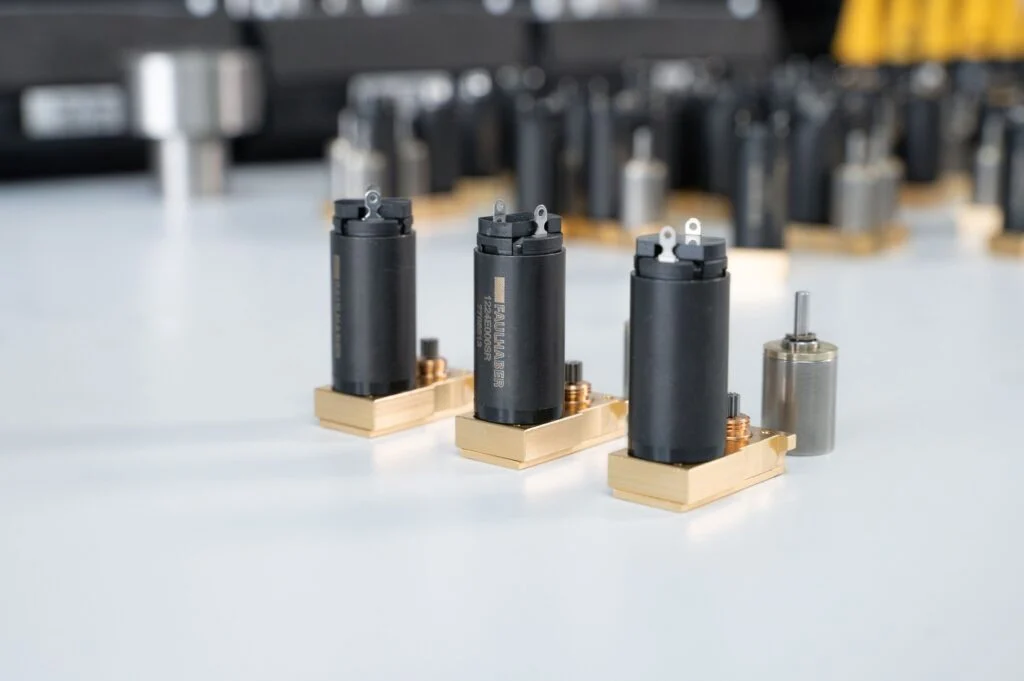
From the whisper-quiet precision needed in medical devices to the unwavering durability required in aerospace applications, fully customized gearbox design and manufacturing is often the answer for industries pushing the boundaries of technological capability. The increasing complexity and specificity of modern machinery demand power transmission solutions that generic, off-the-shelf components simply cannot provide without significant compromises to overall system performance, reliability, or cost-effectiveness.
Chris Handcock, Design Lead at Electro Mechanical Systems, a key player in bespoke motion control solutions, articulates this imperative: "From the whisper-quiet precision needed in medical devices to the durability required in aerospace applications, fully customized gearbox design and manufacturing is often the answer." This sentiment resonates across sectors where optimal performance is non-negotiable, and where every component must contribute synergistically to the system’s overarching goals.
The Imperative for Customization: Beyond Standard Solutions
The decision to specify a fully custom gearbox typically arises when the inherent compromises associated with standard, catalogue products become unacceptable. Constraints around critical factors such as space, weight, or cost frequently mean that while standard gearboxes might meet individual operational requirements in isolation, they invariably fail to optimize the broader system’s performance. This often leads to over-engineering in other areas, increased assembly complexity, or a shortened operational lifespan.
A compelling market trend underscores this shift. According to the Worldwide Industrial Single-stage Gearbox Market Research Report 2026, Forecast to 2032, a significant majority—more than 60% of end users—express a distinct preference for customizable options designed to meet their unique operational requirements. This preference highlights an industry-wide recognition that standardized solutions, while convenient, are increasingly insufficient for the nuanced demands of advanced applications. The report projects continued growth in demand for specialized power transmission solutions, driven by innovation across various industrial sectors.
Custom solutions become indispensable when applications demand specific materials or features that are simply unavailable in stock products. For instance, harsh or specialized operating environments necessitate enhanced ingress protection against contaminants, the use of non-outgassing materials to prevent atmospheric pollution in sensitive environments like cleanrooms or vacuum chambers, or application-specific lubricants tailored for extreme temperatures or biological compatibility. In the medical field, for example, components might require biocompatible, non-corrosive materials and smooth, cleanable surfaces, alongside stringent sterilization capabilities—features rarely found in standard industrial gearboxes. Aerospace applications, conversely, might demand materials capable of withstanding extreme thermal cycling, radiation exposure, or high-vacuum conditions, while also being exceptionally lightweight to maximize fuel efficiency.
Furthermore, customization often enables significant functional integration. By consolidating multiple components into a single, purpose-built gearbox, the design can simplify procurement processes, reduce the number of parts in the bill of materials, and streamline assembly. This not only cuts manufacturing costs and lead times but also enhances overall system robustness by reducing potential points of failure and improving alignment between critical moving parts.
The Evolving Landscape of Precision Engineering
The drive towards customized gearboxes is not a new phenomenon, but its urgency has intensified with the advent of Industry 4.0 and the increasing sophistication of industrial and medical technology. Historically, manufacturing often relied on mass-produced, interchangeable parts, a model that prioritized cost efficiency and broad applicability. However, as industries have matured, the pursuit of marginal gains in performance, efficiency, and reliability has shifted the focus towards specialized, application-specific components.
This evolution is particularly evident in sectors like robotics, autonomous vehicles, advanced medical diagnostics, and satellite technology, where precision, compact size, and unwavering reliability are paramount. The ability to precisely tailor a gearbox’s output characteristics, dimensions, and material composition to an exact operational profile allows engineers to unlock performance thresholds that were previously unattainable. This bespoke approach fosters innovation, enabling the development of smaller, more powerful, and more reliable devices.
The Iterative Journey of Custom Design: From Concept to Reality
The process of designing a fully custom gearbox is an intricate, iterative journey that demands close collaboration between the client’s design engineers and the specialist gearbox supplier. It rarely begins with fully defined specifications, but rather with a comprehensive, system-level definition of the application. This initial phase involves meticulous physical modeling and theoretical calculations to establish critical parameters such as anticipated loads, operating speeds, duty cycles, and projected service life. This foundational understanding is crucial for setting realistic performance targets and identifying potential design challenges early on.
In scenarios where an existing solution is already in place, but exhibiting performance limitations or reliability issues, the custom design process can incorporate reverse engineering. This involves a detailed analysis of the real-world performance of the current setup, often instrumenting systems with sensors to capture precise operating data. This empirical data allows suppliers to identify specific quality or reliability issues caused by off-the-shelf gearboxes operating beyond their datasheet limits. By understanding actual operational stresses and environmental factors, design engineers can then develop accurate, optimized specifications that not only address existing problems but also fit within an existing design’s available space and behavior constraints. This data-driven approach ensures that the new custom gearbox is engineered for real-world resilience, not just theoretical performance.
Navigating the Trade-offs: Performance, Cost, Size, and Weight
While custom gearbox design offers unparalleled advantages, it inherently involves navigating a complex web of trade-offs. The primary balancing act often lies between performance and cost, and performance versus size or weight. Design engineers frequently seek a confluence of high torque density, compact packaging, and long service life, all at a competitive price point. Managing these competing demands effectively is a hallmark of expert custom engineering.
Mike Guilliford, author of Apex Dynamics’ Servo Gearbox Secrets, underscores the increasing importance of precision in modern gearbox technology. He states, "The demand for higher accuracy, efficiency, and reliability in components across industries is increasing… and [the importance of] gearbox selection is often underestimated." This highlights a critical challenge: the true cost of an underestimated or poorly selected gearbox extends far beyond its purchase price, impacting operational efficiency, maintenance costs, and ultimately, the lifespan of the entire system.

To manage the cost factor without sacrificing critical performance, suppliers of custom gearing employ several strategic approaches. These can include reducing component counts through clever integration, selling fully bespoke parts only when absolutely warranted, and leveraging proprietary components that offer optimized performance and cost benefits. In some cases, judicious simplification of non-critical functionality can also help achieve a better balance between cost and core performance requirements.
Motor selection plays a significant role in these trade-offs. A high-performance motor, while potentially more expensive, might deliver the necessary power within tighter spatial constraints, thereby allowing for a simpler, less complex gearbox design. Conversely, a more powerful and compact gearbox might enable the use of a smaller, more cost-effective motor. The final solution is rarely a gearbox-only decision but rather a system-level compromise, where the synergy between the motor and gearbox is optimized for the application’s unique demands.
Engineering for Extreme Constraints: Size, Weight, and Reliability
Constraints around size and weight are particularly challenging, especially in applications like handheld medical devices, portable robotics, or aerospace components where every gram and cubic millimeter counts. When the available envelope is fixed, maintaining performance often necessitates creative adjustments elsewhere in the design, such as carefully reducing safety factors or optimizing material selection. This demands rigorous verification calculations to ensure that critical components, such as gear teeth and bearings, remain robust and reliable even when operating within extremely tight spatial limits.
Safety factors are crucial engineering margins that account for real-world uncertainties, including load variation, thermal effects, manufacturing tolerances, and unforeseen operational stresses that cannot be fully simulated. Gear teeth and bearings, for instance, are typically designed with safety margins ranging from 1.5 times to twice the expected operating load. This ensures that stresses remain well below the material’s yield limits, preventing premature failure. These margins are not static; they are meticulously reviewed and refined during the prototyping and testing phases, allowing for design reinforcements if real-world data reveals unexpected stresses or performance variations.
Material choice is another pivotal factor. While commercial-grade steels offer cost-effectiveness and well-understood properties, medical and aerospace applications frequently demand lighter, corrosion-resistant, or higher strength-to-weight materials. This includes various grades of stainless steels, titanium alloys, or even advanced composites. These specialized materials enable the creation of exceptionally compact and lightweight designs that can withstand harsh environments. However, they also present greater challenges in terms of verification, machinability, and manufacturing cost, necessitating extensive prototyping and rigorous testing to confirm their performance under operational conditions. For example, specific titanium alloys are chosen in aerospace for their excellent strength-to-density ratio and fatigue resistance, while medical-grade stainless steels are selected for their biocompatibility and corrosion resistance against bodily fluids and sterilization agents.
Rigorous Validation: Ensuring Real-World Performance
Simulation, prototyping, and testing collectively form the bedrock of validating a custom gearbox design. However, their effectiveness is directly proportional to how well the actual operating conditions are understood and replicated. Computational simulation, leveraging advanced finite element analysis (FEA) and computational fluid dynamics (CFD), can be invaluable for analyzing individual components or simplified load cases, such as gear tooth stresses, housing strength under known loads, or thermal distribution.
Nonetheless, many real-world applications involve highly complex duty cycles, unpredictable shock loading, significant thermal variations, and environmental factors that are notoriously difficult to model with absolute accuracy. Consequently, the reliability of simulation outputs is heavily dependent on the availability of precise use data—something that is not always available during the early stages of development.
For this reason, production-representative prototyping and real-world validation are critically important. Leading suppliers focus on developing prototypes that are intended to operate precisely as they would in service, rather than merely creating proof-of-concept models optimized purely in software. By rigorously validating gearboxes within the customer’s actual application environment, potential issues can be identified that would be extremely difficult, if not impossible, to predict through simulation alone. This includes subtle failures that might only manifest under specific environmental conditions, during particular operational scenarios, or after extended periods of use.
Testing is often accelerated to condense years of operation into shorter timeframes, employing representative loads, speeds, and control electronics. This approach allows for a realistic assessment of performance, durability, and potential failure modes, while accounting for many of the variables present in real-world use. Depending on the program’s scope, some suppliers may validate defined aspects of the specification internally, while the client’s design engineers carry out broader, system-level testing to ensure seamless integration and overall system performance.
This integrated validation approach aligns perfectly with the overarching goal of designing the gearbox as an integral part of a complete drive system, rather than treating it as an isolated component. Custom drive solutions allow the gearbox to be matched precisely to the motor’s operating characteristics, whether the customer’s priority is maximum power density, high efficiency, or an extended lifecycle. For instance, a motor might be capable of delivering high power within a small envelope, but achieving a long operational life may necessitate operating it at a lower speed. In such cases, selecting a gearbox ratio that shifts the operating point accordingly is crucial. This means that bearing arrangements, lubrication strategy, and housing design are all meticulously selected and optimized to support these specific operating conditions.
At the mechanical interface level, custom housings can be designed to integrate directly with the customer’s subsystem, eliminating the need for adaptor plates or secondary fixtures often required with off-the-shelf gearboxes. This level of consolidation not only improves alignment and reduces assembly complexity but also significantly enhances overall system robustness, resulting in a gearbox that functions seamlessly and reliably within its intended application.
Broader Impact and Strategic Implications
The growing reliance on custom gearbox design has profound implications across various industries. It acts as a powerful catalyst for innovation, enabling engineers to overcome previous limitations and develop groundbreaking products that would be impossible with generic components. Companies that embrace and invest in custom engineering solutions gain a significant competitive advantage, offering products that are superior in performance, more reliable, and ultimately, more appealing to end-users.
From an operational standpoint, the long-term benefits of custom gearboxes often outweigh the higher initial investment. Optimized designs lead to reduced downtime, improved reliability, and significantly longer service life, contributing to a lower total cost of ownership (TCO). Furthermore, the trend towards precision engineering and customization aligns with broader sustainability goals. Efficiently designed and purpose-built components consume less energy, generate less waste, and contribute to the longevity of capital equipment, reducing the environmental footprint of industrial operations.
Looking ahead, the demand for customized motion control solutions is only expected to grow. As industries push towards miniaturization, higher power density, and the integration of smart sensors for predictive maintenance, the need for bespoke gearboxes will intensify. The ability to tailor every aspect of a gearbox—from its internal geometry and material composition to its external interfaces and control integration—will remain critical for unlocking the next generation of technological advancements. Electro Mechanical Systems, among others, stands at the forefront of this evolving landscape, demonstrating that true optimization often begins with a commitment to custom engineering.