Massachusetts Institute of Technology (MIT) engineers have achieved a significant breakthrough in materials science with the development of a novel aluminum alloy that is not only amenable to 3D printing but also demonstrates remarkable tolerance for extreme heat and strength levels that dramatically surpass conventional aluminum. This advanced material, developed through a sophisticated interplay of computational simulations and machine learning, has shown in rigorous testing to be up to five times stronger than aluminum produced via standard manufacturing methodologies. This innovation promises to reshape industries ranging from aerospace and automotive to advanced computing and beyond, offering the potential for lighter, more durable, and more energy-efficient components.
The genesis of this groundbreaking alloy lies in a deliberate and highly efficient approach to material discovery. Rather than relying on traditional, often laborious trial-and-error methods that could necessitate the evaluation of over a million potential material combinations, the MIT team employed a sophisticated machine learning model. This intelligent system was instrumental in dramatically narrowing the vast search space for the optimal elemental composition, reducing the number of promising candidates to a manageable forty before pinpointing the precise formula. This targeted approach not only accelerated the discovery process but also ensured a high degree of predictability in the final material’s performance.
From Classroom Challenge to Materials Breakthrough: A Chronology of Innovation
The seeds of this remarkable achievement were sown in 2020 within the academic environment of MIT. Mohadeseh Taheri-Mousavi, then a postdoctoral researcher and now an assistant professor at Carnegie Mellon University, took a course focused on the computational design of high-performance alloys, taught by Professor Greg Olson of MIT’s Department of Materials Science and Engineering. Professor Olson, a recognized leader in the field, presented students with a challenge: to conceptualize and design a 3D-printable aluminum alloy that would eclipse the strength of any existing material of its kind.
Aluminum’s inherent strength is profoundly influenced by its microstructure, specifically the size and distribution of microscopic internal features known as "precipitates." The prevailing understanding in materials science dictates that smaller, more densely packed precipitates contribute to a stronger metal. Students in Olson’s class utilized sophisticated computer simulations to explore various elemental combinations and concentrations, aiming to predict which mixtures would yield the desired microstructural characteristics and, consequently, superior strength. While the simulations provided valuable insights into material behavior, this initial academic endeavor did not ultimately yield a design that outperformed existing printable aluminum formulations.
This outcome, however, served as a critical catalyst for Taheri-Mousavi. Recognizing the inherent limitations of purely simulation-based approaches when dealing with the complex, non-linear interactions that govern material properties, she began to explore alternative methodologies. "At some point, there are a lot of things that contribute nonlinearly to a material’s properties, and you are lost," Taheri-Mousavi explained, highlighting the challenges of navigating vast design spaces. "With machine-learning tools, they can point you to where you need to focus, and tell you for example, these two elements are controlling this feature. It lets you explore the design space more efficiently." This realization marked a pivotal shift, leading her to integrate machine learning into the alloy design process.
Harnessing Machine Learning for Unprecedented Strength
The subsequent research, detailed in the journal Advanced Materials, saw Taheri-Mousavi and her collaborators meticulously apply machine learning techniques to the problem of aluminum alloy design. Unlike traditional simulations, machine learning algorithms excel at identifying subtle patterns and intricate relationships within large datasets of elemental properties that might otherwise remain obscure. By analyzing a focused set of forty candidate compositions, the machine learning system identified an alloy design characterized by a significantly higher proportion of small precipitates compared to previous efforts.
Crucially, this refined microstructural design translated directly into enhanced mechanical properties. When the researchers printed this newly formulated alloy and subjected it to rigorous mechanical testing, the results not only met but exceeded their predictions. The printed metal performed on par with, and in some cases surpassed, the strongest aluminum alloys currently produced through conventional casting methods. This validation underscored the power of machine learning in accelerating materials discovery and optimizing material performance.
Beyond Conventional Manufacturing: The Role of 3D Printing
A key differentiator of this MIT innovation is its inherent compatibility with 3D printing, also known as additive manufacturing. Traditional casting processes, which involve pouring molten metal into molds and allowing it to cool slowly, can lead to the growth of larger precipitates, thereby diminishing the alloy’s strength. In contrast, additive manufacturing techniques, particularly laser bed powder fusion (LBPF), enable significantly faster cooling and solidification rates.
In the LBPF process, precise layers of metal powder are selectively melted by a laser, rapidly solidifying before the next layer is added. This rapid freezing is instrumental in preserving the fine precipitate structure that the machine learning model predicted would confer superior strength. "Sometimes we have to think about how to get a material to be compatible with 3D printing," noted John Hart, the Class of 1922 Professor and head of MIT’s Department of Mechanical Engineering. "Here, 3D printing opens a new door because of the unique characteristics of the process — particularly, the fast cooling rate. Very rapid freezing of the alloy after it’s melted by the laser creates this special set of properties." This synergistic relationship between the alloy’s composition and the additive manufacturing process is central to its exceptional performance.
Testing Confirms Record Strength and Heat Resistance
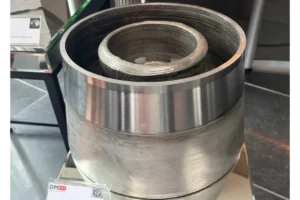
To empirically validate their design, the research team procured a batch of printable metal powder based on their novel alloy formula. This powder, a carefully calibrated blend of aluminum with five additional elements, was sent to collaborators at Paderborn University in Germany. There, using advanced LPBF equipment, small test samples of the alloy were meticulously printed.
Following their creation, these printed samples were returned to MIT for comprehensive mechanical testing and detailed microscopic analysis. The results were conclusive and highly encouraging, confirming the machine learning predictions with remarkable accuracy. The printed alloy demonstrated a strength that was five times greater than a cast version of the same material. Furthermore, it exhibited a 50% improvement in strength compared to aluminum alloys specifically designed using conventional simulation techniques alone.
Beyond its exceptional strength, the new alloy also exhibited impressive thermal stability. Microscopic imaging revealed the characteristic dense population of small precipitates, and critically, the material remained stable and retained its structural integrity at temperatures up to 400 degrees Celsius. This high temperature threshold is particularly noteworthy for aluminum-based materials, which typically have limitations in extreme heat environments.
A Lighter Metal with Vast Industrial Potential
The implications of this breakthrough are far-reaching, promising to usher in an era of stronger, lighter, and more heat-resistant components across a multitude of industries. One of the most immediate and impactful applications envisioned by the research team is in the aerospace sector, specifically for fan blades in jet engines. Currently, these critical components are predominantly manufactured from titanium, a material that is over 50% heavier and can be up to ten times more expensive than aluminum, or from advanced composite materials.
"If we can use lighter, high-strength material, this would save a considerable amount of energy for the transportation industry," stated Taheri-Mousavi. The potential for significant fuel savings and reduced operational costs in aviation alone represents a compelling argument for the adoption of this new alloy.
However, the benefits extend well beyond aviation. Professor Hart elaborated on the broader applicability: "Because 3D printing can produce complex geometries, save material, and enable unique designs, we see this printable alloy as something that could also be used in advanced vacuum pumps, high-end automobiles, and cooling devices for data centers." The ability to 3D print intricate designs with enhanced material properties opens up new avenues for innovation in fields demanding high performance, reliability, and efficiency. For instance, in the automotive industry, lighter and stronger components could lead to improved fuel efficiency and enhanced vehicle dynamics. In data centers, improved cooling devices made from this alloy could lead to more efficient thermal management, reducing energy consumption and increasing operational longevity.
Future Directions and Broader Impact
The MIT team is not resting on its laurels. They are actively leveraging the same machine learning methodologies to further refine other critical properties of the alloy, aiming to unlock its full potential. This ongoing research suggests that the current achievement is merely the beginning of a new chapter in materials science.
"Our methodology opens new doors for anyone who wants to do 3D printing alloy design," Taheri-Mousavi remarked, expressing optimism about the future. "My dream is that one day, passengers looking out their airplane window will see fan blades of engines made from our aluminum alloys." This aspirational vision encapsulates the transformative power of this innovation, hinting at a future where advanced materials enable more sustainable and efficient modes of transportation and technological advancement. The collaborative efforts involved in this project, including researchers from Paderborn University in Germany and Carnegie Mellon University, underscore the global nature of scientific progress and the benefits of international cooperation in tackling complex engineering challenges. The success of this project serves as a testament to the power of combining cutting-edge computational tools with rigorous experimental validation, paving the way for the next generation of high-performance materials.