Researchers led by the University of Warwick have introduced the first unified approach for identifying "spacetime fluctuations" – tiny, random distortions in the structure of spacetime that appear in many efforts to link quantum physics with gravity. This groundbreaking work, published in Nature Communications, represents a significant stride towards resolving one of the most profound challenges in modern physics: the unification of general relativity and quantum mechanics. For decades, the theoretical predictions of quantum gravity have remained largely inaccessible to experimental verification due to their minute scale and the lack of a standardized framework for detection. This new methodology provides a crucial roadmap for experimentalists, translating abstract theoretical concepts into concrete, measurable signals.
The Enduring Quest for Quantum Gravity: A Tale of Two Physics
Modern physics rests upon two monumental pillars: Albert Einstein’s General Theory of Relativity and quantum mechanics. General Relativity, published in 1915, elegantly describes gravity as the curvature of spacetime caused by mass and energy, governing the universe on grand scales – from the orbits of planets to the dynamics of galaxies and the expansion of the cosmos. Quantum mechanics, developed throughout the early 20th century, provides a precise description of matter and energy at the atomic and subatomic levels, explaining phenomena like the behavior of particles, light, and the fundamental forces (excluding gravity).
The success of these two theories in their respective domains is undeniable. However, they remain fundamentally incompatible when applied to extreme conditions where both quantum and gravitational effects are significant, such as within black holes or at the very beginning of the universe during the Big Bang. At these junctures, the smooth, continuous fabric of spacetime described by general relativity clashes with the probabilistic, quantized nature of reality at the quantum scale. This incompatibility has spurred an intense theoretical pursuit for a "theory of everything" – a unified theory of quantum gravity that can reconcile these two descriptions.
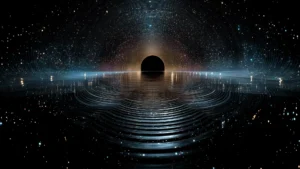
One of the key conceptual breakthroughs in this quest came from physicist John Wheeler, who, in the 1950s and 60s, proposed the idea of "spacetime foam" or "quantum foam." Wheeler suggested that at incredibly tiny scales, specifically at the Planck length (approximately 10⁻³⁵ meters) and Planck time (approximately 10⁻⁴³ seconds), spacetime would not be smooth but would instead exhibit chaotic, turbulent fluctuations – a "frothing" or "bubbling" of spacetime itself. These "spacetime fluctuations" are the quantum manifestations of gravity, analogous to the quantum fluctuations of energy fields in quantum electrodynamics.
However, various leading quantum gravity theories, such as String Theory, Loop Quantum Gravity, and Causal Set Theory, predict different characteristics for these spacetime fluctuations. While all agree on their existence, the precise nature of these distortions – their spectral properties, correlation lengths, and how they evolve over time – varies significantly from one theory to another. This divergence has created a formidable challenge for experimental scientists: without a clear, unified understanding of what signals to look for, the task of detecting these elusive phenomena has been akin to searching for a needle in an impossibly large haystack.
Bridging Theory and Experiment: The Warwick Breakthrough
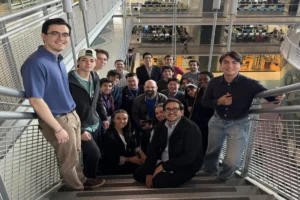
The new research, led by Dr. Sharmila Balamurugan, an Assistant Professor at the University of Warwick and the study’s first author, directly addresses this critical problem. The team has developed a novel framework that systematically categorizes spacetime fluctuations into three primary groups based on their behavior across space and time. While the specific mathematical details of these categories are complex, they broadly relate to how the fluctuations are correlated spatially, temporally, and across different frequency ranges. This categorization allows for a structured approach to a previously amorphous problem.
For each of these categories, the Warwick-led team meticulously identified distinct, measurable patterns. These patterns are not abstract theoretical constructs but specific signatures that could be detected using highly sensitive laser interferometers. These instruments, renowned for their ability to detect infinitesimal changes in distance, range from colossal observatories like the 4-kilometer long LIGO (Laser Interferometer Gravitational-Wave Observatory) to smaller, specialized experimental setups like QUEST (Quantum Experiment for Space-Time) being developed at Cardiff University in the UK, and GQuEST (Gravitational Quantum Experiment for Spacetime) at Caltech in the USA.
Dr. Balamurugan articulated the significance of this development: "Different models of gravity predict very different underlying trends in the random spacetime fluctuations, and that has left experimentalists without a clear target. Our work provides the first unified guide that translates these abstract, theoretical predictions into concrete, measurable signals." This "unified guide" is not merely a theoretical exercise; it is a practical handbook for experimentalists, providing the necessary toolkit to convert complex theoretical equations into tangible experimental parameters.
"It means we can now test a whole class of quantum-gravity predictions using existing interferometers, rather than waiting for entirely new technologies," Dr. Balamurugan added. "This is an important step towards bringing some of the most fundamental questions in physics firmly into the realm of experiment." This point is crucial for accelerating progress in quantum gravity research, as it leverages existing, highly sophisticated infrastructure, rather than requiring decades of development for new observational tools.
The Power of Interferometers: From Cosmic Waves to Quantum Foam
Laser interferometers are among the most sensitive instruments ever built, primarily designed to detect gravitational waves – ripples in spacetime caused by cataclysmic cosmic events like merging black holes and neutron stars. Instruments like LIGO, with its twin detectors in Hanford, Washington, and Livingston, Louisiana, along with its partners Virgo in Italy and Kagra in Japan, have revolutionized astrophysics since their first detection of gravitational waves in 2015. Their operational principle relies on splitting a laser beam into two paths, sending them down long, perpendicular arms, and then recombining them. Any tiny change in the relative length of these arms, caused by a passing gravitational wave or, in this new context, a spacetime fluctuation, creates an interference pattern that can be precisely measured.
The challenge for detecting spacetime fluctuations, however, is even greater than for gravitational waves. While gravitational waves are macroscopic distortions from massive astrophysical events, spacetime fluctuations are hypothesized to be quantum in nature, occurring at scales far smaller than the nucleus of an atom. The Warwick framework addresses this by guiding researchers on where to look in the vast spectrum of possible signals and what specific characteristics to search for.
Dr. Sander Vermeulen, a co-author of the study from Caltech, emphasized this precision: "Interferometers can measure spacetime with extraordinary precision. However, to measure spacetime fluctuations with an interferometer, we need to know where – i.e., at what frequency – to look, and what the signal will look like. With our framework, we can now predict this for a wide range of theories. Our results show that interferometers are powerful and versatile tools in the quest for quantum gravity."
The emergence of smaller, highly specialized interferometers like QUEST and GQuEST is particularly relevant. While LIGO is optimized for low-frequency gravitational waves from astronomical sources, these next-generation tabletop experiments are being designed to probe higher frequencies and different types of noise, potentially making them ideal for detecting the subtle, high-frequency signatures of spacetime fluctuations predicted by the new framework. These experiments represent the cutting edge of quantum metrology, pushing the boundaries of what is experimentally detectable.
Broader Implications: A Versatile Framework for Fundamental Physics
An important strength of this newly developed framework is its inherent flexibility. It is not tethered to any single, specific explanation for how spacetime fluctuations arise. Instead, its utility only requires a mathematical description of the proposed fluctuations and detailed information about the measurement setup. This adaptability makes it invaluable not only for the direct study of quantum gravity but also for several other critical areas of fundamental physics research.
- Stochastic Gravitational Waves: Beyond the discrete events detected by LIGO, cosmologists predict a "stochastic gravitational wave background" – a persistent hum of gravitational waves permeating the universe. This background could originate from a variety of sources, including phase transitions in the early universe, the cumulative effect of countless unresolved astrophysical sources, or even quantum fluctuations of spacetime itself. The Warwick framework can help differentiate between various theoretical models of this background and distinguish these signals from fundamental spacetime noise.
- Dark Matter Signals: Dark matter, an enigmatic substance believed to constitute about 27% of the universe’s mass, remains undetected despite overwhelming gravitational evidence. Some theoretical models propose that certain types of dark matter particles could interact with spacetime in ways that manifest as subtle, fluctuating distortions or by altering the properties of the test masses within an interferometer. This framework provides a tool to predict and search for such signatures, opening new avenues in the hunt for dark matter.
- Experimental Noise Characterization: In highly sensitive experiments like interferometers, distinguishing a genuine signal from various sources of experimental noise is paramount. By providing a clear understanding of the predicted characteristics of fundamental spacetime fluctuations, this framework helps researchers to better characterize and potentially subtract other forms of instrumental or environmental noise, leading to cleaner data and more precise measurements across all experiments.
Prof. Animesh Datta, Professor of Theoretical Physics at Warwick, underscored this versatility: "With this methodology, we can now treat any proposed model of spacetime fluctuations in a consistent, comparable way. In the coming years, we can use this to design smarter tabletop interferometers to confirm or refute possible theories of quantum or semiclassical gravity and even test new ideas about dark matter and stochastic gravitational waves." This highlights the framework’s potential to guide the design of future experiments, ensuring they are optimized to detect specific signatures, thus maximizing the chances of discovery.
A New Era for Experimental Quantum Gravity
The development of a unified approach for identifying spacetime fluctuations marks a pivotal moment in the quest for quantum gravity. For decades, the field has been dominated by theoretical speculation, with experimental verification remaining a distant dream. This research, by providing a concrete bridge between theoretical predictions and experimental detectability, ushers in a new era where the fundamental nature of spacetime itself can be probed with unprecedented precision.
The collaborative effort behind this work, involving institutions like the University of Warwick, Caltech, and Cardiff University, exemplifies the interdisciplinary nature required to tackle such profound scientific questions. This research was made possible through crucial funding from programs such as the UK STFC "Quantum Technologies for Fundamental Physics" (Grant Numbers ST/T006404/1, ST/W006308/1 and ST/Y004493/1) and the Leverhulme Trust under research grants ECF-2024-124 and RPG-2019-022, underscoring the vital role of sustained investment in fundamental science.
As experimental physicists begin to apply this new framework, the coming years promise exciting developments. The ability to systematically search for spacetime fluctuations with existing and next-generation interferometers could lead to the first empirical evidence of quantum gravity, fundamentally altering our understanding of the universe. It could validate or refute specific quantum gravity theories, narrow down the vast landscape of theoretical possibilities, and ultimately bring us closer to a complete and unified description of reality. The "spacetime foam" that John Wheeler envisioned, once a purely theoretical concept, may soon reveal its secrets through the extraordinary precision of laser interferometers.