A day of strong sunlight can spoil more than just a beach outing; it can severely impact the intricate process of photosynthesis, the fundamental mechanism by which plants and other organisms convert sunlight into life-sustaining energy. This vulnerability to excessive light is a well-documented challenge for terrestrial flora. However, beneath the ocean’s surface, where light conditions are often just as intense, if not more varied, certain algae have evolved extraordinary strategies to safeguard their vital energy conversion machinery. A groundbreaking investigation spearheaded by researchers from Osaka Metropolitan University, in collaboration with international partners, has pinpointed a unique pigment called siphonein as a key player in enabling marine green algae to maintain efficient photosynthesis, even when subjected to blistering light intensities that would cripple many other photosynthetic organisms. This discovery not only deepens our understanding of life’s adaptations in extreme environments but also offers tantalizing prospects for engineering next-generation solar technologies that are inherently more resilient and efficient.
The intricate dance of light absorption and energy conversion that defines photosynthesis is the bedrock of nearly all life on Earth. From towering trees to microscopic phytoplankton, photosynthetic organisms harness solar energy to convert carbon dioxide and water into glucose and oxygen. This process is orchestrated by complex molecular systems known as light-harvesting complexes (LHCs), which act as antennae, capturing photons and channeling their energy to reaction centers where the primary chemical transformations occur. Central to this machinery is chlorophyll, the ubiquitous green pigment. When chlorophyll molecules absorb light, their electrons become excited, elevating them to a higher energy state. This energy is then rapidly transferred through a cascade of pigment molecules to specialized reaction centers, ultimately fueling the production of ATP and NADPH – the chemical energy currency of the cell.
The Peril of Photosynthesis: When Sunlight Becomes a Threat
Despite its critical role, intense sunlight can paradoxically become a significant threat to photosynthetic organisms. While light is essential, an excess of it can overwhelm the delicate balance of the photosynthetic apparatus. When chlorophyll absorbs more light energy than the downstream reaction centers can process, it enters a potentially hazardous "triplet" excited state. This triplet chlorophyll, unlike its more benign singlet excited state, can interact with molecular oxygen, producing highly reactive oxygen species (ROS). These ROS, including superoxide radicals, hydrogen peroxide, and singlet oxygen, are potent oxidants capable of inflicting severe damage on cellular components, including proteins, lipids, and DNA. This phenomenon, known as photoinhibition or oxidative stress, can significantly reduce photosynthetic efficiency, stunt growth, and even lead to cell death. Terrestrial plants often cope with this by adjusting leaf angles, developing reflective surfaces, or producing antioxidant enzymes. However, underwater organisms face unique challenges and have developed distinct solutions.
Nature’s Evolutionary Shield: Carotenoids and Triplet Quenching
Nature has, however, devised elegant protective mechanisms to counteract the damaging effects of excessive light. A crucial class of pigments known as carotenoids plays a pivotal role in this photoprotective strategy. These vibrant yellow, orange, and red pigments, commonly seen in carrots, tomatoes, and autumn leaves, serve multiple functions in photosynthetic organisms. Beyond their accessory light-harvesting roles, extending the spectrum of light that can be absorbed, carotenoids are indispensable for photoprotection. Their primary defense mechanism involves swiftly dissipating excess energy from chlorophyll’s dangerous triplet state.
"Organisms use carotenoids to quickly dissipate excess energy, or quench these triplet states, through a process called triplet-triplet energy transfer (TTET)," explained Ritsuko Fujii, lead author of the study and associate professor at the Graduate School of Science and Research Center for Artificial Photosynthesis at Osaka Metropolitan University. In this process, the excited energy from the triplet chlorophyll molecule is non-radiatively transferred to a nearby carotenoid molecule. The carotenoid then harmlessly releases this energy as heat, effectively preventing the formation of damaging reactive oxygen species. While the general principle of carotenoid-mediated quenching has been recognized for decades, the precise molecular details, particularly how certain carotenoids achieve exceptionally high quenching efficiency in specific organisms, remained elusive until recently. Understanding these nuances is vital for fully appreciating the evolutionary ingenuity of photosynthetic life.
A Deep Dive into Marine Adaptations: The Case of Codium fragile
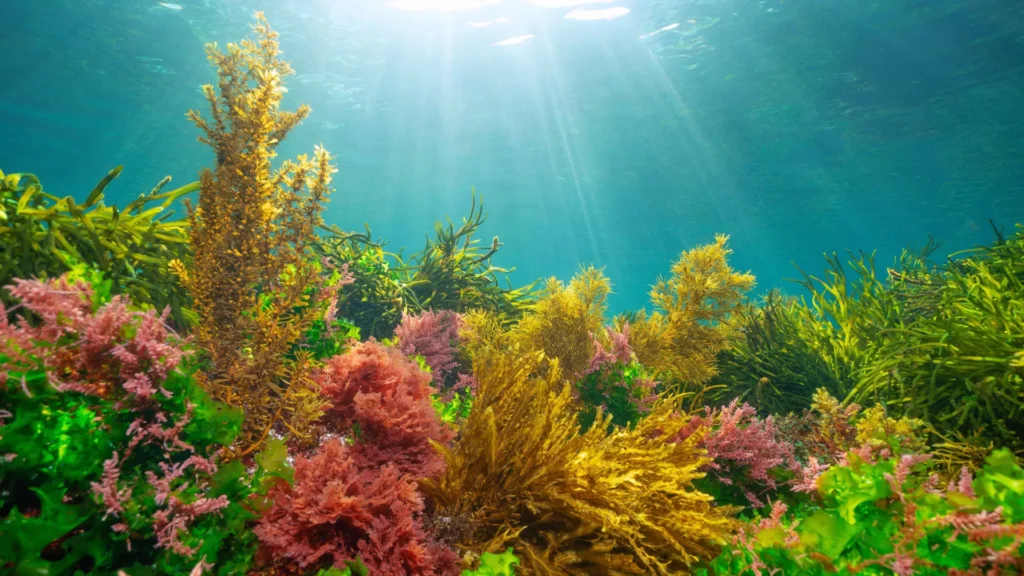
To unravel the intricacies of this protective process, the research team focused their investigation on Codium fragile, a common type of marine green alga often found in intertidal zones and shallow subtidal waters. Codium fragile, also colloquially known as dead man’s fingers due to its branching, spongy texture, is an excellent model organism for studying photoprotection in marine environments. Unlike many deep-sea algae adapted to low light, Codium fragile frequently experiences periods of intense solar radiation, especially during low tide or in clear, shallow waters where sunlight penetration is high.
Crucially, Codium fragile possesses a light-harvesting antenna complex, LHCII, which shares structural similarities with that of land plants. However, its unique adaptation lies in its repertoire of rare carotenoids, most notably siphonein and siphonaxanthin. These pigments are particularly significant because they enable the algae to efficiently utilize green light for photosynthesis. While red and blue light are strongly absorbed by chlorophyll, green light penetrates deeper into the water column. By evolving pigments capable of absorbing green light, marine algae like Codium fragile can expand their photosynthetic window and thrive in environments where the spectral quality of light is shifted. The co-existence of these specialized light-harvesting pigments with robust photoprotective mechanisms highlights the sophisticated evolutionary pressures driving adaptation in aquatic ecosystems.
"The key to the quenching mechanism lies in how quickly and efficiently the triplet states can be deactivated," stated Alessandro Agostini, a researcher at the University of Padua, Italy, and co-lead author of the study. This speed and efficiency are paramount because the longer a chlorophyll molecule remains in its triplet state, the higher the probability of it generating harmful reactive oxygen species. Therefore, the rapid ‘hand-off’ of energy from chlorophyll to the carotenoid is a critical step in preventing cellular damage.
Precision Science: Unveiling Siphonein’s Protective Power
To precisely investigate this quenching mechanism, the researchers employed a highly sensitive spectroscopic technique: electron paramagnetic resonance (EPR) spectroscopy. EPR is particularly adept at directly detecting and quantifying species with unpaired electrons, such as the triplet excited states of chlorophyll. By measuring the signals produced by these triplet states, scientists can gauge their abundance and lifetime, providing direct evidence of photoprotective efficiency.
The team conducted comparative EPR experiments, pitting Codium fragile against spinach, a common terrestrial plant widely used in photosynthesis research. The results were striking and definitive. In spinach, even under controlled conditions, traces of harmful chlorophyll triplet states persisted, indicating that its protective mechanisms, while effective, were not absolute. In stark contrast, within the LHCII complexes of Codium fragile, the signals corresponding to chlorophyll triplet states disappeared entirely and remarkably quickly. This complete absence of detectable triplet states in the marine alga provided compelling evidence that its carotenoids were neutralizing the damaging energy with exceptional speed and efficacy.
"Our research has revealed that the antenna structure of photosynthetic green algae has an excellent photoprotective function," Agostini concluded, underscoring the remarkable resilience engineered into these marine organisms. This finding was a crucial step in moving from general observations of algal robustness to a specific, molecular-level understanding of the underlying protective mechanism.
Building upon the experimental EPR data, the researchers integrated sophisticated quantum chemical simulations. These computational models allowed them to delve into the molecular structures and electronic properties of the pigments within the LHCII complex, identifying the exact location and contribution of each carotenoid. Through this combined approach, siphonein emerged as the unequivocal key pigment responsible for Codium fragile‘s superior photoprotection. The simulations revealed that siphonein is strategically positioned at a critical binding site within the LHCII complex, placing it in optimal proximity to the chlorophyll molecules. Furthermore, its unique molecular structure, characterized by an extended system of conjugated double bonds, makes it exceptionally effective at accepting and dissipating excess energy via TTET. This specific structural and positional advantage allows siphonein to act as an ultra-efficient molecular ‘safety valve,’ diverting potentially harmful energy away from the photosynthetic machinery. These findings collectively demonstrate that marine algae have not only evolved specialized pigments to efficiently absorb the blue-green light prevalent underwater but also possess sophisticated mechanisms, like siphonein-mediated quenching, to withstand the damaging effects of intense sunlight, a critical adaptation for survival in dynamic aquatic environments.
Broader Implications: From Ocean Depths to Renewable Energy Frontiers
The ramifications of this discovery extend far beyond the realm of basic marine biology, promising to influence diverse fields from agriculture to renewable energy. A deeper understanding of nature’s photoprotective strategies, particularly those as efficient as siphonein’s, can unlock novel solutions to some of humanity’s most pressing challenges.
Advancing Agricultural Resilience
In agriculture, crops are increasingly facing environmental stresses, including intense solar radiation exacerbated by climate change. Heatwaves and prolonged exposure to high light intensities can significantly reduce crop yields by inducing photoinhibition and oxidative stress. By elucidating the molecular mechanisms behind siphonein’s superior photoprotection, researchers may gain insights into engineering more resilient crop varieties. For instance, genes encoding similar highly efficient photoprotective pigments or pathways could potentially be introduced into staple crops, enhancing their ability to withstand harsh growing conditions. This could lead to crops that maintain photosynthetic efficiency and productivity even under suboptimal light and temperature regimes, securing food supplies in a warming world.
Bio-Inspired Innovation in Solar Technology
Perhaps one of the most exciting implications lies in the field of renewable energy. The development of more efficient and durable solar technologies is paramount for transitioning away from fossil fuels. Current artificial solar energy systems, such as photovoltaic cells and artificial photosynthesis devices, often suffer from photodegradation when exposed to prolonged, intense sunlight. Mimicking the natural photoprotective strategies evolved by algae could revolutionize their design.
Imagine solar panels or bio-inspired fuel production systems that incorporate "molecular safety valves" akin to siphonein. Such bio-inspired solar technologies could be designed to self-regulate, dissipating excess light energy harmlessly as heat, much like the algae do. This would prevent damage to their light-harvesting components, extend their operational lifespan, and maintain high energy conversion efficiency even under peak sunlight conditions. Researchers could work towards designing synthetic pigments or molecular structures that replicate siphonein’s unique electronic and structural properties, integrating them into next-generation solar cells or catalysts for artificial photosynthesis. This could lead to more robust, long-lasting, and ultimately more cost-effective renewable energy solutions. Furthermore, in the context of photobioreactors used for cultivating algae for biofuels or high-value biochemicals, understanding optimal light management and photoprotection is crucial. Preventing photoinhibition in these controlled environments can significantly boost biomass yield and overall efficiency, making algal biotechnology a more viable sustainable energy pathway.
Future Directions and Molecular Design
The Osaka Metropolitan University team is already looking ahead. "We hope to further clarify the structural characteristics of carotenoids that increase quenching efficiency, ultimately enabling the molecular design of pigments that optimize photosynthetic antennae," Professor Fujii articulated. This future research trajectory involves detailed structural biology to precisely map siphonein’s interaction with chlorophyll and the LHCII complex, potentially using techniques like cryo-electron microscopy. This deeper structural understanding would then inform rational molecular design, allowing scientists to create bespoke pigments for specific applications, whether in enhancing crop resilience or developing advanced solar energy converters. The findings from this study, published in the prestigious journal Cell Reports Physical Science, represent a significant leap forward in our comprehension of biological photoprotection and underscore the immense potential of biomimicry in driving technological innovation. As humanity strives to harness the sun’s energy more effectively and sustainably, the humble marine alga, with its intricate molecular defenses, continues to offer invaluable lessons from the depths of the ocean.