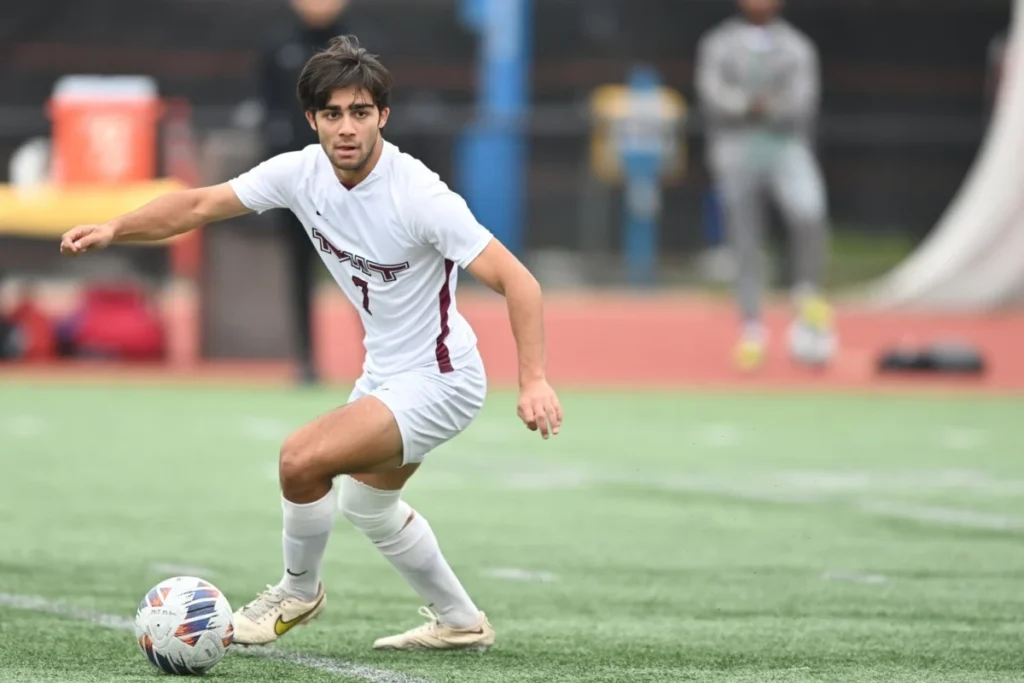
The intersection of high-performance collegiate athletics and rigorous scientific inquiry is a space occupied by few, yet at the Massachusetts Institute of Technology (MIT), it represents a vital component of the campus ecosystem. Dilin Meloni, a rising senior at the institute, exemplifies this duality. As an attacking midfielder for the MIT Engineers men’s soccer team and a double major in Nuclear Science and Engineering (Course 22) and Physics (Course 8), Meloni has navigated the demanding landscape of a premier research institution while advocating for the needs of over 800 student-athletes. His journey from an All-American high school prospect to a leader in student governance and a researcher in the burgeoning field of nuclear fusion offers a window into the evolving culture of student-athlete life at one of the world’s most prestigious academic centers.
From Needham to the Infinite Corridor: A Strategic Academic Choice
Dilin Meloni’s path to MIT was paved by excellence in two distinct arenas. During his tenure at Needham High School in Massachusetts, Meloni established himself as one of the premier soccer talents in the state, earning the title of Massachusetts Boys Soccer Player of the Year and receiving All-American honors. While his athletic prowess garnered attention from various collegiate programs, his academic interests remained focused on the physical sciences.
The catalyst for his commitment to MIT was not merely the reputation of its athletic department, but a specific encounter with the institute’s research output. As a high school junior, Meloni read a paper published by the MIT Plasma Science and Fusion Center (PSFC). The PSFC is globally recognized for its work in plasma physics and fusion energy, particularly its collaborations with Commonwealth Fusion Systems (CFS) on the development of SPARC, a compact, high-field fusion device. This exposure to cutting-edge energy research solidified Meloni’s desire to become an "Engineer" in the literal sense—playing for the MIT varsity team—and a nuclear engineer in the professional sense.
The Academic Rigor of Course 22 and Course 8
At MIT, Meloni’s academic workload is notably intense. Nuclear Science and Engineering is a field that requires a deep understanding of quantum mechanics, thermodynamics, and neutron transport. Coupled with a second major in Physics, Meloni’s curriculum places him in a small minority of varsity athletes. According to institutional data, while approximately 20% of MIT’s undergraduate population participates in varsity sports, the distribution across majors is often skewed toward more traditional engineering tracks or management.
Meloni has noted that there is a perceived scarcity of varsity athletes within the nuclear science and physics departments. This gap is one he actively seeks to bridge by mentoring incoming players and encouraging them to pursue challenging scientific disciplines. His current summer internship at Commonwealth Fusion Systems (CFS) serves as a practical application of his studies. CFS, a private company spun out of MIT, aims to commercialize fusion energy to provide a limitlessly clean and safe energy source. Working at the forefront of this industry allows Meloni to integrate his theoretical knowledge with the logistical and technical demands of a high-stakes startup environment.
The Social and Cultural Role of MIT Athletics
Contrary to the external perception of MIT as a purely academic enclave, Meloni emphasizes that the athletic community provides the bedrock for much of the school’s social life. For fall athletes, the integration into campus life begins two weeks before the general student body arrives. This "preseason" period fosters deep bonds based on shared discipline and time management.
Meloni describes the athletic community as a gathering of like-minded individuals: students who view their sport not as a hobby, but as a core component of their identity. This shared commitment creates a support network that extends beyond the field. Meloni’s own social circle, centered around his fraternity, is largely comprised of teammates from the soccer program, as well as members of the football, swimming, and track teams. This cross-pollination of athletes from different disciplines creates a cohesive subculture within the broader MIT community, offering a sense of belonging that helps mitigate the pressures of a high-stress academic environment.
Leadership in the Student Athlete Advisory Committee (SAAC)
Beyond his roles in the lab and on the pitch, Meloni has emerged as a significant voice in student governance. He serves as a leader within the Student Athlete Advisory Committee (SAAC), an organization mandated by the NCAA to ensure that student-athletes have a voice in the rules and regulations that affect their lives. At MIT, which boasts 33 varsity sports—the largest program in NCAA Division III—representing the diverse needs of nearly 30 teams is a complex logistical challenge.
Meloni’s involvement in governance began in high school, where he served on his town’s school committee and represented students at the state level. He brought this experience to MIT, joining SAAC as a freshman. His approach to the committee is rooted in a philosophy of proactive engagement: "If there’s an area where you can make some change, why not go do it yourself?"
Under Meloni’s leadership, SAAC has focused on several "pain points" identified through direct outreach to coaches and players:
- Facility Allocation: With 33 teams sharing limited space, the scheduling of the Sports Performance Facility and turf fields is a constant source of friction.
- Nutritional Access: The quality and availability of food, particularly for athletes whose practice schedules conflict with standard dining hall hours, remains a priority.
- Administrative Communication: Bridging the gap between the Department of Athletics, Physical Education, and Recreation (DAPER) and the student body.
Navigating Institutional Compromise
A significant portion of Meloni’s work involves managing expectations. In his meetings with administrators, he has gained an understanding of the budgetary and logistical constraints that govern a major university. Whether it is the cost of maintaining high-end turf or the complexities of preseason planning, Meloni acts as a translator between the student body’s demands and the administration’s reality.
He acknowledges that student-athletes sometimes feel like an "underrepresented" group on campus. This feeling often stems from the daily friction of sharing facilities with the general public or student clubs. For a varsity team, an interrupted practice or a lost piece of equipment is not just an inconvenience; it is a disruption of a highly disciplined training regimen. Meloni’s role in SAAC is to voice these frustrations while working toward "middle-ground" solutions that respect the needs of the entire MIT community.
Chronology of Meloni’s MIT Career
- 2021 (Freshman Year): Meloni joins the MIT Men’s Soccer team as an attacking midfielder. He begins attending SAAC meetings at the suggestion of his team captain and coach.
- 2022 (Sophomore Year): He declares a double major in Nuclear Science and Engineering and Physics. He becomes more active in SAAC, focusing on facility access issues.
- 2023 (Junior Year): Meloni takes on a leadership role within SAAC. During the summer, he and the committee co-president meet with all 33 varsity teams to compile a list of advocacy goals. He begins his internship at Commonwealth Fusion Systems.
- 2024 (Senior Year/Projected): Meloni continues his advocacy work, noting a "tipping point" in the administration’s willingness to integrate student-athlete feedback into broader student life policies.
Broader Impact and Implications for Collegiate Sports
The experience of Dilin Meloni highlights a broader trend in collegiate athletics where the "student" and "athlete" roles are increasingly integrated through professional-grade research and sophisticated student governance. At an institution like MIT, the student-athlete is often a precursor to the industry leader. The skills Meloni has honed—negotiating facility time, managing a double-major workload, and conducting fusion research—are directly transferable to the complex challenges of the modern workforce.
Furthermore, the success of the SAAC-DAPER communication channel serves as a model for other Division III institutions. By moving away from a top-down administrative approach and toward a collaborative governance model, MIT has begun to address the unique stressors of its athletic population. Meloni’s observation that administrators are now seeking athlete input on general "realms of student life" suggests that the influence of student-athletes is expanding beyond the locker room.
Conclusion: The Future of Fusion and Athletics
As Dilin Meloni enters his final year at MIT, his focus remains divided between the immediate goals of the soccer season and the long-term potential of fusion energy. The "small changes" he has championed through SAAC—better food, fairer field time, and clearer communication—are, in his view, the foundation for a more sustainable and supportive environment for future Engineers.
In the laboratory, his work with Commonwealth Fusion Systems places him at the center of a historical shift toward clean energy. In the stadium, his role as an attacking midfielder requires a similar level of precision and strategic thinking. Meloni’s trajectory suggests that the rigors of varsity athletics do not detract from academic excellence but rather provide the discipline and social framework necessary to achieve it. As he prepares for a career in nuclear science, Meloni stands as a testament to the idea that at MIT, the title of "Engineer" is one earned both through the study of the physical world and the mastery of the playing field.