The foundations of modern cosmology are facing a significant reassessment following the release of the most comprehensive collection of exploding white dwarf stars ever assembled. This monumental dataset, comprising nearly 3,000 Type Ia supernovae, provides compelling evidence that dark energy—the enigmatic force driving the accelerated expansion of the universe—may not be a static constant as previously assumed. By synthesizing three decades of astronomical observations into a single, rigorous framework, an international research team has uncovered hints that the density of dark energy may fluctuate over cosmic time, a finding that could necessitate a fundamental rewrite of the laws governing the evolution of the cosmos.
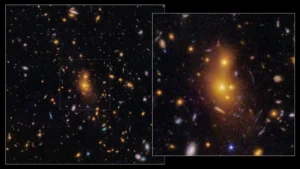
Led by researchers at the University of Queensland’s School of Mathematics and Physics, the study analyzed a total of 2,884 Type Ia supernovae. These stellar events are often referred to as "standard candles" because they explode with a remarkably consistent intrinsic brightness. By measuring how faint these explosions appear from Earth, astronomers can calculate precise distances across billions of light-years. When these distances are compared with the redshift of the host galaxies—a measure of how much the light has been stretched by the expansion of space—scientists can map the expansion history of the universe with unprecedented accuracy.
A New International Benchmark for Supernova Cosmology
The project, spearheaded by PhD candidate Ryan Camilleri, represents a landmark achievement in data integration and cosmological analysis. For decades, various telescope surveys have hunted for supernovae, each using different instruments, filters, and calibration techniques. The University of Queensland team undertook the arduous task of "rebuilding" thirty years of these disparate observations into a unified, consistent framework. This harmonization process was essential to eliminate systematic errors that could arise when comparing data from a telescope in the 1990s with a state-of-the-art digital survey from the 2020s.
"We’ve rebuilt three decades of astronomical observations into a single, consistent framework," Camilleri stated, noting that the project establishes a new international standard for the field. The dataset incorporates observations from the Dark Energy Survey (DES), the Foundation Supernova Survey, Pan-STARRS1, the Sloan Digital Sky Survey (SDSS), the Supernova Legacy Survey (SNLS), the Carnegie Supernova Project, and the Center for Astrophysics (CfA) supernova survey.
By combining this vast supernova catalog with other cosmological probes—such as the Cosmic Microwave Background (CMB), which is the relic light from the Big Bang, and maps of the large-scale distribution of galaxies—the researchers were able to test the "Standard Model" of cosmology, known as the Lambda-CDM model. In this model, dark energy is represented by the Greek letter Lambda ($Lambda$) and is treated as a "cosmological constant," a property of space itself that remains unchanging throughout time. However, the new findings suggest that this assumption may no longer hold.
Re-evaluating Three Decades of Stellar Data
The path to this discovery involved a meticulous re-examination of historical data. As our understanding of supernova physics has matured, researchers have identified subtle factors that can influence the observed brightness of these explosions. To ensure the highest level of accuracy, the team applied modern analytical techniques to older observations, correcting for variables that were less understood when the data was originally collected.
One significant challenge involved the "host galaxy mass step," a phenomenon where supernovae occurring in more massive galaxies appear slightly brighter than those in less massive ones. The researchers also had to account for cosmic dust, which can redden and dim the light of distant stars, and gravitational lensing—the process by which the gravity of massive foreground objects bends and magnifies the light from a background supernova.
"Over the years, we’ve learned a lot more about how supernovae behave, so we’ve been able to go back and apply that improved understanding to older data," Camilleri explained. By accounting for these subtle effects, the team reduced the "noise" in the data, allowing the underlying signal of the universe’s expansion to emerge more clearly.
Challenging the Cosmological Constant
The implications of a time-varying dark energy are profound. For over twenty years, the prevailing view in physics has been that dark energy is a uniform energy density filling space, acting as a repulsive force that grows stronger as the universe expands but remains constant in its "strength" per unit of volume. This concept was first proposed by Albert Einstein as a way to keep the universe static, though he later discarded it. It was revived in 1998 when two independent teams discovered that the expansion of the universe was not slowing down under gravity, but was instead accelerating.
Professor Tamara Davis, an astrophysicist at the University of Queensland and a senior member of the research team, noted that while the 2024 Dark Energy Survey (DES) results first hinted at a deviation from the standard model, this new, larger compilation reinforces those suspicions.
"Our supernova data from DES in 2024 first showed hints that dark energy may be time-varying, and this new compilation also sees a deviation from the standard model, although in a slightly different direction," Professor Davis said.
The significance of these results is amplified by the fact that they align with findings from the Dark Energy Spectroscopic Instrument (DESI). Earlier this year, DESI researchers released a map of the universe’s expansion based on Baryon Acoustic Oscillations (BAO)—relic sound waves from the early universe. Like the supernova study, the DESI results suggested that dark energy might be evolving rather than remaining constant.
"So, two completely independent measurements have found hints of time variation in dark energy, challenging the standard model that dark energy doesn’t change," Davis added. While the two studies do not agree perfectly on the exact nature of the change, the fact that both point away from a constant $Lambda$ suggests that the standard model may be an oversimplification.
Chronology of Cosmic Discovery
To understand the weight of this new research, it is necessary to look at the timeline of dark energy discovery and the evolution of the tools used to study it:
- 1917: Albert Einstein introduces the Cosmological Constant ($Lambda$) into his equations of General Relativity.
- 1929: Edwin Hubble discovers that the universe is expanding, leading Einstein to remove the constant.
- 1998: Observations of Type Ia supernovae by the Supernova Cosmology Project and the High-Z Supernova Search Team reveal that the expansion of the universe is accelerating. This discovery leads to the 2011 Nobel Prize in Physics.
- 2000s–2010s: Various surveys (SDSS, SNLS) begin to refine the measurement of the "w" parameter, the equation of state for dark energy. A value of $w = -1$ corresponds to a constant dark energy.
- 2013–2019: The Dark Energy Survey (DES) uses the Blanco Telescope in Chile to map hundreds of millions of galaxies and thousands of supernovae.
- January 2024: The DES collaboration releases its 3-year and 6-year data, showing the first strong hints that $w$ might change over time.
- April 2024: The Dark Energy Spectroscopic Instrument (DESI) releases its first-year results, showing similar hints of time-variation using galaxy clustering data.
- Late 2024: The University of Queensland team releases the unified dataset of 2,884 supernovae, providing the most robust supernova-based evidence to date for a non-constant dark energy.
Bridging the Gap Between Gravity and Quantum Physics
Beyond the immediate question of how the universe expands, this research touches upon the "holy grail" of theoretical physics: the reconciliation of General Relativity (which explains gravity on a large scale) and Quantum Mechanics (which explains the behavior of subatomic particles).
Currently, these two pillars of physics are mathematically incompatible. Calculations of the energy of the vacuum from quantum field theory suggest a value for dark energy that is $10^120$ times larger than what astronomers actually observe—a discrepancy often called the "worst prediction in the history of physics." If dark energy is indeed time-varying, it may provide the missing link that allows physicists to develop a "Theory of Everything."
"All of this research may also hold the clue to explain how gravity and quantum physics fit together," the researchers noted. If dark energy is a dynamic field (sometimes called "quintessence") rather than a property of space, it could change how we calculate the vacuum energy and lead to a new understanding of the quantum vacuum.
Future Outlook: The Next Generation of Surveys
While the current findings are suggestive, they are not yet definitive enough to officially "overturn" the standard model. In the language of physics, the results have not yet reached the "5-sigma" threshold of statistical certainty required for a formal discovery. However, the scientific community is on the verge of a data explosion that will likely settle the debate.
The researchers are already planning to expand their dataset with the Dark Energy Bedrock All-Sky Supernova program (DEBASS). This program focuses on identifying supernovae closer to Earth, which will help anchor the expansion measurements and provide a clearer "anchor point" for the cosmic distance ladder.
Furthermore, the upcoming Vera C. Rubin Observatory in Chile is expected to begin its Legacy Survey of Space and Time (LSST) in the near future. The Rubin Observatory is designed to discover millions of supernovae over its ten-year mission, compared to the few thousand analyzed in the current study.
As the dataset grows from thousands to millions, the subtle fluctuations in dark energy will either be confirmed as a fundamental feature of our universe or dismissed as a statistical fluke. For now, the largest collection of exploding stars ever compiled has sent a clear message to the scientific world: the universe may be far more complex—and more dynamic—than we ever imagined.
The findings have been documented in two comprehensive papers currently available on the arXiv preprint server, detailing both the cosmological implications and the rigorous methodology used to calculate host galaxy masses and supernova distances. As the international collaboration of hundreds of astronomers continues to refine these measurements, the story of the universe’s expansion enters a new and uncertain chapter.