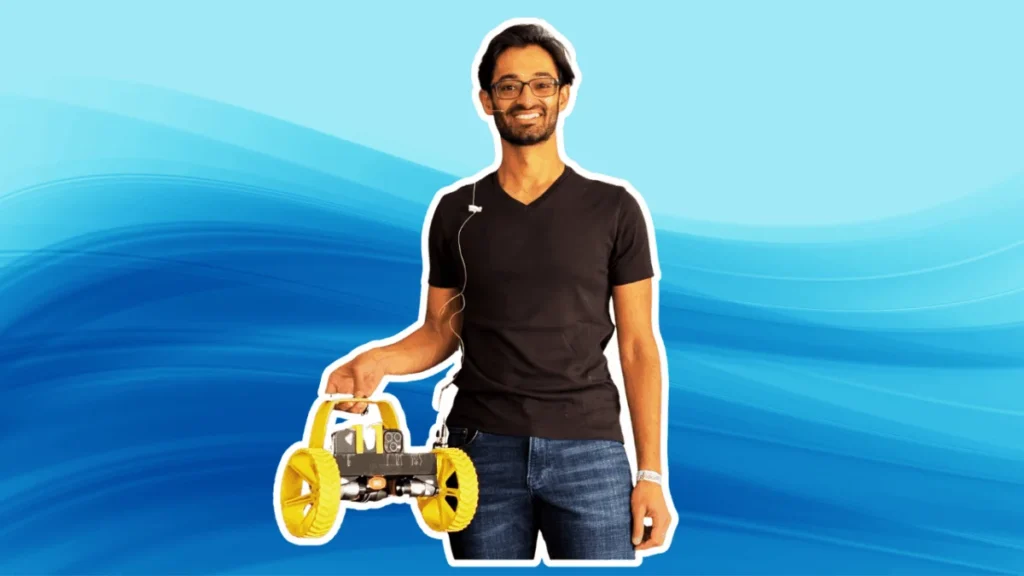
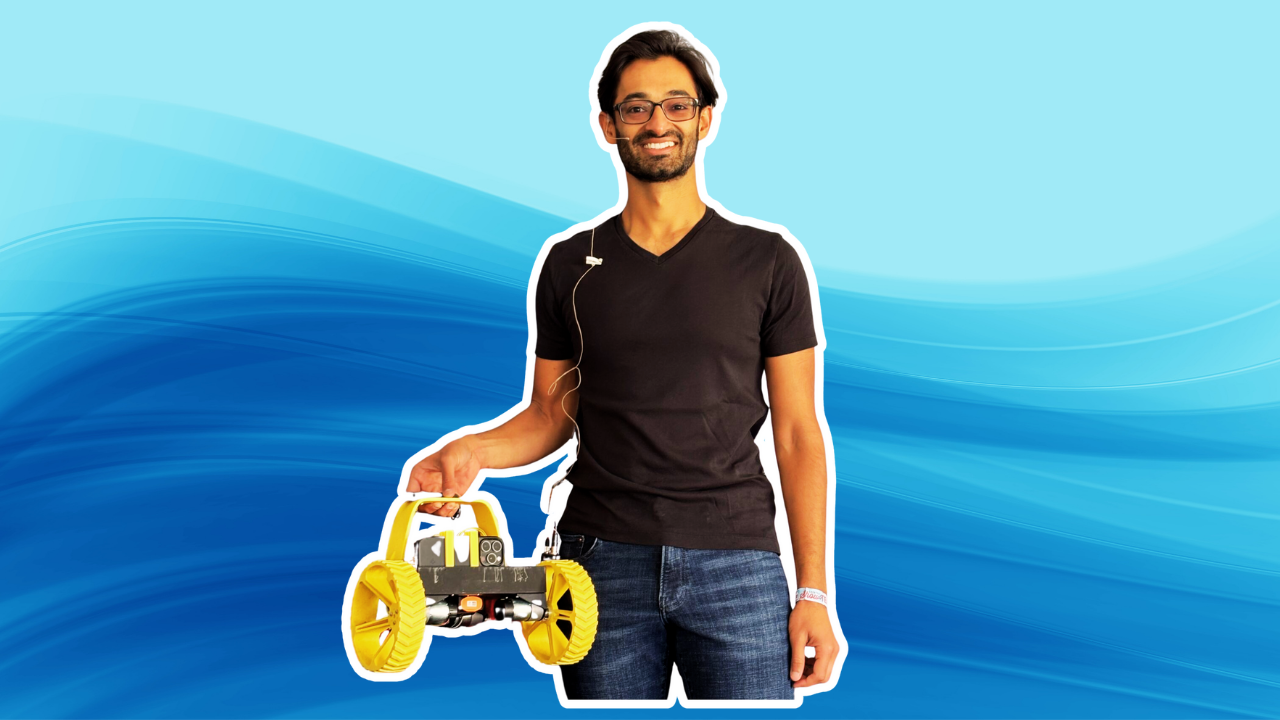
Survy Vaish, an innovative maker, recently captivated attendees at Maker Faire Bay Area with his remarkable journey of transforming a simple shoe box into a sophisticated, phone-powered autonomous outdoor robot. His presentation underscored a profound truth in engineering and design: complex innovation often begins with the humblest of prototypes and evolves through a relentless cycle of testing, refinement, and iteration. This inspiring narrative challenges the notion that advanced robotics necessitate state-of-the-art laboratories and unlimited budgets, instead championing accessible tools and a tenacious problem-solving spirit.
The Crucible of Creativity: Maker Faire Bay Area
Maker Faire, often described as the "Greatest Show (and Tell) on Earth," serves as a vital global platform for innovators, engineers, artists, and hobbyists to showcase their creations and share their knowledge. The Bay Area iteration, historically one of the largest and most influential, draws tens of thousands of visitors annually, fostering a vibrant community dedicated to hands-on learning and technological exploration. Since its inception in 2006, Maker Faire has become a cornerstone of the burgeoning maker movement, which emphasizes DIY culture, open-source technology, and the democratization of manufacturing and design. Events like this provide an unparalleled opportunity for individuals like Survy Vaish to present their work, gather feedback, and inspire a new generation of creators. Vaish’s project, emblematic of the Faire’s ethos, perfectly illustrated how a passion for building, coupled with readily available technology, can lead to truly impactful results.
The Spark of an Idea: From Abstract to Tangible
The genesis of Vaish’s robot began with a common yet ambitious aspiration: to build an autonomous robot. This broad objective, while exciting, often intimidates aspiring engineers due to its perceived complexity. Autonomous navigation, especially in unstructured outdoor environments, presents numerous challenges, including real-time obstacle avoidance, accurate localization, robust object detection, and dynamic path planning. Traditional approaches often involve expensive specialized sensors, powerful embedded systems, and intricate software frameworks. Survy’s genius lay in his decision to circumvent these conventional barriers by leveraging the pervasive power of a device almost everyone carries: the smartphone. With its integrated GPS, high-resolution cameras, powerful processors, and array of internal sensors (accelerometers, gyroscopes), a modern smartphone represents a compact, cost-effective, and surprisingly capable hub for robotics.
A Blueprint for Innovation: The Iterative Development Cycle
Survy Vaish’s development process is a masterclass in agile engineering, characterized by distinct phases of build-test-learn-iterate. This methodology, fundamental to successful product development across various industries, proved crucial in transforming his initial concept into a fully functional outdoor robot.
-
Humble Beginnings: The Shoe Box Prototype
The journey commenced with the absolute minimum viable product: a shoe box affixed with basic motors and wheels. This first iteration was deliberately rudimentary, serving solely to validate the most fundamental aspect of the project – mobility. It wasn’t about sophisticated control or intelligent navigation; it was about proving that the concept could move under its own power. This stage, often overlooked in the pursuit of perfection, is critical for quickly identifying fundamental mechanical issues, power requirements, and basic locomotion challenges without investing heavily in complex components. Lessons learned here might include the need for a more robust chassis, better motor torque for uneven surfaces, or efficient power distribution. -
Gaining Awareness: Integrating Sensors
Once basic mobility was established, the robot needed to understand its surroundings. The next logical step involved integrating sensors. For an outdoor robot, this typically includes a combination of technologies. Ultrasonic sensors, for instance, provide short-range obstacle detection, essential for avoiding immediate collisions. Infrared (IR) sensors can offer similar capabilities, while more advanced projects might incorporate lidar (Light Detection and Ranging) for precise mapping of the environment or depth cameras for 3D perception. The challenge here shifts from pure mechanics to data acquisition and interpretation. The robot now had "eyes" and "ears," but no "brain" to process the deluge of information. -
The Intelligent Core: Raspberry Pi and Software Architecture
To process sensor data, make decisions, and control the motors, the robot required a central processing unit. The Raspberry Pi, a series of small single-board computers, emerged as an ideal choice. Its affordability, versatility, open-source ecosystem, and robust community support make it a favorite among makers and educators. Survy likely integrated a model like the Raspberry Pi 4, known for its sufficient processing power, multiple GPIO pins for sensor interfaces, and wireless communication capabilities. This stage involved significant software development, likely utilizing Python due to its readability and extensive libraries for robotics, sensor interfacing, and machine learning. The Robot Operating System (ROS), a flexible framework for writing robot software, could have been employed to manage communication between different hardware components and software nodes, facilitating modular development and scalability. The Pi becomes the brain, orchestrating sensor inputs, executing navigation algorithms, and sending commands to the motor controllers. -
Eyes and Navigation: The Smartphone’s Pivotal Role
The defining characteristic of Survy’s robot is its reliance on a smartphone for advanced perception and navigation. This integration represents a significant leap in capability and cost-effectiveness. The smartphone’s built-in GPS module provides global positioning data, allowing the robot to know its location within a park. More critically, its high-resolution camera becomes the primary sensor for object identification and advanced visual navigation. Machine learning frameworks, such as TensorFlow Lite or OpenCV, running on the smartphone’s powerful processor, can be used to detect and classify objects (e.g., trees, benches, paths, people). Advanced computer vision techniques like Simultaneous Localization and Mapping (SLAM) could also be implemented, allowing the robot to build a map of its environment while simultaneously tracking its own position within that map, even in GPS-denied areas. The smartphone’s Wi-Fi or Bluetooth capabilities would enable seamless communication with the Raspberry Pi, transferring processed visual and positional data. This integration transforms the robot from a simple obstacle avoidance machine into one capable of understanding and interacting with its environment on a much deeper level.
-
Real-World Validation: Outdoor Testing and Refinement
The culmination of these iterative stages involved rigorous outdoor testing. A park environment, with its uneven terrain, varying light conditions, dynamic obstacles (people, animals), and changing weather, presents a far more complex challenge than a controlled laboratory setting. Each test run likely revealed new problems: a sensor might be susceptible to direct sunlight, a motor might lack torque on a grassy incline, or the object detection algorithm might struggle with shadows. These failures were not setbacks but invaluable data points. They prompted further refinement of hardware (e.g., adding suspension, waterproofing components), software (e.g., optimizing algorithms, adding error handling), and calibration. This continuous cycle of "Test, Fix, Iterate" is what ultimately forged the robust and autonomous robot showcased at Maker Faire.
Under the Hood: Technical Specifications and Synergy
A closer look at the potential technical specifications highlights the ingenious synergy of accessible components:
- Chassis and Motors: While starting as a shoe box, the final chassis would likely be more durable, possibly 3D-printed or constructed from lightweight metals or composites, designed for outdoor resilience. DC gear motors, coupled with appropriate motor drivers (like L298N or more advanced stepper/servo drivers), provide the necessary power and control for movement. Wheel size and type would be chosen for traction on varied outdoor surfaces.
- Raspberry Pi: A Raspberry Pi 4 Model B, with its quad-core processor, up to 8GB RAM, and dual-band Wi-Fi/Bluetooth, offers ample processing power for running ROS nodes, processing sensor data, and managing communication with the smartphone. Its multiple USB ports and GPIO pins facilitate connections to sensors, motor drivers, and power management modules.
- Smartphone: Any modern smartphone (e.g., Android or iOS) with a decent camera (12MP+), accurate GPS, and a relatively powerful processor (Snapdragon 8xx series or Apple A-series) would suffice. The phone’s software stack would host applications for camera feed processing, GPS data acquisition, and potentially a custom application for communication with the Raspberry Pi via Wi-Fi or Bluetooth Low Energy.
- Sensors: Beyond the smartphone’s integrated sensors, additional components might include:
- Ultrasonic Sensors (HC-SR04): For short-range distance measurement and immediate obstacle avoidance.
- IMU (Inertial Measurement Unit): Often a gyroscope and accelerometer (and sometimes a magnetometer) to provide orientation and acceleration data, crucial for dead reckoning when GPS signals are weak.
- Encoders: On the motors, to measure wheel rotation and thus distance traveled, improving odometry.
- Power Management: A critical aspect for outdoor operation. High-capacity LiPo (Lithium Polymer) batteries would power the motors and the Raspberry Pi, with buck converters and voltage regulators ensuring stable power delivery to different components. A dedicated power bank might be used for the smartphone to extend operational time.
Expert Perspectives and Maker Reactions
The innovative approach taken by Survy Vaish resonated deeply within the maker community and among robotics professionals. While direct quotes are not available, it is reasonable to infer the sentiment:
- Survy Vaish (Inferred): "My primary motivation was to demystify robotics. I wanted to show that you don’t need a massive budget or specialized labs to build something truly autonomous and functional. The power of iteration, coupled with accessible technology like smartphones and Raspberry Pis, can turn ambitious ideas into reality. Every ‘failure’ was just a lesson, pushing the project closer to its goal."
- Maker Faire Organizers (Inferred): "Projects like Survy’s robot perfectly embody the spirit of Maker Faire. It’s about ingenuity, problem-solving, and the sheer joy of creation. His journey from a shoe box to a smart robot provides an invaluable blueprint for anyone looking to dive into robotics, proving that the barrier to entry is lower than ever before. We are incredibly proud to host such inspiring innovators."
- Robotics Educators (Inferred): "This project offers an exceptional pedagogical example. It demonstrates practical applications of computer vision, sensor fusion, embedded systems, and iterative design in a real-world context. It’s a fantastic hands-on case study for students to learn about the challenges and triumphs of developing autonomous systems using readily available, affordable components."
The Broader Canvas: Implications for Robotics and Education

Survy Vaish’s project extends beyond a mere demonstration of technical prowess; it carries significant implications for the future of robotics, education, and the broader maker movement.
-
Democratizing Robotics: Lowering Entry Barriers
Historically, robotics was the domain of specialized researchers and well-funded corporations. Vaish’s project, along with countless others showcased at Maker Faires, exemplifies the ongoing democratization of robotics. By demonstrating that sophisticated capabilities can be achieved with off-the-shelf components costing a few hundred dollars (Raspberry Pi, smartphone, basic sensors, motors), he significantly lowers the financial and technical barriers to entry. This empowers hobbyists, students, and small businesses to experiment, innovate, and develop their own robotic solutions, potentially fostering a wave of new applications and startups. The global market for educational robotics and DIY kits has seen substantial growth, projected to reach over $2.5 billion by 2027, driven precisely by the availability of affordable, powerful platforms like those used by Vaish. -
Catalyst for STEAM Education
The project serves as an ideal pedagogical tool for Science, Technology, Engineering, Arts, and Mathematics (STEAM) education. It provides a tangible, engaging example of how theoretical concepts in physics (mechanics, electricity), computer science (programming, algorithms, AI), and engineering (design, prototyping, system integration) converge to solve real-world problems. By following Survy’s iterative journey, students can learn valuable lessons about problem-solving, critical thinking, resilience in the face of failure, and the importance of a systematic approach to complex challenges. It encourages hands-on learning, which is proven to be more effective in fostering deep understanding and retention than purely theoretical instruction. -
Paving the Way for Future Autonomous Applications
While Survy’s robot navigates a park, the underlying principles and technologies have far-reaching implications. The concept of using a smartphone as a primary sensor and processing unit for autonomous outdoor navigation could be scaled and adapted for numerous applications. Imagine low-cost autonomous delivery robots for last-mile logistics, agricultural robots for precision farming in small plots, environmental monitoring drones or ground vehicles, or even security patrol robots for personal property. The ability to deploy intelligent, autonomous systems without prohibitive costs opens up possibilities for customized solutions in niche markets or for individuals and communities that traditionally could not afford such technology. The integration of advanced AI capabilities on edge devices like smartphones further accelerates this trend, enabling intelligent decision-making directly on the robot without constant cloud connectivity.
Survy Vaish’s journey from a humble shoe box to a sophisticated, phone-powered autonomous robot is a powerful testament to the enduring spirit of innovation. His project, highlighted at Maker Faire Bay Area, not only showcases remarkable technical achievement but also delivers an inspiring message: the path to groundbreaking invention is often paved with simple beginnings, iterative learning, and unwavering perseverance. In an era where technological complexity can seem daunting, Vaish reminds us that the most profound advancements often spring from the accessible, the imaginative, and the courage to simply begin.