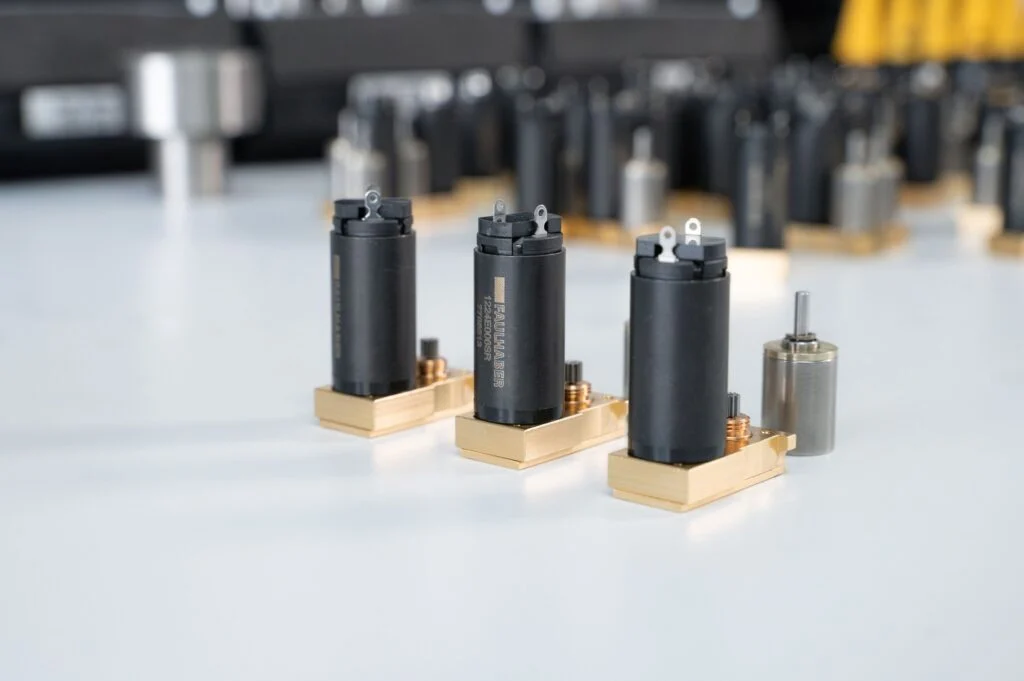
From the whisper-quiet precision needed in advanced medical devices to the unparalleled durability and reliability demanded in critical aerospace and defense applications, the call for fully customized gearbox design and manufacturing is not merely a preference but an engineering imperative. Standard, off-the-shelf components, while readily available and cost-effective for general uses, increasingly fall short of the exacting demands of modern, high-performance systems.
Chris Handcock, Design Lead at Electro Mechanical Systems, articulates this foundational principle: "Fully custom gearboxes are typically specified when the compromises associated with off-the-shelf products are unacceptable. Constraints around space, weight, or cost often mean standard gearboxes meet individual requirements but fail to optimize overall system performance." This sentiment underscores a growing trend across industries where incremental gains in efficiency, precision, and longevity translate into significant competitive advantages and operational safety.
The Evolution of Precision: Why Customization Reigns Supreme
Historically, engineers often designed systems around available components, accepting certain performance limitations or adding bulky workarounds. However, with the relentless march of technological progress, particularly in fields like robotics, automation, and advanced diagnostics, this approach is no longer viable. The inherent trade-offs in standard gearboxes—such as excessive backlash, suboptimal efficiency, increased noise, or inadequate thermal management—can severely impact the overall functionality and lifespan of a sophisticated machine.
A recent publication, the Worldwide Industrial Single-stage Gearbox Market Research Report 2026, Forecast to 2032, highlights a compelling market shift, indicating that more than 60% of end-users now express a distinct preference for customizable options. This significant majority seeks solutions that can be precisely tailored to their unique operational requirements, moving beyond the ‘one-size-fits-all’ mentality. This trend is a clear indicator of industries’ increasing sophistication and the critical need for components that are perfectly integrated rather than merely fitted.
Beyond the Standard: Addressing Unique Application Demands
The need for custom solutions extends far beyond basic performance metrics. Modern applications frequently demand materials or features simply unavailable in stock products. Consider the following scenarios:
- Harsh Environments: Industries operating in extreme conditions, such as deep-sea exploration, desert oil fields, or high-radiation nuclear facilities, require enhanced ingress protection (IP ratings), materials resistant to specific chemicals or corrosive agents, and specialized lubricants capable of maintaining viscosity and performance across vast temperature fluctuations.
- Cleanroom & Medical Applications: Medical devices, pharmaceutical manufacturing, and semiconductor production demand non-outgassing materials to prevent contamination, smooth, easily cleanable surfaces for sterility, and often lightweight designs, particularly for handheld surgical tools or diagnostic equipment. Biocompatibility and resistance to sterilization processes (like autoclaving or gamma irradiation) are paramount.
- Aerospace & Defense: Weight is a critical factor, driving the use of lightweight, high-strength alloys. Gearboxes must withstand extreme temperatures, vibrations, and shock loads, often requiring redundant systems and specialized certifications to ensure mission-critical reliability.
- Robotics & Automation: Low backlash, high stiffness, and dynamic response are crucial for precise motion control, especially in collaborative robots (cobots) where safety and smooth interaction with humans are key.
Moreover, customization frequently enables functional integration, consolidating multiple components—such as sensors, encoders, brakes, or even cooling channels—into a single gearbox unit. This not only simplifies procurement and assembly but also reduces the overall footprint, minimizes potential points of failure, and enhances system robustness by reducing interfaces and improving alignment.
The Design Journey: A Chronology of Precision Engineering
The development of a custom gearbox is a meticulous, multi-stage process that moves from abstract requirements to tangible, validated performance. It is a collaborative endeavor between the client’s design engineers and the specialized gearbox manufacturer, marked by iterative refinement and rigorous validation.
Phase 1: System-Level Definition and Needs Assessment
The journey begins not with gearbox specifications, but with a comprehensive understanding of the overarching system and its operational environment. As Handcock notes, "design engineers rarely present with fully defined specifications. Instead, custom design begins with system-level definition of the application via physical modeling and theoretical calculations of loads, speeds, duty cycles, and service life." This initial phase involves:
- Load Analysis: Characterizing static, dynamic, shock, and torsional loads.
- Speed Requirements: Defining input and output speeds, reduction ratios, and speed variations.
- Duty Cycle: Understanding continuous, intermittent, or cyclic operation patterns.
- Environmental Factors: Temperature range, humidity, vibration, shock, potential contaminants, and atmospheric pressure.
- Service Life and Reliability Targets: Defining the expected operational lifespan and acceptable failure rates.
- Spatial and Weight Constraints: The physical envelope available and target mass.
For existing solutions experiencing issues, reverse engineering and real-world performance analysis are invaluable. Instrumenting systems with sensors to capture operating data allows suppliers to develop accurate specifications that fit within an existing design’s available space and behavior, addressing quality or reliability issues caused by off-the-shelf gearboxes operating beyond their datasheet limits.
Phase 2: Conceptual Design and Material Selection
Once requirements are solidified, conceptual designs are explored. This involves selecting appropriate gear types (e.g., spur, helical, bevel, worm, planetary) based on efficiency, noise, backlash, and torque requirements. Bearing arrangements, lubrication strategies (grease, oil bath, splash, forced lubrication), and sealing mechanisms are also determined.
Material choice is paramount. While commercial-grade steels offer cost-effectiveness, high-performance applications often demand:

- Lightweight Alloys: Stainless steels, aluminum alloys, and titanium alloys for aerospace, medical, and portable devices, offering superior strength-to-weight ratios and corrosion resistance.
- Advanced Ceramics: For extreme temperatures, wear resistance, or non-magnetic properties.
- High-Performance Polymers/Composites: For specific weight, damping, or dielectric properties.
- Specialized Coatings: Such as Diamond-Like Carbon (DLC) or Physical Vapor Deposition (PVD) coatings to enhance wear resistance, reduce friction, or improve corrosion protection.
Phase 3: Detailed Engineering and Simulation
With conceptual designs in place, detailed engineering commences using advanced CAD/CAM software. This stage involves:
- Gear Geometry Optimization: Precision calculations for tooth profiles, helix angles, and contact ratios to minimize stress, noise, and backlash.
- Finite Element Analysis (FEA): Simulating stress distribution in gears, shafts, and housings under various load conditions to identify potential failure points and optimize material usage.
- Computational Fluid Dynamics (CFD): Modeling lubricant flow and thermal dissipation to ensure effective cooling and lubrication throughout the gearbox.
- Multi-Body Dynamics (MBD) Simulation: Analyzing dynamic behavior, vibration, and noise generation, especially critical for quiet operation or high-speed applications.
Phase 4: Prototyping and Manufacturing
Following detailed design, a production-representative prototype is often created. This stage leverages modern manufacturing techniques:
- Precision Machining: CNC milling, turning, grinding, and specialized gear cutting (hobbing, shaping, skiving) to achieve extremely tight tolerances.
- Heat Treatment: Carburizing, nitriding, induction hardening to enhance gear tooth strength and wear resistance.
- Surface Finishing: Honing, lapping, superfinishing to improve surface quality, reduce friction, and extend life.
- Additive Manufacturing (3D Printing): Increasingly used for complex housings, internal features, or rapid prototyping of non-critical components to reduce weight and consolidate parts.
Phase 5: Rigorous Testing and Validation
Validation is the final, critical step, confirming that the custom gearbox meets all specified requirements.
- Performance Testing: Measuring actual torque, speed, efficiency, and backlash.
- Endurance Testing: Operating the gearbox under representative or accelerated duty cycles to simulate years of service and identify wear patterns or potential failure modes.
- Environmental Testing: Exposing the gearbox to extreme temperatures, humidity, vibration, and shock to assess performance in real-world conditions.
- Noise and Vibration Analysis: Measuring sound levels and vibration signatures to ensure compliance with operational requirements.
- Destructive Testing: Pushing components to their limits to determine ultimate strength and failure mechanisms.
This comprehensive validation process, often involving real-world application testing, allows issues to be identified that would be extremely difficult to predict through simulation alone, such as failures occurring only under specific environmental or operational scenarios.
Navigating the Trade-offs: Cost, Size, Weight, and Performance
Gearbox customization inherently involves navigating a complex web of trade-offs, primarily between performance, cost, size, and weight. Design engineers consistently seek high torque density, compact packaging, and long service life at a competitive price. Managing these competing demands is central to successful custom design.
Mike Guilliford, author of Apex Dynamics’ Servo Gearbox Secrets, underscores the paramount importance of precision: “The demand for higher accuracy, efficiency, and reliability in components across industries is increasing… and [the importance of] gearbox selection is often underestimated.” This rising demand for precision directly impacts the trade-off matrix.
Achieving specific performance targets—especially those requiring bespoke components, exotic materials, or intricate manufacturing processes—incurs additional costs. Smart design strategies, such as reducing component counts, optimizing material use, or leveraging proprietary components where appropriate, can mitigate these expenses. In some instances, simplifying certain non-critical functionalities can strike a better balance between cost and performance without sacrificing core requirements.
The symbiotic relationship between the motor and gearbox is also a critical factor in these trade-offs. A high-performance motor can deliver the necessary power within tight spatial constraints, but its cost must be weighed against the gearbox design. The final solution is invariably a system-level compromise, not an isolated gearbox decision. For example, operating a motor at a lower, more efficient speed while selecting an appropriate gearbox ratio can extend component life, even if it means a slightly larger gearbox.
Constraints around size and weight are particularly challenging in aerospace or portable medical devices. When the available envelope is fixed, maintaining performance may necessitate adjustments like reducing safety factors or optimizing material selection. Safety factors, typically ranging from 1.5 to 2 times the expected operating load for gear teeth and bearings, account for real-world uncertainties—load variations, thermal effects, and manufacturing tolerances. Through detailed verification calculations and rigorous testing, these margins can be carefully refined, ensuring critical components remain robust even within stringent spatial limits.
Broader Implications and the Future of Drive Systems
The strategic shift towards custom gearbox solutions has profound implications across various industrial sectors:
- Accelerated Innovation: Custom gearboxes enable engineers to push the boundaries of design, developing entirely new products and functionalities previously constrained by standard component limitations. This fosters innovation in fields from advanced robotics to next-generation medical implants.
- Enhanced Competitive Advantage: Companies that leverage bespoke drive solutions can achieve superior product differentiation, leading to improved market positioning and sustained competitive edge. This is particularly true in highly specialized or niche markets.
- Operational Efficiency and Sustainability: Optimized custom gearboxes can lead to significant gains in energy efficiency, reduced maintenance requirements, and extended product lifecycles, contributing to lower operational costs and greater sustainability.
- Integration with Industry 4.0: Custom drive systems, often designed with integrated sensors and intelligent controls, are perfectly suited for smart factories, predictive maintenance, and real-time performance monitoring, aligning with the principles of Industry 4.0.
- Risk Mitigation: By precisely matching the gearbox to the application, the risk of premature failure, costly downtime, and safety hazards associated with overstressed or poorly suited standard components is significantly reduced.
The ultimate goal, as underscored by Electro Mechanical Systems, is to design the gearbox as an integral part of a complete drive system, rather than treating it in isolation. This allows the gearbox to be matched precisely to the motor’s operating characteristics, whether the priority is maximum power density, high efficiency, or an extended lifecycle. At the mechanical interface level, custom housings can be designed to integrate directly with the customer’s subsystem, eliminating the need for adaptor plates or secondary fixtures often required with off-the-shelf gearboxes. This consolidation improves alignment, reduces assembly complexity, and enhances overall system robustness, ultimately producing a gearbox that works seamlessly and optimally within its intended application.
As industries continue to demand higher performance, greater efficiency, and absolute reliability from their mechanical systems, the role of specialized manufacturers like Electro Mechanical Systems, adept at crafting bespoke gearbox solutions, will only grow in strategic importance. The future of precision engineering is undoubtedly custom.