Researchers at the University of Oxford have achieved a significant breakthrough in quantum mechanics, successfully creating an entirely new class of quantum superpositions. These novel states, which represent a departure from previous methodologies, are uniquely constructed from highly nonclassical quantum components, pushing the boundaries of what is possible in quantum state engineering. This pioneering work holds profound implications for the future of quantum computing, potentially moving beyond the limitations of traditional binary systems, while also promising improvements in sensing technologies and offering fresh perspectives into the foundational principles of quantum physics.
Unveiling the Quantum Realm: From Schrödinger’s Thought Experiment to Lab Reality
At the heart of quantum mechanics lies the counterintuitive principle that quantum objects can exist in multiple states simultaneously—a phenomenon known as superposition. This concept, which challenges our everyday classical intuition, is perhaps most famously illustrated by Erwin Schrödinger’s 1935 thought experiment involving a hypothetical cat. In this scenario, the cat is placed in a sealed box with a device that has a 50% chance of releasing poison, linked to the decay of a radioactive atom. According to quantum mechanics, until the box is opened and the system observed, the atom exists in a superposition of both decayed and undecayed states, consequently rendering the cat simultaneously "alive and dead." While a dramatic and fictionalized example, Schrödinger’s cat serves as a powerful metaphor to highlight the peculiar nature of quantum reality, where definite outcomes only emerge upon measurement.
In the laboratory, scientists routinely generate and manipulate real quantum superpositions. These are not mere thought experiments but tangible states of matter and energy. Over decades, researchers have demonstrated superposition in various systems, including individual atoms, photons of light, and even the collective motion of particles. The ability to precisely create and control these delicate quantum states is paramount for developing next-generation technologies, such as ultra-precise atomic clocks that underpin global navigation systems, and, most notably, quantum computers.
A fundamental building block in the pursuit of quantum computing is the quantum bit, or qubit. Unlike a classical bit, which can only be in a state of 0 or 1, a qubit can exist in a superposition of both 0 and 1 simultaneously. This inherent parallelism is what gives quantum computers their potential for exponential computational speed-up over classical machines. However, the quantum world offers far richer possibilities than simple two-state behavior. Systems known as quantum harmonic oscillators, for instance, can occupy a vast number of discrete energy levels, providing a much larger Hilbert space—the mathematical space representing all possible states of a quantum system—for encoding and processing information. These oscillators are ubiquitous in physics, describing phenomena from the quantized vibrations of atoms in a crystal lattice to the electromagnetic modes of light and the motion of trapped ions.
Scientists have extensively utilized quantum harmonic oscillators to generate various types of quantum superpositions. A particularly well-known example is the "cat state," where an oscillator is prepared in a superposition of two distinct wave packets that are effectively moving in opposite directions or are spatially separated. These wave packets, often referred to as coherent states, are the closest quantum analogues to classical motion, representing the quantum limit of a classical oscillating system. Pioneering work in the late 20th and early 21st centuries, notably by Nobel laureates such as Serge Haroche and David Wineland, demonstrated the creation and manipulation of these macroscopic quantum superpositions in systems like microwave cavities and trapped ions, laying crucial groundwork for the field.
A Paradigm Shift: Building Quantum States from Intrinsic Nonclassicality
The latest achievement by the Oxford team marks a significant evolution in this quest. Rather than assembling cat-like states from these "classical-like" coherent-state wave packets, their novel technique involves combining a broad spectrum of quantum components that are already intrinsically highly nonclassical. This represents a paradigm shift from constructing complex superpositions out of relatively simple, classical-analogue building blocks, to utilizing more exotic, fundamentally quantum components from the outset.
An illustrative example of such nonclassical components includes squeezed states. In a squeezed state, the quantum uncertainty—a fundamental limit imposed by Heisenberg’s uncertainty principle—is redistributed. This means that the uncertainty in one observable quantity (like position) is reduced below its standard quantum limit, at the expense of increased uncertainty in its conjugate observable (like momentum). By leveraging these pre-existing nonclassical properties, the Oxford researchers have demonstrated the creation of superpositions where quantum uncertainty is distributed in an entirely new and complex manner across each part of the state. This approach moves beyond simply creating superpositions of ‘distinct classical-like possibilities’ to creating superpositions of ‘distinct quantum possibilities’ that have no classical counterpart.
The Trapped-Ion Platform: A Precision Quantum Laboratory
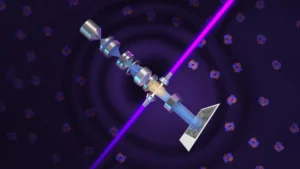
The experimental setup relied on the exquisite control offered by a single trapped ion. Trapped ion systems are among the leading platforms for quantum information processing and fundamental quantum studies due to their exceptional coherence times, high gate fidelities, and the ability to isolate and precisely manipulate individual quantum systems. In this configuration, the ion combines two distinct quantum systems within a single, highly controllable platform: its internal electronic state behaves as a conventional qubit, capable of existing in a superposition of different energy levels, while its physical motion acts as a quantum harmonic oscillator, able to occupy numerous motional states. This unique combination makes trapped ions an ideal testbed for exploring quantum states that extend beyond the binary limitations of standard qubits.
To generate these novel states, the Oxford researchers meticulously engineered specific interactions between the ion’s internal qubit state and its motional degrees of freedom. These interactions, typically mediated by precisely tuned laser pulses, effectively entangle the ion’s internal state with various possible motional states. Following this entanglement step, the team performed a crucial mid-circuit quantum measurement on the ion’s internal state. This measurement, a cornerstone of quantum mechanics, collapses the entangled system, causing the ion’s motion to project into the desired superposition of highly nonclassical components.
Dr. Sebastian Saner, the lead author from the Department of Physics at the University of Oxford, elucidated the power of their method: "This approach gave us an unprecedented tool to sculpt the quantum superposition into almost any shape imaginable. It allows for a degree of customization in quantum state preparation that was previously unattainable with conventional methods." This ability to precisely tailor the quantum state’s waveform opens up vast possibilities for exploring complex quantum phenomena and designing states optimized for specific applications.
Programmable Control and Rigorous Verification
A hallmark of this new method is the high degree of programmable control it affords over the quantum states produced. By precisely adjusting experimental parameters—suchg as laser pulse durations, frequencies, and intensities—the team could modify the relative size, orientation, and spatial separation of the nonclassical components within the superposition. This unparalleled flexibility allowed them to generate a diverse array of unusual motional quantum states using the very same trapped-ion system, showcasing the robustness and versatility of their technique.
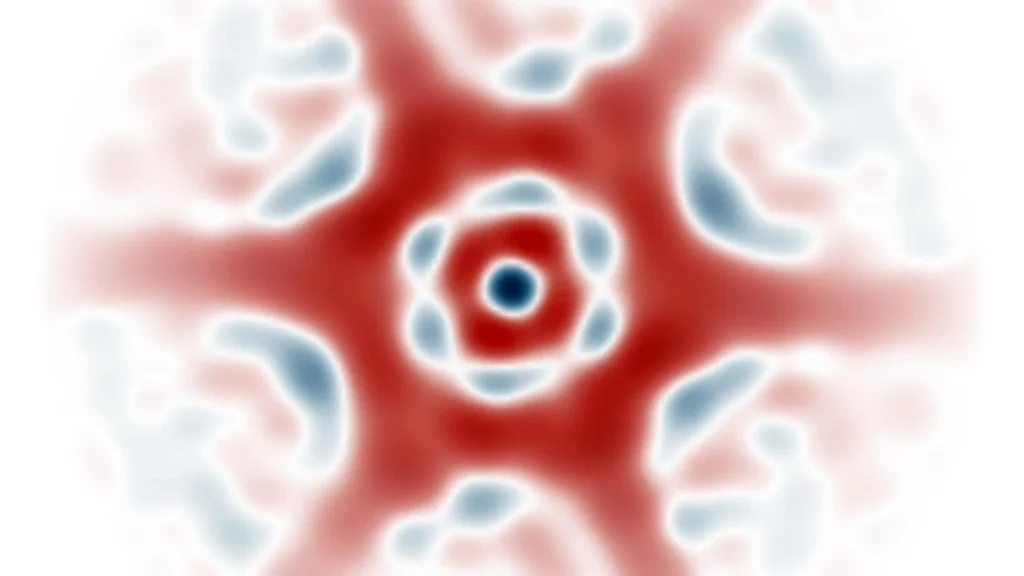
Crucial to any quantum experiment is the rigorous verification that the created states are indeed genuinely quantum and not merely classical mixtures. The researchers painstakingly reconstructed the quantum states directly through a process known as quantum state tomography. Their meticulous measurements revealed clear and unmistakable signatures of quantumness: intricate interference patterns and regions of Wigner negativity. Wigner negativity, a concept rooted in the Wigner quasi-probability distribution, is considered a definitive indicator that a quantum state cannot be described by classical probability distributions. Its presence unambiguously confirms that the experiment had successfully produced genuine quantum superpositions composed of truly nonclassical motional states, existing beyond any classical analogy.
Historical Context and the Evolution of Quantum State Engineering
The journey to this Oxford breakthrough is rooted in a rich history of quantum mechanics. While Schrödinger’s cat was proposed in 1935, experimental verification of quantum superpositions took many decades. Early experiments focused on microscopic particles like photons and electrons, demonstrating their wave-particle duality and superposition properties. The 1980s and 90s saw the development of sophisticated techniques to isolate and manipulate individual atoms and ions, leading to the first demonstrations of "cat states" in trapped ions by David Wineland’s group and in microwave cavities with Rydberg atoms by Serge Haroche’s group, both of whom later shared the Nobel Prize in Physics in 2012 for their groundbreaking work. These pioneering efforts established the feasibility of creating macroscopic quantum superpositions, paving the way for more complex state engineering. The Oxford work builds directly upon this legacy, pushing the boundaries from superpositions of classical-like states to superpositions of states that are nonclassical at their very core. This progression highlights a continuous drive in quantum physics to explore ever more exotic and robust quantum states.
Expert Acclaim and Future Directions
The scientific community has reacted with considerable interest to the Oxford team’s findings. Dr. Raghavendra Srinivas, who supervised the work and is also from the Department of Physics at the University of Oxford, expressed the excitement surrounding the discovery. "We were really encouraged by our colleagues’ reaction when we showed them what we had made," he stated. "We believe we’re still scratching the surface of what’s possible, both for practical applications and for understanding these states at a more fundamental level." This sentiment resonates across the field, with many experts suggesting that this development represents a significant stride in quantum state engineering, opening up new avenues for both theoretical and experimental exploration. The collaborative nature of modern quantum research is also evident, with the Oxford team now actively working with theoretical physicists to gain a deeper understanding of precisely "how quantum" these newly created states truly are, aiming to quantify their nonclassicality and potential resilience.
Profound Implications for Quantum Technologies and Fundamental Physics
The research by the Oxford team points towards a future where quantum technologies may increasingly rely on quantum oscillators and continuous variable systems, rather than solely on simple two-level quantum bits. This shift has several profound implications:
-
Advancing Quantum Computing Beyond Binary:
- Richer Information Encoding: Quantum harmonic oscillators, with their multiple energy levels, offer a significantly richer Hilbert space than qubits. This means they can potentially encode and process more information per physical unit, leading to "qudits" (quantum digits) where d > 2. This could drastically increase the computational power and efficiency of quantum processors.
- Enhanced Error Correction: One of the most significant challenges in quantum computing is protecting delicate quantum information from decoherence and noise. The nonclassical states created by the Oxford team may offer inherent robustness against certain types of errors. For example, some bosonic codes, like the Gottesman-Kitaev-Preskill (GKP) states which are superpositions of squeezed states, are theoretically predicted to be highly resilient to common noise channels. If these complex nonclassical superpositions can be reliably generated and manipulated, they could pave the way for simpler and more effective error-correction strategies, which are crucial for building fault-tolerant quantum computers. This could significantly reduce the overhead typically associated with quantum error correction, accelerating the path to large-scale quantum computation.
-
Revolutionizing Sensing Technologies:
- The ability to precisely control and manipulate highly nonclassical states has direct applications in quantum metrology and sensing. By leveraging the enhanced sensitivity inherent in squeezed states and other nonclassical superpositions, researchers could develop ultra-precise sensors that surpass the standard quantum limit, a fundamental noise floor in classical measurements. This could lead to breakthroughs in areas such as:
- Atomic Clocks: Even more accurate atomic clocks, leading to improved GPS systems, fundamental tests of physics, and better synchronization for global networks.
- Gravimeters and Accelerometers: Highly sensitive devices for mapping gravitational fields, geological exploration, and inertial navigation.
- Magnetometers: Extremely sensitive detection of magnetic fields for medical imaging, materials science, and security applications. The unique entanglement and nonclassical properties of these new states could offer unparalleled precision.
- The ability to precisely control and manipulate highly nonclassical states has direct applications in quantum metrology and sensing. By leveraging the enhanced sensitivity inherent in squeezed states and other nonclassical superpositions, researchers could develop ultra-precise sensors that surpass the standard quantum limit, a fundamental noise floor in classical measurements. This could lead to breakthroughs in areas such as:
-
Probing the Quantum-Classical Boundary:
- Beyond technological applications, this research provides a powerful new experimental platform for investigating one of physics’ most enduring and biggest questions: where exactly does the boundary lie between the strange, counterintuitive quantum world that governs fundamental particles and the familiar classical world that we experience every day? By creating superpositions of increasingly "macroscopic" and highly nonclassical components, scientists can rigorously test the limits of quantum mechanics and explore phenomena like decoherence—the process by which quantum states lose their coherence and become classical-like due to interaction with their environment. Understanding this boundary is crucial for a complete picture of reality and could potentially lead to new insights into quantum gravity and the nature of space-time.
In conclusion, the University of Oxford’s breakthrough in engineering quantum superpositions from inherently nonclassical components represents a significant leap forward in quantum science. By offering unprecedented control over exotic quantum states, this research not only paves the way for more powerful and robust quantum computers and ultra-sensitive measurement devices but also provides an invaluable tool for exploring the deepest mysteries of quantum reality. The journey towards fully harnessing the quantum realm continues, and this latest development marks a pivotal moment in that ongoing exploration.