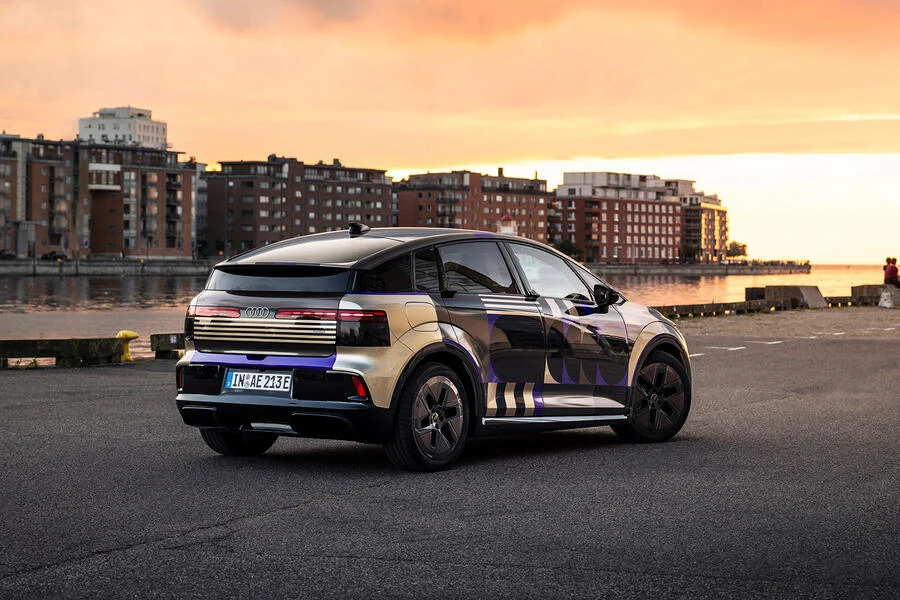
In an automotive landscape increasingly defined by nostalgia and the accelerating transition to electrification, Audi is reviving a nameplate that, while never a commercial blockbuster, has cultivated a devoted following: the A2. This unexpected resurgence, more than two decades after its original debut, sees the compact hatchback reborn as the A2 E-tron, a thoroughly modern electric vehicle that draws inspiration from its predecessor’s pioneering spirit while embracing contemporary engineering and market demands.
The original Audi A2, launched in 1999 and produced until 2005, was a testament to uncompromising engineering. Its defining feature was its lightweight, all-aluminium spaceframe chassis, a groundbreaking approach for a mass-produced vehicle of its size. This innovative construction, combined with a focus on radical aerodynamics and efficient powertrains, resulted in a surprisingly spacious and remarkably fuel-efficient small hatchback. However, despite its technical prowess and the cult status it has since achieved, the A2 was not a commercial success during its production run. Unlike iconic retro revivals such as the modern Mini or the eagerly anticipated electric Renault 5, the A2’s high manufacturing costs and premium pricing, relative to its compact dimensions, hampered its sales performance and profitability for Audi.
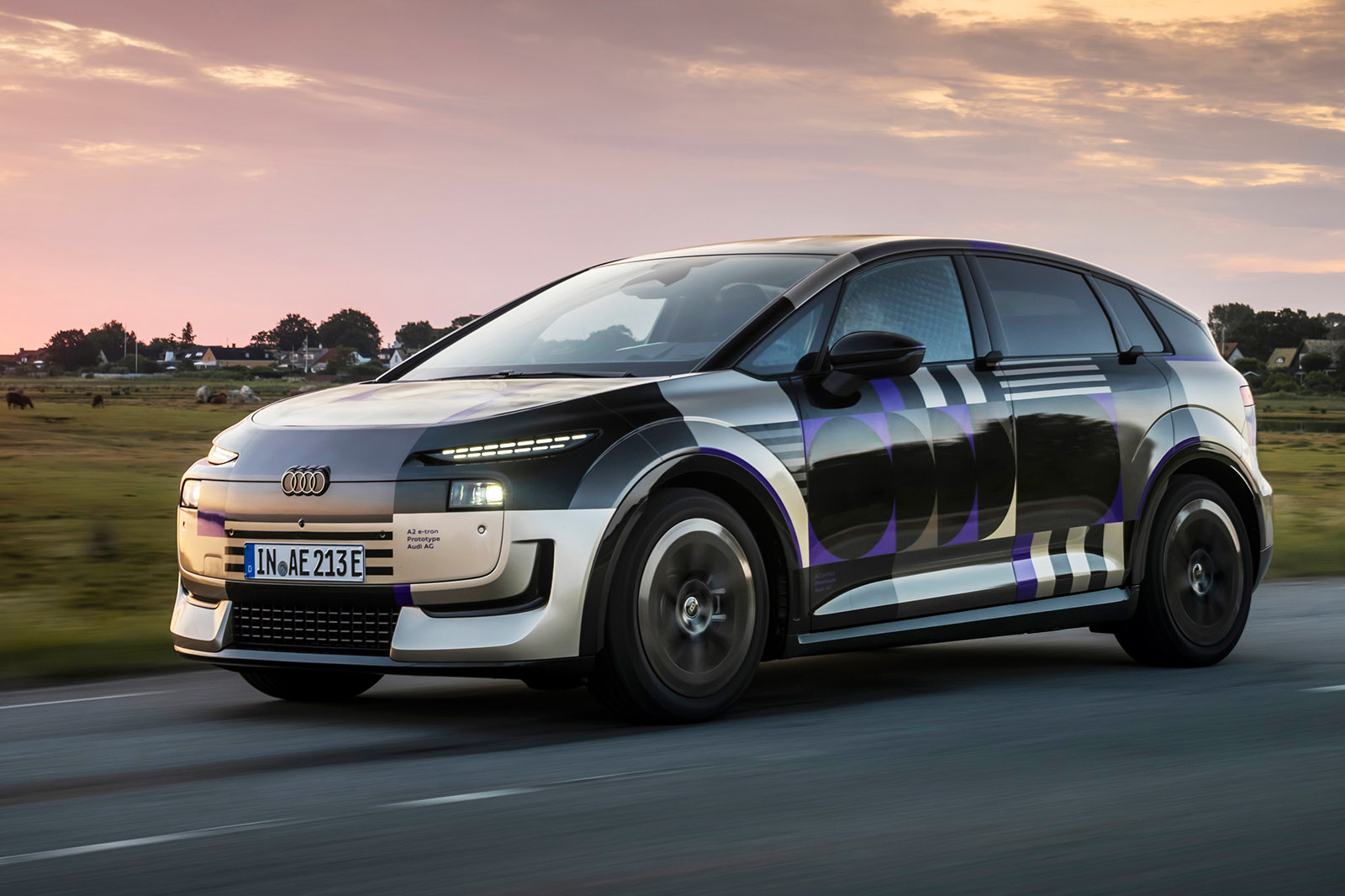
The genesis of the new A2 E-tron, however, stems not from a desire to directly replicate past glories, but from a forward-looking engineering challenge. Audi’s objective was to develop an electric vehicle smaller than its Q4 E-tron SUV and optimize it for aerodynamic efficiency to maximize range with a relatively modest battery pack. The design process, driven by the principles of airflow management, logically led to a shape strikingly reminiscent of the original A2. The short, bluff front end seamlessly transitions into a monolithic body, minimizing unnecessary air displacement. Similarly, a truncated teardrop profile enhances practicality while a split rear window, a distinctive element of the original, is retained to improve rearward visibility – a crucial consideration for aerodynamic optimization.
While the new A2 E-tron channels the spirit of its predecessor, it operates within the pragmatic realities of the modern automotive industry. The era of highly experimental, unprofitable niche vehicles is largely behind manufacturers. The imperative for affordability, scalability, and broad market appeal dictates a more conventional approach. Consequently, the A2 E-tron is not built upon an entirely bespoke, radical platform. Instead, it leverages the established and versatile Volkswagen Group MEB platform, albeit in its latest iteration, which underpins a range of electric vehicles from across the group, including the Volkswagen ID 3 and Cupra Born. This strategic decision allows Audi to benefit from economies of scale and proven electric vehicle architecture, ensuring a more commercially viable product. The A2 E-tron is also understood to be positioned to indirectly fill the void left by the recently discontinued A1 and Q2, offering a premium compact electric alternative.
The adoption of the MEB platform brings with it a suite of technological advancements. Notably, Audi has incorporated a new battery chemistry for the mid-range option: lithium-iron-phosphate (LFP) cells are replacing the traditional nickel-manganese-cobalt (NMC) chemistry. This shift offers significant advantages, primarily in terms of longevity and daily usability. LFP batteries are known for their stability and are less susceptible to degradation when consistently charged to 100%, a common practice for daily drivers that can be detrimental to NMC cells over time. This means A2 E-tron owners can confidently charge their vehicles to full capacity without undue concern for battery health, maximizing the vehicle’s usable range on a day-to-day basis.
Further efficiency gains are attributed to the new "APP350" electric motor. This powertrain unit has been meticulously engineered to reduce energy consumption. Innovations include the use of thinner materials within its construction and a refined lubrication system. The motor now features a separate oil pan, preventing the gears from constantly churning through a deep bath of oil. This reduces parasitic drag, a significant factor in overall energy efficiency, particularly at higher speeds. These incremental improvements contribute to a more potent and efficient electric drivetrain, crucial for a vehicle aiming to maximize range.
The A2 E-tron is, in essence, Audi’s interpretation of the Volkswagen ID 3, translated through the brand’s distinct design language and premium aspirations. While official dimensions are yet to be released, the vehicle is expected to be in a similar size class to the ID 3. This positions the A2 E-tron in a competitive segment of the electric vehicle market. With established premium players like BMW and Mercedes-Benz yet to introduce direct electric rivals to their respective 1 Series and A-Class models, the A2 E-tron will contend with compelling alternatives such as the Renault Megane E-Tech Electric, the Volvo EX30, and the Mini Countryman E. It will also face competition from its MEB platform sibling, the Cupra Born.
Under the Camouflage: Interior Insights
While external details of the A2 E-tron are gradually emerging, with prototypes undergoing extensive testing, the interior remains largely under wraps. However, a closer inspection of camouflaged test vehicles has provided valuable insights into Audi’s approach to cabin design for its new compact EV. It appears that the A2 E-tron will align more closely with recent Audi models than with its MEB platform cousin, the ID 3. This means a more familiar Audi interior aesthetic, likely featuring the digital displays, steering wheel design, and the distinctive column stalk array reminiscent of 1980s Citroën models that have become a hallmark of current Audi interiors.
This integration of established Audi design elements is largely positive. The company’s recent interiors have generally been praised for their intuitive operation and robust build quality, conveying a sense of solidity and durability. However, the trend towards minimizing physical controls and the extensive reliance on touchscreens has drawn some criticism. The thick bezels surrounding the displays in some recent Audi models have been compared to early-generation tablets, suggesting a design choice that prioritizes a clean aesthetic over outright screen real estate or the tactile feedback of physical buttons.
Audi has also embraced contemporary material trends, utilizing knitted fabrics for the door tops and dashboard. This material, also seen in recent Mini models, offers a pleasant tactile experience. However, the overall interior aesthetic appears to be predominantly black and rather austere. While this understated approach is characteristic of Audi’s design philosophy, it raises questions about whether the cabin will feel sufficiently upmarket to justify a premium positioning, particularly when compared to rivals like the Renault Megane E-Tech Electric, which has been lauded for its more vibrant and individually styled interior. The challenge for Audi will be to balance its signature minimalist design with a sense of premium quality and occupant comfort that distinguishes it from more mainstream offerings, even those sharing its underlying architecture.
Historical Context and Market Implications
The revival of the A2 nameplate is a significant strategic move for Audi. It taps into a growing consumer interest in compact, efficient, and technologically advanced vehicles, particularly in the burgeoning electric vehicle market. The original A2’s reputation for innovation, despite its commercial shortcomings, provides a strong foundation of goodwill and a narrative of forward-thinking engineering. By rebranding its new compact EV as the A2 E-tron, Audi is not merely launching a new model; it is reintroducing a legend, albeit in a radically transformed guise.
The decision to base the A2 E-tron on the MEB platform underscores the industry-wide trend towards platform standardization and shared architectures in the EV era. This approach allows manufacturers to spread the significant development costs of electric vehicles across multiple models and brands, making electrification more financially sustainable. For Audi, it means faster time-to-market and the ability to offer a competitive product without the immense R&D investment that would be required for a bespoke EV platform at this segment.
The A2 E-tron’s positioning in the premium-ish compact EV segment will be crucial to its success. The market for these vehicles is intensifying, with established players and new entrants vying for market share. Audi’s brand equity, coupled with its commitment to design, technology, and perceived quality, provides a strong starting point. However, the A2 E-tron will need to offer a compelling blend of range, performance, interior refinement, and pricing to stand out against formidable rivals.
The success of the A2 E-tron could also signal a broader shift in Audi’s strategy for its smaller vehicles. With the A1 and Q2 discontinued, the A2 E-tron represents a bold reimagining of Audi’s entry-level offerings. If it proves successful, it could pave the way for further electric successors to other beloved, though perhaps not blockbuster, Audi models of the past, further embracing the retro-revival trend within a modern electric context. The automotive industry is in a period of rapid transformation, and the Audi A2 E-tron’s return is a compelling chapter in this ongoing evolution, demonstrating how past engineering ingenuity can be a catalyst for future electric mobility.