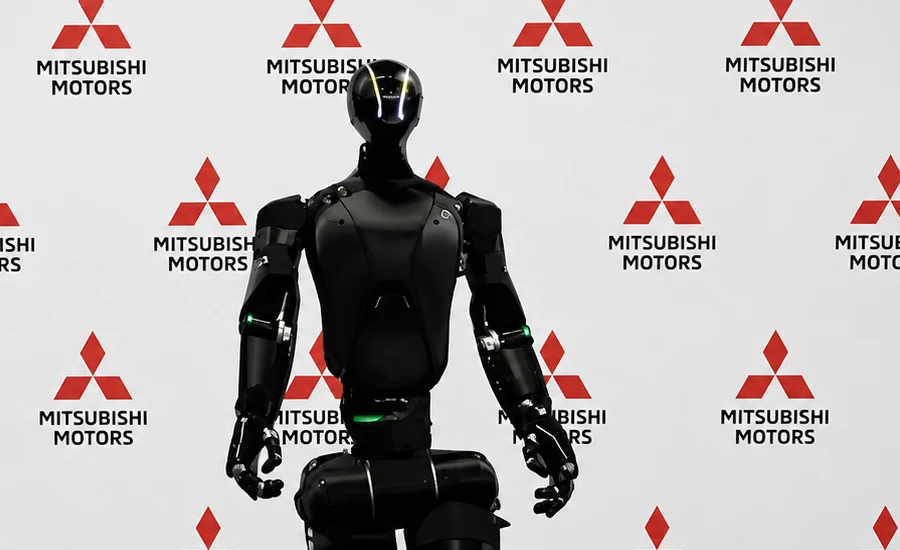
TOKYO – Mitsubishi Motors has announced ambitious plans to commence mass production of artificial intelligence-powered humanoid robots at one of its Japanese manufacturing plants in the first half of 2027. This strategic move, which positions the automaker at the forefront of advanced factory automation, represents one of the industry’s most significant commitments to large-scale robot production and the integration of physical AI into core manufacturing processes. The initiative aims to address pressing labor challenges and potentially establish a new revenue stream for the company by eventually offering these advanced robots to other manufacturers.
The automotive giant revealed that it will dedicate an unused engine production line at its Kyoto plant for the manufacturing of these cutting-edge humanoid robots, which have been developed by the Tokyo-based startup Highlanders Inc. With an ambitious production target of up to 1,000 robots per month, Mitsubishi is preparing to transform its operational capabilities and contribute to a broader industrial paradigm shift. The decision underscores a growing trend within high-tech manufacturing to leverage sophisticated robotics to enhance efficiency, overcome workforce constraints, and drive innovation.
Strategic Imperative: Addressing Japan’s Demographic Challenge
Mitsubishi Motors’ venture into mass-producing humanoid robots is deeply rooted in the pressing demographic challenges facing Japan. The nation has long grappled with a rapidly aging population and a declining birth rate, leading to severe and intensifying labor shortages across various sectors, particularly in manufacturing. According to data from Japan’s Ministry of Health, Labour and Welfare, the country’s working-age population has been shrinking steadily for years, with projections indicating a continued decline. In 2022, the working-age population (15-64) was approximately 74.2 million, a stark decrease from its peak of 87 million in 1995. Projections suggest this number could fall below 60 million by 2040, putting immense pressure on industries reliant on a robust human workforce.
The manufacturing sector, a cornerstone of Japan’s economy, has been particularly vulnerable. Factories often require specific skills, physical endurance, and consistent staffing, areas where human availability is increasingly scarce. A 2023 survey by the Japan Chamber of Commerce and Industry revealed that over 60% of small and medium-sized enterprises (SMEs) in manufacturing reported experiencing labor shortages. Traditional automation solutions, while effective for repetitive and predictable tasks, often fall short when it comes to complex, nuanced operations that require human-like dexterity, adaptability, and cognitive processing. This is where humanoid robots, equipped with advanced AI, offer a compelling solution. By deploying robots that can mimic human actions and adapt to dynamic environments, Mitsubishi aims to maintain and even boost productivity levels in the face of an ever-tightening labor market, securing its operational resilience for decades to come.
The Highlanders Humanoid: A Closer Look at the Technology
The humanoid robot, developed by Highlanders Inc., stands approximately 1.75 meters tall, a stature designed to seamlessly integrate into human-centric factory environments without requiring significant retooling or redesign of existing workspaces. This human-like form factor is crucial, as it allows the robots to navigate narrow aisles, operate standard machinery, and interact with tools originally designed for human use, thereby minimizing disruption and integration costs.
Central to the robot’s capabilities is its advanced artificial intelligence system, which enables it to autonomously assess its surroundings. This AI is not merely pre-programmed but is designed to learn and adapt, interpreting sensory input from high-resolution cameras, lidar, and other sensors to understand its operational context. This allows for dynamic path planning, sophisticated object recognition, and intelligent obstacle avoidance, making the robot far more versatile than traditional industrial robots confined to fixed, repetitive movements. The AI’s ability to process real-time data and make informed decisions on the fly is a game-changer for adaptability in dynamic factory settings.
Furthermore, the robot features highly articulated hands, a critical differentiator that sets it apart from many existing robotic solutions. These hands are equipped with multiple degrees of freedom and sophisticated force feedback sensors, capable of grasping and carrying a wide array of objects with varying shapes, sizes, and weights, mirroring the dexterity and sensitivity of a human hand. This advanced manipulation capability allows the robot to perform intricate tasks that traditionally require fine motor skills, such as assembling small components, precise wiring, detailed quality inspection, and handling delicate materials without causing damage. This level of dexterity is paramount for tasks in automotive manufacturing, where precision, adaptability, and careful handling are key. The combination of advanced AI and sophisticated manipulation hardware makes the Highlanders robot a formidable tool for future factory operations, poised to tackle complex tasks previously considered exclusively human domains.
The Evolution of Industrial Automation: A Historical Perspective
The introduction of humanoid robots represents the latest frontier in a long history of industrial automation, a journey that began with simple mechanical devices and evolved through several transformative phases. The first wave of industrial automation in the mid-20th century primarily focused on fixed-function machinery, such as robotic arms for welding, painting, and heavy lifting. These machines, while incredibly efficient for their specific, repetitive tasks, lacked flexibility and required significant reprogramming and retooling for any change in production, limiting their utility to high-volume, standardized processes.
The subsequent wave saw the rise of more versatile, multi-axis robots and later, collaborative robots (cobots) in the early 21st century. Cobots were designed with safety features to work alongside human operators, often assisting with tasks that were ergonomically challenging or required brute strength, such as lifting heavy parts or performing repetitive assembly. They introduced a new level of flexibility and human-robot interaction but still operated within defined parameters and often lacked the full range of human cognitive and physical adaptability needed for truly unstructured tasks.
Humanoid robots, like those Mitsubishi plans to mass-produce, signify a leap beyond these predecessors. They embody the aspiration to create machines that can operate in human environments with human-like versatility and intelligence. Their ability to perceive, interpret, and act in complex, unstructured, and dynamic settings is a game-changer. This transition from "fixed automation" to "flexible, intelligent automation" is driven by exponential advancements in AI, machine vision, haptics, and computational power, allowing robots to move beyond simple automation to genuine cognitive assistance and physical collaboration. Mitsubishi’s commitment is a clear signal that the industry is ready to embrace this next generation of robotic intelligence, moving from specialized tasks to general-purpose utility in manufacturing, capable of adapting to a wide array of roles within an existing human-centric factory layout.
Mitsubishi’s Production Strategy and Timeline

The decision to repurpose an existing engine production line at the Kyoto plant is a strategic one, demonstrating Mitsubishi’s commitment to efficiency and leveraging its established infrastructure. Engine production lines are typically highly automated, precise, and involve complex assembly processes, making them well-suited for the exacting standards required for robot manufacturing. This approach minimizes the need for entirely new capital expenditure on a greenfield site and allows for a quicker ramp-up to production. Furthermore, it highlights Mitsubishi’s intention to fully integrate advanced robotics into its core operations, not just as an end-product but also as a fundamental tool for its own manufacturing processes.
The first half of 2027 target for commencing mass production implies a rigorous development and testing phase over the next two to three years. This period will involve finalising robot designs, optimizing manufacturing processes, establishing robust supply chains for specialized components (including high-performance sensors, precise actuators, advanced AI chips, and durable materials), and implementing extensive quality control protocols. Mitsubishi’s decades of experience in high-volume, high-quality vehicle production are expected to be invaluable during this phase. Their robust quality systems and manufacturing expertise, honed through producing millions of vehicles, will be directly applied to ensure the reliability, safety, and performance of each humanoid robot, adhering to the stringent standards of the automotive industry.
Initially, these robots will be deployed within Mitsubishi’s own manufacturing facilities. This internal deployment serves multiple purposes: it acts as a real-world testing ground, allows for iterative improvements based on operational feedback, and directly addresses the company’s internal labor needs by automating routine or labor-intensive tasks. Only after successful internal integration and validation, demonstrating consistent performance and return on investment, will Mitsubishi consider offering these robots for sale to other manufacturers. This phased approach mitigates risk and ensures that a mature, proven product is eventually brought to the broader market, positioning them as a sophisticated and reliable solution for industrial automation challenges across various sectors.
Industry-Wide Adoption and Competitive Landscape
Mitsubishi’s announcement is not an isolated event but rather reflects a broader, accelerating trend within the global automotive and manufacturing industries to adopt humanoid robotics. Major players are increasingly investing in and trialling these advanced machines, signaling a collective belief in their transformative potential.
Toyota, for instance, has already initiated trial deployments of humanoid robots at a Canadian plant, exploring their capabilities in logistics and assembly. While details of Toyota’s specific robot models and deployment scale remain under wraps, their involvement underscores the industry’s shared vision for future factories. Similarly, BMW has publicly announced the introduction of humanoid robots from companies like Figure AI into its production lines in the United States, utilizing them for tasks such as material handling and picking. These early adoptions by automotive giants highlight the practical applicability and perceived benefits of humanoids in complex manufacturing environments, from assembly to logistics and quality control.
Beyond the automotive sector, companies like Boston Dynamics (with its ‘Atlas’ and ‘Stretch’ robots) and Agility Robotics (with ‘Digit’) are making significant strides in humanoid and bipedal robot development, attracting substantial investment and demonstrating increasingly sophisticated capabilities in mobility and manipulation. Tesla, under Elon Musk, has also famously announced its "Optimus" humanoid robot project, with ambitions for mass production and deployment across its factories and potentially for sale. These developments collectively indicate that the race to commercialize and integrate humanoid robots into the industrial landscape is intensifying. Mitsubishi’s move, with its specific focus on mass production and internal deployment before external sales, positions it as a significant player in shaping this competitive and rapidly evolving market. The anticipated growth of the global humanoid robot market, projected by various research firms to reach tens of billions of dollars by the next decade, further validates these strategic investments by leading manufacturers. This market expansion is driven by advancements in AI, declining hardware costs, and the undeniable need for flexible automation in a changing global workforce.
Economic and Societal Implications
The mass production and deployment of humanoid robots by a major industrial player like Mitsubishi Motors carries profound economic and societal implications. Economically, the widespread adoption of such robots could lead to significant gains in productivity and efficiency, particularly in countries facing demographic headwinds. Factories could operate more consistently, with fewer disruptions due to labor availability, potentially leading to higher output and more competitive pricing for goods. This could also drive innovation in related fields, such as AI development, sensor technology, advanced materials, and human-robot interface design. New jobs might emerge in robot maintenance, programming, integration, and oversight, potentially offsetting some of the potential job displacement in traditional, repetitive manufacturing roles. The World Economic Forum, for example, predicts a net positive impact on jobs from automation in the long run, with a shift towards roles requiring different skills.
Societally, the integration of humanoid robots will necessitate careful consideration of the future of work. While robots are intended to augment human capabilities and fill labor gaps, concerns about job displacement are inevitable. This will likely spur increased focus on reskilling and upskilling programs for the existing workforce, preparing them for roles that involve collaborating with robots or managing robotic systems. Governments, educational institutions, and corporations will need to adapt curricula to foster skills relevant to this new human-robot collaborative era, emphasizing creativity, critical thinking, and technical proficiency.
Furthermore, ethical considerations surrounding AI and robotics will become more prominent. Questions of safety in human-robot co-working spaces, accountability for robotic actions, data privacy (especially concerning AI’s learning capabilities and data collection), and the broader societal impact of increasingly autonomous machines will require robust regulatory frameworks and public discourse. Mitsubishi’s phased deployment strategy, starting internally, provides an opportunity to address some of these practical and ethical challenges in a controlled environment before broader market release. The success of this initiative could set a precedent for how industries navigate the transition to a more automated future, balancing technological advancement with human welfare and fostering a collaborative coexistence.
Challenges and Future Outlook
While the prospects for Mitsubishi Motors’ humanoid robot venture are promising, several challenges lie ahead. The initial cost of these advanced robots, despite mass production efforts, is likely to be substantial, requiring significant upfront investment from potential buyers. Integrating these complex systems into existing manufacturing ecosystems will also present complexities, demanding sophisticated software interfaces, robust network infrastructure, and skilled personnel for deployment, programming, and ongoing maintenance. Ensuring the safety of human-robot collaboration, especially with highly dexterous and autonomous machines, will be paramount and subject to rigorous regulatory scrutiny and international safety standards. The reliability and longevity of these sophisticated machines in demanding factory environments will also be a critical factor for widespread adoption.
Despite these hurdles, the long-term outlook appears robust. As AI and robotics technology continues to mature, economies of scale are expected to drive down production costs, and capabilities will expand further. Mitsubishi’s move could catalyze further innovation, driving down prices and increasing accessibility for a wider range of manufacturers, including SMEs. The company’s unique position as both a developer (through partnership with Highlanders) and a high-volume manufacturer gives it a distinct advantage in shaping the future of industrial humanoid robotics, allowing for direct feedback loops between operational needs and product development.
By leveraging its deep manufacturing heritage and embracing cutting-edge AI, Mitsubishi Motors is not just building robots; it is actively constructing a blueprint for the factory of the future. This initiative has the potential to redefine efficiency, address critical labor shortages, and establish Mitsubishi as a pivotal innovator in the evolving landscape of global industry. The year 2027 marks not just the beginning of a production line, but potentially the dawn of a new era in human-robot collaboration within the manufacturing world, setting a benchmark for intelligent automation and sustainable industrial growth.