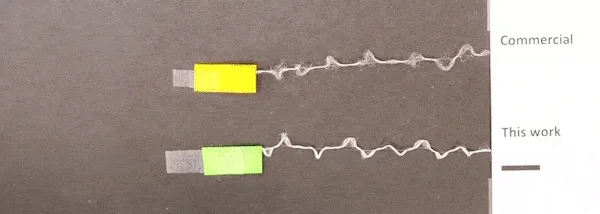
After a closet cleanout, the options for recycling old threads remain dismally few. Beyond simply donating used clothes, a robust, widely adopted process for recycling textiles, akin to those for bottles and cans, is largely non-existent. The consequences are staggering: the average American discards approximately 81 pounds of clothing each year, contributing to an alarming total of over 11 million tons of textiles that ultimately find their way into landfills or incinerators. This mounting problem, exacerbated by the rise of fast fashion and complex material compositions, presents a significant environmental and economic challenge. However, a groundbreaking innovation from engineers at the Massachusetts Institute of Technology (MIT) offers a beacon of hope, introducing a new, recyclable yarn designed to tackle this growing mountain of textile waste head-on.
The Escalating Problem of Textile Waste
The scale of textile waste is immense and rapidly expanding. Globally, an estimated 92 million tons of textile waste are generated annually, a figure projected to rise to 134 million tons by 2030. This waste stream is particularly problematic due to several factors. Landfills struggle to accommodate the sheer volume, with textiles often taking hundreds of years to decompose, releasing methane, a potent greenhouse gas, in the process. When incinerated, textiles release carbon dioxide and other pollutants into the atmosphere. Beyond disposal, the production of new textiles is incredibly resource-intensive, requiring vast amounts of water, land for cultivation (for natural fibers), and chemicals, all contributing to a significant carbon footprint. The environmental impact extends to microplastic pollution, as synthetic fibers shed tiny plastic particles during washing and wear, contaminating waterways and food chains.
A key contributor to this crisis is the phenomenon of "fast fashion," characterized by rapid production cycles, low prices, and transient trends, which encourages consumers to purchase and discard clothing at an unprecedented rate. This model places immense pressure on supply chains and accelerates the accumulation of waste. While some efforts exist for textile recycling, they are often limited to pure material streams, such as cotton or polyester, and struggle immensely with blended fabrics, which make up the vast majority of modern garments.
The Spandex Conundrum: A Major Recycling Hurdle
At the core of the textile recycling problem lies the pervasive use of elastic fibers, most notably spandex. This synthetic fiber, known for its exceptional stretch and recovery, has become ubiquitous in modern apparel, incorporated into everything from activewear and denim to everyday essentials. Svetlana Boriskina, a research scientist in MIT’s Department of Mechanical Engineering, highlights the severity of the issue: "Eighty percent of textiles on the U.S. market currently contain some amount of spandex, which makes them nonrecyclable."
Spandex itself is a polyurethane-based synthetic fiber. While incredibly springy, it lacks inherent strength, which is why it’s typically used as a core wrapped in a sheath of tougher polyester or nylon. This composite structure provides the desired combination of stretch and durability. However, this very blend of materials renders elastic yarns nearly impossible to recycle efficiently. Current recycling processes would first require a complex and often costly chemical treatment to separate the polyester or nylon sheath from the spandex core. While the polyester component might then be melted down and reused, there is no straightforward, scalable method to recycle the spandex itself, or the composite yarn as a whole, without chemical separation.
Boriskina emphasizes the drawbacks of these separation technologies: "Even though chemical separation technologies exist, they add extra cost and complexity, and usually require toxic chemicals that are harmful to the environment. That’s why most stretchy garments go to the dump." This technical and economic barrier ensures that the vast majority of garments containing spandex—which, as Boriskina notes, is a staggering 80% of the market—are destined for landfills or incineration, perpetuating the linear "take-make-dispose" model of consumption.
MIT’s Polyethylene Breakthrough: A New Era for Textile Recycling
Against this backdrop of escalating waste and intractable recycling challenges, the MIT engineers have unveiled a promising solution: a new, recyclable yarn crafted from a form of plastic commonly associated with everyday items like milk bottles and grocery bags – polyethylene. This innovation builds upon previous research from Boriskina’s group, who in 2021, explored the potential of polyethylene as a textile material. In that earlier work, they demonstrated that polyethylene yarn could be spun and woven into garments possessing desirable properties such as moisture-wicking, stain-resistance, and cooling capabilities. However, the critical leap in their latest study, published in the esteemed journal ACS Materials Letters, was to engineer polyethylene yarn to specifically mimic the tough and stretchy characteristics of spandex-based elastic yarns, while crucially maintaining full recyclability. The paper, titled "Polyethylene-Based Thermo-Mechanically Recyclable Elastic Yarns for Circular Textile Economy," details this significant advancement.
The MIT team, led by Boriskina and first author SeongHyeon Kim, alongside Duo Xu, Volodymyr Korolovych, Domingo Flores-Hernandez, Kaniz Moriam, and Daniel Braconnier, focused on creating a yarn that could directly replace spandex-polyester or spandex-nylon blends. These conventional blends, due to their dissimilar fiber compositions, cannot be recycled together. In stark contrast, the MIT team’s new yarn is designed from a specific combination of polyethylene-based materials that not only replicate the desired properties of stretch and strength but also ensure effortless recyclability.
The process begins with polyethylene, a thermoplastic polymer, meaning it can be melted down and reformed repeatedly without significant degradation. This inherent property makes it an ideal candidate for a circular economy. To achieve the stretch and strength of traditional elastic yarns, the researchers employed a clever design: a core-sheath structure. For the elastic core, they utilized a specific polyethylene-based resin engineered to produce a highly stretchy fiber. Surrounding this core, a second, stiffer polyethylene resin formed the protective sheath.
The fabrication process itself is reminiscent of pasta making, as described by first author SeongHyeon Kim: "You just melt it in a barrel with a heater, and then you extrude and spin it into fibers. It’s like a spaghetti machine." Pellets of each selected polyethylene resin are fed into a hopper, heated to approximately 350 degrees Fahrenheit (past their melting point), and then extruded through tiny openings to form hair-thin fibers. An industrial yarn spinner then winds the sheath fibers around the core fiber, creating the final elastic yarn.
The genius of this approach lies in the chemical uniformity. Because both the core and the sheath of the new yarn are derived from the same chemical family of polyethylene, they are chemically compatible. This eliminates the need for the complex and environmentally damaging chemical separation processes required for spandex blends. As Boriskina explains, "Because they are exactly the same chemistry, they play nicely together. That’s what makes this yarn very recyclable." At the end of its useful life, a garment made from this polyethylene yarn can be simply melted down as a whole and reformed into new yarn, or even cast into other plastic products like buttons or belt buckles, creating a truly closed-loop system.

Demonstrating Robust Recyclability
To rigorously prove the yarn’s recyclability, the MIT researchers conducted a series of demanding tests. They spun a spool of the new polyethylene yarn, then subjected it to a melting process, followed by re-spinning into new yarn. This cycle was repeated an impressive 10 times. After each cycle, the team meticulously evaluated the yarn’s mechanical properties, specifically its strength and flexibility. They precisely stretched threads and measured the force required for them to break, finding that even after 10 cycles of melting and re-spinning, the recycled yarn maintained strength and flexibility comparable to conventional thread and the original, virgin polyethylene yarn. This remarkable resilience underscores the material’s potential for truly sustainable, multi-cycle use within a circular economy.
The research also highlighted the versatility of polyethylene itself. Boriskina elaborated on its chemical structure, comparing it to "Christmas garland — a backbone of carbon, carbon, carbon, and also these dangling ‘decorations’ of hydrogen atoms or short branches with the same structure as a backbone." She added, "How these chains are arranged can change the properties of the whole structure." This molecular configurability allowed the team to tailor different polyethylene formulations to achieve the distinct properties needed for the stretchy core and the robust sheath, proving polyethylene’s wide range of potential applications in textiles.
Broader Implications and a Vision for a Circular Economy
The development of this recyclable polyethylene yarn carries profound implications across multiple sectors, from environmental conservation to the global fashion industry.
Environmental Impact: The most immediate and significant benefit is the potential to drastically reduce textile waste ending up in landfills and incinerators. By enabling garments to be recycled back into new textiles, the demand for virgin resources (oil for synthetic fibers, water and land for natural fibers) will decrease. This closed-loop system could also mitigate microplastic pollution, as the material can be recovered and reused instead of breaking down into environmental contaminants.
Economic Opportunities: A truly circular textile economy could unlock new economic models and industries. Facilities dedicated to collecting, sorting, melting, and re-spinning polyethylene textiles could emerge, creating jobs and fostering innovation. For brands, the ability to reclaim valuable materials from their own products could lead to cost savings and reduced reliance on volatile raw material markets. This shift aligns with the growing global emphasis on sustainable business practices and resource efficiency.
Transformation of the Fashion Industry: The fashion sector, often criticized for its environmental footprint, stands to gain immensely. Designers will no longer face the dilemma of choosing between stretch and recyclability. This innovation could spur a "design for recycling" ethos, where products are created with their end-of-life reprocessing in mind. It provides a tangible pathway for fashion brands to meet consumer demand for sustainable products and adhere to increasingly stringent environmental regulations. Consumers, in turn, could confidently purchase stretchy garments knowing they can be properly recycled.
Policy and Regulatory Shifts: The availability of such materials could influence policy makers to encourage or even mandate the use of recyclable components in textile production. Governments might offer incentives for companies adopting circular economy principles or implement extended producer responsibility (EPR) schemes that hold brands accountable for the end-of-life management of their products.
Challenges Ahead: While the promise is immense, significant challenges remain. Scaling up production from laboratory demonstrations to industrial-sized spools capable of weaving kilometers of yarn for a single garment will require substantial investment and collaboration with manufacturers. Establishing a comprehensive collection, sorting, and reprocessing infrastructure specifically for polyethylene textiles will be crucial for widespread adoption. Consumer awareness and participation in new recycling schemes will also be key. Furthermore, ensuring that the recycled material consistently maintains the desired aesthetic qualities, hand-feel, and performance characteristics over many cycles, comparable to virgin materials, will be essential for market acceptance.
Expert Outlook and Next Steps
The scientific community and environmental advocates are likely to laud this innovation as a critical step towards addressing one of the most pressing environmental challenges of our time. Industry experts, while acknowledging the inherent difficulties of transitioning established supply chains, will recognize the immense potential for long-term sustainability and market differentiation. This breakthrough offers a tangible solution to a problem that has long plagued the textile industry, providing a pathway to significantly reduce its environmental impact.
The MIT team is now focused on the immediate next steps: demonstrating the yarn’s utility in actual textile production. Boriskina states, "Now we have something that can be knitted and woven. That is the next stage." Their long-term vision is clear: to enable a circular fashion and textile economy where polyethylene garments can be routinely collected, melted down, and respun into new yarn, drastically reducing the need for virgin material production. As Boriskina concludes, "Hopefully it will prevent the need for making more and more textile materials, because you can keep recycling a large portion of it."
This pioneering research was made possible through crucial support from the DEVCOM Soldier Center via the U.S. Army Research Office, the Office of Naval Research Global through Tecnologico de Monterrey, and the MIT Portugal Program. The collaborative effort underscores the interdisciplinary nature of addressing complex global challenges and highlights the role of fundamental research in paving the way for sustainable futures. The MIT recyclable yarn represents not just a material innovation, but a blueprint for a more responsible and resource-efficient textile industry.






