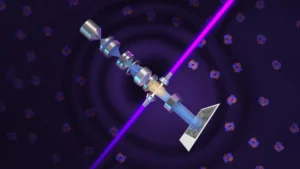
For the ambitious promise of fusion energy systems to transition from scientific endeavor to a reliable, commercial power source, researchers face the formidable challenge of precisely understanding and controlling matter at its most extreme state: superheated plasma. Within the heart of a fusion device, fuel is heated to hundreds of millions of degrees Celsius, creating a volatile, magnetically confined, or inertially compressed plasma where atomic nuclei fuse, releasing immense energy. Key characteristics such as temperature, density, pressure, impurity levels, and magnetic field configurations directly dictate the efficiency, stability, and ultimate sustainability of these fusion reactions. Measuring these extraordinary conditions, which often exist for mere microseconds or are encased within intensely radioactive environments, demands an array of sophisticated instruments known as diagnostics. These diagnostics serve as the indispensable "eyes and ears" inside a fusion device, providing the critical data necessary for scientists to guide experiments, validate models, and engineer future power plants.
A groundbreaking new report, spearheaded by the U.S. Department of Energy (DOE), has issued a compelling call for substantially increased and strategically focused investment in the nation’s fusion diagnostic capabilities. This comprehensive document unequivocally asserts that enhancing these crucial measurement tools is not merely beneficial but absolutely essential for providing the DOE and Congress with the robust, real-time data required to dramatically accelerate the development and eventual deployment of commercial fusion power plants. The report underscores that without a significant leap forward in diagnostic technology, the path to a sustainable fusion energy future will remain protracted and uncertain.
The Genesis of the Report: A Strategic Workshop on Measurement Innovation
The impetus for this pivotal report originated from the DOE’s 2024 Basic Research Needs Workshop on Measurement Innovation. This vital gathering was meticulously organized through the Office of Science’s Fusion Energy Sciences (FES) program, which serves as the primary federal steward for fusion research in the United States. The workshop brought together a diverse and highly specialized cadre of experts from across the nation’s fusion enterprise. Luis Delgado-Aparicio, a distinguished figure and head of advanced projects at the DOE’s Princeton Plasma Physics Laboratory (PPPL), skillfully chaired the intensive effort, working in close collaboration with Sean Regan, director of the Experimental Division at the University of Rochester’s Laboratory for Laser Energetics, who served as co-chair.
Participants included leading specialists from a wide spectrum of institutions: esteemed universities known for their cutting-edge plasma research, innovative private companies actively pursuing fusion commercialization, and key national laboratories such as PPPL, Oak Ridge National Laboratory, and Lawrence Livermore National Laboratory. Their collective mission was sharply defined: to meticulously identify and prioritize the diagnostic and measurement technologies most urgently needed to sustain and enhance U.S. leadership in the global race for fusion energy and plasma science. The workshop was not an isolated event; it was strategically aligned with and designed to support the overarching objectives of the DOE’s Fusion Science & Technology Roadmap. This ambitious roadmap, as the report highlights, "targets actions and milestones out to the mid-2030s, providing the scientific and technological foundation to support a competitive U.S. fusion energy industry." The diagnostic report, therefore, serves as a critical tactical component within this broader national strategy.
Delgado-Aparicio articulated the profound impact of this focus, stating, "Measurement innovations have led and will continue to lead to scientific and engineering breakthroughs in plasma science and technology activities supported by the DOE’s FES, especially fusion energy sciences." He further emphasized the report’s reach, noting, "This new report provides substantive findings across seven key areas of plasma and fusion science and technology. We believe it will impact both the public and private fusion communities in a meaningful way," signaling its potential to galvanize the entire fusion ecosystem. Sean Regan echoed this sentiment, adding, "The findings in this report are a testament to the critical role of diagnostics in driving fusion energy science forward. By investing in innovative measurement technologies, we can accelerate progress toward commercial fusion energy and strengthen America’s leadership in plasma science."
The Indispensable Role of Diagnostics in Fusion Science
To truly grasp the report’s urgency, one must understand the extreme environment within a fusion reactor. Whether it’s a magnetic confinement device like a tokamak, where powerful magnetic fields attempt to contain plasma at temperatures exceeding 100 million degrees Celsius, or an inertial confinement system like a laser fusion experiment, which compresses a fuel pellet to unprecedented densities and temperatures for picoseconds, the conditions are hostile and ephemeral.
Diagnostics are the only means to peer into this heart of fusion. They measure:
- Ion and Electron Temperatures: Crucial for achieving and maintaining the conditions necessary for fusion reactions.
- Plasma Density: Directly influences the rate of fusion reactions.
- Magnetic Field Topology and Fluctuations: Essential for understanding plasma confinement and stability in magnetic fusion devices.
- Plasma Flow and Rotation: Impacts the suppression of turbulence and instabilities.
- Impurity Levels: Even trace amounts of heavier elements can cool the plasma and dilute the fuel, hindering fusion.
- Heat Flux to Plasma-Facing Components: Critical for designing robust materials that can withstand the extreme thermal loads.
- Neutron and Alpha Particle Emission: Direct indicators of fusion power output and the self-heating of the plasma.
- Plasma Instabilities: From macroscopic Magnetohydrodynamic (MHD) instabilities to microscopic turbulence, these can cause energy loss and even lead to plasma disruptions.
Without precise, real-time measurements of these parameters, scientists operate largely in the dark. They cannot accurately evaluate experimental results, refine theoretical models, or develop the predictive capabilities necessary for operating future power plants reliably and safely. The challenges in obtaining these measurements are immense: diagnostic components must survive intense neutron and gamma radiation, operate in ultra-high vacuum, withstand powerful magnetic fields, and often observe events occurring on timescales faster than a blink of an eye.
Seven Priority Areas Driving Plasma Physics Innovation
The workshop convened seventy researchers who collectively delved into seven major plasma physics topics currently funded by the DOE’s FES program. While the specific names of these areas were not detailed in the original brief, based on the context of fusion energy development and plasma science, these priority areas would logically encompass:
- High-Performance Plasma Confinement and Transport: Focusing on understanding and optimizing how plasma energy and particles are confined and transported, crucial for achieving sustained burning plasmas.
- Plasma-Material Interactions and Heat Exhaust: Addressing the critical challenge of how superheated plasma interacts with the reactor walls and how immense heat loads can be safely extracted.
- Plasma Startup, Control, and Disruption Mitigation: Developing advanced techniques for reliably initiating plasma, maintaining its stability, and mitigating potentially damaging disruptions.
- Burning Plasma Physics and Fusion Gain: Investigating the physics of self-heated plasmas where alpha particles from fusion reactions contribute significantly to plasma heating, a key step towards net energy gain.
- Advanced Measurement Techniques for Inertial Confinement Fusion (ICF): Developing diagnostics specifically tailored for the ultra-fast, high-density, high-temperature conditions created by powerful laser systems.
- Cross-Cutting Instrumentation for Extreme Environments: Research and development into novel sensors, optics, and electronics capable of enduring the unique and harsh conditions inside future fusion reactors.
- Data Analysis, Modeling, and AI Integration for Diagnostics: Developing sophisticated computational tools and artificial intelligence algorithms to extract maximum information from diagnostic data, enable real-time analysis, and predict plasma behavior.
Collectively, these meticulously chosen areas span the entire spectrum of fusion research, from fundamental plasma science and theoretical understanding to the practical engineering and design considerations for future fusion power facilities.
Pivotal Recommendations: Tougher Sensors, Faster Measurements, and AI-Driven Insights
The experts assembled for the workshop identified several critical pathways for the federal government to substantially strengthen the nation’s capacity to measure plasma effectively. These recommendations form the bedrock of the report’s strategic vision:
- Radiation-Hardened Diagnostics: A paramount priority is the development of diagnostics that can reliably endure the extremely intense radiation levels anticipated inside future fusion power plants, particularly those utilizing deuterium-tritium fuel. Neutrons and gamma rays from fusion reactions can severely degrade or destroy conventional electronic components, optical fibers, and sensor materials. This requires breakthroughs in material science, component design, and remote handling technologies to ensure diagnostics remain operational and accurate over long periods.
- High-Speed, Ultra-Fast Measurement Techniques: Another urgent need is the creation of new diagnostic techniques capable of capturing the exquisitely fast events that occur during fusion experiments. This is especially true for inertial confinement fusion (ICF) experiments, where critical phenomena unfold on picosecond to nanosecond timescales. Even in magnetic confinement, transient events like edge localized modes (ELMs) or turbulence require microsecond-scale resolution. Developing such ultra-fast diagnostics is crucial for understanding dynamic plasma behavior and preventing instabilities.
- Integration of Artificial Intelligence (AI) and Machine Learning (ML): The report strongly advocates for the strategic use of artificial intelligence and machine learning to streamline the design, calibration, and operation of advanced measurement systems. AI can analyze vast datasets from multiple diagnostics simultaneously, identify subtle patterns indicative of impending instabilities, optimize experimental parameters in real-time, and even predict plasma behavior. Furthermore, AI can assist in the automated interpretation of complex diagnostic signals, significantly accelerating the pace of scientific discovery.
- Robust Workforce Development: A critical, cross-cutting recommendation is the imperative to build a strong and diverse workforce pipeline to attract, train, and retain the next generation of diagnostic scientists and engineers. The highly specialized nature of fusion diagnostics demands unique skill sets, blending physics, engineering, materials science, computer science, and data analytics. Without a continuous influx of talented individuals, even the most advanced technologies will remain underutilized.
These enhanced capabilities are not solely beneficial for fusion energy; they also serve to reinforce a broader plasma technology ecosystem. Advancements in plasma diagnostics have significant spin-off benefits for other high-tech sectors, including semiconductor manufacturing, medical sterilization, advanced materials processing, and even space propulsion. This strengthens overall U.S. economic competitiveness and technological leadership.
Major Recommendations to Accelerate Fusion Innovation (Detailed)
Building upon these priority areas, the report outlines a series of key recommendations, framed to provide actionable strategies for the DOE and its partners:
- Sustained and Increased Strategic Investment in Diagnostic R&D: The report calls for a significant and sustained increase in federal funding specifically earmarked for the research and development of fusion diagnostics. This investment must span basic research (low Technology Readiness Levels, TRLs) to applied engineering and prototyping (higher TRLs), ensuring a continuous pipeline of innovation.
- Establishment of Dedicated Diagnostic Test Facilities: To accelerate the development and validation of new diagnostic technologies, the report recommends establishing or significantly upgrading dedicated testbed facilities that can simulate the extreme environments of future fusion reactors (e.g., high radiation, strong magnetic fields, extreme temperatures).
- Fostering Interdisciplinary and Cross-Institutional Collaboration: Emphasizing the complex nature of diagnostic development, the report urges stronger collaboration between national laboratories, universities, private industry, and international partners. This includes mechanisms for sharing expertise, resources, and best practices, potentially through joint development programs.
- Comprehensive Workforce Development Programs: Beyond attracting talent, the report suggests concrete programs such as specialized graduate fellowships, postdoctoral opportunities, and early-career grants focused on plasma diagnostics. Mentorship programs and industry-academic exchanges are also vital to cultivate the necessary expertise.
- Aggressive Integration of AI/ML into Diagnostic Systems: The report recommends dedicated funding initiatives to develop AI/ML algorithms and software infrastructure specifically for diagnostic data analysis, real-time control, predictive modeling, and even autonomous operation of diagnostic systems.
- Advanced Materials Science for Diagnostic Components: A focused research program is needed to develop novel radiation-hardened materials for sensors, optical components (e.g., mirrors, lenses, fibers), and electronic circuits that can withstand the harsh conditions inside future reactors like ITER and beyond.
- Development of Standardized Data Acquisition and Analysis Protocols: To maximize the utility of diagnostic data across different facilities and research groups, the report suggests developing standardized data formats, metadata, and analysis tools to facilitate data sharing, comparison, and collaborative research.
Broader Impact and Implications for U.S. Leadership
The comprehensive nature of this report and its urgent recommendations carry profound implications. By strategically investing in fusion diagnostics, the United States can solidify its position as a global leader in fusion energy and plasma science. This leadership is not just a matter of scientific prestige; it directly translates into economic competitiveness, job creation in high-tech sectors, and national security advantages.
The development of advanced diagnostics will directly accelerate the timeline for achieving commercial fusion power. With better "eyes and ears" inside fusion devices, scientists can more rapidly optimize plasma performance, identify and mitigate operational challenges, and validate the engineering designs of future reactors. This faster pace of innovation is crucial in the global race to develop clean, abundant energy sources.
Furthermore, the emphasis on workforce development and the integration of AI will create a highly skilled talent pool and advanced technological capabilities that extend far beyond fusion. The innovations in radiation-hardened electronics, ultra-fast sensors, and sophisticated data analytics will find applications in space exploration, medical imaging, advanced manufacturing, and defense technologies, creating a vibrant "plasma technology ecosystem" that benefits the entire U.S. economy.
The report also implicitly acknowledges the significance of international collaborations, particularly the International Thermonuclear Experimental Reactor (ITER) project. As a major U.S. partner in ITER, the development of robust diagnostics is crucial for the success of this monumental experiment and for the U.S. to fully leverage the scientific returns from its investment. The lessons learned and technologies developed for ITER will directly inform the design of future U.S. domestic fusion power plants.
About the Report: A Collaborative Masterpiece
The complete report, along with a concise executive summary, has been made publicly available online, ensuring its findings and recommendations are accessible to the broader scientific community, policymakers, and interested stakeholders.
The success of this extensive project is a testament to the power of collaboration. Luis Delgado-Aparicio and Sean Regan skillfully led the project, guided by the strategic oversight of Curt Bolton from the FES program. The detailed work was accomplished through dedicated working groups, each responsible for developing individual chapters of the report, reflecting the diverse expertise involved. Instrumental organizational support for the workshop itself came from the capable team at the Oak Ridge Institute for Science and Education. Editorial and project management support, ensuring clarity and coherence, was provided by PPPL’s Communications Department, including the diligent efforts of B. Rose Huber, Raphael Rosen, and Kelly Lorraine Andrews. Finally, the report’s visual appeal and impactful presentation were shaped by the art direction and design leadership of Michael Branigan of Sandbox Studio, complemented by compelling illustrations from Ariel Davis. This comprehensive, multi-faceted effort underscores the collective commitment to advancing fusion energy and securing a brighter energy future for the nation and the world.