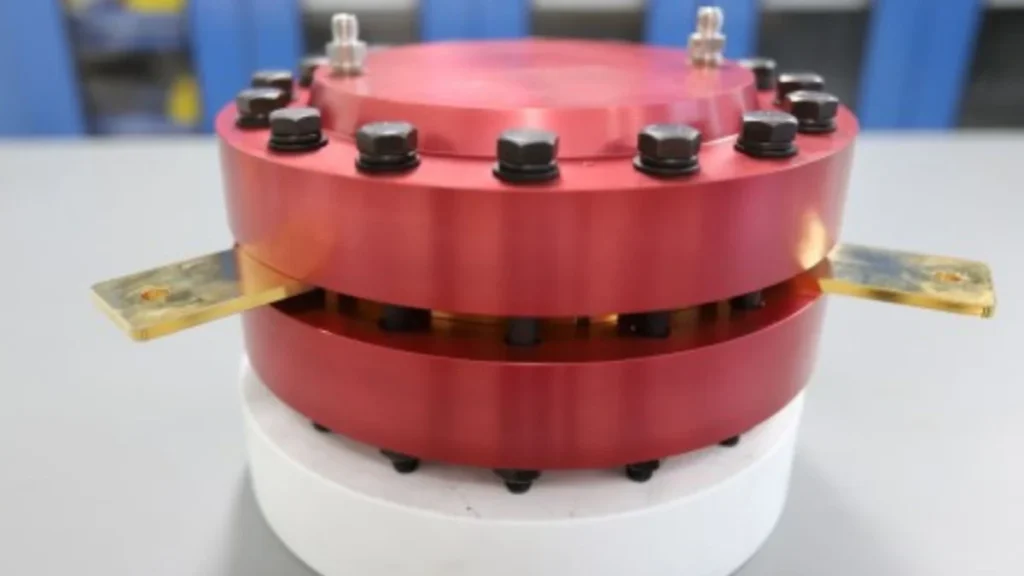
A collaborative research effort between the Korea Institute of Machinery and Materials (KIMM) and Chung-Ang University has culminated in the development of a novel chemical adsorption heat pump system designed to directly transform low-temperature waste heat into cooling power. This innovative technology addresses a critical global challenge: the immense energy consumption for cooling in industrial and commercial sectors, coupled with the environmental burden of discarded thermal energy and conventional refrigerants. The successful creation of a 10 kW-class prototype by manufacturer Samjung Tech Co., Ltd. marks a significant milestone, demonstrating a viable pathway towards sustainable and efficient cooling solutions.
The Global Cooling Imperative: A Growing Energy and Environmental Challenge
The demand for cooling across the globe is escalating rapidly, driven by industrial expansion, burgeoning data centers, and the pervasive need for climate control in commercial and residential buildings. Data centers, the digital backbone of modern society, are notorious energy guzzlers, with a substantial portion of their electricity consumption dedicated to maintaining optimal operating temperatures for servers. Similarly, a myriad of industrial processes, from manufacturing to chemical production, generate significant amounts of heat that is often simply vented into the atmosphere, representing a colossal waste of potential energy.
According to the International Energy Agency (IEA), space cooling and refrigeration currently account for approximately 10% of global electricity consumption, a figure projected to nearly triple by 2050 under business-as-usual scenarios. This surge in demand not only strains electricity grids but also contributes to increased greenhouse gas emissions, particularly when electricity is generated from fossil fuels. Compounding this issue is the prevalence of traditional cooling systems that rely on mechanical compressors—devices known for their noise, vibration, and substantial energy requirements. Furthermore, many conventional refrigerants, such as hydrochlorofluorocarbons (HCFCs) and hydrofluorocarbons (HFCs), possess high Global Warming Potential (GWP) and contribute to ozone depletion, necessitating their phasedown under international agreements like the Montreal Protocol and its Kigali Amendment. The South Korean research team’s initiative directly confronts this dual challenge of energy waste and environmental impact, seeking to harness previously unusable low-grade waste heat and deploy environmentally benign refrigerants.
Overcoming Limitations: A New Era for Waste Heat Recovery
Conventional adsorption cooling technologies, while offering a thermodynamic alternative to vapor-compression systems, typically require heat sources exceeding 70°C to operate efficiently. This requirement has historically limited their application in recovering low-temperature waste heat, such as the lukewarm exhaust often discharged from factories, power plants, and, critically, data centers, which frequently release heat in the 40°C to 60°C range. This previously "too cold to capture" thermal runoff has represented a significant untapped energy resource.
The breakthrough by KIMM and Chung-Ang University lies in their ability to drive cooling using waste heat as low as 40°C (104°F). This is achieved through a synergistic combination of advanced chemical adsorption principles and an innovative electrochemical compressor. KIMM spearheaded the engineering of the heat pump system to efficiently capture and utilize this low-grade thermal energy. Concurrently, Chung-Ang University developed a pioneering electrochemical compressor that operates without noise or vibration, directly addressing one of the major drawbacks of conventional mechanical compression systems. This integration replaces heavy, grid-straining machinery with an almost silent, highly efficient cooling solution that promises to revolutionize industrial and commercial cooling practices.
Technological Pillars of Innovation
The success of this new heat pump system rests on several core technological advancements:
-
Redesigned Adsorption Bed for Enhanced Efficiency: A critical innovation involves the complete redesign of the heat pump’s core adsorption bed. This structural optimization has led to a remarkable increase in thermal efficiency, resulting in a world-leading Specific Cooling Power (SCP) of 346.5 W/kg. To put this into perspective, this performance benchmark more than doubles that of existing international technologies. This higher SCP signifies that the system can extract substantially more cooling capacity per unit mass, paving the way for significantly more compact and powerful waste-heat-driven cooling units. Such miniaturization is crucial for broader adoption, particularly in space-constrained environments within data centers or manufacturing facilities.
-
The Silent Revolution: Electrochemical Compressor: The development of a noise- and vibration-free electrochemical compressor by Chung-Ang University represents a paradigm shift from traditional mechanical compressors. Mechanical compressors, which are ubiquitous in standard air conditioning units, rely on moving parts that generate considerable noise and vibration, consume substantial electricity, and are prone to mechanical wear. The electrochemical compressor, in contrast, offers a quiet and stable operation, making the entire system ideal for noise-sensitive environments such as hospitals, schools, libraries, and even residential applications. Furthermore, its modular design allows for scalability; capacity can be easily increased by adding more cells to a multi-layer stack configuration, eliminating the need to redesign heavy mechanical housings for larger installations. This modularity simplifies manufacturing, installation, and maintenance, offering considerable advantages over complex mechanical systems.
-
Embracing Natural Refrigerants: Ammonia as the Working Fluid: A cornerstone of the system’s environmental credentials is its exclusive use of natural ammonia as the working refrigerant. Ammonia (NH₃) is a substance with zero Ozone Depletion Potential (ODP) and a near-zero Global Warming Potential (GWP=0 or <1), making it an environmentally superior alternative to synthetic compounds like HCFCs and HFCs. These synthetic refrigerants have been identified as potent greenhouse gases that contribute significantly to climate change and, in some cases, stratospheric ozone depletion. By utilizing ammonia, the new heat pump system effortlessly complies with today’s stringent global environmental standards and regulatory frameworks aimed at phasing out harmful refrigerants. This commitment to green chemistry ensures that the technology not only reduces energy consumption but also eliminates a major source of direct greenhouse gas emissions associated with refrigerant leaks, thereby contributing to a holistic reduction in carbon footprint.
Development and Prototype Validation
The journey from concept to a demonstrable prototype involved a close collaboration between academic research and industrial manufacturing. KIMM’s expertise in machinery and materials laid the groundwork for the heat pump’s design, while Chung-Ang University contributed its specialized knowledge in electrochemical systems for the compressor. The manufacturing partner, Samjung Tech Co., Ltd., played a pivotal role in translating these innovations into a tangible, functional unit.
The 10 kW-class prototype is currently undergoing rigorous demonstration testing. These tests are crucial for validating the system’s performance under real-world conditions, assessing its durability, and refining its operational parameters. Dr. Young Kim, Principal Researcher at KIMM, underscored the significance of this phase, stating, "The most significant achievement of this research is the successful demonstration of cooling low-temperature waste heat at just 40°C from factories and data centers. We are currently conducting demonstration tests with a 10 kW-class prototype. Building on these tests, we plan to pursue further research to advance the technology for field demonstration." This statement highlights the immediate focus on practical application and the strategic roadmap towards broader commercialization.
The development of a large-area ammonia compressor, integrated with the multi-layer stack configuration, is a testament to the scalability inherent in the design. This modular approach ensures that the technology can be adapted for a wide range of cooling capacities, from smaller industrial applications to large-scale data center infrastructure, facilitating its eventual commercial deployment in diverse noise-sensitive and energy-intensive environments.
Broader Implications and Future Outlook
The implications of this South Korean innovation are profound and far-reaching, promising to reshape energy consumption patterns and environmental policies across various sectors.
Economic Impact: The primary economic benefit lies in the potential for substantial reductions in electricity bills for data centers, factories, and other industrial facilities. By converting waste heat—a previously discarded resource—into valuable cooling energy, businesses can significantly lower their operational expenditures. This represents a direct saving on energy costs, which are often a major component of industrial budgets. Furthermore, the efficiency and compact design of the new system could lead to lower capital expenditure compared to installing or upgrading conventional, less efficient cooling infrastructure. The global market for energy-efficient cooling solutions is projected to grow significantly, and this technology positions South Korea at the forefront of this burgeoning industry.
Environmental Impact: From an environmental perspective, the technology offers a dual benefit. Firstly, by reducing the reliance on grid electricity for cooling, it directly lowers greenhouse gas emissions associated with power generation, particularly in regions still heavily dependent on fossil fuels. This contributes directly to national and international climate change mitigation efforts. Secondly, the exclusive use of natural ammonia as a refrigerant eliminates the need for synthetic HCFCs and HFCs, which are potent greenhouse gases. This aligns perfectly with global environmental mandates like the Kigali Amendment, which seeks to phase down HFCs. The reduction in both direct (refrigerant) and indirect (energy-related) emissions positions this heat pump as a truly green technology, supporting a transition towards a low-carbon economy.
Societal and Technological Advancements: The noise- and vibration-free operation of the electrochemical compressor opens up new possibilities for deploying high-capacity cooling systems in environments where noise is a critical concern. Hospitals, educational institutions, commercial offices, and even residential complexes could benefit from efficient cooling without the disruptive noise typically associated with air conditioning units. This enhances comfort, productivity, and overall quality of life. Technologically, the achievement of such a high SCP and the ability to utilize low-grade waste heat pushes the boundaries of thermodynamic engineering, inspiring further research and development in waste heat recovery and sustainable energy systems.
Policy and Regulatory Alignment: Governments worldwide are enacting stricter regulations on energy efficiency and refrigerant use. This technology, with its inherent environmental benefits and energy-saving potential, aligns perfectly with these policy objectives. Its adoption could help countries meet their climate targets and foster a more sustainable industrial landscape. For policymakers, it presents a compelling case for investment in green infrastructure and research incentives for similar innovations.
As the KIMM and Chung-Ang University team advances towards commercial deployment, the successful field demonstration and scaling of this technology will be crucial. Addressing potential challenges such as initial investment costs, wider industry adoption, and the establishment of robust maintenance protocols will be key to its widespread success. Nevertheless, this groundbreaking chemical adsorption heat pump system represents a transformative step towards a future where waste heat is no longer a burden but a valuable resource, driving efficient, silent, and environmentally responsible cooling worldwide.






