As the additive manufacturing (AM) industry continues its rapid expansion, the need for efficient and effective post-processing solutions, particularly for surface finishing, has become increasingly critical. Addressing this burgeoning demand, Mass Finishing Inc. (MFI), a recognized leader in industrial parts polishing and deburring machinery, has introduced its HZ-6 centrifugal barrel tumbler finishing machine. This innovative, compact system is specifically engineered to meet the unique challenges of finishing additively manufactured components, offering a high-polish finish for multiple small, micro-precision parts simultaneously.
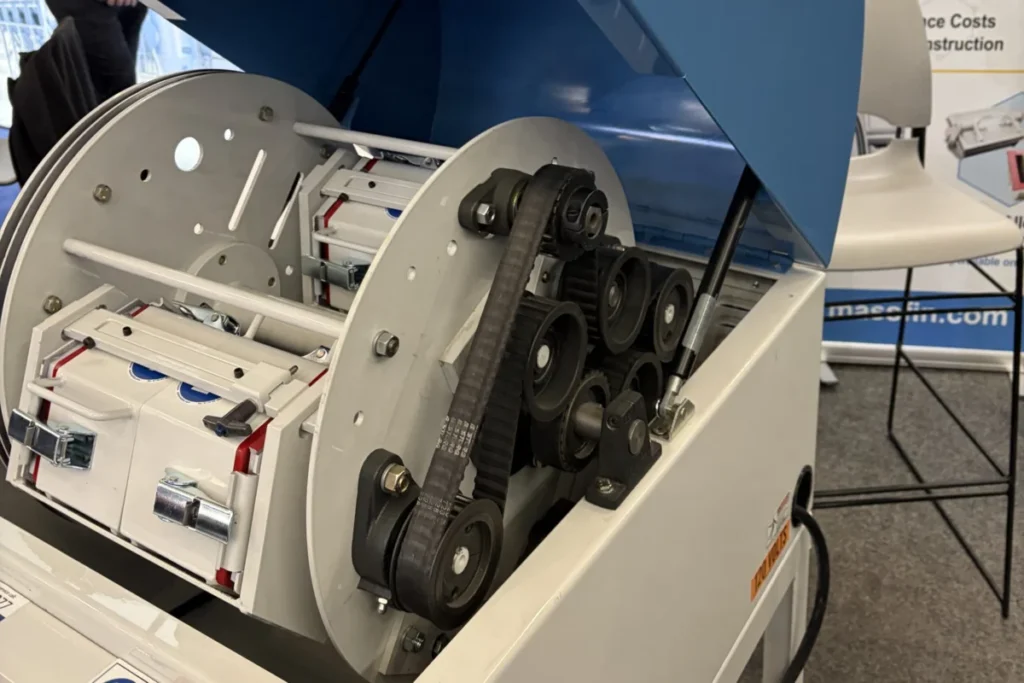
The HZ-6 centrifugal barrel tumbler boasts a 6-liter capacity and an exceptionally small footprint of just 3 by 2 feet, making it an ideal solution for workshops with limited space. Its design incorporates a set of wheels, offering unparalleled mobility and allowing operators to position the machine precisely where it is needed within a facility or to remove it entirely when not in use. This flexibility is a significant advantage in dynamic manufacturing environments. MFI’s strategic focus on compact finishing options reflects a clear understanding of the evolving landscape of AM, where the production of intricate and often small-scale parts is becoming commonplace.
At its core, the HZ-6 is a dual-barrel system featuring two distinct cradle positions, enabling the simultaneous processing of multiple components. One cradle accommodates a standard, full-size latched-end barrel measuring 8.375 inches in length. Complementing this is a configuration that can hold two half-size latched-end barrels, each 3.625 inches in length. This modularity is particularly advantageous for iterative testing and the finishing of small batches of parts. The half-size barrels are designed for processing small, micro-precision components, while the full-size barrel can handle parts up to 8 inches long and with an outside diameter of up to 4.5 inches.
A key operational advantage of the HZ-6 system is its significantly quieter operation compared to many vibratory tumbling systems. It leverages centrifugal force to achieve its finishing objectives, rapidly removing excess material and burrs, polishing surfaces, and ultimately enhancing the overall finish of the part. This method is not only effective but also contributes to a more pleasant working environment.
The Imperative of Surface Smoothing for Additive Manufacturing
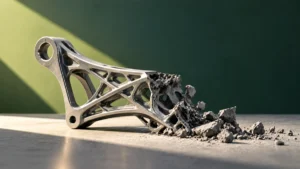
The successful integration of 3D printed metal parts into critical applications hinges on overcoming the inherent challenge of surface roughness. Advanced AM processes, such as laser powder bed fusion (LPBF), while enabling the creation of large and complex geometries, often leave behind a surface characterized by distinct layer lines and a generally rough texture due to the additive nature of the printing process. However, industries like aerospace, energy, and medical manufacturing demand smooth, uniform surfaces for optimal component performance.
In the medical field, for instance, 3D printed components such as stents and implants require a meticulously uniform surface finish. This uniformity is crucial for promoting proper bone in-growth in the case of implants, ensuring biocompatibility and long-term patient outcomes. Similarly, in aerospace, smooth surfaces are vital for reducing drag, improving fatigue life, and ensuring the integrity of critical components exposed to high stresses and extreme conditions. The HZ-6 system directly addresses this need by providing a robust solution for achieving the necessary surface quality.
Understanding Centrifugal Barrel Finishing
Centrifugal barrel finishing, also known as centrifugal barrel tumbling, represents a high-energy, accelerated alternative to more conventional AM post-processing methods, including vibratory finishing. The principle of operation can be likened to a "Ferris Wheel" mechanism, where the rotation of the turret is synchronized with the rotation of the barrels in a 1:1 ratio. This synchronized motion generates significant centrifugal force.

The process begins with loading one or all of the machine’s chambers with a combination of components, water, finishing compound, and appropriate media. The chambers are typically filled to an estimated 50-80% capacity to allow for optimal material movement. As the machine rotates, the barrels embark on a planetary motion around the turret. This movement creates a powerful sliding force within each barrel, effectively burnishing and abrading the surfaces of the loaded parts. The pressure and friction generated through this centrifugal action are highly effective in removing excess material, deburring, and polishing component surfaces. This method consistently yields isotropic finishes, meaning parts are uniformly and evenly polished in all directions, achieving desired surface qualities at an accelerated pace.
Efficiency Gains and Material Versatility
The high-energy nature of centrifugal barrel finishing translates into substantial time savings for manufacturers. While traditional vibratory finishing might require 10 to 20 hours to achieve a smooth surface on a metal additively manufactured component, MFI’s HZ-6 system can accomplish comparable results in as little as one hour, processing multiple parts concurrently. This dramatic reduction in cycle time directly impacts production throughput and cost-effectiveness.
Furthermore, the HZ-6 system is engineered for versatility in terms of media selection. It accommodates a wide range of media types, including heavy ceramic, porcelain, and plastic media, available in various shapes and sizes. This flexibility allows for the precise tailoring of the finishing process to suit different metal materials, from hard alloys to softer metals, ensuring optimal results for a diverse array of applications. The HZ-6 is specifically intended to finish 3D printed components made from common AM materials such as titanium, copper, nitinol, and carbon steel, underscoring its broad applicability within the industry.
A Spectrum of Surface Finishing Techniques for AM
The journey from a raw 3D printed part to a finished, application-ready component often involves a series of post-processing steps. Parts emerging from 3D printers frequently exhibit layer lines, residual powder, marks from support structures, and internal surface irregularities that necessitate further refinement. It is important to recognize that there is no universal "AM finishing" solution; the optimal sequence of processes is contingent upon a variety of factors, including the material used, the part’s geometry (especially internal features), the required surface roughness, and the intended end-use of the component. The following outlines some of the most prevalent post-processing and finishing techniques employed in AM today:
Media Blasting (Bead, Sand, or Soda)
This initial step is commonly applied to both metal and polymer AM parts. Using pressurized media, it effectively removes loose powder, smooths minor surface imperfections, and imparts a uniform matte finish. Media blasting is a quick and cost-efficient method for surface preparation.
Tumbling and Vibratory Finishing
In this process, parts are placed in a bowl or barrel with abrasive media and subjected to prolonged agitation, often for hours or even days. This method is well-suited for batch processing of small to medium-sized parts and is effective for breaking sharp edges.
Chemical and Electrochemical Polishing
These techniques involve immersing parts in a chemical solution designed to selectively dissolve surface peaks while largely preserving the valleys. This process is advantageous for finishing both external and internal surfaces, making it ideal for complex geometries like lattice structures, conformal cooling channels, and medical implants.
Abrasive Flow Machining (AFM)
AFM utilizes a viscous, abrasive-laden putty that is pumped back and forth through internal passages under pressure. This method is widely adopted for smoothing intricate internal features in AM components such as fuel nozzles, manifolds, and hydraulic blocks.

CNC Machining
This subtractive manufacturing process remains essential for critical mating surfaces, bearing journals, sealing faces, and features requiring tight tolerances. The increasing prevalence of hybrid manufacturing machines, which integrate additive processes like directed energy deposition (DED) or LPBF with subtractive milling in a single setup, further streamlines production.
Manual Grinding, Sanding, and Polishing
These manual techniques are crucial for large structural parts, prototypes, and for removing visible support witness marks. Despite advancements in automated processes, hand finishing continues to be a significant cost driver in many low-volume metal AM workflows.
Laser Polishing
Laser polishing involves using a defocused laser to remelt a thin surface layer. Surface tension then acts to smooth out microscopic irregularities. This method requires no consumables and eliminates the need for cleaning media from internal features, offering high levels of control. It is often a preferred option for small, high-value components used in sectors like dentistry and aerospace.
Coatings and Plating
Following mechanical preparation, AM parts can be enhanced with various coatings and platings, including anodizing, physical vapor deposition (PVD), electroless nickel, and powder coating. These treatments can mask minor surface defects, impart wear or corrosion resistance, and provide a uniform aesthetic appearance.
Vapor Smoothing
This process involves submerging clean 3D printed parts in a solvent within an airtight vessel. The vessel is then heated, generating vapor that smooths and polishes the part’s surface over several hours. Automated systems are widely adopted for vapor smoothing, though the process can also be executed within a sealed container.
The Broader Implications of Compact, High-Performance Finishing
The introduction of MFI’s HZ-6 centrifugal barrel tumbler signifies more than just a new product; it represents a strategic response to the evolving needs of the AM industry. As the complexity and application range of 3D printed parts expand, the demand for efficient, space-saving, and high-quality post-processing equipment will only intensify. The HZ-6’s ability to deliver rapid, high-polish finishes on multiple small parts simultaneously addresses a critical bottleneck in AM workflows, potentially accelerating the adoption of 3D printed components in sectors where surface finish is paramount.
This development also underscores a broader trend in manufacturing towards greater efficiency and flexibility. The mobility offered by the HZ-6, coupled with its compact design, allows manufacturers to adapt their production lines more readily to changing demands. As the AM industry matures, the integration of advanced finishing technologies like centrifugal barrel tumbling will become increasingly indispensable for unlocking the full potential of additive manufacturing, paving the way for more widespread and sophisticated applications across a multitude of industries. The ability to consistently achieve precise surface finishes is not merely an aesthetic consideration but a fundamental requirement for ensuring the functional performance, reliability, and safety of 3D printed parts in demanding environments.