In a landmark advancement for condensed matter physics, an international research team has demonstrated that artificial intelligence can drastically shorten the timeline for discovering superconductors, materials capable of conducting electricity with zero energy loss. Led by Professor Päivi Törmä of Aalto University, the SuperC consortium has successfully integrated machine learning with quantum mechanical modeling to identify new superconducting compounds, effectively bypassing decades of traditional trial-and-error experimentation. This breakthrough comes at a critical juncture for the global energy sector, which faces mounting pressure to reduce carbon emissions and improve the efficiency of power grids and data centers.
Superconductivity is a state of matter where electrons move through a material without resistance, a phenomenon that occurs when quantum effects become dominant at low temperatures. While currently utilized in specialized fields such as magnetic resonance imaging (MRI), particle accelerators, and maglev transportation, the requirement for extreme cryogenic cooling—often using liquid helium or nitrogen—has limited the widespread adoption of these materials. The pursuit of a "room-temperature" superconductor, which would function under ambient conditions, is widely considered the "holy grail" of modern science.
The Challenge of Material Discovery in the Quantum Realm
The difficulty in finding new superconductors lies in the astronomical number of possible chemical combinations. For over a century, the discovery of superconducting materials has been characterized by serendipity rather than systematic prediction. Since the initial discovery of superconductivity in mercury by Heike Kamerlingh Onnes in 1911, researchers have identified approximately 7,000 superconductors. However, the vast majority of these were found through accidental observations or incremental modifications of known structures.
According to Professor Törmä, the computational burden of predicting whether a material will exhibit superconducting properties is immense. Traditionally, scientists use Density Functional Theory (DFT) and other quantum mechanical simulations to model electron behavior. These calculations are so resource-intensive that, out of the thousands of known superconductors, only about 20 had their properties accurately predicted before they were physically synthesized. The gap between theoretical potential and experimental reality has historically been a bottleneck that stalled innovation for decades.
The SuperC consortium, established in 2023, seeks to bridge this gap. By combining the expertise of leading physicists from institutions such as Aalto University and Rice University, the group has developed a pipeline that uses AI to act as a high-speed filter. Instead of performing deep quantum calculations on every possible element combination, a specialized machine-learning algorithm pre-screens billions of candidates, identifying those with the highest probability of success based on structural and electronic signatures.
A Breakthrough in Quantum Geometry: The Kagome Lattice
The team’s latest success involves the discovery of two new superconductors: Yttrium-Ruthenium-Boron (YRu₃B₂) and Lutetium-Ruthenium-Boron (LuRu₃B₂). These materials were not found by chance but were targeted based on a specific physical concept known as "flat bands" within a Kagome lattice.
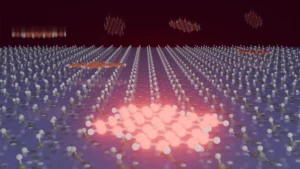
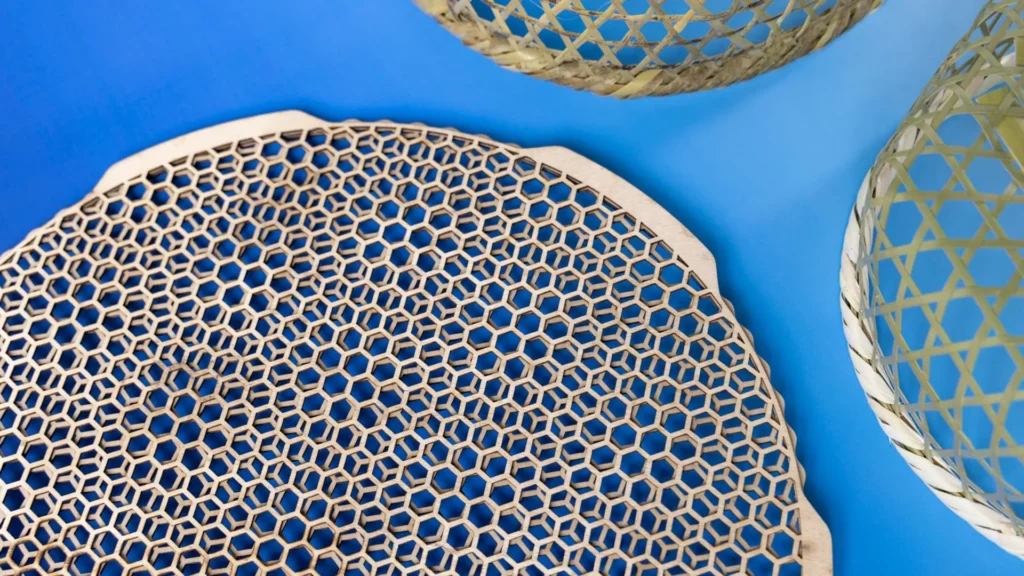
A Kagome lattice is a geometric arrangement of atoms that resembles a traditional Japanese basket-weaving pattern, consisting of interlaced triangles. In the world of quantum physics, this specific geometry can cause electrons to "slow down" and interact more strongly with one another, forming what are known as flat bands. In these bands, the kinetic energy of electrons is suppressed, allowing quantum correlations to take the lead. This environment is highly conducive to the formation of Cooper pairs—pairs of electrons that move together to create the superconducting state.
The SuperC team’s AI was trained to look for these specific geometric and electronic signatures. Once the algorithm flagged YRu₃B₂ and LuRu₃B₂ as high-potential candidates, the researchers moved to the next phase: rigorous quantum verification. Detailed calculations confirmed that the flat bands in these materials were indeed likely to support superconductivity.
From Algorithmic Prediction to Laboratory Synthesis
The transition from a digital model to a physical material requires sophisticated chemical engineering. This task was led by Professor Emilia Morosan and her team at Rice University. Using high-temperature synthesis techniques, the Rice team combined the constituent elements to create pure crystalline samples of the predicted compounds.
Following synthesis, the materials underwent experimental testing to verify their properties. The results confirmed the AI’s predictions: both YRu₃B₂ and LuRu₃B₂ exhibited superconductivity. While these specific materials still require low temperatures to operate, their discovery serves as a vital "proof of concept." It proves that the combination of machine learning and quantum geometry can successfully navigate the vast landscape of material science to find functional superconductors that follow specific design principles.
The findings were recently published in the journal Physical Review Research, providing a peer-reviewed roadmap for other researchers to follow. This methodology represents a shift from "discovery by accident" to "discovery by design," a change that Professor Törmä believes will allow the scientific community to process billions of material combinations in the coming years.
The Economic and Environmental Stakes
The drive toward room-temperature superconductivity is fueled by more than just scientific curiosity; it is a necessity for a sustainable future. Currently, a significant percentage of electricity is lost as heat during transmission through copper and aluminum wires. In the United States alone, the Energy Information Administration (EIA) estimates that transmission and distribution losses account for about 5% of total electricity generation. On a global scale, eliminating these losses through superconducting power lines could save enough energy to power entire nations.
Furthermore, the Information and Communications Technology (ICT) sector is facing a cooling crisis. Data centers, which underpin the modern internet and the rise of AI, consume vast amounts of electricity, much of which is spent on cooling systems to prevent hardware from overheating. Superconducting processors and interconnects would generate virtually no heat, potentially slashing the global energy consumption of data centers by more than half.
"Superconductive materials that can operate at room temperature would forever change the way we consume energy," says Professor Törmä. "If such a material could replace regular conductors in applications like computers and data centers, global energy consumption could be slashed and the heat footprint of the ICT sector vastly reduced."
A Timeline for the Future: The 2033 Goal
The SuperC consortium has set an ambitious deadline: to discover a practical room-temperature superconductor by the year 2033. This ten-year mission is supported by a diverse range of philanthropic and scientific organizations, including The Kavli Foundation, the Jane and Aatos Erkko Foundation, and the Klaus Tschira Stiftung.
The project’s timeline includes several key milestones:
- 2023: Formation of the SuperC consortium and the launch of the AI-driven screening platform.
- 2024: Successful identification and synthesis of Kagome-lattice superconductors YRu₃B₂ and LuRu₃B₂.
- 2025-2026: Expansion of the AI database to include more complex ternary and quaternary compounds.
- September 2026: Public showcase of research at Aalto University’s "Designs for a Cooler Planet" exhibition in Finland.
- 2027-2032: Iterative testing of high-pressure and chemically doped materials to raise the critical temperature (Tc) toward room temperature.
- 2033: Target for the identification of a stable, room-temperature superconducting material.
Broader Implications and Scientific Reactions
The scientific community has reacted to the SuperC consortium’s methodology with cautious optimism. The field of superconductivity research has recently been marred by high-profile claims of room-temperature discovery that failed to be replicated, such as the LK-99 controversy in 2023. By utilizing a transparent, AI-backed, and experimentally verified approach, the SuperC team is setting a new standard for rigor in the field.
Independent analysts suggest that the integration of AI into material science could have spillover effects in other industries. The same algorithms used to find superconductors could potentially be adapted to discover more efficient battery chemistries, better catalysts for hydrogen production, or new carbon-capture materials.
However, challenges remain. Even if a room-temperature superconductor is identified, it must be "practical." Many high-temperature superconductors discovered in the past are brittle ceramics that are difficult to manufacture into long wires or thin films. The next phase of the SuperC mission will likely involve not only finding the right electronic properties but also ensuring the materials are ductile and stable enough for industrial mass production.
As the world moves toward an increasingly electrified future, the work being done in laboratories in Finland and the United States provides a glimpse into a world where energy is frictionless. With the power of AI narrowing the search, the "limitless" possibilities of material science are finally being brought within human reach. The journey toward 2033 is not just about a single material; it is about rewriting the rules of how humanity interacts with energy and the environment.