Global demand for electricity is rising fast, placing unprecedented pressure on power systems worldwide. The insatiable appetite of energy-hungry data centers supporting artificial intelligence, coupled with an expanding global manufacturing base, necessitates more than simply generating additional electricity; it demands a revolution in how existing energy supplies are utilized. The National Renewable Energy Laboratory (NREL), a leading institution in renewable energy research, has unveiled a groundbreaking solution: the Ultra-Low Inductance Smart power module, or ULIS. This innovative silicon carbide-based technology promises to dramatically improve electricity conversion and delivery, offering record-breaking efficiency, higher power density, and a cost-effective manufacturing process poised to reshape multiple industries from data centers to advanced aviation.
The Unprecedented Energy Challenge
The escalating global electricity demand presents one of the most significant challenges of the 21st century. According to the International Energy Agency (IEA), global electricity demand grew by 2.2% in 2023, accelerating from 2022, with projections indicating continued robust growth through the decade. A primary driver of this surge is the rapid expansion of artificial intelligence. Training and operating advanced AI models require immense computational power, translating directly into colossal electricity consumption. A single large language model training session can consume as much electricity as several European households in a year, and the number of data centers globally is projected to grow substantially, each requiring megawatts, if not gigawatts, of power. Beyond AI, the re-shoring of manufacturing, the electrification of transportation, and the increasing digitalization of societies worldwide further compound the demand. This relentless growth strains existing power grids, exacerbates carbon emissions if met by fossil fuels, and underscores the urgent need for innovative solutions that prioritize efficiency alongside new generation capacity.
Energy efficiency, often referred to as the "first fuel," is critical for managing this demand. Every unit of electricity saved at the point of conversion or use reduces the strain on generation, transmission, and distribution infrastructure. Historically, power conversion losses have been a significant, yet often overlooked, drain on energy systems. Addressing these inefficiencies is not merely an economic imperative but also a crucial step towards achieving global climate goals and ensuring grid stability.
NREL’s Breakthrough: The ULIS Module
At the forefront of this efficiency revolution is NREL, a national laboratory dedicated to the research, development, commercialization, and deployment of renewable energy and energy efficiency technologies. For decades, NREL has been a crucible for innovations that power the nation and the world. The ULIS power module represents a culmination of NREL’s expertise in power electronics and advanced materials. A power module is the foundational component housing power electronics, which regulate the flow of electricity between systems. These modules are omnipresent, from electric vehicle chargers and solar inverters to industrial motor drives and grid infrastructure.
ULIS introduces a new paradigm in power conversion, leveraging silicon carbide (SiC) semiconductors. SiC is a wide-bandgap material offering superior properties compared to traditional silicon, including higher breakdown voltage, faster switching speeds, lower losses, and the ability to operate at higher temperatures. These characteristics make SiC ideal for high-power, high-frequency applications where efficiency and compactness are paramount. ULIS capitalizes on these inherent advantages, delivering five times the energy density of earlier designs while occupying significantly less space. This remarkable combination enables manufacturers to design and build equipment that is smaller, lighter, and far more energy efficient, critical factors for modern technological advancement. The module, rated at 1200 volts and 400 amps, is meticulously engineered for high-demand applications such as hyperscale data centers, modernized electrical grids, compact microreactors, and heavy-duty platforms including next-generation aircraft and military vehicles.
The Science of Efficiency: Ultra-Low Inductance Explained
The core of ULIS’s groundbreaking performance lies in its exceptionally low parasitic inductance. Parasitic inductance refers to unintended electrical resistance within a circuit that impedes the rapid change in electrical current. In power electronics, high parasitic inductance limits how quickly a module can switch on and off, leading to energy losses during conversion and limiting overall efficiency. It’s akin to friction in a mechanical system – it wastes energy and generates unwanted heat.
ULIS’s design dramatically reduces this inherent resistance by seven to nine times compared with today’s most advanced silicon carbide power modules. This reduction is not merely incremental; it is transformative. By minimizing parasitic inductance, ULIS can switch electrical current extremely quickly and efficiently. This capability means that a significantly higher proportion of the input electricity is converted into usable power, rather than being lost as heat. The implications are profound: systems powered by ULIS can extract substantially more value from the same energy supply, directly addressing the growing global energy needs by making every electron count.
Faisal Khan, NREL’s chief power electronics researcher and the principal investigator for the ULIS project, underscored the significance of this achievement. "We consider ULIS to be a true breakthrough," Khan stated. "It’s a future-proofed, ultrafast power module that will make the next generation of power converters more affordable, efficient, and compact. This isn’t just an improvement; it’s a fundamental shift in what’s possible for power electronics." His words highlight the dual benefit of enhanced performance and reduced cost, a combination that is often elusive in cutting-edge technological development.
Engineering for Resilience: Reliability in Extreme Environments
Beyond sheer efficiency, ULIS is engineered with an unwavering focus on reliability, particularly in the most demanding and critical environments. According to Khan, the module boasts advanced self-monitoring capabilities, allowing it to continuously assess its own condition and anticipate potential component failures before they occur. This predictive maintenance feature is not merely a convenience; it is a critical safety and operational imperative for high-risk applications.
Consider the operational context: an aircraft operating at 30,000 feet, where even minor component failure can have catastrophic consequences, or a military vehicle navigating a combat zone, where mission success and crew safety depend on flawless performance. In such scenarios, early failure detection can literally be the difference between mission accomplishment and catastrophic loss. The ability of ULIS to provide real-time diagnostics and forewarn operators of impending issues significantly enhances operational safety, reduces unscheduled downtime, and lowers long-term maintenance costs for complex, high-value assets. This robust design ethos, coupled with the fact that ULIS was an entirely "organic effort, built entirely in-house here at NREL," as Khan emphasized, speaks volumes about the depth of expertise and dedication that went into its development. The team is now eagerly anticipating demonstrating its strengths in real-world settings.
A Radical Redesign: From Concept to Cost-Effective Manufacturing
Many of ULIS’s performance gains stem from a completely novel physical design that deviates significantly from conventional power module architectures. Traditional power modules typically stack semiconductor devices within box-like packages, leading to inherent limitations in space utilization and thermal management. The NREL team challenged this established approach.
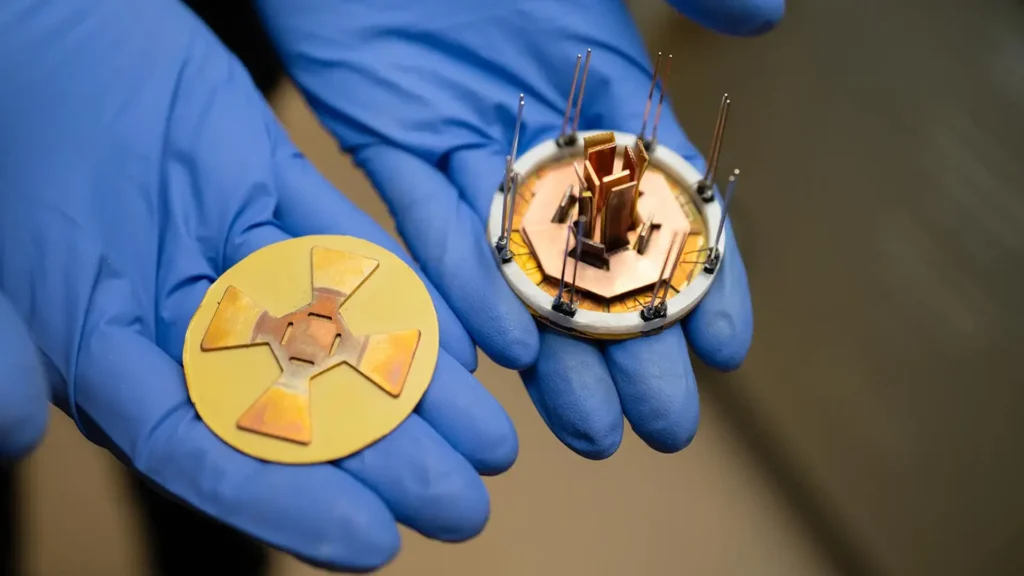
Instead, ULIS arranges its circuitry in a flat, octagonal layout. This innovative disk-shaped structure allows for the integration of more components into a smaller footprint, thereby reducing both the overall size and weight of the module. Critically, this design also incorporates innovative current routing that minimizes magnetic interference. Magnetic interference, often a byproduct of high-speed current switching, can degrade electrical output quality and reduce efficiency. By mitigating this, ULIS delivers cleaner electrical output and contributes to its higher overall efficiency.
Shuofeng Zhao, an NREL power electronics researcher responsible for designing ULIS’s flux cancellation architecture, described the design challenge. "Our biggest concern was that the device switches off and on very quickly, and we needed a layout that wouldn’t create a chokepoint within the design," Zhao explained. The design process itself was an iterative journey of innovation. Early concepts explored complex three-dimensional shapes, including intricate designs resembling flowers or hollow cylinders. While these offered potential performance benefits, they proved prohibitively expensive or difficult to manufacture at scale.
The breakthrough arrived when the team simplified the concept into a nearly two-dimensional structure. Sarwar Islam, another NREL power electronics researcher, proposed the flattened design that struck a crucial balance between performance, cost, and manufacturability. "We squished it flat, like a pancake," Zhao humorously recounted, "and suddenly we had a low-cost, high-performing design that was much easier to fabricate." This simplification was not a compromise but an elegant solution. Joshua Major, also part of the NREL power electronics team, further refined the process by developing new fabrication methods that allowed the intricate structure to be produced using only existing in-house tools and facilities. The result is a design that brilliantly combines the electrical advantages often associated with complex three-dimensional systems with the practical, economic benefits of flat manufacturing.
Material Innovation and Wireless Integration
ULIS also redefines material selection and control mechanisms in power modules. Conventional power modules typically rely on bonding copper directly to rigid ceramic bases to conduct electricity and manage heat. While effective for heat dissipation, this approach inherently limits the module’s flexibility and contributes to its weight and manufacturing complexity.
In a significant departure, ULIS bonds copper to Temprion, a flexible polymer. This strategic material choice yields a thinner, lighter, and more adaptable structure. The bonding process itself is simplified, requiring only heat and pressure, and the components can be machined using widely available equipment. This shift dramatically reduces manufacturing costs, bringing them into the hundreds of dollars per module rather than the thousands, making the technology more accessible for widespread adoption.
Another major advance is ULIS’s capability for wireless operation. The module can be controlled and monitored without the need for physical cables, functioning as a truly self-contained unit. This modular, "Lego-like" design facilitates seamless integration into a vast array of systems, from the densely packed racks of data center servers to the confined spaces of advanced aircraft and military vehicles. This wireless capability reduces wiring complexity, improves reliability by eliminating potential cable failures, and enhances modularity. A patent for the low-latency wireless communication protocol, spearheaded by Sarwar Islam, is currently pending, underscoring the novelty and proprietary nature of this innovation.
Future-Proofing Power: Adaptability and Long-Term Vision
While ULIS currently leverages advanced silicon carbide semiconductors, its design was intentionally conceived to be future-proof and adaptable. The module’s architecture allows for easy integration with future semiconductor materials, including gallium nitride (GaN) and gallium oxide (GaO). Gallium nitride is already making inroads into power electronics for its high-frequency capabilities, while gallium oxide, though not yet commercially mature, holds immense promise for even higher power and temperature applications. This forward-looking design philosophy ensures that ULIS will remain relevant and effective as semiconductor technology continues to evolve, protecting investments in infrastructure that adopts the module.
Together, these innovations—from the revolutionary physical design and advanced materials to the ultra-low inductance and wireless control—support a central, overarching goal: to deliver unparalleled efficiency without sacrificing dependability. As societies become increasingly reliant on a constant and reliable supply of electricity, technologies like ULIS become indispensable for ensuring both energy security and environmental sustainability.
Transformative Impact Across Key Sectors
ULIS is poised to have a broad and transformative impact across multiple critical sectors, offering solutions to long-standing challenges and enabling new technological frontiers.
Power Grid Modernization: In the U.S. power grid, and indeed grids worldwide, electricity often undergoes multiple conversions into usable forms before it reaches end consumers. This process traditionally relies on large, low-frequency equipment that is inherently inefficient and contributes to significant energy waste. ULIS’s fast switching capabilities dramatically improve conversion efficiency, while its ability to tolerate high temperatures may also reduce long-term maintenance costs and enhance grid resilience. This is particularly crucial for integrating intermittent renewable energy sources, as efficient power electronics are key to managing grid stability and power quality. A more efficient grid means less energy generated is wasted, leading to lower operating costs and a reduced carbon footprint.
Advanced Aviation: The aviation sector is undergoing a profound transformation towards electrification. The module’s ability to move electricity quickly and conserve energy is critical for enabling lighter and more powerful converters, which are essential for electric aircraft. This could significantly accelerate the practical and commercial viability of electric vertical takeoff and landing (eVTOL) aircraft, as well as hybrid-electric and fully electric conventional aircraft. For military aviation, ULIS’s combination of high power density, reliability, and self-monitoring capabilities offers strategic advantages, enabling more advanced onboard systems, extended mission durations, and enhanced operational safety.
Emerging Energy Systems (Fusion): While commercial fusion energy remains a long-term aspiration, ongoing research and development efforts are making significant strides. These experimental systems require compact, reliable, and extremely robust pulsed power components capable of handling immense energy discharges. ULIS’s ultralow inductance and durable design make it exceptionally well-suited for this challenge, potentially playing a crucial role in the development of future fusion reactors. Its ability to manage high power efficiently and reliably under extreme conditions aligns perfectly with the demands of cutting-edge energy research.
Data Centers and AI Infrastructure: Returning to the initial challenge, data centers and AI infrastructure are perhaps the most immediate beneficiaries. With AI power consumption projected to grow exponentially, efficiency at every level is paramount. ULIS can reduce power losses in servers, power distribution units, and cooling systems, leading to substantial energy savings and lower operational expenses for data center operators. This also translates to a smaller environmental footprint for the digital economy, helping to mitigate the carbon impact of our increasingly AI-driven world.
As industries worldwide pursue more reliable electricity, advanced artificial intelligence, and next-generation vehicles, the demand for highly efficient, compact, and reliable power electronics will only intensify. ULIS, developed with meticulous precision and forward-thinking design by NREL, is now available for licensing. Its commercialization holds the promise of not just incremental improvements but a fundamental reshaping of how power is managed and delivered, ushering in an era of unprecedented energy efficiency and technological capability.