Lockheed Martin, a global leader in aerospace, defense, security, and advanced technologies, has announced a significant expansion of its domestic manufacturing capabilities, directly aligning with the United States’ "Arsenal of Freedom" initiative. This strategic move aims to accelerate the production of critical military systems, munitions, and materiel through advanced private sector partnerships, reinforcing the nation’s defense industrial base and ensuring readiness in an evolving global security landscape. The expansion is backed by substantial investments and a series of key government contracts, underscoring a concerted effort to enhance the speed and scale of defense production.
The Genesis of the "Arsenal of Freedom"
The "Arsenal of Freedom" initiative, spearheaded by the U.S. Department of War under the leadership of Secretary Pete Hegseth, draws a clear historical parallel to President Franklin D. Roosevelt’s iconic "Arsenal of Democracy." Roosevelt’s vision during World War II saw the United States transform into the primary supplier of military equipment and aid to Allied nations, a critical factor in the eventual Allied victory. That historical precedent involved the rapid conversion of civilian industries to military production, supplying everything from tanks and aircraft to munitions and ships, effectively turning the tide of a global conflict even before the U.S. formally entered the war.
The modern iteration, as articulated by the War Department, seeks to establish a similar robust and responsive domestic manufacturing apparatus. Its stated objective, prominently featured on the Department of War’s official website, is "striving to produce at scale the systems, munitions and materiel needed for warfighters to fight and win." This contemporary initiative reflects lessons learned from recent global events, where the rapid depletion of existing stockpiles and the necessity for swift resupply have highlighted the imperative for a resilient and high-capacity defense industrial base. Geopolitical tensions, particularly in Eastern Europe and the Indo-Pacific, have underscored the critical need for industrial preparedness to meet the demands of sustained conflict and deterrence.
Secretary Hegseth’s strategic framework for this initiative emphasizes maximizing acquisition flexibility. This involves a deliberate approach to reducing and eliminating what the Department deems "burdensome and unnecessary regulations and processes." Such reforms aim to cut through bureaucratic delays that have historically plagued defense procurement. Concurrently, the strategy focuses on incentivizing opportunities for private industry to collaborate more seamlessly with the Department of War, aiming to streamline operations and reduce costs for industry partners. This dual approach is designed to foster an environment conducive to rapid innovation and efficient production, ensuring that cutting-edge defense technologies can be developed and deployed with unprecedented speed and cost-effectiveness.
Chronology of Key Contracts and Milestones
Lockheed Martin’s commitment to the "Arsenal of Freedom" is concretized through a series of substantial contracts and strategic investments, marking a clear chronology of accelerated defense initiatives.
A pivotal development occurred in April, when the U.S. government awarded Lockheed Martin a contract to develop, integrate, and rigorously test the capability to launch a PAC-3 missile from the formidable Aegis Combat System. This integration project represents a significant leap in missile defense interoperability and capability, combining two of the most advanced defense platforms in the U.S. arsenal. The Aegis Combat System, renowned as "the gold standard for multi-mission combat systems," powers more than 120 ships across six nations, including the U.S. Navy’s cruisers and destroyers. Its modular architecture not only provides robust defense capabilities at sea but also enables the rapid deployment of land-based defense strategies, offering unparalleled flexibility in diverse operational theaters. The ability to launch PAC-3 interceptors from Aegis-equipped platforms significantly enhances their defensive envelope against advanced ballistic and cruise missile threats.
Building on this momentum, July saw the U.S. government further solidify its partnership with Lockheed Martin, awarding a seven-year undefinitized contract action modification. This monumental agreement, valued at up to $53.86 billion, is specifically for PAC-MSE (Patriot Advanced Capability-3 Missile Segment Enhancement) interceptors, directly supporting the Department of War’s broader Acquisition Transformation Strategy. The scale of this contract underscores the critical importance placed on advanced missile defense capabilities in the current geopolitical climate and reflects a long-term commitment to securing a steady supply of these vital assets. The PAC-3 MSE interceptor is currently regarded as the most advanced air and missile defense interceptor available globally. Its enhanced capabilities, including a more powerful motor and larger control surfaces, allow it to engage more agile and sophisticated threats at higher altitudes and longer ranges, offering precision terminal defense against a spectrum of airborne threats.
Facility Modernization and Expansion Initiatives
Lockheed Martin’s proactive response to the "Arsenal of Freedom" initiative extends beyond contract fulfillment to a comprehensive strategy of facility modernization and expansion. The company articulates that the vision for the nation’s defense readiness is not merely about increasing factory floor space or adding new production lines. Instead, it emphasizes "speed and a dedicated workforce that uses technology and its expertise to meet critical security demands." This holistic approach acknowledges that technological prowess, workforce development, and operational efficiency are as crucial as sheer manufacturing capacity in modern defense.
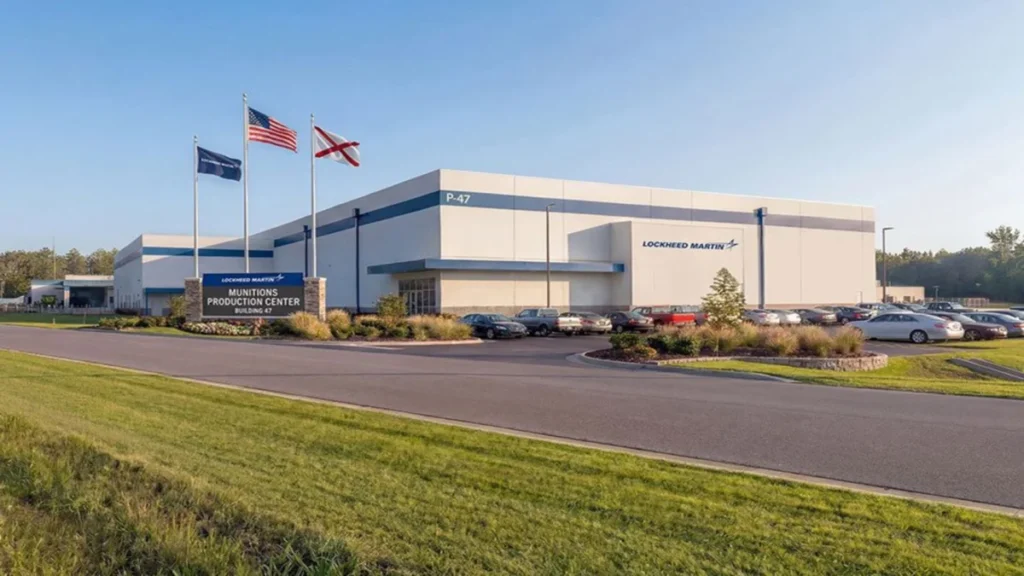
To achieve these ambitious goals, Lockheed Martin plans to invest an estimated $8 to $9 billion through 2040. This substantial capital injection will be directed towards modernizing over 20 existing U.S. facilities and rapidly scaling munitions output across its enterprise. The company’s commitment to this long-term vision is already evident through recent significant milestones. This year, Lockheed Martin celebrated the construction and operationalization of two cutting-edge munitions facilities. The Munitions Production Center Building 47, located in Troy, Alabama, is designed to support the Terminal High Altitude Area Defense (THAAD) system and future work on the Next Generation Interceptor (NGI). Simultaneously, the Munitions Acceleration Center in Camden, Arkansas, has been established to specifically bolster the production of the PAC-3 MSE. These facilities represent the vanguard of digital manufacturing and advanced production techniques within the defense sector, aiming to triple PAC-3 MSE production capacity by the end of 2030.
A cornerstone of this expansion is the ongoing development at Lockheed Martin’s campus in Courtland, Alabama. This site is being significantly expanded to advance the Next Generation Interceptor (NGI) program, a critical initiative poised to replace the aging FIM-92 Stinger missile. The Stinger, which has served the U.S. military and its allies since 1981, while historically effective against slower aircraft and helicopters, is increasingly challenged by modern aerial threats, particularly sophisticated drones, advanced cruise missiles, and emerging hypersonic weapons that exhibit greater speed, maneuverability, and stealth capabilities. The NGI program is engineered to address these contemporary and future threats with superior intercept capabilities and a more robust, adaptable defense architecture.
The recent opening of Missile Assembly Building 5 (MAB-5) at the Courtland campus is a testament to this commitment. MAB-5 is a state-of-the-art facility that fully leverages digital engineering and production methodologies. This advanced approach enables operators to significantly streamline testing, integration, and delivery phases, thereby accelerating the deployment of next-generation interceptors. Digital engineering, in particular, allows for virtual prototyping, simulation, and real-time data analysis throughout the product lifecycle, leading to more efficient design cycles, reduced errors, and faster time-to-market for complex defense systems, ultimately enhancing both reliability and performance.
Meeting Security Challenges of Today and Tomorrow
The strategic investments and expansions undertaken by Lockheed Martin are squarely aimed at addressing the evolving and increasingly complex national security challenges of the present and future. Reshondra McInnis, Lockheed Martin’s Courtland site executive, emphasized this imperative, stating, "Once again, we are expanding the Courtland campus to meet the national security challenges of today. MAB-5 will shape the local workforce by introducing high-skill jobs to create even more pathways toward advanced manufacturing careers." This statement highlights not only the immediate defense implications but also the broader socio-economic benefits, including the cultivation of a highly skilled workforce in advanced manufacturing, fostering regional economic growth and technological literacy.
The Next Generation Interceptor is positioned as more than just a replacement for an older system; it represents a paradigm shift in missile defense. Chris Jewell, vice president of Lockheed Martin’s NGI Program, articulated this vision, remarking, "NGI is more than a ‘next generation interceptor’, it’s a next generation solution to missile defense’s most serious threats. We are creating a foundation that enables long-term production, sustainment and mission support with greater adaptability and more resilient defense architecture." This perspective underscores the NGI’s role in establishing a durable and adaptable defense infrastructure capable of countering future threats that may not yet be fully understood. The emphasis on "resilient defense architecture" suggests a system designed for longevity, upgradeability, and seamless integration into a broader network of defensive capabilities, ensuring its relevance for decades to come.
The integration of the PAC-3 missile with the Aegis Combat System further exemplifies this forward-looking approach. As noted, the Aegis Combat System is a cornerstone of naval defense globally. This integration expands Aegis’s "capability, capacity and flexibility to counter increasingly advanced threats while building on its proven foundation," according to a Lockheed Martin news release. This enhancement means that existing Aegis-equipped platforms, whether at sea or configured for land-based defense (such as Aegis Ashore), will gain a new, potent layer of defense against ballistic and cruise missiles, leveraging the PAC-3’s terminal defense precision and Lock-On-After-Launch capabilities. This synergistic approach maximizes the effectiveness of existing assets while introducing new defensive layers.
Broader Impact and Implications
The comprehensive expansion and modernization efforts by Lockheed Martin, in conjunction with the Department of War’s "Arsenal of Freedom" initiative, carry significant broader implications for the United States.
Strengthening the Domestic Industrial Base: At its core, this initiative is about fortifying America’s defense industrial base. By investing billions in domestic facilities and accelerating production, the U.S. aims to reduce reliance on external supply chains, enhance manufacturing resilience, and ensure a consistent, reliable supply of critical munitions and systems. This strategic autonomy is vital in an era of complex global logistics and potential geopolitical disruptions. It ensures that the nation can meet its own defense needs and those of its allies without undue delays or vulnerabilities, a crucial lesson from recent international conflicts.
Economic Growth and Job Creation: The multi-billion-dollar investment translates directly into substantial economic benefits. The modernization of over 20 facilities and the construction of new centers like those in Troy, Alabama, and Camden, Arkansas, will create thousands of high-skill jobs in advanced manufacturing, engineering, research and development, and related fields. Reshondra McInnis’s comments about shaping the local workforce and creating pathways to advanced manufacturing careers highlight the significant regional economic uplift expected in states like Alabama and Arkansas. This not only provides stable employment but also fosters a highly skilled labor pool crucial for sustained technological leadership and innovation.
Enhanced National Security and Deterrence: The primary objective of these efforts is to enhance national security. By tripling PAC-3 MSE production capacity by the end of 2030 and rapidly advancing programs like NGI, the U.S. significantly bolsters its air and missile defense capabilities. This increased capacity and technological superiority serve as a powerful deterrent against potential adversaries, demonstrating the nation’s resolve and ability to defend against evolving threats, including sophisticated ballistic missiles, advanced cruise missiles, hypersonic weapons, and swarms of unmanned aerial systems. The ability to rapidly replenish stockpiles also signals to adversaries that the U.S. is prepared for sustained conflict if necessary, thereby contributing to strategic stability.
Technological Leadership and Innovation: Lockheed Martin’s embrace of digital engineering and advanced production techniques, as seen in MAB-5, positions the U.S. at the forefront of defense manufacturing innovation. These methodologies not only accelerate development and production but also foster a culture of continuous improvement and adaptability. The integration of cutting-edge technologies ensures that future defense systems will be more capable, efficient, and resilient, maintaining a qualitative edge over potential adversaries and pushing the boundaries of defense technology.
Support for Allies and Global Stability: Just as the "Arsenal of Democracy" historically supported allies, the "Arsenal of Freedom" is poised to do the same. A robust U.S. defense industrial base allows for greater flexibility in providing security assistance to partner nations, strengthening alliances, and contributing to global stability. The ability to produce and export advanced defense systems like the PAC-3 MSE can empower allies to defend themselves, reducing the burden on U.S. forces and fostering collective security against common threats. This collaborative defense posture is vital in maintaining a stable international order.
The initiative also reflects a broader governmental and industrial understanding that modern warfare demands not only superior technology but also the capacity to produce it rapidly and at scale. The current geopolitical climate, marked by conflicts in Eastern Europe and tensions in the Indo-Pacific, has underscored the importance of industrial preparedness and the ability to surge production of critical munitions. The War Department’s focus on "producing at scale" is a direct response to these contemporary realities, aiming to prevent any potential "munitions gap" that could undermine U.S. and allied security.
In conclusion, Lockheed Martin’s extensive investments and strategic partnership with the U.S. Department of War under the "Arsenal of Freedom" initiative represent a comprehensive effort to modernize and expand America’s defense manufacturing capabilities. From accelerating missile production to developing next-generation interceptors and leveraging digital engineering, these endeavors are designed to ensure the nation’s readiness, technological superiority, and economic strength in an increasingly complex world. The long-term vision aims to create a resilient, adaptable, and highly capable defense industrial base that can meet current and future security challenges with unparalleled speed and effectiveness.






