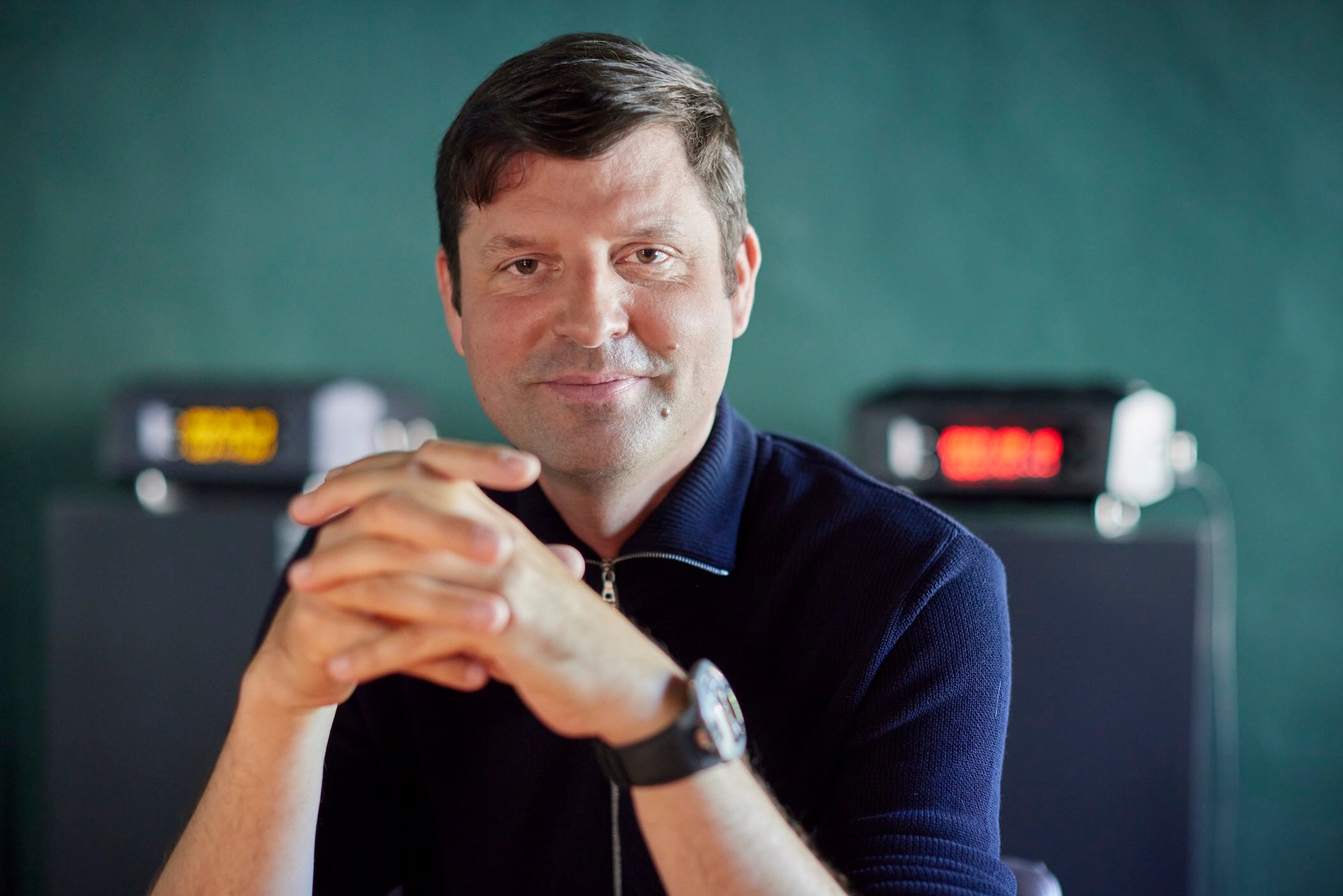
The world of haute horlogerie is often perceived as a realm of guarded secrets and enigmatic personalities, where innovation is meticulously balanced with a deep reverence for tradition. Within this intricate ecosystem, the "Twelve on Time" series by Monochrome Watches endeavors to demystify the individuals who shape the industry, offering a glimpse into their personal philosophies and their profound connections with the art of watchmaking. This installment features Felix Baumgartner, a visionary co-founder of Urwerk, a brand synonymous with avant-garde design and mechanical ingenuity. Through a curated set of twelve probing questions, Baumgartner unveils his journey, his inspirations, and his unwavering commitment to pushing the boundaries of what is possible in timekeeping.
The Genesis of a Visionary: An Encounter with Genius
Baumgartner’s entry into the demanding world of independent watchmaking was not a linear progression but a seismic shift, catalyzed by a singular encounter that redefined his perception of the craft. "Which watch changed the way you looked at watchmaking?" he is asked. His answer points to a 19th-century tourbillon, meticulously displayed at the Patek Philippe Museum. This encounter was more than an aesthetic appreciation; it was a profound realization of human ingenuity. "I was mesmerized," Baumgartner recounts, describing the profound impact of witnessing "pure human genius: someone, three centuries ago, using the finest technology of their time, had invented a mechanism so refined it is still running and still being admired today."
This experience served as a pivotal moment, planting the seed for his own ambitious pursuit. The desire wasn’t to replicate past glories but to emulate the spirit of innovation. "I told myself, ‘I want this.’ Not to repeat it, but to do for our era what that watchmaker did for his: use today’s technology to create mechanisms nobody has ever seen before." This realization provided the decisive impetus to abandon his previous endeavors and fully commit to the challenging yet rewarding path of independent contemporary watchmaking. This decision marked the beginning of Urwerk’s journey, a brand that would soon become synonymous with pushing the very definition of a wristwatch.
The Heart of a Watch: Emotion as the Ultimate Complication
Beyond technical prowess and historical significance, Baumgartner places paramount importance on the emotional resonance of a timepiece. When questioned about the quality he values most in a watch, his response is immediate and unequivocal: "The emotion it evokes." He elaborates that this feeling can stem from various sources – the captivating design, the intricate mechanical complexity, or the compelling narrative woven into its existence. However, the ultimate measure of a watch’s success, in his view, lies in its ability to stir something within the wearer. "A watch that leaves you indifferent has failed at the one thing that matters. It has to make you feel something." This philosophy underscores a core tenet of Urwerk’s design ethos: to create timepieces that are not merely functional objects but objects of profound personal connection and emotional engagement.
The Everest of Watchmaking: The Sympathique Complication
For those who appreciate the intricate ballet of gears and springs, the term "complication" evokes a sense of wonder. Yet, for Felix Baumgartner, one complication stands above the rest, representing the zenith of mechanical achievement. "The sympathique watch," he declares, is "the real Everest of watchmaking." His fascination lies in the inherent complexity of such a mechanism. "Two independent mechanisms, each with its own life, somehow ‘speaking’ to one another, synchronizing, interacting. It’s mind-blowing." The concept of two distinct, yet harmoniously integrated, mechanical systems working in concert speaks to Baumgartner’s passion for intricate engineering and his desire to explore the outer limits of horological possibility. The sympathetic watch, a rare and complex mechanism where one watch can set another, embodies this pursuit of extraordinary mechanical dialogue.
A Stance Against Stagnation: The Perils of Nostalgia in Watchmaking
The contemporary watch industry, while celebrating its rich heritage, faces a constant challenge in balancing reverence for the past with the imperative to innovate. Baumgartner expresses a strong critique of a prevalent trend that he believes hinders progress: "Nostalgia dressed up as innovation." He argues that the industry should be resolutely focused on the future, rather than dwelling on past achievements. "Watchmaking should look forward, not spend its energy polishing the rearview mirror," he states emphatically. His vision for the craft is one of continuous evolution. "We didn’t inherit this craft to freeze it in amber." This sentiment reflects a proactive approach to design and engineering, pushing Urwerk to consistently explore new forms and functionalities that define the present and future of watchmaking.
The Subtle Art of Care: Beyond the Visible
The meticulous craftsmanship that defines high-end watchmaking is often evident in its visible elements – the intricate engraving, the polished surfaces, the perfectly aligned indices. However, Baumgartner believes that true care is revealed in the details that are often overlooked, the subtle nuances that enhance the ownership experience. When asked what detail instantly signals a watch made with care, he points to the seemingly minor aspects of daily interaction. "The small, almost invisible things: is it comfortable on the wrist? Is it intuitive to set? Could a child operate it without frustration?" He posits that "genius isn’t only in the complication, it’s in how effortlessly the owner lives with it every day." This perspective highlights a holistic approach to design, where usability and wearer comfort are as crucial as the mechanical heart of the watch.
The Unseen Forces: Shaping the Future of Time
The evolution of watchmaking is intrinsically linked to humanity’s broader quest for knowledge and exploration. Baumgartner identifies a pivotal era that fundamentally shaped the discipline: "The moment mankind needed a precise instrument to navigate the ocean, and later, the sky." He emphasizes that watchmaking’s origins are rooted in practical necessity and the spirit of discovery. "Watchmaking was born from exploration, from the need to know exactly where you are when everything around you is in motion." This historical context deeply informs his own creative process. "That spirit is the one I try to keep alive," he asserts, underscoring his commitment to imbue Urwerk’s creations with a sense of adventure and forward momentum.
Navigating the Currents of Conformity: The Industry’s Greatest Challenge
In an era where information and trends spread with unprecedented speed, the watch industry faces the significant challenge of maintaining individuality amidst growing homogenization. Baumgartner identifies "walking with the crowd" as the greatest threat. He warns of a "real risk of uniformisation in mechanical watchmaking: the same silhouette, the same indications, the same finishing, repeated across the industry until nothing surprises us anymore." This concern reflects a broader industry-wide discussion about authenticity and originality. For Urwerk, this means a steadfast dedication to its unique design language and a refusal to conform to prevailing trends, ensuring each creation stands as a testament to its distinct identity.
Worlds Beyond the Wrist: Unconventional Inspirations
The creative wellsprings of a watchmaker can often extend far beyond the confines of the workshop. Felix Baumgartner draws significant inspiration from fields seemingly distant from traditional horology. "Aerospace engineering, above all, cockpits, satellites, and anything designed to function flawlessly in a hostile environment," he reveals. This fascination with the precision and resilience required in space exploration directly influences Urwerk’s aesthetic and engineering principles. Furthermore, science fiction plays a crucial role in shaping his conceptualization of time. "Science fiction, too, has shaped how I imagine time: not as something that simply passes, but as something that moves through space." This perspective imbues his work with a cosmic dimension, viewing time as a dynamic force rather than a passive progression.
A Legacy of Life-Saving Precision: The Ideal Creation
When asked about a watch he wishes he had created, Baumgartner’s answer transcends mere aesthetic desire. He points to "The first marine chronometer." His reasoning is rooted in the profound responsibility associated with such an invention. "Not for its beauty, but for what was at stake: get it wrong, and a ship is lost at sea." This historical context highlights the immense pressure and ingenuity required to develop a timepiece that directly impacted human lives and voyages of discovery. "That kind of pressure produces a different order of genius. One where the mechanism isn’t just admired, it’s trusted with lives." This sentiment underscores a deep respect for the historical milestones that have directly contributed to human progress.
The Unseen Companion: A Personal Timepiece
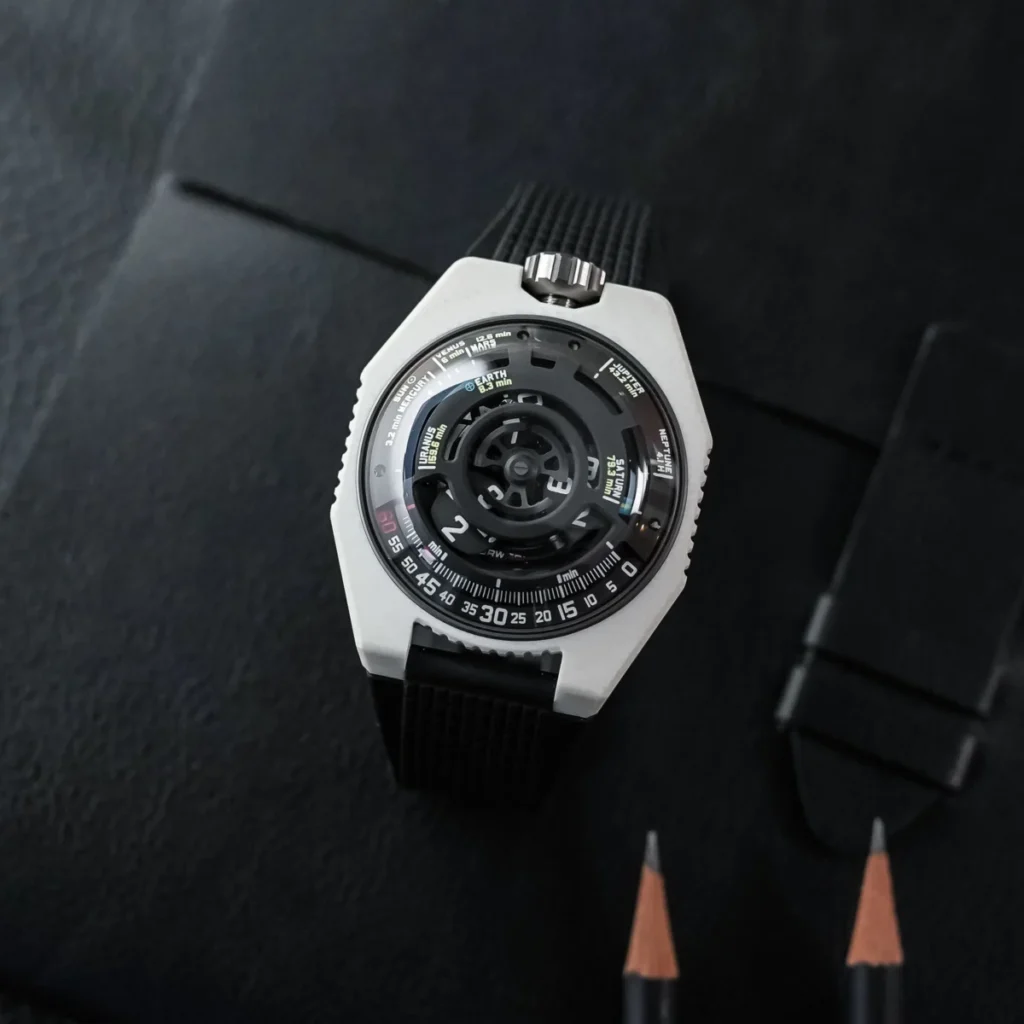
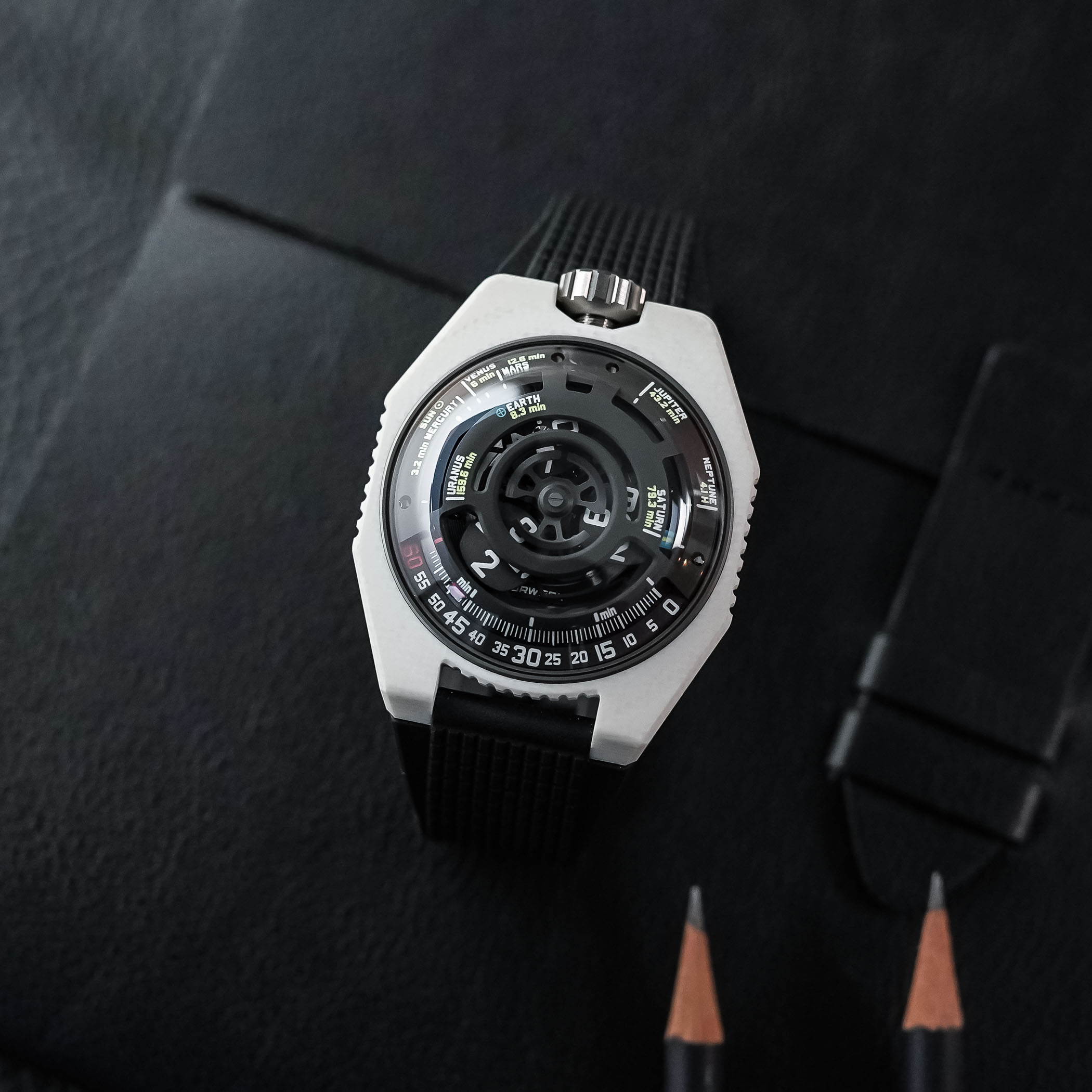
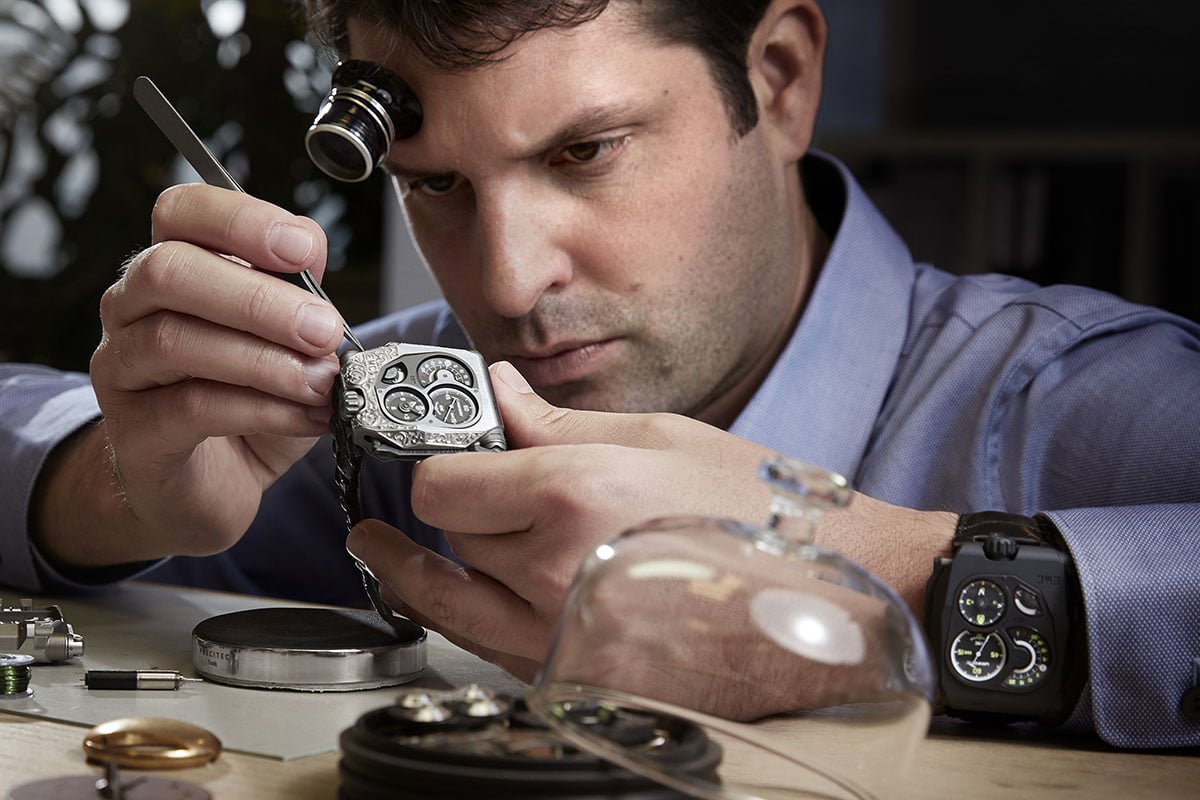
Even for a renowned creator of unique timepieces, personal preference dictates what graces the wrist when the public gaze is absent. Baumgartner’s choice is unsurprising, yet revealing: "No surprise: it’s an URWERK, the EMC." He adds that this particular watch, the EMC (Electro Mechanical Control), "kept me awake and on my toes for quite a while." The EMC, known for its innovative ability to allow the wearer to self-regulate the watch’s accuracy, represents a significant technical challenge and a deeply personal project for Baumgartner. Its presence on his wrist signifies not just pride in his creation, but also an appreciation for the demanding journey of its development.
The Guiding Hand: Paternal Influence on Craftsmanship
The foundations of any craft are often laid by those who came before. For Felix Baumgartner, the most influential personality in shaping his view of watchmaking is unequivocally his father. "My father, without a doubt," he states. A retired, passionate watchmaker himself, his father imparted fundamental lessons at his side. "He taught me at his side, on the bench, the beauty of a wheel, the secret sound of a well-adjusted pendulum." These were not abstract lessons but tactile experiences that fostered a deep appreciation for the mechanics. "These are all technical parts that only become art once the mechanics are flawless." The legacy of his father’s dedication and precision continues to resonate. "Everything I know about respecting the craft I learned watching him work." This familial connection highlights the enduring importance of mentorship and hands-on learning in the perpetuation of horological artistry.
A Foundation for the Future: Advice for Emerging Collectors
As the landscape of watch collecting evolves, with increasing emphasis on investment potential, Baumgartner offers a refreshingly personal perspective for younger enthusiasts. He urges them to prioritize "Pleasure." He advises against succumbing to the discourse of financial returns. "Forget the talk of return on investment and ‘safe’ purchases. That’s a language for accountants, not collectors." Instead, he champions a more intuitive and passionate approach. "You’re young: have fun, follow your instinct, and let the knowledge come along the way." His ultimate counsel is a testament to the true spirit of collecting: "The best collections are built by people who bought what they loved." This philosophy encourages a personal journey of discovery, where passion and instinct lead to a collection that is as rich in meaning as it is in horological significance.