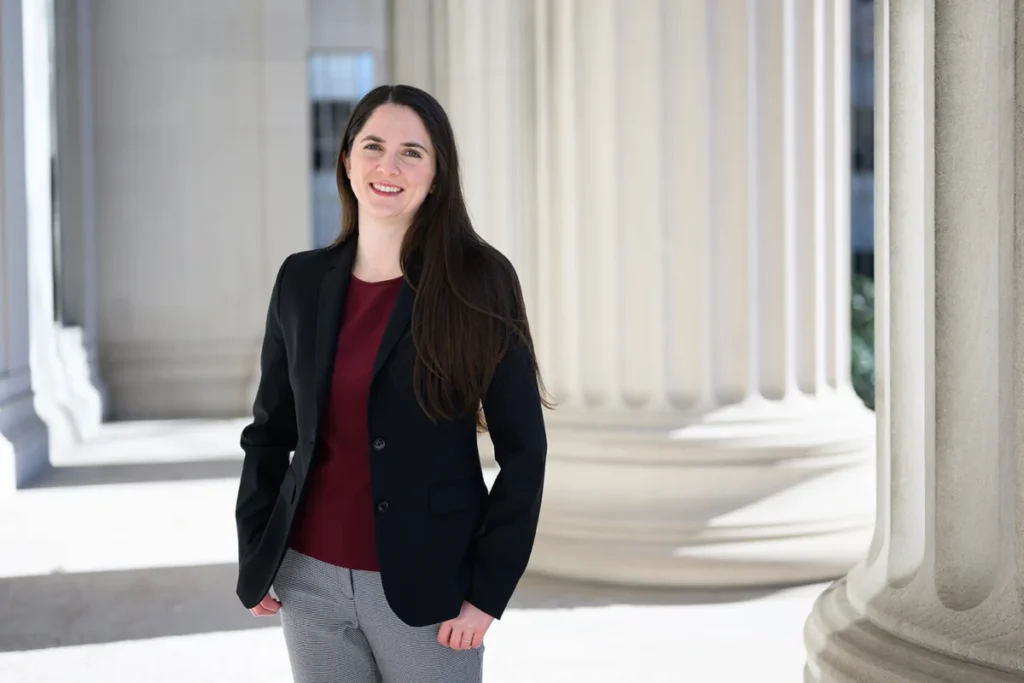
For nuclear power to fulfill its critical role as a viable, clean energy source in the global transition away from fossil fuels, it must overcome significant economic hurdles, primarily by becoming competitively priced and more economical to produce. This economic imperative drives much of the innovation within the nuclear sector today, focusing on reducing capital costs, streamlining construction, and, crucially, minimizing operational expenses. At the forefront of this transformative effort is Lauren Fortier, a second-year doctoral student in the Massachusetts Institute of Technology’s (MIT) Department of Nuclear Science and Engineering (NSE), who is developing sophisticated remote operation protocols for autonomous control of nuclear plants, a breakthrough that promises to reshape the industry’s economic landscape and operational paradigms.
The Economic Imperative for Nuclear Power
Nuclear energy currently provides approximately 10% of the world’s electricity and about half of the clean energy in many developed nations. However, the high upfront capital costs and substantial operational expenses associated with large, legacy nuclear power plants have historically challenged its economic competitiveness against cheaper, albeit often intermittent, renewable sources or fossil fuels. The industry’s future hinges on the development of advanced reactor designs, particularly Small Modular Reactors (SMRs) and microreactors, which promise lower capital costs, shorter construction times, and enhanced safety features. Yet, even with these advancements, the operational expenditure (OpEx), largely driven by staffing requirements, remains a significant factor. Traditional nuclear power plants require hundreds of highly trained operators and support staff, a cost model that is unsustainable for smaller, distributed reactors designed for remote deployment or specialized applications. Fortier’s research directly addresses this critical challenge by seeking to automate many of these labor-intensive operations, thereby driving down costs and enhancing the economic viability of next-generation nuclear technologies.
From Naval Discipline to Academic Innovation: Lauren Fortier’s Journey
Fortier’s unique journey into the realm of nuclear automation is rooted in a blend of rigorous academic training and invaluable hands-on operational experience. After earning an undergraduate degree in materials science and engineering from Northwestern University, a pursuit she undertook on an ROTC scholarship, Fortier served with distinction in the U.S. Navy. Her naval career placed her in the demanding environment of supervising nuclear plant operations aboard a U.S. aircraft carrier, navigating the strategic waters of the South China Sea. This experience, she recounts, was profoundly formative. "It was a unique experience that you don’t easily see anywhere else, especially the complete reliance on nuclear power. The only way you’re moving through the ocean is if you have that nuclear reactor working," she explains. This direct exposure to the unyielding demands of nuclear power in a mission-critical setting instilled in her a deep appreciation for the science and mechanics of plant operations.
During her tenure as a naval nuclear operator, Fortier developed a keen understanding of the operational intricacies, but also observed numerous process shortcomings. She noted that many plant operations were remarkably manually intensive, sparking an early curiosity about the potential for greater efficiency through automation. This firsthand insight into the human-centric nature of existing nuclear operations would become the bedrock of her subsequent academic pursuits.
Transitioning to Academia: MIT’s Role in Fortier’s Vision
As these ideas coalesced, the Navy presented Fortier with an opportunity to pursue a master’s degree from a selection of approved disciplines. Recognizing a natural extension of her operational experience, she chose nuclear engineering at MIT, one of the world’s leading institutions for nuclear science. "My experiences in nuclear up until then had been overwhelmingly positive, so I thought I would build on them and move from the operations realm to the academic realm," Fortier states. The intense training and discipline acquired during her naval service proved to be an excellent foundation for the rigorous academic environment at MIT, preparing her for the intellectual challenges ahead.
For her master’s degree, Fortier embarked on developing a supervisory control system specifically designed for the operation of nuclear plants. Working with a sophisticated simulator that accurately replicated complex thermal hydraulic responses, her research aimed to create a framework where lessons learned from these simulations could be directly translated into real-world operational improvements. This foundational work laid the groundwork for her doctoral research, demonstrating the feasibility of integrating advanced control systems into nuclear plant environments. The master’s research, completed in 2025, confirmed that while significant progress had been made, much more work was needed to achieve truly autonomous operations.
Pioneering Autonomous Nuclear Plant Operations: The Doctoral Mission
Fortier’s doctoral research at MIT is a direct continuation and expansion of her master’s work, driven by the future viability of nuclear power, particularly the deployment of small plants in diverse, often rural or remote areas. While legacy nuclear facilities can justify large staffs due to their 100% capacity operation and massive power output, distributed microreactors cannot bear the economic burden of a large human workforce. This is where supervised and thoroughly vetted autonomous operations become not just beneficial, but essential.
The central question guiding Fortier’s PhD research is: "How do we transition to autonomous operations in nuclear power plants?" Her vision is to develop a single, integrated approach – a central supervisory control system – rather than a patchwork of interlinked components. This holistic perspective, however, presents a significant challenge: modifying operational frameworks that were originally designed for human execution to seamlessly incorporate machine control. Fortier recognized early on that any supervisory control system, no matter how robust, would be severely limited if its inherent rigidity couldn’t accommodate both human operators and automated systems. "Because everything is human-centric, it doesn’t allow you to choose the best way to do a procedure," Fortier observes. Her innovative approach seeks to redefine this dynamic, envisioning a future where humans and computers "tag-team," each performing tasks for which they are best suited, with human intervention strategically deployed only when necessary. This hybrid model promises to optimize efficiency while maintaining the highest levels of safety.
The Power of Collaboration: MIT, National Labs, and Industry
Achieving the elegant goal of seamless human-machine collaboration in nuclear operations required a scope far beyond a master’s thesis, making a doctorate a natural progression for Fortier, with her PhD completion anticipated after 2025. This ambitious endeavor has been significantly bolstered by the powerful collaborative ecosystem fostered at MIT. Her research advisor, Sacit Cetiner, holds a joint appointment with MIT’s Nuclear Reactor Laboratory and the Idaho National Laboratory (INL), a critical nexus for nuclear research and development in the United States.
To tackle the complex challenge of designing an autonomous supervisory control system with an effective and easily adopted human-machine interface (HMI), Fortier collaborated extensively with Katya Le Blanc, a senior human factors scientist at INL. This partnership was crucial for integrating an understanding of human behavior and cognitive processes into the technical design. Furthermore, a collaboration with the Human System Simulation Laboratory at INL provided Fortier with invaluable insights into the intricacies of designing cyber-physical systems, ensuring that the automation protocols are intuitive and reliable for human oversight. "I’m very much an engineer and don’t have a lot of experience in human behavior, so the collaboration with INL was a huge benefit for me. I got better insights into many aspects, including what you want to see when a human has to take over for a machine when it’s no longer working," Fortier explains, underscoring the interdisciplinary nature of her work.
Beyond national laboratories, Fortier also engaged with industry leaders. She completed a summer internship in 2025 at Westinghouse, a preeminent design organization and vendor for both current and next-generation nuclear power plants. This internship provided a vital platform to test her innovative ideas about autonomous operations solutions in a practical, industry-relevant context, ensuring her research remains grounded in real-world applicability.
At MIT, Fortier has benefited immensely from the guidance of her co-advisors. Anuradha Annaswamy, a distinguished founder and director of the Active-Adaptive Control Laboratory in the Department of Mechanical Engineering, is a control systems expert. "She’s a control systems expert, which really benefits me because while I can explain what to do with a nuclear power plant, she can help me understand better how to go about operations from a control systems perspective," Fortier notes. Annaswamy provides critical guidance on the theoretical framework and execution of the supervisory control system, while Fortier also augments her knowledge by taking specialized classes related to control systems. Her other co-advisor is Curtis Smith, the former director for INL’s Nuclear Safety and Regulatory Research Division, now serving as the KEPCO Professor of the Practice of Nuclear Science and Engineering at MIT NSE. Smith’s extensive background in nuclear safety and regulatory research ensures that Fortier’s work is not only technically sound but also aligns with the stringent safety and regulatory requirements of the nuclear industry.
A Measured and Transparent Progression Toward Autonomy
A core principle guiding Fortier’s design philosophy is a gradual and systematic introduction of autonomy, meticulously crafted to build trust with users. She emphasizes that the operational systems she is designing will incorporate a step-by-step progression. "When we introduce an automated procedure that walks you step by step through what you would be doing anyway, it is reassuring and builds trust," Fortier points out. This approach seeks to familiarize human operators with automated processes in a controlled manner, fostering confidence rather than apprehension. Her doctoral work innovates by focusing on objective-oriented operations, where the control system intelligently generates the necessary sequence of events to achieve a specific objective, moving beyond rigid, predetermined operating procedures. This adaptive capability marks a significant leap from traditional, prescriptive control systems.
Crucially, Fortier is developing automation based on a process called finite state automata. This method, unlike some forms of artificial intelligence (AI), offers exceptional transparency in its execution. Finite state automata, which Fortier studied extensively during an internship at INL in summer 2024, is a discrete event system. This means that every action within the automation framework is event-driven – following a clear "if this happens, then do that" logic. This explicit, rule-based approach allows the system to adjust dynamically to current plant conditions and transition between various states or events with complete clarity. It represents a sophisticated solution to a complex problem through conventional automation, deliberately avoiding AI-driven automation for safety-critical applications. "We’re not using a data-driven statistical approach like machine learning because we do not yet have the tools to validate the operation of such systems in the highly regulated nuclear environment," Fortier asserts. This cautious yet innovative stance prioritizes verifiable safety and regulatory compliance, which are paramount in nuclear power generation.
Future Impact and Recognition: Paving the Way for Commercial Microreactors
The potential impact of Fortier’s pioneering work on developing automation for nuclear plants has not gone unnoticed. Her research has garnered significant recognition within the scientific and energy communities. In 2025, she was one of the esteemed winners of the Innovations in Nuclear Energy Research and Development Student Competition, a prestigious award from the Department of Energy’s Nuclear Energy University Program (NEUP). This recognition underscores the critical importance and innovative nature of her contributions to the field. Further cementing her standing as a future leader in nuclear energy, Fortier was also named a 2026–2027 MathWorks Engineering Fellow, a distinction that will provide crucial support for her continued advancement of this vital research.
The direct application of Fortier’s nuclear plant automation program on next-generation equipment is expected to provide the necessary traction for the accelerated development and deployment of commercial microreactors. These compact, often factory-fabricated reactors are designed to provide power to remote communities, industrial sites, or even disaster relief efforts, offering unparalleled energy resilience and flexibility. Reducing their operational footprint through advanced automation is key to unlocking their widespread adoption and economic competitiveness.
The immediate next steps in Fortier’s research involve scaling the supervisory control system, building upon insights gained from initial work on smaller, more contained aspects of control. Fortier expresses profound excitement about the path ahead and the myriad possibilities that her research promises to unlock. "The collaborations with other people, and the relationships we have established with stakeholders, have really helped make an impact and supported the relevancy of the work," she reflects. "Sometimes when you’re stuck in your own bubble, that outside perspective is really useful." This ethos of collaborative innovation is central to her success and to the broader advancement of nuclear energy.
Broader Implications: Energy Security and Climate Goals
The implications of Fortier’s work extend far beyond mere cost reduction. By enabling more economical and remotely operable nuclear power plants, her research contributes significantly to global energy security, offering resilient and carbon-free energy solutions that can be deployed where conventional grid infrastructure is insufficient or vulnerable. This is particularly relevant in an era of increasing climate change impacts and geopolitical instability.
The ability to operate microreactors with minimal human intervention also opens new possibilities for staffing and workforce development. While some traditional roles may be reduced, new high-skill jobs will emerge in the oversight, maintenance, and cybersecurity of these advanced autonomous systems. This evolution demands a shift in educational and training paradigms, preparing a new generation of nuclear professionals for a highly automated future. Fortier’s contributions are therefore not just technical but also foundational to the future human-machine ecosystem of the nuclear industry. Her work is a testament to the ingenuity required to harness nuclear power’s full potential, positioning it as a cornerstone of a sustainable, secure, and clean energy future.






