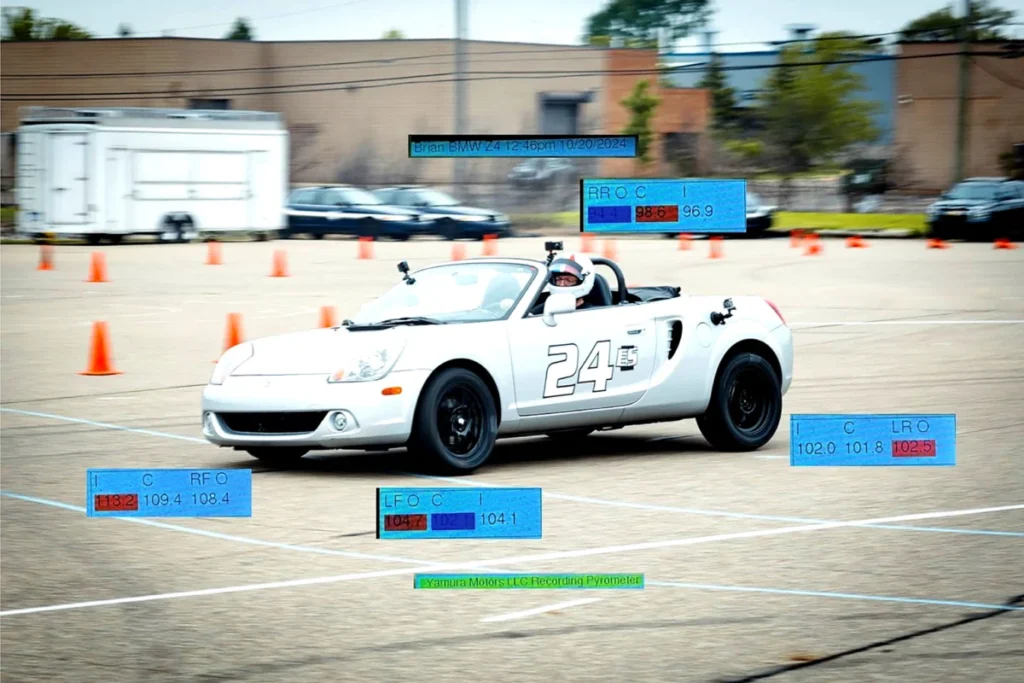
In the high-stakes, precision-driven world of autocross, the margin between a podium finish and a mid-pack placement is often measured in hundredths of a second. Unlike traditional circuit racing, where drivers have multiple laps to find a rhythm and bring components up to operating temperature, autocross demands immediate, peak performance from the moment the green light flashes. Between these intense bursts of activity, competitors find themselves in a critical 10-to-15-minute window. This interval is not merely a rest period but a vital tactical phase where strategic adjustments to tire pressure, thermal management, and suspension geometry can fundamentally alter a vehicle’s handling characteristics. Understanding the interplay between these variables is essential for any driver seeking to optimize their car’s contact patch and mechanical grip as the day progresses.
The Science of the Contact Patch: Managing Tire Pressure
The most immediate and accessible adjustment available to a driver in the paddock is the modification of tire pressure. The air pressure within a tire determines the shape and consistency of the contact patch—the small area of rubber actually touching the pavement. Professional paddock observers note that tire pressure is rarely a "set it and forget it" metric; rather, it is a dynamic value that fluctuates with ambient temperature and the heat generated during a run.
Data from performance tire manufacturers suggests that even a variance of two to three pounds per square inch (psi) can significantly alter a vehicle’s lateral acceleration capabilities. When a tire is overinflated, the carcass balloons slightly, causing the center of the tread to bear the brunt of the load. This results in higher temperatures at the center of the tire and a reduction in the overall surface area of the contact patch, leading to a loss of grip. Conversely, an underinflated tire allows the sidewalls to roll and the center of the tread to concave, causing the edges to overheat while the center remains cool.
Expert drivers utilize a tire pyrometer—a specialized thermometer—to measure temperatures across three points of the tread: the inside edge, the center, and the outside edge. A uniform temperature gradient across these three points indicates an optimized pressure setting. During the 15-minute break between runs, drivers must meticulously bleed off excess pressure built up from internal friction or add air if the morning’s rising ambient temperatures have not yet compensated for a cold start. Keeping a detailed logbook of these changes alongside track temperature data is a hallmark of the most successful regional and national competitors.
Thermal Management: The Paradox of Heat
In elite disciplines like Formula 1 or IndyCar, the "warm-up lap" is a choreographed ritual designed to bring tires into a specific thermal window. Autocross lacks this luxury. A driver must launch from a standstill and expect maximum adhesion at the first turn. This requirement places a premium on tires that "turn on" quickly, but it also introduces the risk of thermal saturation.
While heat is necessary for the chemical compounds in racing rubber to become pliable and "sticky," there is a definitive ceiling beyond which the rubber begins to break down or "grease over." This phenomenon occurs when the surface temperature of the tire exceeds its optimal operating range, causing the rubber to lose structural integrity and slide across the pavement rather than gripping it.
To combat this, the use of water sprayers has become a standard sight in autocross paddocks. By misting the tires with water between runs, drivers can evaporatively cool the rubber, bringing it back down into the "Goldilocks zone" of peak grip. This is particularly crucial for the outside front tire on front-engine vehicles, which often bears the highest load and generates the most heat. On the other end of the spectrum, on overcast or chilly days, maintaining heat becomes the priority. While professional tire warmers are generally prohibited in club-level events to maintain a level playing field, many drivers utilize tire blankets or simple covers to shield their rubber from wind chill, ensuring that the hard-earned heat from the previous run is not lost to the atmosphere.
Suspension Geometry: Camber and Toe Adjustments
Beyond the rubber itself, the mechanical interface between the car and the ground—the suspension—offers another layer of tunability. The most frequent adjustment influenced by tire temperature data is camber. Defined as the inward or outward tilt of the wheels when viewed from the front, camber dictates how much of the tire stays in contact with the road during hard cornering.
If a pyrometer reveals that the inside edges of the tires are significantly hotter than the outside, it is a clear indication of excessive negative camber. While negative camber helps the car corner by flattening the tire against the pavement as the body rolls, too much of it reduces the contact patch during straight-line braking and acceleration. Conversely, high temperatures on the outside edge suggest that the tire is "rolling over" onto its sidewall, necessitating an increase in negative camber.
Toe settings also play a critical role in both heat generation and turn-in response. "Toe-in," where the front of the tires point toward each other, provides straight-line stability but can sluggishly resist initial turn-in. "Toe-out" enhances the car’s eagerness to enter a corner but increases tire "scrub" on the straights, which generates additional heat. For many advanced competitors, adjusting these settings between runs is a calculated risk, often requiring portable alignment plates and a deep understanding of the vehicle’s specific kinematics.
Dynamic Handling: Shocks and Sway Bars
For vehicles equipped with adjustable dampers (shocks) and sway bars, the interval between runs provides an opportunity to fine-tune the car’s balance. The primary goal is to manage weight transfer. Autocross courses are characterized by rapid transitions—slaloms and offsets that throw the vehicle’s mass from side to side.
If a driver experiences "understeer" (the car refuses to turn and pushes toward the outside of the curve), the standard technical response is to soften the front suspension or stiffen the rear. This allows for more weight transfer to the front tires, increasing their grip. If the car suffers from "oversteer" (the rear end slides out), the opposite is true: softening the rear dampers can help the back tires find purchase. These adjustments allow a driver to "dial in" the car to the specific rhythm of the day’s course layout, which may favor high-speed sweepers one weekend and tight, technical hairpins the next.
Environmental Evolution and the Chronology of an Event
A significant factor that often goes overlooked by novices is the evolution of the racing surface itself. An autocross event follows a predictable chronological arc that affects grip levels:
- The Morning Session: The track is often "green" and "dusty." Overnight dew, dust, and oils sit on the surface. Early runners often act as "brooms," clearing the line for later competitors. Grip is at its lowest, and tire temperatures rise slowly.
- Mid-Day Transition: As more cars traverse the course, they lay down a layer of rubber—a process known as "rubbering in." This increases the coefficient of friction between the tires and the road. Simultaneously, the sun begins to heat the pavement. A dark asphalt surface can reach temperatures 30 to 40 degrees higher than the ambient air, significantly accelerating tire wear and heat buildup.
- The Final Runs: By the fourth or fifth run, the "racing line" is well-defined and clean. This is typically when the fastest times of the day are recorded. However, this is also when the car is most susceptible to overheating.
Industry analysts point out that the ability to read these environmental shifts is what separates the champions from the enthusiasts. A driver who fails to account for the increasing grip of a "rubbered-in" track may find themselves over-driving the car, leading to mistakes that negate the technical advantages of the improved surface.
Broader Implications and Technical Analysis
The meticulous nature of these adjustments reflects a broader trend toward the professionalization of amateur motorsports. What was once a casual weekend hobby has evolved into a data-driven pursuit. The availability of affordable telemetry systems and high-precision sensors has allowed amateur racers to apply the same logic used by professional racing teams to their street-legal vehicles.
From a safety perspective, these adjustments are equally vital. A car that is properly balanced and running at optimal tire pressures is more predictable and less likely to experience a sudden loss of control. Furthermore, the emphasis on record-keeping and data analysis fosters a culture of technical literacy among participants.
In conclusion, the 15 minutes between autocross runs are not a hiatus but a high-pressure diagnostic window. By synthesizing tire temperature data, mechanical feedback, and environmental observations, a driver can transform a struggling vehicle into a precision instrument. As the track surface evolves from the morning dust to the afternoon heat, the successful competitor is the one who remains agile—not just behind the wheel, but in the paddock with a pressure gauge and a wrench in hand. The quest for grip is a never-ending cycle of measurement, adjustment, and execution, proving that in the world of autocross, the race is often won before the car even reaches the starting line.