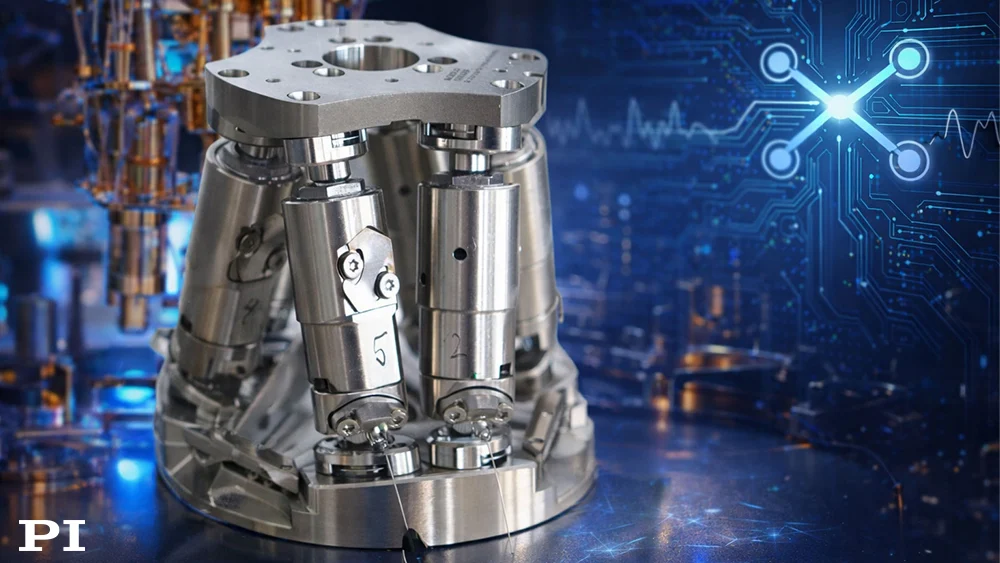
PI (Physik Instrumente) has officially initiated a comprehensive low-temperature development program, marking a significant advancement in the realm of multi-axis nanopositioning systems specifically engineered for the burgeoning field of quantum applications. This strategic initiative underscores PI’s unwavering commitment to providing the foundational precision mechanics necessary to push the boundaries of quantum research and commercialization. The program focuses on addressing the increasingly complex demands of quantum experiments, which necessitate unparalleled accuracy and stability in extreme cryogenic environments.
A New Frontier in Quantum Precision
The landscape of quantum technology, encompassing quantum computing, quantum communication, and quantum sensing, is rapidly evolving from theoretical concepts and laboratory demonstrations to the brink of commercial viability. This rapid progression has created an urgent demand for increasingly sophisticated and precise instrumentation. Early-stage quantum research often relied on more rudimentary cryogenic motion solutions, typically involving stacked XYZ stages to achieve basic three-degree-of-freedom (3DOF) positioning. While these systems served their purpose in initial experimental setups, their limitations quickly became apparent as quantum experiments grew in complexity.
Today’s cutting-edge quantum applications demand far greater versatility and precision, specifically requiring 5- and 6-degree-of-freedom (6DOF) alignment systems. These advanced systems must not only accommodate significantly larger payloads, sometimes weighing several hundred grams, but also support increasingly intricate optical configurations involving multiple lenses, mirrors, and fiber arrays. All of this must operate seamlessly within the confined and thermally sensitive spaces of cryostats and dilution refrigerators. The transition from simple linear translation to complex multi-axis control, including precise rotational adjustments (pitch, roll, yaw), represents a critical engineering challenge that PI’s new development program aims to resolve. The ability to manipulate components with nanometer-scale precision across multiple axes simultaneously is paramount for optimizing qubit coherence, enhancing optical coupling efficiency, and maintaining the delicate conditions required for observing and exploiting quantum phenomena. This development marks a pivotal shift, enabling researchers to move beyond single-component manipulation to orchestrating complex quantum architectures with unprecedented control.
The Critical Role of Cryogenics in Quantum Research
Cryogenic temperatures, typically below 4 Kelvin (K) and often extending down to millikelvin (mK) ranges, are not merely a preference but a fundamental requirement for the operation of many quantum technologies. The extreme cold is essential for several key reasons:
- Qubit Coherence: Many types of qubits, such as superconducting qubits (e.g., transmons, flux qubits) and topological qubits, require near-absolute-zero temperatures to maintain their fragile quantum states (coherence) for a sufficient duration. Thermal energy at higher temperatures introduces noise and environmental interactions that rapidly cause decoherence, leading to computational errors.
- Superconductivity: Superconducting circuits, integral to many quantum computers and highly sensitive detectors, rely on cryogenic temperatures to achieve zero electrical resistance. This enables lossless signal transmission, reduces thermal noise in readout electronics, and facilitates the operation of components like Josephson junctions.
- Noise Reduction: Low temperatures significantly reduce thermal vibrations, Brownian motion, and electromagnetic noise (Johnson-Nyquist noise), which can otherwise interfere with delicate quantum states, obscure faint quantum signals, and degrade measurement fidelity.
- Material Properties: Certain quantum phenomena, such as Bose-Einstein condensates, superfluidity, or the properties of exotic topological materials, only manifest at ultralow temperatures, making cryogenic environments indispensable for their study and application.
Operating precision mechanical systems in such extreme environments presents a unique and formidable set of engineering challenges. Traditional materials behave differently: thermal expansion coefficients become critical, necessitating careful material selection to avoid differential contraction and stress build-up; friction mechanisms change, often requiring dry lubricants or specialized bearings; and conventional lubricants freeze or become ineffective, leading to increased wear and reduced precision. Furthermore, any heat generated by motion systems, even minimal amounts, can severely compromise the cryogenic environment, leading to increased power consumption for cooling, extended cool-down times, and potential loss of qubit coherence or thermal instability. The spatial constraints within cryostats, often cylindrical vessels designed to minimize heat leakage, add another layer of complexity, demanding compact yet highly functional designs. Dilution refrigerators, which can reach temperatures as low as a few millikelvin, impose even stricter thermal budgets and size limitations, making the integration of active motion components particularly challenging due to their limited cooling power.

Unpacking PI’s Advanced Parallel Kinematics Solution
PI’s innovative approach to addressing these multifaceted challenges is firmly rooted in compact 6DOF parallel kinematics, specifically leveraging its extensive expertise in hexapod-type designs. These systems offer distinct advantages over traditional serial (stacked) systems, where errors can accumulate with each successive stage:
- Compact Footprint: Unlike serial stages that stack individual linear and rotary elements, a hexapod integrates all motion axes into a single, compact unit. This design is inherently space-efficient, making it ideally suited for the highly constrained volumes inside cryostats and dilution refrigerators, where every cubic centimeter is precious.
- Enhanced Stiffness and Stability: Parallel kinematics distribute loads across multiple actuators and a common platform, resulting in significantly higher stiffness, greater load-bearing capacity, and superior overall stability compared to stacked stages. This is crucial for maintaining precise alignment over extended periods, especially under changing thermal conditions or external vibrations. The inherent stiffness minimizes flexure and drift, vital for nanometer-scale accuracy.
- Reduced Error Accumulation: Since all actuators work together to control the platform, systemic errors are minimized, leading to superior overall accuracy, repeatability, and dynamic performance. The control system manages the coordinated motion of all six axes simultaneously, rather than sequentially, which inherently reduces compounding errors.
- Programmable Pivot Point: A key and highly beneficial feature of hexapods is the ability to define a virtual pivot point in space. This allows for rotational alignment around any specific point of interest – for example, the center of a precisely aligned lens, a specific qubit on a chip, or a critical optical junction. This capability simplifies complex optical alignments, streamlines experimental setup, and reduces the need to physically reposition the entire system, thereby minimizing disruption to the cryogenic environment.
- Open Aperture: Many hexapod designs inherently offer an open central aperture. This feature is vital for optical access, allowing laser beams, optical fibers, or other optical signals to pass directly through the system unimpeded. This is indispensable for experiments requiring light delivery to or collection from the sample stage.
These systems are meticulously designed for a range of critical optical and mechanical tasks within quantum setups, directly enabling complex experiments:
- Beam Steering: Precisely directing and fine-tuning the trajectory of laser beams to specific target points on a quantum chip, into an optical cavity, or onto individual qubits.
- Lens Aberration Correction: Compensating for imperfections or environmental distortions in optical components to maintain optimal wavefront quality, crucial for high-fidelity quantum operations.
- Polarization Control: Accurately aligning optical elements (e.g., waveplates, polarizers) to manipulate the polarization state of light, which is fundamental for encoding and decoding quantum information.
- Fiber Alignment: Achieving nanometer-precision coupling of optical fibers to photonic integrated circuits, single-photon detectors, or individual quantum emitters – a notoriously challenging task due to the small mode field diameters (often single-digit micrometers) and stringent coupling efficiency requirements.
- Positioning of Dispersive Elements: Accurately placing gratings, prisms, and other components used for spectral filtering, beam shaping, or frequency manipulation of light within complex optical paths.
The robust design ensures reliable operation at temperatures below 4K, while simultaneously supporting payloads of several hundred grams – a significant capability given the mass of some optical assemblies, cryo-probes, and quantum devices. Furthermore, these systems are engineered to provide millimeter-scale travel ranges, maintaining exceptional stability and repeatability. Achieving sub-nanometer resolution and positional stability for extended periods in such extreme conditions is a testament to the advanced engineering involved, directly impacting the fidelity, success rates, and scalability of quantum experiments.
Engineering for Extreme Environments: The Piezoelectric Advantage
The core of PI’s cryogenic nanopositioning technology lies in its advanced piezo-based architecture. Piezoelectric actuators are particularly well-suited for cryogenic applications due to several inherent advantages that address the stringent requirements of low-temperature quantum environments:
- Minimal Heat Generation: Unlike traditional electromagnetic motors that generate significant resistive heat through coils, piezoelectric actuators operate by inducing strain in a ceramic material when an electric field is applied. Their energy conversion efficiency is very high, resulting in extremely low heat dissipation during operation. This is a critical factor in cryogenic environments where every milliwatt of heat load can drastically increase cooling costs, extend cool-down times, and, most importantly, compromise the thermal stability and coherence of sensitive quantum devices. For example, in a dilution refrigerator operating at millikelvin temperatures, even micro-watts of excess heat can cause significant temperature excursions.
- Direct Drive and High Resolution: Piezoelectric actuators provide direct, frictionless motion with virtually unlimited resolution, limited only by the noise floor of the control electronics. This direct drive capability eliminates the need for mechanical gears, screws, or traditional lubricants, all of which are problematic at low temperatures due to freezing, increased friction, or material property changes. The inherent stiffness of piezo ceramics also contributes to fast response times and precise dynamic control.
- Self-Locking Operation: A unique and highly beneficial advantage of PI’s piezo-based architecture is its ability to self-lock when power is switched off. Once a position is reached, the piezo elements can maintain that position without continuous power draw. This "set-and-forget" capability is invaluable in thermally sensitive low-temperature environments, as it eliminates active heat generation during periods of static positioning, further conserving the cryogenic budget and enhancing long-term thermal stability. This passive holding mechanism is far superior to active servo control in terms of heat load.
- Non-Magnetic Materials: Quantum devices, particularly those relying on superconducting circuits, trapped ions, or spin qubits, are exquisitely sensitive to stray magnetic fields, which can induce unwanted shifts in energy levels or cause decoherence. The meticulous selection and use of non-magnetic materials in the construction of the nanopositioning systems is therefore paramount. PI’s commitment to specialized, non-magnetic alloys and ceramics ensures that the motion systems do not introduce spurious magnetic fields that could interfere with qubit operation or measurement integrity.
- Ultra-High Vacuum (UHV) Compatibility: Many quantum experiments are conducted under ultra-high vacuum conditions (typically below 10^-9 Torr) to prevent contamination of sensitive surfaces and ensure the purity of the experimental environment, which can affect qubit lifetimes or optical losses. The materials and construction methods employed in PI’s new systems are fully UHV compatible, meaning they do not outgas volatile compounds that could degrade vacuum levels or deposit unwanted residues on sensitive optical or quantum components. This ensures seamless integration near the most sensitive quantum devices without compromising experimental conditions.
The combination of these features allows for the precise, stable, and thermally benign manipulation of components, directly addressing the multifaceted challenges of quantum research and development. The ability to maintain nanometer-scale precision and stability for extended periods at temperatures approaching absolute zero, while handling substantial payloads, represents a significant engineering feat that will unlock new experimental capabilities.
The Evolution of Nanopositioning for Quantum Applications
The development of this advanced cryogenic nanopositioning program is not an isolated event but a logical and strategic progression in PI’s long-standing commitment to precision motion technology. For decades, PI has been at the forefront of designing and manufacturing high-precision positioning systems for a vast array of scientific research and industrial applications, including those requiring extreme environmental conditions such as vacuum, high radiation, or magnetic fields.

The increasing maturity of the quantum technology sector, particularly over the last decade, has driven a corresponding increase in the demand for specialized and more capable instrumentation. Initial quantum experiments, often proof-of-concept demonstrations involving a handful of qubits, could tolerate less precise alignment or rely on manual, coarse adjustments. However, as researchers move towards scaling up quantum systems – integrating dozens or hundreds of qubits, building complex photonic circuits for quantum information processing, and developing commercial prototypes – the requirements for every subsystem, including motion control, have become exponentially more stringent. The margin for error has diminished dramatically.
This program significantly expands PI’s existing body of work in motion technology tailored for quantum research and cryogenic photonic systems. The company has a history of collaborating closely with leading research institutions and industry partners globally, gaining invaluable insights into the specific needs and challenges faced by quantum scientists and engineers. This deep collaborative engagement has directly informed the design principles, performance targets, and feature sets of the new cryogenic nanopositioning systems, ensuring they meet the real-world demands of next-generation quantum platforms. The timeline of quantum research itself, moving from fundamental theoretical explorations to robust laboratory demonstrations and now towards engineering commercial-grade, fault-tolerant quantum systems, directly dictates the escalating need for such robust and precise tools. This development is a testament to PI’s foresight in anticipating the infrastructure requirements of an emerging technological paradigm.
Strategic Implications and Industry Impact
The introduction of PI’s advanced cryogenic nanopositioning systems carries profound strategic implications across several high-tech industries, acting as a critical enabler for their continued innovation and growth:
Quantum Technology
- Quantum Computing: These systems are vital for the development and scaling of quantum processors. Precise alignment of optical components for qubit control (e.g., laser addressing of trapped ions or neutral atoms), efficient fiber coupling for data input/output to superconducting or photonic qubits, and the accurate positioning of detectors are all critical for achieving higher qubit counts, improving gate fidelities, and reducing error rates. The enhanced stability and repeatability will accelerate experimental cycles, improve the reliability of complex quantum algorithms, and ultimately contribute to the realization of fault-tolerant quantum computers.
- Quantum Communication: For secure quantum key distribution (QKD) networks and future quantum internet initiatives, accurate and stable alignment of optical fibers, free-space optical links, and integrated photonic circuits is essential. These nanopositioners will enable more efficient photon coupling, minimize signal loss over long distances, and facilitate the development of robust quantum repeaters and entanglement distribution networks.
- Quantum Sensing: Next-generation quantum sensors, such as atomic clocks with unprecedented precision, highly sensitive gravimeters, magnetometers, and gyroscopes, often rely on precise manipulation of atoms, photons, or defects in cryogenic environments. The new systems will provide the necessary alignment capabilities to maximize sensor sensitivity, accuracy, and resolution, opening doors to new scientific discoveries and industrial applications (e.g., medical imaging, navigation, fundamental physics tests).
Photonics Industry
The rigorous demands of quantum technology are serving as a powerful catalyst for innovation across the broader photonics sector. Integrated photonics, in particular, will significantly benefit from these systems, as they enable precision alignment during the critical stages of manufacturing, packaging, testing, and operation of advanced photonic circuits that are increasingly being developed for quantum applications. The ability to actively correct for lens aberrations, precisely align multiple optical paths, and accurately position dispersive elements will also benefit other advanced optical systems used in demanding applications beyond quantum, such as astronomy, high-power lasers, and advanced microscopy. This cross-pollination of technology elevates the entire field of precision optics.
Semiconductor Industry
While typically associated with room-temperature processes, the semiconductor industry is increasingly exploring cryogenic technologies for advanced device characterization, defect inspection, and potentially even for future cryogenic electronics (e.g., for operating alongside quantum processors). The unparalleled precision, stability, and low thermal budget offered by PI’s new systems could find critical applications in these specialized semiconductor R&D areas, particularly for testing novel






