A significant scientific breakthrough from the University of Hong Kong (HKU) promises to address a critical bottleneck in the scalable production of green hydrogen: the need for durable, yet affordable, electrolyzer materials capable of withstanding harsh seawater environments. Led by Professor Mingxin Huang from HKU’s Department of Mechanical Engineering, a research team has developed a specialized stainless steel, dubbed SS-H₂, which exhibits unprecedented corrosion resistance under conditions previously considered prohibitive for conventional stainless steel, opening a potentially transformative pathway for clean energy.
The Quest for Green Hydrogen: A Global Imperative
Green hydrogen, produced by splitting water molecules using electricity from renewable sources, is widely recognized as a cornerstone of the global energy transition. It offers a versatile, zero-emission fuel and feedstock for various industries, including transportation, heavy manufacturing, and power generation, where direct electrification is challenging. The global hydrogen market is projected to reach trillions of dollars in the coming decades, with green hydrogen poised for exponential growth as nations strive to meet ambitious decarbonization targets. However, the widespread adoption of green hydrogen faces substantial hurdles, primarily high production costs, energy intensity, and the reliance on purified freshwater, which is a scarce resource in many regions.
Current industrial green hydrogen production predominantly relies on electrolyzers fed with highly purified water. This purification process adds considerable expense and environmental burden, particularly in water-stressed areas. The allure of utilizing abundant seawater as a feedstock for electrolysis is immense, promising to decouple hydrogen production from freshwater scarcity. Yet, seawater presents a formidable challenge to conventional materials science: its corrosive nature, laden with chloride ions, and propensity for side reactions, rapidly degrades standard electrolyzer components, undermining long-term durability and increasing operational costs.
Confronting the Seawater Electrolysis Conundrum
Direct seawater electrolysis has been a subject of intense research for decades, but the aggressive electrochemical environment poses unique material science problems. Chloride ions (Cl⁻) in seawater are notoriously corrosive, leading to pitting and crevice corrosion in most metals. Furthermore, at the high electrical potentials required for water splitting, undesirable side reactions can occur, most notably the evolution of toxic chlorine gas (Cl₂) instead of oxygen, which not only reduces the efficiency of hydrogen production but also necessitates complex and costly safety measures. Catalyst degradation, the formation of precipitates (like magnesium hydroxide and calcium carbonate) that foul electrode surfaces, and limited long-term operational stability are persistent obstacles highlighted in numerous recent reviews of the technology.
Current industrial practice for producing hydrogen from desalted water or acid typically employs structural materials based on titanium, often coated with expensive precious metals like platinum or gold to enhance corrosion resistance and catalytic activity. While effective, these materials contribute significantly to the overall capital expenditure of an electrolyzer plant, rendering green hydrogen less competitive with fossil-fuel-derived hydrogen. For instance, a 10-megawatt (MW) Proton Exchange Membrane (PEM) electrolysis tank system, as estimated at the time of the HKU report, could cost around HK$17.8 million (approximately US$2.28 million), with structural components accounting for a staggering 53% of that expense. This high upfront cost is a major barrier to scaling up green hydrogen production.
SS-H₂: A Game-Changing Material
The HKU team’s SS-H₂ directly confronts this cost and durability dilemma. In rigorous tests conducted within a salt water electrolyzer, the newly developed steel demonstrated performance comparable to the costly titanium-based structural materials currently used in industrial settings. The crucial distinction lies in its dramatically lower cost. Stainless steel is inherently far more economical than titanium, and the team’s projections are striking: replacing expensive structural materials with SS-H₂ could reduce the cost of these components by approximately 40 times. Such a reduction could fundamentally alter the economic viability of large-scale green hydrogen production from seawater.
This breakthrough is particularly significant given the history and limitations of conventional stainless steel. For over a century, stainless steel has been prized for its corrosion resistance, a property derived from the formation of a thin, passive film of chromium oxide (Cr₂O₃) on its surface when exposed to oxygen. Chromium (Cr) is the key alloying element, and its oxidation creates a protective barrier that shields the underlying iron from degradation. However, this familiar protection system has a critical Achilles’ heel: at high electrical potentials, such as those encountered during water electrolysis, the stable Cr₂O₃ film can break down. Specifically, at around ~1000 mV (relative to a saturated calomel electrode, SCE), Cr₂O₃ can be further oxidized into soluble hexavalent chromium (Cr(VI)) species, leading to what is known as transpassive corrosion. This potential is well below the approximately ~1600 mV required for efficient water oxidation, rendering ordinary stainless steel unsuitable for the anode side of an electrolyzer. Even advanced alloys like 254SMO super stainless steel, known for its superior pitting resistance in marine environments, succumb to this high-voltage limitation under the extreme electrochemical conditions of hydrogen production.
The Ingenuity of "Sequential Dual-Passivation"
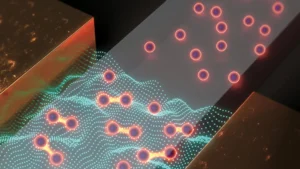
The innovation behind SS-H₂ lies in a sophisticated strategy termed "sequential dual-passivation." Rather than solely relying on the conventional chromium oxide barrier, SS-H₂ is engineered to form a second, distinct protective layer. The initial layer is indeed the familiar Cr₂O₃-based passive film. However, at a potential of approximately ~720 mV, a second, manganese-based layer intelligently forms atop the chromium layer. This novel, manganese-rich outer shield provides additional protection, enabling the steel to resist corrosion in chloride-containing environments up to an ultra-high potential of 1700 mV. This remarkable stability far surpasses the requirements for water oxidation and positions SS-H₂ as a truly robust material for demanding electrolytic applications.
The discovery is particularly counter-intuitive because manganese (Mn) has historically been considered detrimental to the corrosion resistance of stainless steel. Conventional metallurgical wisdom suggested that manganese inclusions or its presence in the passive film could weaken its protective properties. Dr. Kaiping Yu, the first author of the groundbreaking article published in Materials Today (titled "A sequential dual-passivation strategy for designing stainless steel used above water oxidation"), articulated this surprise: "Initially, we did not believe it because the prevailing view is that Mn impairs the corrosion resistance of stainless steel. Mn-based passivation is a counter-intuitive discovery, which cannot be explained by current knowledge in corrosion science. However, when numerous atomic-level results were presented, we were convinced. Beyond being surprised, we cannot wait to exploit the mechanism." This statement underscores the profound scientific shift initiated by the HKU team’s work, challenging established paradigms in corrosion science.
A Decade of "Super Steel" Innovation and a Six-Year Journey to SS-H₂
The development of SS-H₂ is not an isolated incident but rather the latest achievement in Professor Mingxin Huang’s long-running "Super Steel" Project at HKU. This ambitious research program has a proven track record of pioneering materials science breakthroughs. In 2017 and 2020, the project successfully developed ultra-strong and ultra-tough Super Steel, demonstrating novel approaches to enhancing mechanical properties. More recently, in 2021, the team made headlines with the creation of anti-COVID-19 stainless steel, showcasing their versatility in addressing diverse societal needs through advanced materials.
The specific journey from the initial observation of SS-H₂’s unusual properties to its scientific explanation and eventual publication spanned nearly six years. This extended timeline reflects the complexity of unraveling a counter-intuitive phenomenon and rigorously validating the underlying mechanisms through atomic-level analysis. Professor Huang emphasized the team’s unique research focus: "Different from the current corrosion community, which mainly focuses on the resistance at natural potentials, we specialize in developing high-potential-resistant alloys. Our strategy overcame the fundamental limitation of conventional stainless steel and established a paradigm for alloy development applicable at high potentials. This breakthrough is exciting and brings new applications." This strategic focus on high-potential applications distinguishes HKU’s approach and explains their success in an area where traditional methods fall short.
From Laboratory Bench to Industrial Production
The HKU team has already moved beyond laboratory-scale experimentation, taking significant strides towards industrialization. Patents for the SS-H₂ technology have been submitted in multiple countries, with two already granted authorization at the time of the HKU announcement. Crucially, the team reported the successful production of tons of SS-H₂-based wire in collaboration with a factory in Mainland China. This demonstrates the material’s manufacturability and scalability, a critical step often overlooked in early-stage research.
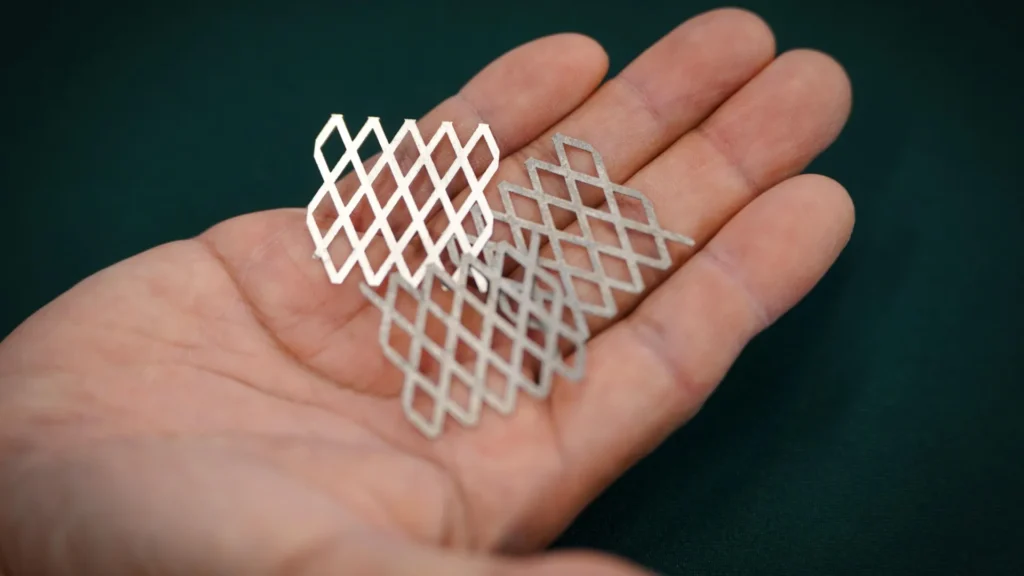
Professor Huang acknowledged the remaining engineering challenges, stating, "From experimental materials to real products, such as meshes and foams, for water electrolyzers, there are still challenging tasks at hand. Currently, we have made a big step toward industrialization. Tons of SS-H₂-based wire has been produced in collaboration with a factory from the Mainland. We are moving forward in applying the more economical SS-H₂ in hydrogen production from renewable sources." The transition from wire to complex electrolyzer components like meshes and foams requires further development in fabrication techniques, but the initial success in large-scale material production is a strong indicator of future commercial viability.
Reinforcing Relevance: The Enduring Challenges of Seawater Electrolysis
While the SS-H₂ study was published in 2023, its relevance has only intensified. The challenges it addresses remain central to ongoing research in seawater electrolysis. Recent scientific literature continues to underscore the critical need for advanced materials that can withstand the punishing conditions of direct seawater electrolysis. A 2025 Nature Reviews Materials review, for instance, reiterated that while direct seawater electrolysis holds immense promise, it is still hampered by persistent issues such as corrosion, detrimental side reactions, the formation of metal precipitates, and limited operational lifetimes.
Other concurrent research efforts further highlight the importance of the HKU breakthrough. Recent work, also published in 2025 in Nature Communications, has explored stainless steel-based electrodes augmented with protective catalytic layers, including nickel-iron (NiFe) based coatings and platinum (Pt) atomic clusters, to enhance durability in natural seawater. Researchers have also reported on corrosion-resistant anode strategies built upon stainless steel substrates, demonstrating a broader scientific consensus that stainless steel, despite its traditional limitations, remains a key focus in the pursuit of practical seawater electrolysis.
These complementary research directions do not diminish the significance of the SS-H₂ discovery; rather, they powerfully reinforce why the HKU team’s approach is so critical. While coatings and catalysts offer valuable solutions, SS-H₂ stands apart by fundamentally altering the protective mechanism of the steel itself through a novel alloy design strategy. This intrinsic material improvement offers a robust foundation upon which further enhancements, such as catalytic coatings, could potentially be built, leading to even more durable and efficient systems. The field is actively seeking materials that can survive the punishing combination of saltwater chemistry, high voltage, and industrial operating demands, and SS-H₂ presents a compelling answer.
A Steel Breakthrough with Transformative Clean Energy Potential
It is important to note that SS-H₂ is not yet an off-the-shelf solution for the nascent hydrogen economy. The engineering work required to transform experimental materials into functional electrolyzer components, such as intricate meshes and foams, is substantial and ongoing. However, the promise of SS-H₂ is unequivocally clear. A stainless steel capable of enduring high-voltage seawater conditions, while simultaneously offering a cost-effective alternative to expensive titanium-based components, could dramatically reduce the capital expenditure of green hydrogen production. This cost reduction is vital for making green hydrogen competitive with fossil fuels, thereby accelerating its scalability and facilitating its integration with renewable energy sources globally.
For an industry where the economic viability and long-term durability of technology often dictate its transition from laboratory curiosity to industrial reality, a steel that ingeniously builds its own "second shield" against corrosion could be far more than a materials science marvel. It represents a tangible, practical step towards unlocking the full potential of green hydrogen, enabling cleaner energy production at an unprecedented industrial scale, independent of freshwater resources, and at a cost that makes a sustainable future economically attainable. The HKU breakthrough could empower nations worldwide to leverage their coastlines for hydrogen production, fundamentally reshaping the global energy landscape.