Last year, researchers led by UCLA achieved a milestone that physicists had pursued for half a century, successfully making radioactive thorium nuclei absorb and release photons in a controlled way, similar to how electrons behave inside atoms. This groundbreaking achievement, first proposed by the team in 2008, was heralded as a critical step towards a new generation of extremely precise clocks. Such advances held the promise of dramatically improving global navigation systems and potentially aiding scientists in testing whether some of nature’s fundamental constants change over time. However, a significant practical hurdle remained: the specific isotope essential for nuclear clocks, thorium-229, is notoriously scarce, found almost exclusively as a decay product of weapons-grade uranium. Estimates suggested that only about 40 grams of this invaluable material existed worldwide for research purposes, rendering efficiency an paramount challenge for widespread adoption.
Overcoming the Thorium Scarcity Bottleneck
An international collaboration, once again spearheaded by UCLA physicist Eric Hudson, has now unveiled a solution to this critical limitation. The team has discovered a remarkably simpler and more efficient method to reproduce their earlier results, utilizing only a minuscule fraction of the thorium previously required. This novel approach, detailed in a recent issue of the prestigious journal Nature, is characterized by its straightforwardness and cost-effectiveness, paving the way for nuclear clocks to potentially become compact and affordable enough for broad societal integration. Should this vision materialize, these advanced timekeeping devices could transcend the confines of specialized laboratories, finding applications in vital infrastructure such as power grids, cellular communication towers, and GPS satellites. Furthermore, the technology holds the potential to shrink sufficiently to be incorporated into everyday personal devices like smartphones and wristwatches, and critically, enable navigation in environments where traditional GPS signals are inaccessible, including the vast expanses of deep space and the challenging underwater realms navigated by submarines.
The Half-Century Quest for Nuclear Precision
The pursuit of atomic and, more recently, nuclear clocks represents humanity’s ongoing quest for ultimate precision in timekeeping. For decades, atomic clocks have served as the bedrock of modern technology, underpinning everything from global positioning systems and internet synchronization to financial transactions and fundamental scientific research. These devices operate by monitoring the precise resonant frequency of electromagnetic radiation that causes electrons in atoms to transition between energy levels. The stability and accuracy of these electron transitions are extraordinary, with modern optical atomic clocks achieving uncertainties on the order of one part in 10^18, meaning they would only lose or gain one second over billions of years.
However, even this astounding level of precision faces inherent limitations. Electron energy levels are somewhat susceptible to external electromagnetic fields and temperature fluctuations, which can subtly perturb their delicate transitions. Physicists have long theorized that transitions within the atomic nucleus, rather than the electron shell, could offer an even more robust and precise timekeeping mechanism. Nuclear transitions are shielded by the surrounding electron cloud and are therefore expected to be significantly less sensitive to environmental disturbances. The challenge lay in finding a nucleus with a suitable low-energy transition that could be manipulated and measured with existing laser technology.
Thorium-229 emerged as the prime candidate due to its unique low-lying isomeric state, an excited nuclear state with an exceptionally low energy of just a few electron volts – the lowest known nuclear excitation in nature. This energy level is comparable to those of electron transitions in atoms, making it theoretically accessible with optical lasers. The concept of a nuclear clock based on thorium-229 was first proposed over fifty years ago, yet its experimental realization remained elusive until very recently.
From Complex Crystals to Simple Electroplating: A Chronology of Breakthroughs
The journey to the current breakthrough is marked by several significant milestones.
- 2008: The Initial Proposition: The UCLA team first put forth the theoretical framework for using thorium-229 for a nuclear clock, outlining the potential for its unique properties. This laid the groundwork for future experimental efforts.
- Decades of Global Endeavor: Before the recent UCLA successes, numerous research groups worldwide dedicated considerable resources to understanding and manipulating thorium-229. Much of this work involved indirect detection or theoretical modeling due to the immense experimental difficulties.
- "Last Year" (Inferred 2023): The First Experimental Realization: After years of dedicated research, the UCLA-led team achieved the first direct observation of thorium-229 nuclei absorbing and releasing photons in a controlled manner. This monumental achievement, published in Nature, confirmed the long-held theoretical predictions and demonstrated the feasibility of a nuclear clock. The methodology at the time involved embedding thorium-229 atoms within carefully engineered thorium-doped fluoride crystals. These crystals were designed to stabilize the thorium and remain transparent to the specific laser light needed to excite the atomic nucleus. This success was recognized with the 2025 Deborah Jin Award for Outstanding Doctoral Thesis Research in Atomic, Molecular, or Optical Physics for first author and UCLA postdoctoral researcher Ricky Elwell, highlighting the profound impact of this initial discovery.
- The Crystal Conundrum: Despite the triumph, the crystal-based method presented substantial challenges. "We did all the work of making the crystals because we thought the crystal had to be transparent for the laser light to reach the thorium nuclei. The crystals are really challenging to fabricate. It takes forever and the smallest amount of thorium we can use is 1 milligram, which is a lot when there’s only 40 or so grams available," explained Ricky Elwell, underscoring the material and logistical hurdles. The fragility of these specialized crystals further complicated their handling and potential for widespread application.
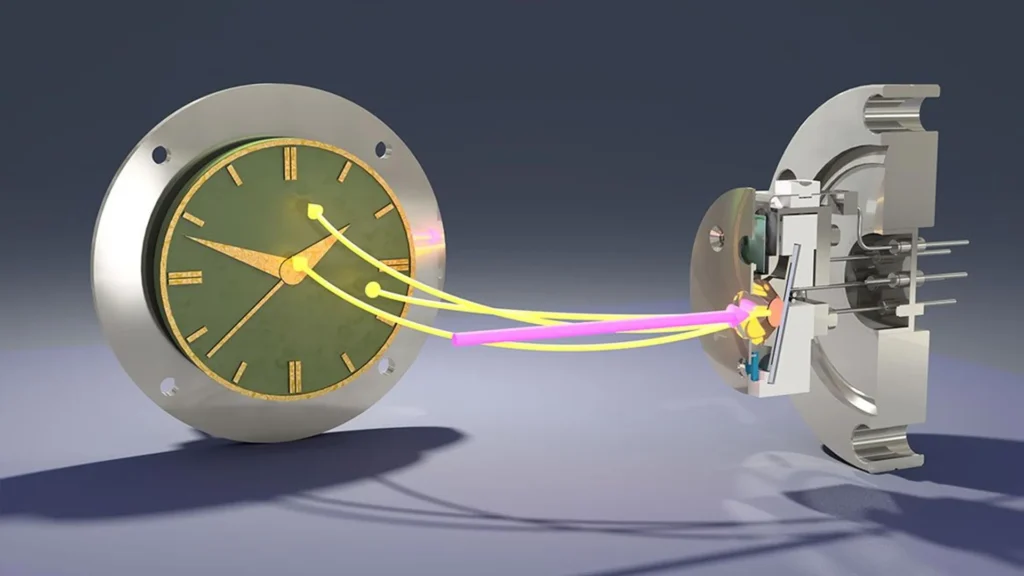
- The Current Breakthrough (2024): A Simpler, More Efficient Path: The latest research, again led by Eric Hudson, marks a paradigm shift in methodology. Instead of intricate crystal growth, the team adopted a radically different and simpler approach: depositing an extremely thin layer of thorium onto stainless steel using electroplating. This technique, which dates back to the early 1800s and is commonly employed in jewelry manufacturing, utilizes an electric current to transfer metal atoms through a conductive solution, effectively coating one surface with another. The elegance of this method lies in its simplicity, robustness, and, crucially, its drastically reduced thorium requirement. "It took us five years to figure out how to grow the fluoride crystals and now we’ve figured out how to get the same results with one of the oldest industrial techniques and using 1,000 times less thorium. Further, the finished product is essentially a small piece of steel and much tougher than the fragile crystals," Hudson stated, emphasizing the efficiency gains and enhanced durability.
Rethinking Nuclear Excitation: A Fundamental Insight
The success of the new electroplating system stemmed from a critical re-evaluation of a long-standing assumption in nuclear clock research. Scientists had previously believed that thorium needed to be meticulously embedded within a transparent material to allow laser light to directly reach and excite the nucleus. The UCLA team’s groundbreaking insight was that exciting the nucleus enough to observe its energy transition was far easier than initially conceived, and that transparency of the host material was not a prerequisite.
"Everyone had always assumed that in order to excite and then observe the nuclear transition, the thorium needed to be embedded in a material that was transparent to the light used to excite the nucleus. In this work, we showed that is simply not true," Hudson elaborated. "We can still force enough light into these opaque materials to excite nuclei near the surface, and then, instead of emitting photons like they do in transparent material such as the crystals, they emit electrons which can be detected simply by monitoring an electrical current — which is just about the easiest thing you can do in the lab!" This revelation streamlines the detection process significantly, replacing the complex photon detection in transparent crystals with a much simpler electrical current measurement from the opaque electroplated surface. This fundamental shift in understanding not only reduces the material requirements but also simplifies the detection mechanism, making the entire process more robust and accessible.
Broader Implications and Transformative Applications
The implications of this breakthrough extend far beyond the laboratory, promising to revolutionize various sectors and open new avenues for scientific inquiry.
Enhanced Navigation and National Security:
One of the most immediate and profound impacts of ultra-precise nuclear clocks lies in navigation. Current global navigation satellite systems (GNSS) like GPS rely heavily on the precise timing signals from onboard atomic clocks. However, these systems are vulnerable to various threats, including intentional jamming, spoofing, and disruption from natural phenomena like electromagnetic storms. Such disruptions could cripple critical infrastructure and pose significant national security risks.
Nuclear clocks, being far less sensitive to environmental disturbances and having an intrinsically higher stability, could provide an autonomous and resilient navigation solution. Submarines, for instance, already rely on onboard atomic clocks for navigation while submerged, but these clocks drift over time, necessitating periodic surfacing to reconfirm their position via GPS or other external signals. A nuclear clock, maintaining its accuracy for much longer periods, could dramatically extend the operational endurance of submarines without needing to surface, enhancing stealth and operational capability. Similarly, for deep-space missions, where signals take minutes or hours to reach Earth, highly stable onboard clocks are crucial for precise trajectory calculations and autonomous navigation, reducing reliance on constant communication with ground control.
Makan Mohageg, optical clock lead at Boeing Technology Innovation, affirmed this potential: "The UCLA team’s approach could help reduce the cost and complexity of future thorium-based nuclear clocks. Innovations like these may contribute to more compact, high-stability timekeeping, relevant to several aerospace applications."
Revolutionizing Infrastructure and Communication:
Beyond navigation, highly accurate clocks are vital for the synchronization of critical infrastructure. Power grids require extremely precise timing to prevent cascading failures and blackouts. Cellular networks and other communication systems rely on accurate time signals for efficient data transfer and handovers between towers. Financial markets, especially high-frequency trading platforms, demand nanosecond-level precision for timestamping transactions. Nuclear clocks, offering unparalleled stability, could elevate the performance and resilience of these systems, potentially leading to more robust and efficient global networks.
Fundamental Physics and the Fabric of Reality:
Perhaps the most profound implications of nuclear clocks lie in their potential to unlock new insights into the fundamental laws of the universe. Eric Burt, who leads the High Performance Atomic Clock project at the NASA Jet Propulsion Laboratory and was not involved in the research, highlighted this aspect: "In my opinion, thorium nuclear clocks could also revolutionize fundamental physics measurements that can be performed with clocks, such as tests of Einstein’s theory of relativity. Due to their inherent low sensitivity to environmental perturbations, future thorium clocks may also be useful in setting up a solar-system-wide time scale essential for establishing a permanent human presence on other planets."
Nuclear clocks can test Einstein’s theory of relativity with unprecedented precision, particularly the concept of gravitational time dilation, where time passes at different rates depending on gravitational potential. By comparing nuclear clocks placed at different altitudes or in varying gravitational fields, scientists could probe the limits of general relativity.
Furthermore, nuclear clocks offer a unique platform to investigate whether fundamental constants of nature, such as the fine-structure constant or the proton-to-electron mass ratio, change over cosmological timescales. These constants govern the strength of fundamental forces and the properties of matter. While currently assumed to be invariant, some theories, particularly those attempting to unify fundamental forces or explain dark matter and dark energy, predict subtle variations. Because nuclear transition energies depend on these constants differently than electron transition energies, comparing nuclear clocks with atomic clocks over long periods could reveal tiny, hitherto undetectable drifts in these constants, offering profound insights into the underlying physics of the universe.
A Foundation for Future Space Exploration and Human Presence:
As humanity sets its sights on establishing a permanent presence beyond Earth, ultra-precise timekeeping becomes increasingly critical. Long-duration space missions to Mars and beyond require autonomous navigation capabilities that are impervious to communication delays or outages. Nuclear clocks, with their inherent stability and resilience, could serve as the cornerstone for such systems. Moreover, the vision of a "solar-system-wide time scale," as suggested by Eric Burt, is essential for coordinating activities, communication, and scientific endeavors across vast interplanetary distances, laying the groundwork for future human settlements on other planets.
A Collaborative Effort Towards a New Era of Timekeeping
This groundbreaking research was made possible through the collaborative efforts of physicists from various institutions, underscoring the interdisciplinary nature of cutting-edge scientific discovery. The project received support from the National Science Foundation and involved experts from the University of Manchester, University of Nevada Reno, Los Alamos National Laboratory, Ziegler Analytics, Johannes Gutenberg-Universität at Mainz, and Ludwig-Maximilians-Universität München. This diverse collaboration brought together expertise in nuclear physics, laser spectroscopy, materials science, and quantum metrology, essential for tackling such a complex and ambitious scientific challenge.
The shift from intricate crystal fabrication to a simple, cost-effective electroplating technique represents a monumental leap forward in the practical realization of nuclear clocks. By dramatically reducing the reliance on scarce thorium-229 and simplifying the experimental setup, the UCLA team has not only overcome a major scientific bottleneck but has also accelerated the timeline for bringing these ultra-precise timekeeping devices out of specialized laboratories and into widespread applications. This innovation promises to usher in a new era of precision timekeeping, with transformative impacts on navigation, communication, infrastructure, and our fundamental understanding of the universe. The vision of nuclear clocks shrinking to fit into everyday devices or guiding humanity’s deep-space voyages is now closer than ever to becoming a reality.