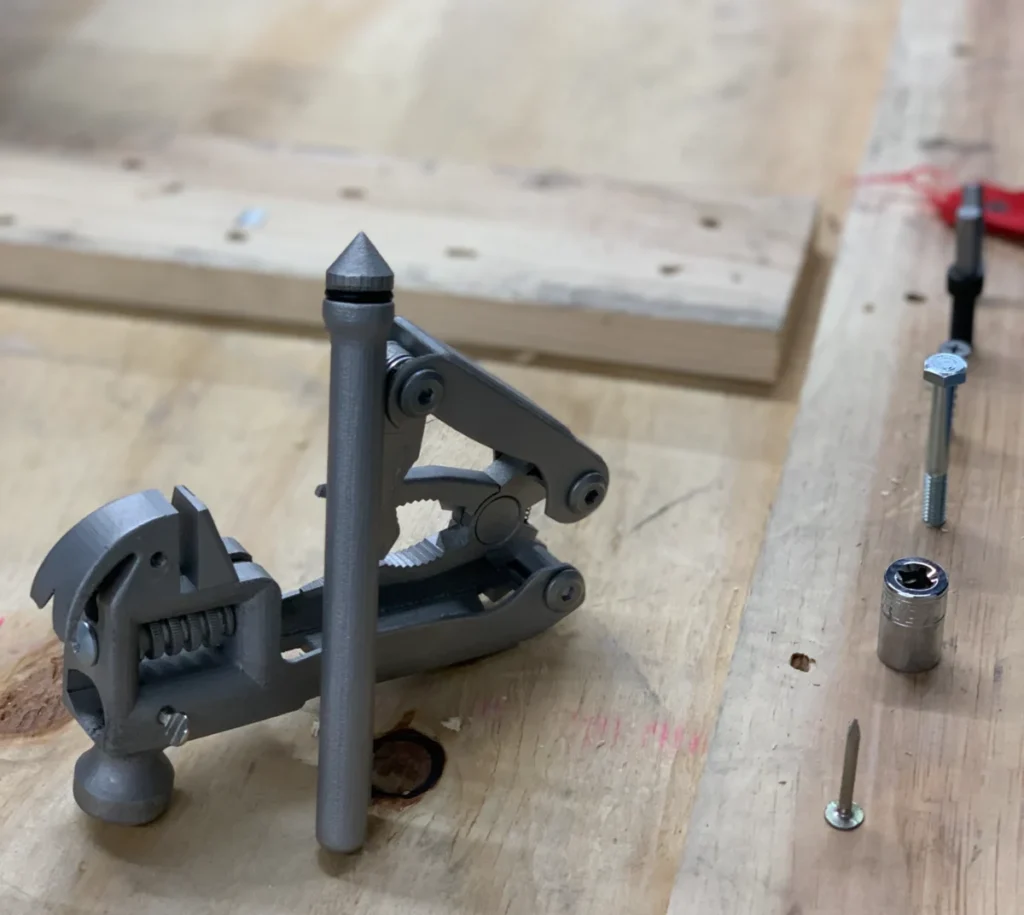
A groundbreaking stainless steel multi-tool, meticulously engineered and brought to life through advanced 3D printing, has earned top honors for a team of students from the University of Texas at El Paso (UTEP). The innovation, developed by the UTEP W.M. Keck Center for 3D Innovation’s student group "Borderland Steel," secured first place in America Makes’ third annual Additive Manufacturing (AM) in Steel competition. This prestigious event challenges university teams to design and fabricate functional, visibly 3D printed metal multi-tools, mirroring the everyday carry (EDC) items vital across sectors such as medical and industrial applications.
The winning multi-tool represents a significant leap in additive manufacturing, showcasing the power of integrating sophisticated design principles with cutting-edge production techniques. Borderland Steel’s journey began with extensive prototyping, utilizing in-house PLA desktop 3D printers to explore numerous design iterations. This iterative process allowed the team to refine concepts and identify optimal solutions before committing to the final metal fabrication. The culmination of their efforts is a robust multi-tool realized through Laser Powder Bed Fusion (LPBF) technology, employing stainless steel 316L, a material renowned for its strength, corrosion resistance, and biocompatibility.
From Concept to Competition: The Design and Engineering Journey
The development of the multi-tool involved a strategic approach to design optimization. Borderland Steel initially conceptualized 20 distinct components. However, through intelligent design consolidation, the team managed to reduce this number to approximately five core elements. This feat was achieved by integrating multiple functionalities into single parts, standardizing interfaces for seamless assembly, and incorporating advanced lattice structures. These lattice designs, a hallmark of additive manufacturing, serve to significantly reduce material usage without compromising the structural integrity and load-bearing capacity of critical components. This not only enhances the tool’s efficiency but also contributes to sustainability by minimizing material waste.
Following the initial design phase, the team embarked on the critical stage of 3D printing multiple iterations of their refined design. This intensive printing process was focused on achieving precise tolerances and ensuring smooth, functional movement between the integrated parts. The pursuit of perfection in these mechanical aspects is crucial for a multi-tool, where each component must operate reliably and effectively.
The AM in Steel Competition: A Crucible of Innovation
The AM in Steel competition, hosted by America Makes—the U.S. manufacturing innovation institute—serves as a vital platform for nurturing the next generation of additive manufacturing talent. The competition aims to foster innovation in metal additive manufacturing by presenting students with a tangible design challenge that has real-world applications. Multi-tools, being common EDC items, offer a perfect testbed for demonstrating the versatility and practicality of 3D printed metal components. The competition’s emphasis on "visibly 3D printed" aspects encourages students to not only design for function but also to embrace and showcase the unique aesthetic and structural possibilities offered by additive manufacturing.
This year’s competition, held at the prominent RAPID + TCT 2026 trade show in Boston, Massachusetts, brought together bright minds from universities across the nation. The event provides an invaluable opportunity for students to present their work to industry leaders, potential employers, and peers, fostering a collaborative and competitive environment. The venue, RAPID + TCT, is one of the largest and most influential additive manufacturing events globally, offering unparalleled exposure for the student teams.
Technical Specifications and Postprocessing
The winning multi-tool from Borderland Steel boasts impressive technical specifications, underscoring the advanced capabilities employed in its creation:

- Material: Stainless Steel 316L – chosen for its excellent mechanical properties, resistance to corrosion, and suitability for demanding applications. This grade of stainless steel is commonly used in medical implants and marine hardware, attesting to its robustness.
- Design Software: Materialise Magics slicing software – a leading platform in the AM workflow, essential for preparing complex 3D models for printing, optimizing support structures, and ensuring build integrity.
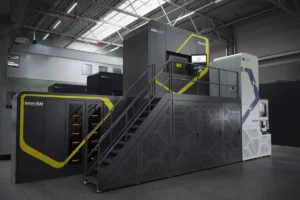
- Process: Laser Powder Bed Fusion (LPBF) – a sophisticated additive manufacturing technique where a high-power laser selectively fuses fine metal powder layer by layer, enabling the creation of intricate geometries.
- System: EOS M290 – a widely recognized and highly capable industrial 3D printing system that utilizes LPBF technology, known for its reliability and precision in producing high-quality metal parts.
- Postprocessing: Electrical Discharge Machining (EDM) and Sandblasting – critical steps after the printing process. EDM is used for achieving fine surface finishes and precise feature details, while sandblasting helps to remove residual powder and create a uniform surface texture, enhancing both the aesthetic appeal and functional performance of the multi-tool.
The integration of these technologies and materials demonstrates a comprehensive understanding of the additive manufacturing value chain, from initial design conceptualization to the final finishing of the product.
Broader Implications and Future Outlook
The success of Borderland Steel and the AM in Steel competition highlights several key trends and implications for the future of manufacturing. Firstly, it underscores the growing proficiency of university students in leveraging advanced manufacturing technologies like 3D printing. These programs are crucial for developing a skilled workforce capable of driving innovation in the U.S. manufacturing sector.
Secondly, the competition reinforces the viability of additive manufacturing for producing functional, end-use metal parts. As LPBF technology continues to mature and become more accessible, its application in creating complex, customized, and high-performance components across various industries will undoubtedly expand. The ability to design for additive manufacturing, as exemplified by Borderland Steel’s consolidation of parts and use of lattice structures, is a critical skill that will define the next generation of engineers and designers.
Furthermore, the increasing focus on sustainability within manufacturing is being addressed by AM through its inherent ability to optimize material usage and enable on-demand production, reducing waste and transportation costs. The development of tools like this multi-tool, which are designed for longevity and functionality, also aligns with principles of circular economy and product lifecycle management.
America Makes’ commitment to fostering innovation in metal additive manufacturing through initiatives like AM in Steel is instrumental in pushing the boundaries of what is possible. By providing a challenging yet supportive environment, they are cultivating a pipeline of talent that will contribute to the reinvigoration of American manufacturing and its competitive edge on the global stage. The collaboration between academic institutions, industry partners, and government initiatives is a powerful model for driving technological advancement and economic growth.
A Legacy of Innovation: Past AM in Steel Competitions
The AM in Steel competition has a growing history of showcasing remarkable student ingenuity. In previous iterations, teams have demonstrated exceptional creativity and technical skill. The 2025 competition, for instance, saw a multi-tool designed and engineered by students from the University of Louisville featured on "The Cool Parts Show." This multi-tool, recognized for its intricate design and functionality, highlighted the progressive evolution of the competition and the increasing sophistication of student projects.
The second annual AM in Steel competition, held at Forge Fair 2025 in Cleveland, Ohio, further emphasized the practical application of 3D printed multi-tools. The event was notably covered by Additive Manufacturing Media, with Editor-in-Chief Stephanie Hendrixson serving as one of the esteemed judges. This continuity of engagement and coverage by industry media outlets like Additive Manufacturing Media is vital for disseminating the achievements of these student teams and inspiring wider adoption of additive manufacturing principles.
The evolution of these competitions demonstrates a clear trajectory: from initial explorations of the technology’s potential to the creation of highly refined, functional products that rival conventionally manufactured items. The UTEP team’s victory in the third annual AM in Steel competition is not just a testament to their individual brilliance but also a strong indicator of the broader advancements and growing maturity of additive manufacturing in the United States. The multi-tool itself, a symbol of utility and ingenuity, now stands as a prominent example of what can be achieved when cutting-edge technology meets passionate innovation.