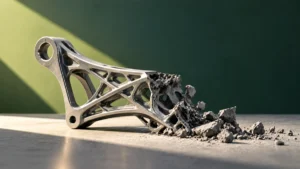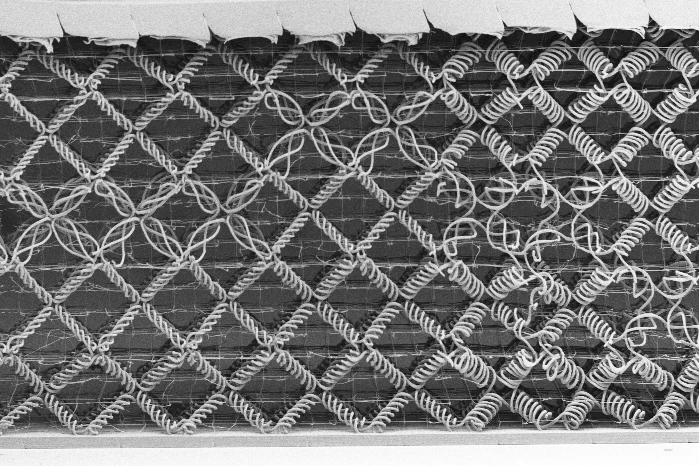
Metamaterials, engineered substances whose remarkable properties stem from their meticulously designed internal microstructures rather than their inherent chemical composition, have been at the forefront of materials science innovation for the past decade. Historically, the primary focus of metamaterial development has been on lightweight materials engineered for exceptional stiffness and strength. However, a groundbreaking advancement from the MIT Department of Mechanical Engineering is set to redefine this landscape by introducing a computational design framework that enables the creation of a new generation of soft, compliant, and highly deformable metamaterials. These novel materials, christened "3D woven metamaterials," are constructed from intricately intertwined fibers that self-contact and entangle, imbuing them with a unique and programmable set of mechanical characteristics.
The imperative for such adaptable materials is growing, as explained by Carlos Portela, the Robert N. Noyce Career Development Professor and an associate professor of mechanical engineering at MIT. "Soft materials are required for emerging engineering challenges in areas such as soft robotics, biomedical devices, or even for wearable devices and functional textiles," Portela stated, highlighting the burgeoning demand across diverse technological sectors.
This pioneering research, detailed in an open-access paper published on January 26th in the prestigious journal Nature Communications, presents a universal design framework capable of generating complex 3D woven metamaterials with an extensive spectrum of properties. Crucially, the researchers have also released open-source code, empowering users to conceptualize and create designs tailored to specific requirements. This code facilitates the generation of files compatible with 3D printers, enabling direct fabrication or simulation of the designed materials.
Portela elaborated on the transformative potential of this framework, drawing a parallel to traditional textile manufacturing. "Normal knitting or weaving have been constrained by the hardware for hundreds of years – there’s only a few patterns that you can make clothes out of, for example – but that changes if hardware is no longer a limitation," he explained. "With this framework, you can come up with interesting patterns that completely change the way the textile is going to behave." This liberation from the constraints of conventional manufacturing hardware unlocks unprecedented design freedom.
The potential applications stemming from this research are vast and far-reaching. They include the development of wearable sensors that seamlessly conform to human skin, advanced fabrics for demanding aerospace and defense applications, highly flexible electronic devices, and a wide array of other customizable printable textiles. The ability to engineer materials with such precise mechanical responses opens doors to innovations previously confined to the realm of science fiction.
Algorithmic Design and Microstructural Control
At the core of this innovation lies a sophisticated algorithmic approach developed by the research team. This algorithm translates general design rules into a graph representation of the metamaterial. The inherent attributes of this graph subsequently dictate the precise placement and interconnections of each fiber within the metamaterial’s structure. The fundamental building blocks are meticulously woven unit cells, which can be dynamically adjusted through the control of various design parameters. These parameters include crucial elements like the radius and pitch of the fibers that constitute the woven struts, allowing for fine-tuning of the material’s macroscopic properties.
Molly Carton, the lead author of the study and a former postdoctoral researcher in Portela’s lab, now an assistant research professor in mechanical engineering at the University of Maryland, emphasized the material’s tunable nature. "Because this framework allows these metamaterials to be tailored to be softer in one place and stiffer in another, or to change shape as they stretch, they can exhibit an exceptional range of behaviors that would be hard to design using conventional soft materials," Carton noted. This inherent programmability allows for the creation of materials with spatially varying mechanical properties, a feat exceptionally difficult to achieve with traditional soft materials.
Simulating and Predicting Material Behavior
Beyond design, the computational framework incorporates a powerful simulation component. This allows users to accurately predict the deformation response of these novel 3D woven metamaterials. The simulations are capable of capturing complex phenomena such as the self-contact and entanglement of fibers, which are critical to the material’s overall behavior. This predictive capability extends to designing materials that can resist specific deformation or tearing patterns, enhancing their durability and reliability in demanding applications.
Portela expressed particular excitement about the ability to engineer failure modes. "The most exciting part was being able to tailor failure in these materials and design arbitrary combinations," he said. "Based on the simulations, we were able to fabricate these spatially varying geometries and experiment on them at the microscale." This level of control over material failure is a significant leap forward, enabling the development of materials that can withstand extreme conditions or exhibit predictable failure behaviors for safety-critical applications.
This research marks a significant milestone as the first to provide a comprehensive toolset for users to design, print, and simulate an emerging class of metamaterials that are both highly extensible and remarkably tough. The study conclusively demonstrates that by precisely tuning geometric parameters, users can effectively control and predict how these materials will deform and ultimately fail. Furthermore, it introduces several novel design building blocks that substantially expand the available property space for woven metamaterials.
Carton highlighted the contrast between current manual design processes and the new automated approach. "Until now, these complex 3D lattices have been designed manually, painstakingly, which limits the number of designs that anyone has tested," she observed. "We’ve been able to describe how these woven lattices work and use that to create a design tool for arbitrary woven lattices. With that design freedom, we’re able to design the way that a lattice changes shape as it stretches, how the fibers entangle and knot with each other, as well as how it tears when stretched to the limit." This shift from manual artistry to algorithmic precision is a paradigm change in metamaterial design.
A Catalyst for Interdisciplinary Innovation
Carton expressed a strong belief in the framework’s broad applicability across various scientific and engineering disciplines. "In releasing this framework as a software tool, our hope is that other researchers will explore what’s possible using woven lattices and find new ways to use this design flexibility," she stated. "I’m looking forward to seeing what doors our work can open." The open-source nature of the code and the comprehensive design framework are poised to accelerate research and development in numerous fields, fostering collaboration and innovation.
The research paper, titled "Design framework for programmable three-dimensional woven metamaterials," is publicly available in Nature Communications. The MIT-affiliated co-authors include James Utama Surjadi, Bastien F. G. Aymon, and Ling Xu. This work was partially supported by the advanced fabrication and characterization facilities at MIT.nano, underscoring the collaborative and resource-intensive nature of cutting-edge scientific discovery.
Broader Implications and Future Directions
The implications of this advancement extend far beyond the immediate research community. The ability to design and fabricate soft, deformable metamaterials with programmable properties could revolutionize industries ranging from healthcare to consumer electronics and advanced manufacturing.
Revolutionizing Healthcare and Biomedical Devices
In the biomedical field, these 3D woven metamaterials hold immense promise. For instance, soft robotics designed with these materials could enable more delicate surgical procedures, with robotic instruments that mimic the dexterity of human hands. Wearable biomedical devices, such as continuous glucose monitors or advanced prosthetics, could become more comfortable, adaptable, and integrated with the human body. The biocompatibility of these materials, coupled with their tunable mechanical properties, opens avenues for innovative implants and tissue engineering scaffolds. Imagine artificial organs that can mimic the natural mechanical compliance of biological tissues, or drug delivery systems that respond dynamically to physiological cues.
Enhancing Aerospace and Defense Capabilities
The aerospace and defense sectors stand to benefit significantly from materials that offer both strength and flexibility. Lightweight, impact-resistant structures for aircraft and spacecraft could be developed, capable of absorbing significant energy without catastrophic failure. For defense applications, materials that can adapt to changing environmental conditions or provide advanced protection against ballistic threats are of paramount importance. The ability to program specific failure mechanisms could also lead to the design of safer ejection seats or more robust protective gear for soldiers.
Transforming Consumer Electronics and Wearable Technology
The consumer electronics market is increasingly embracing flexible and adaptable designs. 3D woven metamaterials could pave the way for truly foldable smartphones, rollable displays, and wearable electronics that are indistinguishable from conventional fabrics. The integration of sensing capabilities directly into these materials could lead to smart clothing that monitors vital signs, tracks athletic performance, or even provides haptic feedback for immersive gaming experiences. The development of flexible batteries and energy harvesting devices, intrinsically linked to these new materials, could further propel the wearable revolution.
Advancing the Future of Manufacturing
The computational framework and open-source code released by the MIT team are poised to democratize the design and fabrication of these advanced materials. This accessibility can foster a new wave of innovation in additive manufacturing, enabling small businesses and individual researchers to explore novel material applications. The ability to precisely control microstructures at the design stage, and then reliably fabricate them using 3D printing, streamlines the product development cycle and reduces the cost of bringing new material-based innovations to market.
Addressing the Challenges of Material Design
Historically, the design of materials with complex, non-intuitive properties has been a significant challenge. The manual process of trial and error, coupled with the limitations of existing manufacturing techniques, often restricted the exploration of novel material architectures. The algorithmic approach developed by Portela’s lab offers a systematic and efficient method for exploring vast design spaces. By translating desired mechanical behaviors into specific microstructural arrangements, researchers can bypass years of empirical experimentation. This is particularly relevant for soft materials, where the interplay between geometry and mechanics can be highly complex and non-linear.
The research also sheds light on the importance of understanding material failure. For many applications, it is not enough for a material to be strong; it must also fail predictably and safely. The ability to tailor failure modes in 3D woven metamaterials provides a critical layer of control, enhancing both performance and safety. This is a significant departure from conventional material design, where failure is often viewed as an undesirable outcome to be avoided at all costs.
Looking ahead, the continued development of this computational framework and the exploration of new fiber arrangements and entanglement strategies are likely to unlock even more sophisticated material properties. The integration of AI and machine learning into the design process could further accelerate the discovery of novel metamaterials tailored for specific, complex tasks. As the understanding and application of 3D woven metamaterials expand, they are set to become a cornerstone of next-generation engineering, enabling technologies that are more adaptable, resilient, and integrated with the human experience.