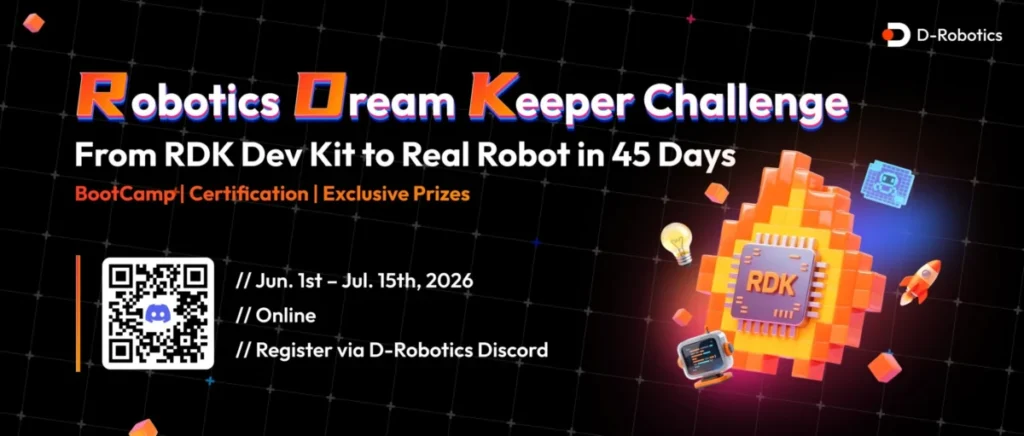
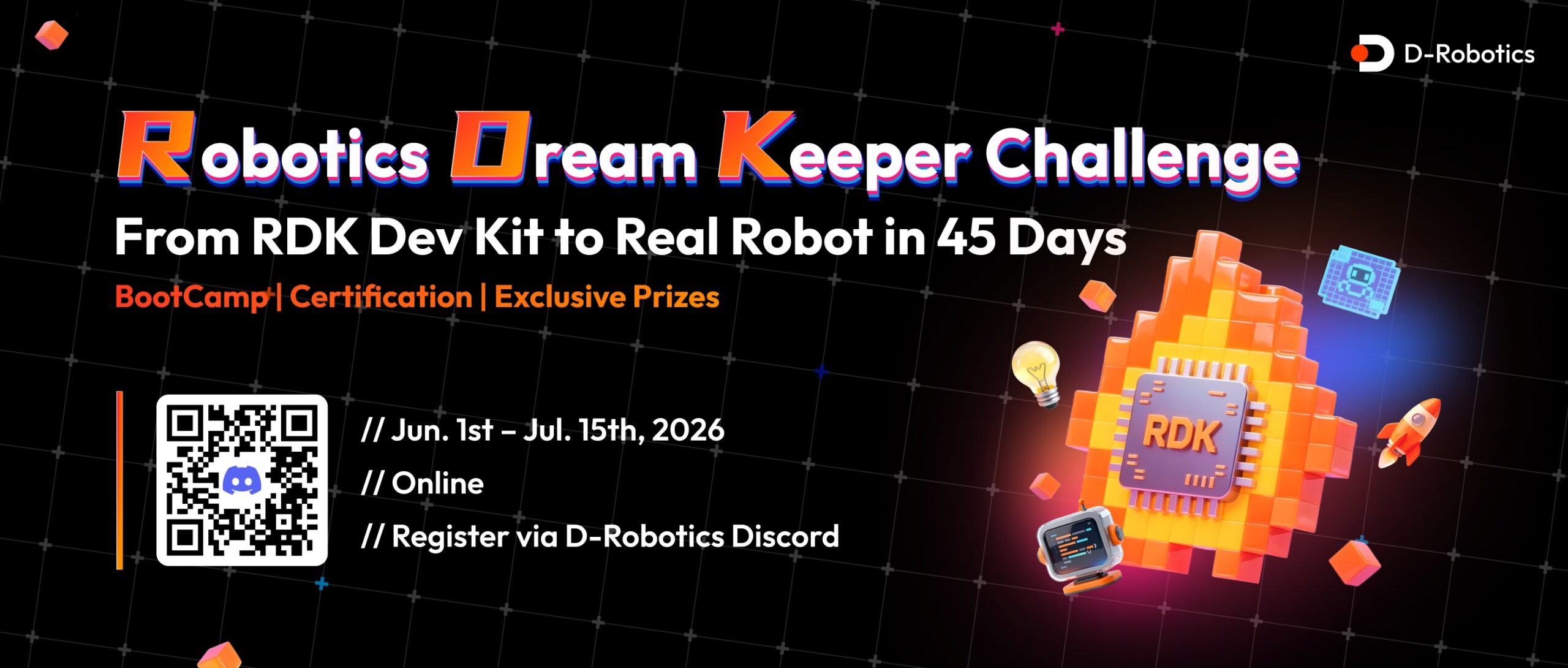
In a significant move to democratize the often-complex field of robotics and artificial intelligence, D-Robotics has officially launched the Robotics Dream Keeper Challenge (RDK Challenge). This innovative program is designed to empower a diverse range of enthusiasts—from novice makers and students to seasoned hobbyists and professional builders—to transform their ambitious robot concepts into tangible, intelligent machines. At the heart of this initiative is the RDK X5, an edge AI development board that D-Robotics positions as a powerful yet remarkably accessible tool, poised to become a cornerstone for future robotic innovation. The challenge seeks to dismantle the traditional barriers of entry into AI robotics, such as intricate wiring, daunting software environments, and the perennial question of "where to start," by offering a structured pathway, robust support, and compelling incentives.
The Evolution of the Maker Movement and the Rise of Accessible AI
The global "maker movement," characterized by its ethos of creating, customizing, and sharing, has witnessed an exponential surge over the past two decades. What began with rudimentary electronics and open-source software has now matured into a sophisticated ecosystem where individuals can tackle increasingly complex projects, including those involving advanced computing and robotics. However, the integration of artificial intelligence, particularly in real-world, embodied systems, has historically remained a formidable frontier for independent creators. The sheer computational demands, the intricacies of AI model deployment, and the specialized hardware often placed intelligent robotics beyond the reach of many enthusiastic makers.
This landscape began to shift with the advent of edge AI—a paradigm where AI computations are performed directly on the device rather than relying solely on cloud servers. Edge AI offers numerous advantages crucial for robotics: reduced latency, enhanced privacy, lower bandwidth requirements, and the ability to operate autonomously in environments without consistent internet connectivity. These benefits are particularly attractive for hobbyist and educational projects, where immediate feedback and self-sufficiency are paramount. The RDK X5, as an edge AI development board, directly addresses this need, offering dedicated hardware acceleration for AI tasks, thereby enabling sophisticated on-device intelligence without the need for high-end, expensive servers or complex cloud infrastructure. D-Robotics’ initiative taps into this growing demand for accessible edge AI tools, aiming to cultivate a new generation of roboticists and innovators who can leverage these technologies without needing an advanced degree in computer science or robotics engineering.
D-Robotics and the RDK X5: A Closer Look at the Enabling Technology
The RDK X5 is central to the Dream Keeper Challenge’s mission. While the original article hints at its power and approachability, a deeper dive reveals its strategic design. The board typically integrates a high-performance System-on-Chip (SoC) featuring dedicated neural processing units (NPUs) or AI accelerators. These specialized cores are optimized for executing machine learning models efficiently, drastically reducing the power consumption and latency compared to general-purpose CPUs. This capability is critical for robotics applications where real-time perception, decision-making, and control are essential—think object detection for autonomous navigation, voice command processing for interactive robots, or pose estimation for bipedal locomotion.
Furthermore, the RDK X5 is designed with a comprehensive set of interfaces, including various GPIOs (General Purpose Input/Output), MIPI CSI for camera inputs, HDMI for display outputs, and multiple USB ports, allowing for seamless integration with a wide array of sensors, actuators, and peripherals. This extensive connectivity simplifies the hardware integration process, a notorious hurdle for many makers. D-Robotics further enhances this accessibility through its RDK Studio software environment, which provides a unified platform for development, debugging, and deployment. By offering a streamlined software experience alongside capable hardware, D-Robotics aims to abstract away much of the underlying complexity, allowing participants to focus more on their creative ideas and less on the minutiae of system configuration. This integrated approach positions the RDK X5 as a strong contender in the competitive market of development boards, differentiating itself by its specific focus on making advanced AI robotics genuinely "maker-friendly."
The Robotics Dream Keeper Challenge: A Structured Journey of Innovation

The RDK Challenge is meticulously structured into three progressive stages, designed to guide participants through the entire robot development lifecycle over approximately 35 to 45 days. This phased approach ensures a gradual learning curve, preventing participant burnout and fostering a sense of accomplishment at each milestone.
Stage 1: Ignite (5-10 Days) – Powering the Brain
The initial "Ignite" phase is all about foundational setup and immediate gratification. Participants begin by unboxing their RDK X5, familiarizing themselves with the board, and powering it on. The primary goal is to successfully run a pre-configured AI demonstration. This involves tasks such as flashing an SD card with the operating system, establishing SSH access, and deploying a simple AI model—perhaps an object detection algorithm or a basic image classification task. This stage is crucial for building confidence, demonstrating the RDK X5’s capabilities, and providing a tangible "win" early in the challenge. For those with prior experience in single-board computers like Raspberry Pi, this stage will feel familiar, serving as a quick on-ramp into the RDK X5 ecosystem. The focus here is on ensuring participants can interact with the hardware and witness its core AI processing power firsthand.
Stage 2: Build (10-15 Days) – Designing the Intelligent System
Following the foundational "Ignite" phase, participants move into the "Build" stage, where creativity and conceptualization take center stage. This is the transition from running existing demos to designing a unique intelligent robot system. Key activities include defining the project concept, outlining the desired functionalities, and architecting the AI pipeline that will drive the robot’s intelligence. This involves selecting appropriate sensors (e.g., cameras, lidar, ultrasonic sensors), actuators (e.g., motors, servos), and determining how they will interact with the RDK X5. Participants are encouraged to sketch out their hardware setup and propose the software logic for their robot. Critically, this stage includes mentorship support, where experienced guides help participants "sanity-check" their plans, providing valuable feedback and preventing them from pursuing overly ambitious or technically unfeasible designs, thereby optimizing their chances of success in the final stage.
Stage 3: Launch (20 Days) – Delivering a Demo-Ready AI Robot
The final "Launch" stage is the culmination of the challenge, focusing on integration, optimization, and presentation. Participants will wire up all the chosen components, integrate their custom software with the RDK X5, and ensure all systems communicate effectively. A crucial technical aspect here is optimizing AI inference using the RDK X5’s BPU (AI accelerator) for maximum efficiency and real-time performance. The ultimate goal is to produce a fully functional, demo-ready AI robot that embodies the participant’s initial vision. This final project is envisioned as a "portfolio piece"—a tangible demonstration of skills that can be showcased in various professional and academic contexts, from YouTube demonstrations and conference talks to job interviews and personal portfolios. The extended duration of this stage allows for iterative refinement, troubleshooting, and polishing, ensuring a high-quality final product.

Showcasing Innovation: Early Projects and Their Significance
The challenge has already garnered impressive preliminary results, with several projects demonstrating the RDK X5’s versatility and the creative potential it unlocks. These early builds serve as powerful exemplars for prospective participants, illustrating the breadth of applications achievable with the platform.
The OpenDuck Mini – RDK X5, developed by AI Researcher and Robotics Developer Frank Fu, stands out as a brilliant example of advanced robotics. This bipedal robot utilizes reinforcement learning to achieve complex "sim-to-real" walking. Reinforcement learning is a cutting-edge AI technique where an agent learns optimal behavior through trial and error, much like how humans learn. The "sim-to-real" aspect means the robot learns its walking gait in a simulated environment and then transfers that learned behavior to a physical robot. This is a notoriously difficult challenge in robotics, requiring precise control and robust AI, and OpenDuck Mini’s success on the RDK X5 underscores the board’s capability to handle demanding AI computations for dynamic locomotion.
Another project, An Arc Reactor That Beats With My Heart by MateoTechLab, showcases the RDK X5’s potential beyond traditional robotic forms. This glowing, heartbeat-synchronized Arc Reactor, inspired by popular culture, demonstrates the board’s applicability in interactive art, wearable technology, and Internet of Things (IoT) devices. By integrating physiological data (heart rate) with dynamic lighting, the project highlights the RDK X5’s ability to process real-time sensor inputs and drive creative outputs, proving its utility as a powerful controller for immersive and personalized experiences.

Finally, the Valentine’s Day AI Robot With RDK X5 by Pro Know presents an adorable interactive companion. This tiny robot incorporates vision, touch, and sound reactions, demonstrating multimodal interaction capabilities. Such projects are at the forefront of human-robot interaction, exploring how robots can provide companionship, respond contextually, and exhibit charming personalities. The RDK X5 enables this by processing multiple sensory inputs simultaneously and executing AI models for facial recognition, voice command interpretation, and responsive behaviors, hinting at a future where personal AI companions are more accessible and customizable. These diverse projects collectively affirm the RDK X5’s strong on-device AI performance and its user-friendly nature, validating D-Robotics’ claim of providing an accessible yet powerful platform for makers.
Building a Community: The D-Robotics Ecosystem
Beyond the technical aspects, a cornerstone of the Robotics Dream Keeper Challenge is its commitment to fostering a vibrant, supportive community. D-Robotics emphasizes that this is not a high-pressure competition designed to weed out beginners, but rather a community-driven journey built on shared learning and mutual support. This philosophy is evident in the comprehensive support system provided, which includes free bootcamps, dedicated mentors, weekly interactive events, and a wealth of open resources.
The Discord community, in particular, is structured as a growth ecosystem, guiding participants through clearly defined stages: Explorer, Builder, Creator, and Core Developer. This tiered structure acknowledges that everyone starts at a different skill level and provides a clear pathway for progression. Explorers are newcomers gathering information, Builders are actively working on projects, Creators are refining and sharing their innovations, and Core Developers are contributing to the platform itself or pushing its boundaries. This model encourages peer-to-peer learning, collaborative problem-solving, and the sharing of insights and code. A D-Robotics spokesperson emphasized, "Our vision extends beyond just selling hardware; we aim to cultivate a thriving ecosystem where innovation is nurtured, and every participant, regardless of their starting point, feels empowered to realize their robotic dreams. The Discord community is the heartbeat of this mission, providing instant access to expertise and a network of like-minded individuals." This community-centric approach significantly lowers the psychological barrier to entry, ensuring that participants can focus on creation rather than getting bogged down by solitary struggles.

Rewards, Incentives, and Broader Implications
D-Robotics has put forth an attractive package of rewards and incentives to fuel participation and acknowledge the hard work of its innovators. Beyond the immense satisfaction of bringing an intelligent robot to life, participants who successfully complete all three challenge stages are eligible for a full cash rebate on their RDK X5 purchase, effectively making their development board free. This financial incentive is a powerful motivator, particularly for students and hobbyists who might be budget-conscious. Furthermore, the most outstanding project will be awarded a $1,000 grand prize, recognizing exceptional innovation and execution. Top community advocates, those who actively contribute to the supportive environment, can also win an extra $500 cash reward, reinforcing the value of community engagement.
The "surprises" mentioned in the original article hint at even more significant long-term opportunities. These include the potential to collaborate directly with the D-Robotics team, gain exposure through interviews with global developers, participate in the annual D-Robotics Developers Conference, and even win a visit to a Robot Innovation Center in Shenzhen—a global hub for hardware development and manufacturing. These are not merely prizes; they represent career-advancing opportunities that can provide invaluable industry exposure, networking possibilities, and a direct pipeline into professional robotics development.
The broader implications of the RDK Challenge and similar initiatives are profound. By lowering the barrier to entry for AI robotics, D-Robotics is contributing to the democratization of technology. This means that innovation is no longer confined to well-funded corporate labs or academic institutions but can flourish within the diverse and passionate maker community. Such programs serve as powerful educational tools, offering hands-on experience with cutting-edge technologies that are highly relevant in today’s job market. They foster critical thinking, problem-solving skills, and interdisciplinary collaboration. From an economic perspective, empowering a wider base of innovators can lead to the creation of novel applications, the emergence of new startups, and a general acceleration of technological progress in the fields of AI and robotics. The RDK X5, currently a "hidden gem," has the potential to become a catalyst for significant disruption, enabling creative solutions that might otherwise never see the light of day.

How to Engage and Shape the Future of Robotics
For those ready to embark on this exciting journey, the path to participation is straightforward. Prospective builders are encouraged to join the lively D-Robotics Discord community, which serves as the primary hub for support, discussion, and collaboration. Following this, a quick application form needs to be submitted to officially register for the challenge. Participants will also need to download and register for RDK Studio, the integrated development environment tailored for the RDK X5.
To kickstart their projects, participants can acquire the RDK X5 board and any necessary accessory kits through D-Robotics’ official partnered channels. This ensures access to genuine hardware and support resources.
This Robotics Dream Keeper Challenge represents a unique and timely opportunity to delve into the rapidly evolving world of modern robotics and embodied AI. With comprehensive guidance, a supportive community, and tangible rewards, it provides an unparalleled platform for individuals to transform their dormant robot ideas into functional realities. The RDK X5, while still early in its market adoption, is poised to become a significant tool for makers. Those who engage with this challenge now will not only gain invaluable experience but will also play a crucial role in shaping the future trajectory of the community and the broader landscape of accessible AI robotics. It is an invitation to move beyond passive observation and actively contribute to the next wave of technological innovation.