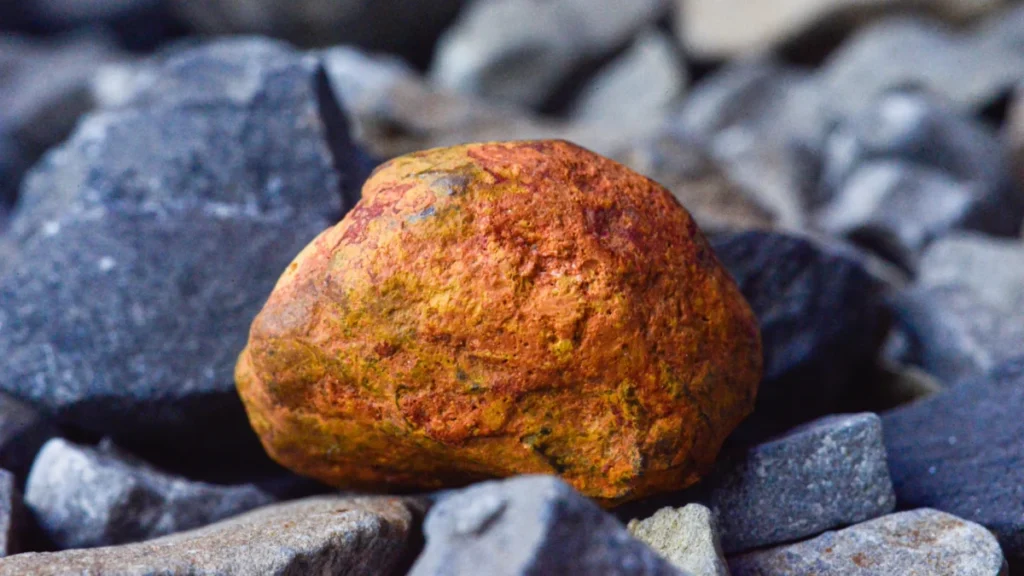
Researchers at the University of Minnesota Twin Cities have achieved a significant breakthrough, demonstrating that low-purity iron ore sourced directly from Minnesota can be transformed into semiconductor-quality pyrite. This pivotal discovery has the potential to forge a substantially cheaper and more sustainable route for acquiring essential materials for future solar panels, advanced batteries, and various electronic devices, potentially revolutionizing how these critical components are manufactured. The findings challenge long-held assumptions within materials science regarding the necessity of ultra-high purity starting materials for semiconductor fabrication.
Pyrite, widely recognized as "fool’s gold" due to its deceptive metallic luster, has long been identified as an intriguing, albeit unusual, semiconductor material. Its inherent properties make it exceptionally attractive for technological applications: it exhibits strong light absorption capabilities, is composed of globally abundant and non-toxic elements (iron and sulfur), and is inherently inexpensive to acquire. However, despite these promising attributes, its widespread adoption in semiconductor technology has been hampered by a critical obstacle: the conventional wisdom dictates that producing high-quality semiconductor pyrite necessitates highly purified precursor materials. Impurities and structural defects are typically considered detrimental, interfering with the material’s electronic performance and hindering its efficiency in device applications. This requirement for extreme purity has historically driven up production costs and complexity, overshadowing pyrite’s inherent advantages.
The Minnesota team’s groundbreaking research, however, fundamentally re-evaluates this established paradigm. By employing iron ore samples extracted directly from the vast reserves of the Minnesota Iron Range, the researchers successfully synthesized semiconductor-quality iron sulfide without incorporating any additional, costly purification steps into their process. This audacious approach, which deliberately bypassed the standard purification protocols, yielded results that defied conventional expectations and pointed towards an unexpected resilience of pyrite to elemental contamination.
A New Horizon for Minnesota’s Iron Industry
This finding carries particular significance for Minnesota, a state deeply intertwined with the legacy and future of iron production. Minnesota currently accounts for approximately 75% of the total iron ore production in the United States, an industry that consistently generates more than $4 billion in annual revenue and supports thousands of jobs. For decades, this abundant resource has primarily served as the bedrock for the nation’s steelmaking industry. The University of Minnesota’s research now opens a transformative new chapter, suggesting that the same iron ore deposits that have underpinned traditional heavy industry could concurrently evolve into a vital domestic source of advanced semiconductor materials, thereby diversifying the state’s economic landscape and strengthening its position in the high-tech manufacturing sector.
The historical context of Minnesota’s Iron Range is crucial to understanding the magnitude of this discovery. Iron mining began in Minnesota in the late 19th century, driven by the burgeoning demand for steel during the industrial revolution. The primary ore initially mined was high-grade hematite. As these richer deposits dwindled in the mid-20th century, the industry shifted to taconite, a lower-grade, harder iron-bearing rock. The process of converting taconite into usable iron pellets, known as taconite beneficiation, involves crushing the rock into a fine powder, separating the iron ore using magnetic methods, and then agglomerating the concentrate into pellets for shipment to steel mills. This well-established infrastructure and expertise in handling large volumes of iron-bearing rock provide a unique foundation for exploring new applications for this abundant resource. The potential to add high-value semiconductor materials to the output of an existing, large-scale mining operation represents a powerful synergy between traditional industry and cutting-edge technology.
"Dirty Ore" Yields Cleaner Results: Challenging Semiconductor Dogma
The research team rigorously tested three distinct types of iron ore, ultimately identifying Direct Reduced Grade Taconite – one of the most commonly available and widely processed grades within Minnesota’s extensive reserves – as the optimal performer for conversion into semiconductor-quality pyrite. This outcome was genuinely surprising to the scientific community, given the pervasive understanding that semiconductor materials are inherently and exquisitely sensitive to the presence of impurities. Even trace amounts of foreign elements can disrupt the delicate electronic band structure of a semiconductor, leading to defects that significantly degrade its performance, reducing charge carrier mobility, increasing recombination rates, and ultimately limiting device efficiency.
Instead of succumbing to these expected challenges, pyrite exhibited an unexpected and remarkable ability to tolerate impurities while steadfastly retaining the crucial electronic properties required for effective semiconductor applications. This finding represents a significant departure from the conventional wisdom that has guided semiconductor research and development for decades.
Chris Leighton, a Distinguished McKnight University Professor in the Department of Chemical Engineering and Materials Science at the University of Minnesota and the senior author of the seminal study, articulated this revelation. "We realized that pyrite’s really not like a typical semiconductor – it is surprisingly immune to impurities," Leighton stated. "So, we wondered, do we even need the high purity material that we (and everyone else) had been using to make semiconducting pyrite?" This question marked a pivotal turning point in their research methodology, prompting them to deliberately challenge the very premise of high-purity feedstock.
The researchers’ subsequent experiments confirmed their hypothesis: the low-purity ores could indeed be processed directly into pyrite suitable for semiconductor applications, entirely circumventing the need for additional purification steps. This elimination of a potentially complex, energy-intensive, and costly stage from the production of semiconductor-quality material could dramatically reduce the overall manufacturing expense and environmental footprint associated with these advanced materials.
Leighton further emphasized the counterintuitive nature of their success. "There are all sorts of reasons why you would think this would not be possible," he added, referring to the traditional understanding of semiconductor physics. "But, during processing the dirty – or low-purity – iron ores, directly from the Minnesota Iron Range, were easily converted to semiconductor-quality pyrite with no extra purification steps. This happens for reasons that we now understand pretty well." The development of this detailed understanding of why pyrite behaves this way, specifically its tolerance for certain impurities, is as crucial as the discovery itself. It provides a scientific foundation that could guide the development of similar processes for other earth-abundant materials, potentially unlocking a new class of cost-effective semiconductors.
Scientific Rationale: Unpacking Pyrite’s Impurity Tolerance
While the original article hints at a scientific understanding, elaborating on potential mechanisms adds depth. Many semiconductors are sensitive to impurities because foreign atoms introduce unwanted energy levels within the band gap, acting as "traps" or "recombination centers" for charge carriers (electrons and holes). This reduces the material’s conductivity and efficiency. Pyrite, however, appears to possess intrinsic properties that mitigate these effects. One hypothesis under investigation is that the specific crystal structure of pyrite, or the nature of the chemical bonds between iron and sulfur, might inherently "passivate" or neutralize the electronic effects of certain common impurities found in raw iron ore. For instance, some impurities might integrate into the lattice without creating detrimental defect states, or they might cluster in ways that do not significantly impede charge transport. Another possibility is that the processing conditions used to convert the ore into pyrite might actively drive impurities to benign locations within the material, or even expel them, without requiring a separate purification stage. Understanding these atomic-level mechanisms is critical for optimizing the process and extending its application to other material systems. This deep dive into the material science allows for a fundamental shift in how engineers approach new semiconductor materials, moving beyond an exclusive focus on purity to a more holistic understanding of impurity tolerance.
"Fool’s Gold" Targets Future Devices: Broadening Technological Horizons
The potential applications stemming from this breakthrough extend far beyond the conventional realm of silicon-based semiconductor devices. Pyrite’s exceptional ability to absorb light across a wide spectrum makes it an extremely attractive candidate for next-generation solar energy technologies. Unlike some prevalent thin-film solar materials that rely on scarce or toxic elements (e.g., cadmium telluride or copper indium gallium selenide), pyrite offers a non-toxic, earth-abundant, and cost-effective alternative. This could lead to the development of more sustainable, less environmentally impactful, and cheaper solar panels, accelerating the global transition to renewable energy.
Beyond solar, pyrite’s composition and low cost also position it as a promising material for advanced battery technologies. Researchers are exploring iron-sulfur compounds for their potential in high-capacity, safe, and inexpensive battery electrodes. The ability to source this material directly from raw ore could significantly reduce the cost of battery manufacturing, making energy storage more accessible and scalable for grid applications, electric vehicles, and portable electronics. Furthermore, the material’s semiconducting properties could open doors for its use in various electronic devices, potentially enabling new paradigms for low-cost, flexible, or specialized sensors and computing components where the ultra-high performance of silicon is not strictly required, but cost and sustainability are paramount.
The researchers also point to possible, albeit nascent, applications in water purification technologies. The semiconducting properties of pyrite, particularly its light absorption capabilities, could potentially be harnessed in photocatalytic processes for breaking down pollutants in water, offering a novel and sustainable approach to environmental remediation. However, the team prudently notes that these diverse applications remain future possibilities. The immediate next phase of research will focus on rigorously testing how the material performs when fabricated into device-relevant forms and structures.
Next Steps and Global Implications
The immediate research agenda includes a more comprehensive examination of additional types and grades of iron ore found within Minnesota’s geologically rich Iron Range, which boasts a wide variety of iron-bearing resources. This systematic exploration will help identify the most suitable and efficient feedstocks for large-scale production. Crucially, the researchers also aim to move beyond the production of bulk pyrite crystals to developing methods for producing thin films of the material. Thin films are the standard format for most electronic and energy devices, offering advantages in terms of material efficiency, integration, and performance. Successfully fabricating high-quality pyrite thin films from raw ore would be a critical step towards commercial viability. Furthermore, the development of prototype devices, such as small-scale solar cells or battery components, will be essential to validate the real-world performance of this novel material.
This innovative approach holds the promise of creating an entirely new and high-value use for iron resources that are already mined at an immense scale. Instead of requiring highly purified feedstock to manufacture specialized semiconductor materials – a process that often involves significant energy expenditure and complex chemical treatments – manufacturers could potentially initiate their production processes with more abundant and significantly less refined iron ore. This paradigm shift could dramatically lower the barriers to entry for new semiconductor manufacturing, fostering greater regional and national self-sufficiency in critical material supply chains.
For the state of Minnesota, this breakthrough could translate into a powerful new technology pathway, intrinsically linked to and built upon its long-standing, robust mining industry. It represents a strategic diversification away from an exclusive reliance on steelmaking, positioning the state at the forefront of sustainable advanced material production. The integration of traditional mining with high-tech manufacturing could create new economic opportunities, foster innovation, and attract investment in a burgeoning sector.
From a broader perspective, for materials engineers and scientists worldwide, this work offers a profound and challenging lesson: a material that might initially appear too impure or contaminated for high-performance semiconductor applications may, in fact, possess a far greater tolerance for impurities than previously assumed. This revelation encourages a re-evaluation of numerous earth-abundant materials that have been overlooked or dismissed due to perceived purity limitations. It suggests a future where sustainable, cost-effective, and environmentally friendly materials could play a much larger role in shaping the next generation of solar panels, batteries, and electronic devices, moving away from reliance on scarce or problematic elements.
The study, which lays the foundational groundwork for these exciting possibilities, was published in the esteemed scientific journal Physical Review Applied, marking a significant contribution to the fields of materials science, semiconductor physics, and sustainable technology development. The implications of this research are far-reaching, potentially impacting global energy strategies, electronics manufacturing, and resource management for decades to come.






