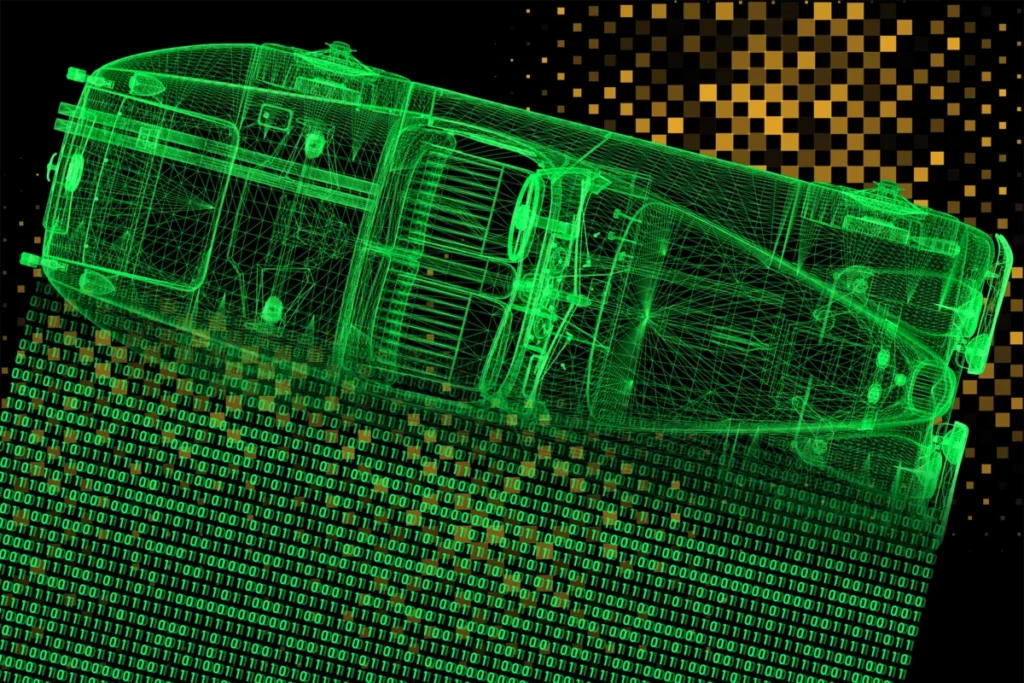
Engineers across critical sectors, from aerospace to automotive, routinely leverage vision-language models (VLMs) to conceptualize and generate preliminary designs for components. These initial AI-driven concepts then undergo rigorous simulation using established computer-aided design (CAD) software, which transforms 2D representations into intricate 3D models. These 3D models are indispensable for virtual crash testing, durability analyses, and myriad other performance evaluations that ensure a product’s integrity and safety before physical prototyping. However, a significant hurdle in this workflow has been the often-limited accuracy and functionality of CAD programs automatically generated by existing AI models, necessitating extensive human intervention and computational resources.
A groundbreaking development by researchers from MIT and collaborating institutions now offers a transformative solution. They have unveiled a novel system designed to train vision-language models to autonomously convert 2D designs into highly accurate and fully functional CAD programs. This new methodology marks a substantial leap forward, achieving superior results with a mere fraction of the computational power typically required by conventional approaches. The implications of this innovation are profound, promising to streamline rapid prototyping processes, significantly reduce development costs, and potentially unlock novel design possibilities that might otherwise be overlooked by human engineers.
The Evolution of Design and the AI Imperative
The journey of a physical product, from a nascent idea to a market-ready item, invariably begins on a drawing board, whether physical or digital. For decades, CAD software has been the bedrock of modern engineering design, allowing engineers to create, modify, analyze, and optimize designs with unparalleled precision. The global CAD software market, valued at approximately $10 billion in 2023, is projected to grow significantly in the coming years, driven by increasing demand for product innovation and digital transformation across industries. The integration of artificial intelligence into this domain represents the next frontier, aiming to accelerate the initial conceptualization phase and bridge the gap between abstract design ideas and tangible, functional models.
Traditional design processes, even with advanced CAD tools, can be iterative and time-consuming. Engineers typically sketch out 2D designs, manually translate them into 3D CAD models, and then run simulations. Each iteration requires manual adjustments and re-testing. The advent of vision-language models promised to automate parts of this process, allowing AI to interpret design inputs (like images and text descriptions) and generate preliminary CAD code. However, the output from these early VLM-CAD systems often fell short, producing simplistic shapes or code that was not fully executable or functionally robust, thereby limiting their practical utility in demanding engineering environments. The primary bottleneck identified by the MIT researchers was the scarcity of diverse, high-quality CAD datasets needed to adequately train these complex models.
Introducing GIFT: Learning from Mistakes to Achieve Precision
To overcome the pervasive "data bottleneck," the MIT-led team developed a sophisticated data augmentation system they call GIFT (Geometric Inference Feedback Tuning). Unlike conventional data augmentation techniques, which typically involve random adjustments to existing data (e.g., altering colors, sizes, or shapes), GIFT employs a "model-aware" approach. This means GIFT actively learns from the specific strengths and weaknesses of the vision-language model it is trying to improve.
"We want engineers to be able to point our framework at an underperforming CAD model, set a compute budget, and let the system take over — turning the model’s own mistakes into better training data," explains Giorgio Giannone, lead author of the research paper and a research affiliate in MIT’s Design Computation and Digital Engineering (DeCoDE) Lab, as well as a principal research scientist on the AI Innovation Team at Red Hat. This philosophy underpins GIFT’s ingenious mechanism: it doesn’t just add more data; it adds smarter data specifically tailored to address the model’s identified deficiencies.
The system operates by asking the VLM to attempt to solve a given CAD generation problem multiple times in parallel, producing various code outputs. GIFT then meticulously checks the correctness of these attempts. While existing VLMs might generate "almost correct" CAD code with relative ease, achieving "perfectly correct" and executable code for complex 3D models remains a significant challenge. This is precisely where GIFT intervenes. For those attempts that are nearly correct but fall short, GIFT intelligently adjusts them, transforming these "near-misses" into successful solutions. Both these newly refined successes and the original successful solutions are then incorporated into a fresh, augmented dataset. This new dataset serves as a potent learning resource, teaching the VLM how to overcome specific problems and tackle tricky scenarios it would otherwise struggle with independently.
"If we sample the model 10 times and it generates 10 correct answers to the same problem, then there is not much for it to learn. We care about the in-between cases, where the model might only solve the problem 50 percent of the time," Giannone further clarifies. By focusing on these marginal cases, GIFT generates data augmentations that are both model-aware and task-aware, maximizing the learning efficiency. Moreover, by incorporating multiple correct solutions to the same problem, the new data significantly broadens the model’s general understanding and knowledge base of CAD code generation. This automatic, self-correcting system dramatically reduces the need for human intervention, traditionally a costly and time-consuming aspect of AI model refinement.
Technical Prowess and Performance Benchmarks
The research, recently presented at the International Conference on Machine Learning, highlights GIFT’s technical sophistication. The system creates data augmentations from a pre-trained VLM using a process known as inference-time scaling. This crucial technique allows a static, already trained model to produce superior outputs without the high computational expenditure associated with completely retraining the entire model from scratch. This flexibility means users can define their desired computational budget, tailoring GIFT’s operation to their specific time and resource constraints.
In rigorous comparative testing, GIFT demonstrably outperformed several established competing techniques. It consistently generated CAD programs that exhibited higher accuracy while consuming approximately 80% less computation. The CAD models produced by VLMs integrated with GIFT showed a significantly improved alignment with the ground-truth shapes, indicating a much higher fidelity in design translation. "With GIFT, we started with geometry because with engineering problems, if the geometry of a 3D shape is not correct, nothing else will be correct, but there are many other aspects to consider," Giannone notes, emphasizing the foundational importance of accurate geometric representation.
The research team comprises a multidisciplinary group of experts: Giorgio Giannone, Anna Claire Doris (a mechanical engineering graduate student at MIT), Amin Heyrani Nobari (an MIT postdoc), Kai Xu of Red Hat, and co-senior authors Akash Srivastava (director of Core AI at IBM and a principal investigator at the MIT-IBM Computing Research Lab) and Faez Ahmed (associate professor of mechanical engineering at MIT, leader of the DeCoDE Lab, and a principal investigator at the MIT-IBM Computing Research Lab). This collaborative effort, notably supported in part by the MIT-IBM Computing Research Lab, underscores the synergistic approach required for such advanced interdisciplinary breakthroughs.
Transformative Impact on Engineering and Manufacturing
The implications of GIFT extend far beyond mere technical achievement, promising a paradigm shift in how products are designed, developed, and brought to market.
- Accelerated Rapid Prototyping: The ability to swiftly and accurately convert 2D conceptual designs into functional 3D CAD models will drastically reduce the design-to-prototype cycle. This means engineers can iterate through more design variations in less time, accelerating innovation and product development timelines.
- Significant Cost Reductions: By minimizing the need for manual CAD modeling and reducing errors in the initial design phase, companies can expect substantial savings in labor, computational resources, and time. Fewer errors in design translate directly to fewer costly rework cycles in manufacturing.
- Enhanced Design Exploration and Innovation: With AI handling the laborious task of precise CAD generation, engineers can focus more on creative problem-solving and exploring a wider array of design choices. The system’s ability to identify beneficial designs that might be overlooked by human intuition could lead to truly novel and optimized products.
- Democratization of Advanced Design: This technology could lower the barrier to entry for small and medium-sized enterprises (SMEs) and startups, enabling them to leverage sophisticated AI-driven design tools without needing extensive in-house CAD expertise or large computational budgets.
- Improved Manufacturability: As the system evolves to consider performance and manufacturability, designs will not only be geometrically correct but also inherently optimized for production processes, reducing waste and improving efficiency on the factory floor.
Faez Ahmed, co-senior author, encapsulates the broader vision: "Nearly every physical product around us, from airplanes to appliances, begins its life as a CAD model. Industry teams are eager for AI that can help speed-up the creation of these designs, but today’s models often produce simple shapes inadequate for practice. What excites me about this work is that it gives many image-to-CAD-code models a way to improve themselves, learning from their own errors rather than waiting for more human-made data — and that brings trustworthy AI design tools much closer to everyday engineering." This sentiment resonates deeply within an industry constantly striving for efficiency and innovation.
Industry Perspectives and Future Horizons
Industry analysts anticipate that advancements like GIFT will significantly accelerate the integration of AI into critical engineering workflows. Companies heavily invested in digital transformation and product lifecycle management (PLM) solutions are likely to closely watch the commercialization and broader application of this technology. Major CAD software developers may look to integrate similar self-improving AI modules to enhance their platforms, offering customers more intelligent and autonomous design assistance.
The research team is not resting on its laurels. Their future plans involve expanding GIFT’s capabilities beyond mere geometric accuracy. They aim for the framework to teach models to generate CAD programs that optimize for a product’s overall performance and its manufacturability – a crucial step towards truly intelligent design. This means considering factors like material stress, thermal properties, assembly constraints, and cost-effective production methods directly within the AI-generated design. Furthermore, they intend to apply the system to larger, more complex models and a broader spectrum of diverse CAD generation tasks, pushing the boundaries of what AI can achieve in engineering design.
In conclusion, the development of GIFT represents a pivotal moment in the convergence of artificial intelligence and engineering design. By enabling AI models to learn autonomously from their own mistakes and generate highly accurate, functional CAD programs with unprecedented efficiency, MIT and its collaborators are paving the way for a future where product development is faster, more cost-effective, and ultimately, more innovative. This breakthrough moves the industry closer to a reality where AI is not just a tool for assistance but a proactive partner in the creative and rigorous process of bringing tomorrow’s products to life.