The rapid evolution of artificial intelligence and data science has fundamentally restructured the methodologies through which society derives insights from complex information. Within the healthcare sector, AI-driven tools are increasingly central to the discovery of novel treatments and the analysis of vast clinical datasets via machine learning. However, the integration of these technologies into medical practice is not without significant risk, particularly regarding the potential for algorithmic systems to amplify historical biases embedded in data or design. Addressing these challenges requires a paradigm shift in education, focused on equipping the next generation with the critical reasoning skills necessary to navigate an AI-saturated world. This necessity served as the focal point for the fourth installment of the Raspberry Pi Foundation’s seminar series, "Teaching about AI in the Arts, Humanities, and Sciences," where Kathy Jessen Eller of The Concord Consortium presented the Data Science, AI & You (DSAIY) program.
The Educational Challenge: Moving Beyond Cognitive Offloading
A primary concern for modern educators is the manner in which students interact with generative AI and machine learning tools. Kathy Jessen Eller noted during the seminar that while students are increasingly adept at using AI to produce answers for coursework, they often fail to critically evaluate the veracity of those outputs. The phenomenon of "cognitive offloading"—where individuals delegate complex thinking processes to automated systems—threatens to undermine the development of deep analytical skills.
In a traditional classroom setting, students are encouraged to engage with primary sources and verify facts. However, the "black box" nature of many AI tools often obscures the logic behind their conclusions, leading students to accept generated content at face value. The DSAIY program was developed specifically to counter this trend by fostering "AI literacy" through the lens of healthcare, a field where the consequences of data misinterpretation can be a matter of life and death.
The DSAIY Framework: A Comprehensive High School Curriculum
The Data Science, AI & You program, phonetically referred to as "Daisy," is a semester-long curriculum designed for high school students. Unlike introductory courses that focus solely on the mechanics of coding, DSAIY immerses students in the entire machine learning lifecycle. The curriculum is built on the premise that to understand AI, one must first understand the data that fuels it.
The program’s structure follows a logical progression through the machine learning pipeline:
- Data Collection: Students learn how to gather relevant information from authentic healthcare sources.
- Data Preparation: This phase involves cleaning and organizing data, a critical step where many biases are first introduced or mitigated.
- Modeling: Using Python, students train and test machine learning models, moving from simple linear regressions to more complex predictive algorithms.
- Deployment and Evaluation: The final stage involves assessing the model’s performance in real-world scenarios and identifying potential failures.
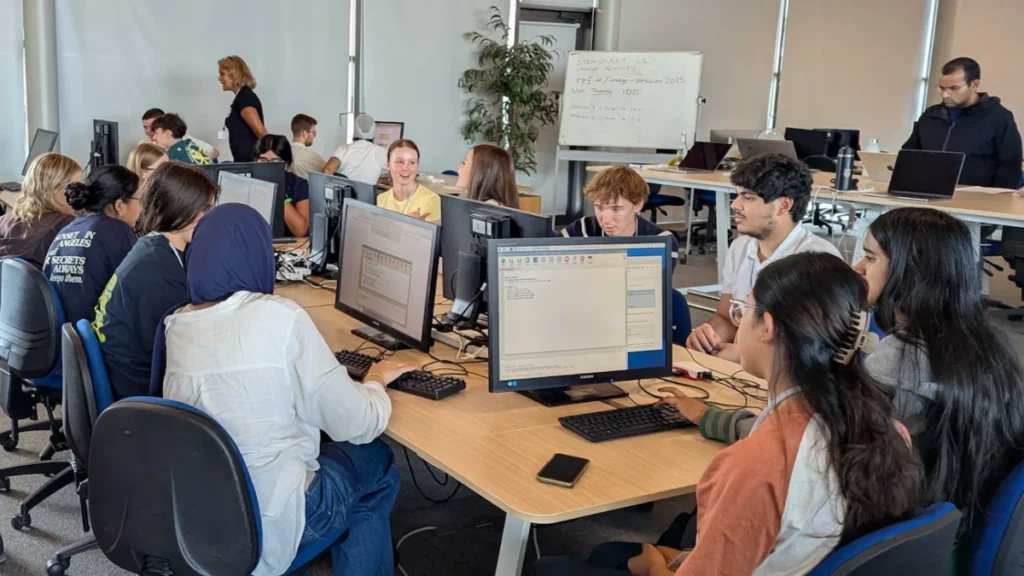
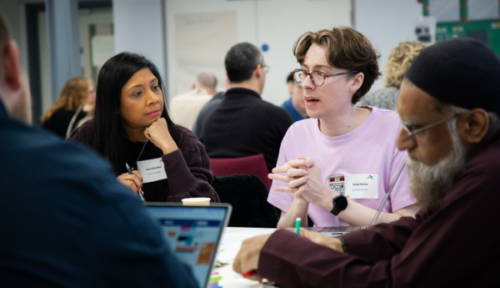
The culmination of the program is an "AI-a-thon," a high-stakes, collaborative event where students work in cross-disciplinary teams. These teams include not only their peers but also professional data scientists, clinicians, and educators. This format mirrors the professional environments of the biotech and medical industries, providing students with a tangible connection between their classroom activities and future career paths.
Implementation and Demographic Impact in Rhode Island
The DSAIY program has already seen significant implementation success. At the time of the seminar, the curriculum had been delivered by 11 teachers to over 800 students across various educational settings in Rhode Island, USA. Rhode Island has become a key testing ground for such initiatives due to its state-level focus on enhancing STEM (Science, Technology, Engineering, and Mathematics) education and its robust healthcare infrastructure.
One of the most notable outcomes of the program is its success in attracting a diverse student body. Traditional computer science courses often struggle with gender parity, yet DSAIY has reported exceptionally high female participation. In one instance, a participating teacher observed that the course enrolled more girls than any other computer science elective in his school’s history. This suggests that framing AI and data science within the context of healthcare—a field with clear social utility and human impact—may be a more effective way to bridge the gender gap in technology education.
To ensure the program’s sustainability, teachers are provided with extensive support, including four days of intensive professional development and ongoing technical assistance. This support structure is vital, as it allows educators who may not have a background in statistics or computer science to confidently lead their students through complex technical material.

Technical Empowerment via the CODAP Platform
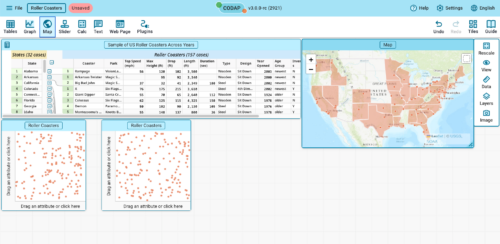
A cornerstone of the DSAIY curriculum is the use of the Common Online Data Analysis Platform (CODAP). Developed by The Concord Consortium, CODAP is a free, web-based tool designed to make data analysis accessible to novices. The platform provides a highly visual interface that allows students to interact with large datasets without the steep learning curve associated with professional statistical software.
By using CODAP, students can transition from creating basic graphs to performing sophisticated data reasoning. The tool allows them to "click into" individual data points, transforming abstract numbers into individual case studies. This ability to see the "human" behind the data point is particularly relevant in healthcare, where every entry in a dataset represents a patient’s experience. The visual nature of CODAP helps students identify patterns, outliers, and inconsistencies that might be missed in a standard spreadsheet, thereby sharpening their diagnostic and analytical skills.
Confronting Algorithmic Bias: The Case of the Pulse Oximeter
The DSAIY curriculum does not shy away from the ethical complexities of modern technology. A key component of the program involves teaching students about algorithmic bias and fairness. One of the primary case studies used is the pulse oximeter, a medical device used to measure blood oxygen levels.
Pulse oximeters function by passing red and infrared light through the skin. However, research has shown that these devices can produce inaccurate readings for individuals with darker skin pigmentation, as melanin can interfere with light absorption. In a clinical setting, an overestimation of blood oxygen levels in a patient of color could lead to the denial of necessary supplemental oxygen, illustrating a clear instance of systemic bias embedded in a technical tool.
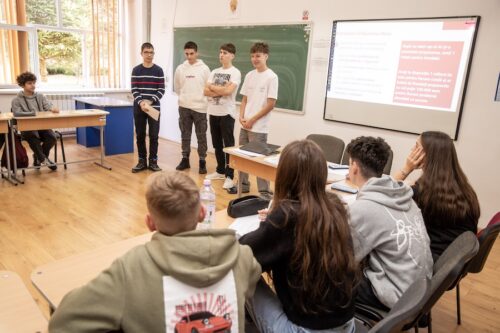
Students in the DSAIY program engage with this issue by collecting their own oxygen saturation data and using CODAP to visualize the variability. This hands-on exercise prompts critical discussions:
- Whose data was used to calibrate the original device?
- What are the ethical implications of using a flawed tool in a life-saving situation?
- Should "outliers" (data points that don’t fit the expected curve) be removed, or do they represent a critical sub-population that the model is failing to serve?
Through these inquiries, students move beyond being passive consumers of technology to becoming critical evaluators of the systems that govern modern life.
Analysis of Implications: Data Literacy as the Foundation of AI Literacy
The central thesis of Kathy Jessen Eller’s presentation is that AI literacy is fundamentally dependent on data literacy. In the current media landscape, AI is often discussed as a monolithic, almost magical entity. By deconstructing AI into its constituent parts—data, algorithms, and human decision-making—the DSAIY program demystifies the technology.
When students learn to question the provenance of a dataset or the logic of a model, they develop a "critical computational literacy" that is transferable to other areas of life. For example, a student who understands how bias enters a healthcare model will be better equipped to evaluate the trustworthiness of a chatbot like ChatGPT or the fairness of an automated hiring system.
Furthermore, the program’s focus on healthcare provides a blueprint for how AI can be taught across the humanities and sciences. By grounding technical education in real-world social problems, educators can foster a sense of civic responsibility in students. They are not just learning to code; they are learning to ensure that the tools of the future are equitable and just.
Looking Ahead: The Future of AI Education
The seminar concluded with a look toward the future of the series. The next session, scheduled for July 14, will feature Dan Verständig from Goethe University Frankfurt, who will discuss the intersection of Social Explainable AI (Social XAI) and Critical Computational Literacy. This continued exploration highlights the global academic community’s commitment to refining how AI is integrated into the classroom.
The success of programs like DSAIY in Rhode Island suggests that there is a significant appetite for curriculum models that prioritize ethics and real-world application. As AI continues to permeate every facet of the global economy, the ability to critically analyze data-driven systems will become an essential skill for all citizens, regardless of their career path.
By prioritizing hands-on experience, teacher support, and the exploration of systemic bias, the DSAIY program offers a robust model for 21st-century education. It empowers students not only to use AI but to shape it, ensuring that the technological advancements of the future are informed by a deep understanding of data, ethics, and human impact. For those interested in the ongoing dialogue regarding AI education, the Raspberry Pi Foundation continues to host recordings and resources from these seminars, providing a valuable repository for researchers and practitioners alike.