When the iconic Empire State Building was meticulously constructed, its 102 stories ascended above midtown Manhattan, each piece contributing to a monumental edifice that would stand as the world’s tallest for four decades. Now, uptown at Columbia University, a different kind of architectural marvel is taking shape. Oleg Gang and his chemical engineering laboratory are not erecting skyscrapers of steel and stone; instead, they are constructing incredibly small devices, or "nanoscale versions of the Empire State Building," built from self-assembling nanoscopic building blocks. This groundbreaking work, detailed in recent publications, promises to revolutionize the fabrication of materials for a wide array of advanced technologies.
Pioneering Bottom-Up Nanofabrication
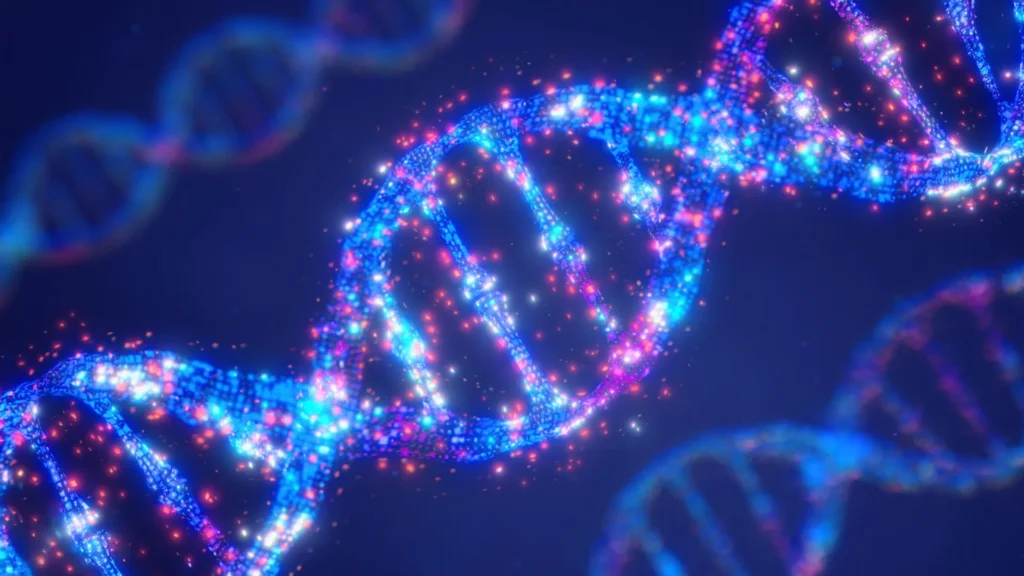
Professor Oleg Gang, a leading figure in chemical engineering and applied physics and materials science at Columbia Engineering, also heads the Soft and Bio Nanomaterials Group at Brookhaven National Laboratory’s Center for Functional Nanomaterials. His team’s innovation lies in a sophisticated bottom-up approach to material design, drawing inspiration from the intricate self-assembly processes found in biological systems. Unlike traditional "top-down" manufacturing methods, which chip away at larger materials to create intricate designs, Gang’s method uses DNA as a fundamental building block to guide the precise arrangement of nanoparticles into complex three-dimensional structures.
"We can now build complexly prescribed 3D organizations from self-assembled nanocomponents, a kind of nanoscale version of the Empire State Building," stated Professor Gang. This analogy powerfully conveys the scale and complexity of the structures his team is capable of producing. The ability to design and assemble these intricate nanoscale architectures on demand is not merely an academic curiosity; it holds profound implications for numerous emerging technological fields.
A New Era of Material Design
The potential applications of this novel fabrication technique are vast and varied. Professor Gang highlighted the critical role these capabilities will play in areas such as advanced optics, including the manipulation of light for new display technologies and sensors. Neuromorphic computing, which aims to create artificial intelligence systems that mimic the human brain’s structure and function, stands to benefit significantly from precisely arranged nanoscale components. Furthermore, the development of highly efficient catalytic materials for chemical reactions and the creation of sophisticated biomolecular scaffolds and reactors for medical and biological research are all within reach.
Two seminal papers have recently documented this transformative methodology. The first, published on July 9th in the prestigious journal Nature Materials, and a preceding one released on April 11th in ACS Nano, outline a new fabrication technique for creating targeted 3D nanoscale structures through self-assembly. Crucially, the researchers have also developed a design algorithm, effectively a blueprint, that allows other scientists to replicate and adapt their methods.
The Power of DNA: Nature’s Blueprint for Nanoscale Architecture
At the heart of this revolutionary approach is DNA, the fundamental molecule of heredity. DNA’s inherent properties—its predictable folding patterns and its ability to encode information—make it an ideal candidate for directing nanoscale assembly. Traditional methods for fabricating microelectronics, such as photolithography, are largely top-down and struggle with the complexity of three-dimensional structures at the nanoscale. While additive manufacturing, or 3D printing, has made strides, it has yet to achieve the resolution required for true nanoscale fabrication. Both these conventional techniques are serial processes, building structures one feature at a time, which is inherently slow and inefficient for complex 3D objects.
In contrast, Gang’s bottom-up strategy leverages DNA’s inherent programmability. By designing specific DNA sequences, researchers can create nanoscale components that spontaneously assemble into predetermined three-dimensional architectures. This parallel assembly process offers significant advantages in terms of speed, cost-effectiveness, and environmental sustainability, as the assembly often occurs in water-based solutions.
A Timeline of Innovation and Application
The journey towards this breakthrough has been marked by significant milestones and collaborations. Professor Gang has been actively refining his DNA-directed self-assembly methods for years, often in close collaboration with scientists requiring highly specialized nanoscale devices for their own research.
A notable recent achievement, occurring approximately two months prior to the Nature Materials publication, involved the delivery of a prototype to collaborators at the University of Minnesota. This prototype was designed for the creation of advanced 3D light sensors intended for integration onto microchips. The team accomplished this by first cultivating DNA scaffolds directly onto a chip and then coating these scaffolds with light-sensitive materials. This early success demonstrated the practical viability of their approach for tangible technological applications.
The Nature Materials paper further expands on these capabilities, introducing an "inverse design strategy." This innovative approach allows researchers to start with a desired 3D structure and then work backward to determine the specific set of nanoscale DNA components and nanoparticles required for its self-assembly. The study showcases four distinct applications of this "DNA origami" technique:
- Crystal-like Structures: The creation of intricate structures composed of one-dimensional strings and two-dimensional layers, mimicking the ordered arrangements found in natural crystals.
- Solar Panel Mimics: Development of structures designed to emulate the light-absorbing properties of materials commonly used in solar panels, potentially leading to more efficient solar energy harvesting.
- Helical Crystals: The fabrication of a unique crystalline structure that exhibits a helical, or spiral, arrangement, opening possibilities for novel optical and electronic properties.
- Advanced Optical Reflectors: For collaborator Nanfang Yu, a professor of applied physics at Columbia Engineering, the team engineered a structure capable of reflecting light in highly specific ways. This research is a critical step towards the long-term goal of developing optical computers.
These intricate structures were not only designed but also experimentally verified using advanced characterization techniques at both Columbia and Brookhaven National Laboratories. Techniques such as synchrotron-based X-ray scattering and various electron microscopy methods allowed the team to confirm that the assembled structures precisely matched their designs. Furthermore, these analyses provided crucial insights into the design considerations needed to enhance the fidelity and robustness of the assembled structures. Each of these unique designs achieved self-assembly within simple water wells in Gang’s laboratory, underscoring the elegance and efficiency of the process.
The MOSES Algorithm: Democratizing Nanoscale Design
A significant challenge in harnessing DNA self-assembly for complex structures is determining the precise DNA sequences required for the correct folding and assembly of millions, or even billions, of individual components. Professor Gang and his colleagues have addressed this with their inverse structural design approach. "If we know the big structure with the function that we want to create, we can dissect that into smaller components to create our building blocks with structural, binding, and functional attributes required to form the desired structure," explained Professor Gang.
The fundamental building blocks in this system are DNA strands that fold into a robust, eight-sided octahedral shape, which Gang refers to as a "voxel." These voxels are equipped with connectors at each corner, allowing them to link together. By encoding specific DNA sequences, a vast number of these voxels can be designed to assemble into particular repetitive 3D motifs, akin to how jigsaw puzzle pieces combine to form a complex image. These repetitive motifs, in turn, assemble in parallel to create the final, hierarchically organized structure.
To facilitate this complex design process, the researchers developed an algorithm dubbed "Mapping Of Structurally Encoded aSsembly," or MOSES. This algorithm acts as a nanoscale computer-aided design (CAD) software. "You can think of it like compressing a file. We want to minimize the amount of information for the DNA self-assembly to be most efficient," said Jason Kahn, the first author of the Nature Materials paper and a staff scientist at BNL who was previously a postdoctoral researcher in Gang’s group. MOSES guides the selection of the appropriate DNA voxels to construct any arbitrarily defined 3D hierarchically ordered lattice.
Integrating Functionality and Future Potential
Once the DNA scaffold is assembled, it can be functionalized by incorporating various types of nano-"cargo" within the voxels. This cargo imbues the final structure with specific properties. For instance, the incorporation of gold nanoparticles, as demonstrated in Professor Yu’s experiments, imparts unique optical characteristics. The research has also shown the versatility of this platform by integrating both inorganic and bio-derived nanocomponents into the DNA scaffolds.
Following the assembly of the desired device, the team can further process the structure through a technique called "mineralization." This involves coating the DNA scaffolds with silica and then exposing them to heat, which decomposes the DNA. The result is a highly robust inorganic structure that retains the precise architecture dictated by the original DNA scaffolding. This mineralization process transforms the organic template into a durable material, suitable for a wider range of applications.
Professor Gang continues to foster collaborations with Professor Kumar and Professor Yu to deepen the understanding of design principles for engineering and assembling increasingly complex structures. The ultimate ambition is to realize even more sophisticated designs, including a 3D circuit intended to replicate the intricate connectivity of the human brain, a key goal in the field of neuromorphic computing.
A Paradigm Shift in Manufacturing
The implications of this work extend far beyond academic curiosity. Professor Gang views this platform as a significant advancement in manufacturing. "We are well on our way to establishing a bottom-up 3D nanomanufacturing platform. We see this as a ‘next-generation 3D printing’ at the nanoscale, but now the power of DNA-based self-assembly allows us to establish massively parallel fabrication," he stated.
This "next-generation 3D printing" represents a paradigm shift. Instead of printing layer by layer, the DNA acts as a programmable mold, guiding countless components to assemble simultaneously. This massively parallel approach offers an exponential increase in fabrication speed and efficiency compared to current methods. The environmental benefits, stemming from water-based assembly and reduced material waste, further enhance its appeal as a sustainable manufacturing technology.
The ability to design and build complex, functional 3D nanostructures with such precision and scalability opens doors to innovations previously confined to the realm of science fiction. From advanced materials with tailored optical and electronic properties to sophisticated biological interfaces and computing architectures, the "Empire State Buildings of the nanoscale" being constructed in Oleg Gang’s lab are poised to redefine the boundaries of what is possible in science and technology. The democratization of nanoscale design through algorithms like MOSES suggests a future where bespoke nanomaterials can be created for a multitude of specific applications, accelerating scientific discovery and technological progress across diverse fields.