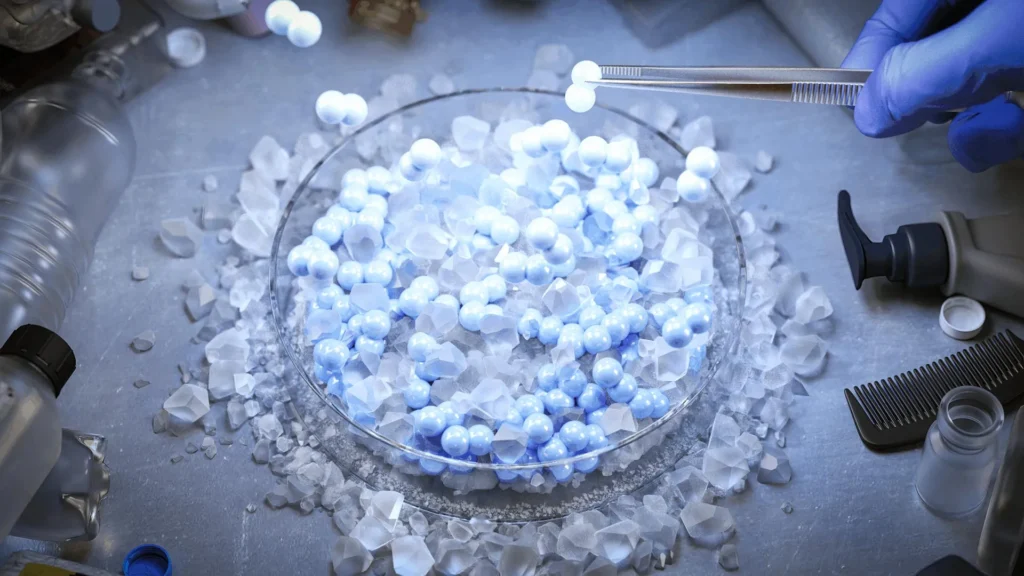
The global community stands at a critical juncture in the management of environmental waste and the transition toward sustainable energy sources. Plastic, a ubiquitous material found in everything from household water bottles and grocery bags to intricate vehicle dashboards and medical equipment, has become a defining hallmark of modern industrial life. However, the very durability that makes plastic useful also makes it an environmental catastrophe once it enters the waste stream. Traditional recycling infrastructures have struggled to keep pace with the sheer volume and complexity of discarded polymers, leading to a system where only a fraction of waste is reclaimed. In a major technological breakthrough, a collaborative research team from the UCLA Samueli School of Engineering and Ewha Womans University in South Korea has demonstrated a transformative chemical process capable of converting mixed plastic waste directly into high-purity hydrogen fuel. This method not only addresses the mounting plastic crisis but also provides a viable pathway for the production of clean energy while simultaneously capturing carbon emissions in solid mineral form.
The Global Plastic Crisis and the Limitations of Current Recycling
To understand the significance of this breakthrough, one must examine the staggering data surrounding global plastic consumption. Current estimates suggest that more than 400 million tonnes of plastic are produced annually worldwide. Despite decades of public awareness campaigns and the implementation of curbside recycling programs, the efficiency of these systems remains remarkably low. According to data cited by the research team, only 9% of all plastic ever produced has been recycled. The vast majority—approximately 79%—ends up in landfills or as litter in the natural environment, where it can take centuries to decompose, often breaking down into harmful microplastics that infiltrate the food chain. The remaining 12% is typically incinerated, a process that generates energy but at the cost of releasing significant amounts of carbon dioxide and other toxic pollutants into the atmosphere.
The primary bottleneck in conventional recycling is the requirement for meticulous sorting. Post-consumer waste is often a "poly-bag" of different materials, including polyethylene terephthalate (PET) used in beverage bottles, polyethylene (PE) used in plastic bags, and polypropylene (PP) used in food containers. These materials have different chemical properties and melting points. If they are not separated with high precision—a process that is both labor-intensive and expensive—the resulting recycled product is often of poor quality, a phenomenon known as "downcycling." The new research published in the Proceedings of the National Academy of Sciences (PNAS) offers a way to bypass this sorting hurdle entirely by processing mixed plastics in a single reactor.
A New Frontier: Alkaline Thermal Treatment (ATT)
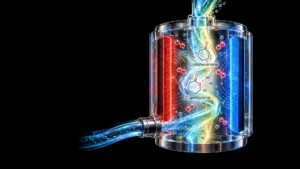
The core of this innovation lies in a process known as alkaline thermal treatment (ATT). Originally conceptualized as a method for extracting energy from biomass, the researchers adapted the chemistry to tackle the more resilient molecular structures found in synthetic plastics. The process involves reacting plastic waste with sodium hydroxide (NaOH) under controlled heat. Unlike conventional gasification, which requires extreme temperatures often exceeding 800 to 1,000 degrees Celsius to break molecular bonds, the ATT method operates at significantly lower thermal thresholds.
In the laboratory setting, the team demonstrated that the ATT process could handle a mixture of PET, PE, and PP simultaneously. This is a significant departure from other emerging technologies like solar-driven photoreforming or electrochemical conversion, which are generally effective only on oxygen-containing plastics like PET. By successfully processing the more inert PE and PP—which make up a massive portion of the global waste stream—the UCLA and Ewha Womans University team has solved a problem that has long plagued low-temperature recycling research.
Overcoming Chemical Resistance via Thermal Oxidation
One of the most significant technical challenges the researchers faced was the chemical stability of polyethylene and polypropylene. These plastics are composed almost entirely of carbon-hydrogen bonds, which are notoriously resistant to chemical reactions under alkaline conditions. In early tests, while PET responded well to the treatment, the PE and PP components produced negligible amounts of hydrogen.
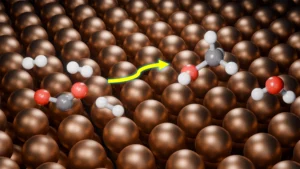
To solve this, the team introduced a crucial preliminary step: thermal oxidation pretreatment. Before the plastics are subjected to the main alkaline reaction, they are briefly heated in the presence of air at relatively mild temperatures. This "activation" step introduces oxygen-containing functional groups into the long, stubborn polymer chains. These functional groups act as "weak points" or reactive sites, allowing the subsequent alkaline thermal treatment to break down the materials efficiently. Once this pretreatment was integrated, all three types of plastic decomposed effectively, resulting in a hydrogen gas yield with a purity level exceeding 90%.
Carbon Sequestration: Turning Waste into Mineral Wealth
Beyond the production of hydrogen, the ATT process addresses the "carbon problem" inherent in waste-to-energy technologies. In traditional gasification or incineration, the carbon stored in the plastic is released as carbon dioxide (CO2). In the ATT reactor, however, the sodium hydroxide serves a dual purpose. It acts both as a catalyst for the production of hydrogen and as a "trap" for carbon.
As the plastics break down, the carbon atoms react with the sodium hydroxide to form sodium carbonate (Na2CO3), a stable solid. The researchers reported that more than 75% of the carbon originally present in the plastic feedstock was successfully captured in either solid carbonate form or as liquid organic residues. Less than 13% of the carbon entered the gas phase, and the amount of CO2 released into the atmosphere during the reaction was described as negligible.
Furthermore, the process allows for the recovery of the carbon in a commercially useful form. Through a straightforward secondary reaction, the sodium carbonate can be converted into calcium carbonate (CaCO3). Calcium carbonate is a staple material in the construction industry, used in the production of cement and concrete, as well as in the paper and plastics industries. By locking the carbon into a solid mineral, the technology effectively turns a potential greenhouse gas into a value-added industrial product.
Chronology of Development and Academic Collaboration
The journey toward this breakthrough began several years ago when Ah-Hyung "Alissa" Park, currently the Ronald and Valerie Sugar Dean of UCLA Samueli, and Woo-Jae Kim, a professor at Ewha Womans University, began exploring carbon-neutral energy solutions. In 2020, they published foundational research in Nature Communications detailing how alkaline thermal treatment could be used to produce hydrogen from seaweed and other forms of biomass.
Recognizing the chemical similarities between the complex hydrocarbons in biomass and those in synthetic plastics, the team spent the last few years refining the ATT chemistry. The transition from biomass to plastic required a sophisticated understanding of polymer science, eventually leading to the development of the thermal oxidation pretreatment that unlocked the potential for recycling PE and PP. The current study represents the culmination of this international collaboration, involving experts from Korea Aerospace University, Kangwon National University, and Sogang University.
Expert Perspectives and Industrial Implications
The implications of this research are far-reaching, touching on both the "hydrogen economy" and the "circular economy." Dr. Ah-Hyung Park emphasized the dual-purpose nature of the technology, noting that it addresses two of the most pressing environmental challenges of the 21st century: the accumulation of plastic waste and the need for decarbonized energy. "This technology tackles both of these challenges in a creative and scalable way," Park stated, highlighting the potential for the process to be integrated into existing waste management infrastructures.
Professor Woo-Jae Kim highlighted the economic potential of the discovery. By eliminating the need for high-precision sorting—which currently accounts for a massive portion of the cost in the recycling industry—the ATT process could significantly lower the barrier to entry for commercial hydrogen production from waste. "This technology has the potential to become a next-generation core technology," Kim remarked, suggesting it could serve as a bridge between current waste disposal methods and a future where waste is viewed as a primary resource.
Broader Impact: A Path Toward Scalability
While the laboratory results are a landmark achievement, the transition to commercial-scale application will require further investigation. The research team has acknowledged that the next phase of development must focus on the economic viability of the process at scale. This includes optimizing the energy balance of the thermal oxidation pretreatment and ensuring that the recovery of sodium and calcium carbonates can be done cost-effectively.
However, the baseline data is highly encouraging. By operating at temperatures 300 to 400 degrees Celsius lower than traditional gasification, the ATT process is inherently more energy-efficient. Furthermore, the high purity of the hydrogen produced (over 90%) means that less post-processing is required before the fuel can be used in hydrogen fuel cells or industrial applications.
As nations around the world set ambitious "Net Zero" targets, technologies that can provide "blue" or "green" hydrogen—produced with minimal or zero carbon footprint—are in high demand. The UCLA and Ewha Womans University method offers a unique "turquoise" or "circular" hydrogen model, where the feedstock is a problematic waste product and the byproduct is a stable mineral.
Conclusion: Redefining the Value of Plastic Waste
The study supported by the National Research Foundation of Korea marks a significant shift in how scientists and engineers view plastic waste. Rather than seeing a discarded bottle as a permanent environmental burden, this new chemical process views it as a compact, energy-dense carrier of hydrogen.
By solving the historical problems of plastic sorting, high-energy requirements, and carbon emissions, the ATT process provides a blueprint for a more sustainable industrial ecosystem. If successfully scaled, this technology could transform municipal waste centers into clean energy hubs, providing a continuous supply of hydrogen fuel to power transportation and industry while permanently sequestering the carbon that would otherwise warm the planet. The road to commercialization remains, but the chemical foundation has been laid for a future where plastic waste is no longer a crisis, but a solution.