NASA’s upgraded Cold Atom Lab (CAL), a pioneering facility designed to investigate the fundamental nature of matter, is now fully operational aboard the International Space Station (ISS). This significant restart equips researchers with an enhanced platform to delve into the mysteries of quantum mechanics and accelerate the development of future quantum technologies, leveraging the unique microgravity environment of low Earth orbit to conduct experiments impossible to perform on Earth.
Unlocking the Quantum Realm: The Science Behind CAL
Quantum science focuses on the enigmatic behavior of matter and energy at the smallest scales, examining atoms, electrons, and light particles. While conventional understanding often pictures atoms as discrete, billiard-ball-like entities, the quantum world reveals a far more complex and counter-intuitive reality. At these minuscule dimensions, atoms can exhibit wave-like properties, exist in multiple locations simultaneously (superposition), and even tunnel through barriers under specific conditions. Understanding these phenomena is not merely academic; it forms the bedrock for revolutionary technologies that have already reshaped our world and those yet to come.
At the heart of CAL’s mission is the study of matter cooled to temperatures just a hair above absolute zero, the theoretical point at which all atomic motion ceases. This extreme cooling, reaching temperatures below minus 459 degrees Fahrenheit (minus 237 degrees Celsius), allows atoms to coalesce into an extraordinary quantum state known as a Bose-Einstein condensate (BEC). First theorized by Albert Einstein and Satyendra Nath Bose in the 1920s and experimentally realized in 1995, a BEC is often referred to as the "fifth state of matter," joining solids, liquids, gases, and plasma. Unlike individual subatomic particles, a BEC is a macroscopic quantum system, meaning it is large enough to be observed directly while still obeying the peculiar laws of quantum mechanics.
In a BEC, individual atoms lose their distinct identities and merge into a single quantum wave, behaving as a unified entity. This collective behavior allows scientists to observe quantum phenomena on a larger, more accessible scale. On Earth, the pull of gravity limits the lifespan and size of these delicate condensates, causing them to collapse or disperse quickly. However, the microgravity environment of the ISS provides an unparalleled advantage, enabling these matter waves to expand to significantly larger sizes and persist for much longer durations, offering an extended window for scientific observation and experimentation.
Jason Williams, project scientist for the Cold Atom Lab at NASA’s Jet Propulsion Laboratory (JPL) in Southern California, which designed and built the facility, emphasized the transformative potential of such extreme conditions. "At the coldest temperatures, matter behaves drastically different from anything we have experienced," Williams stated. "The wavelike nature of matter dominates, and ultracold matter can behave in ways that are not only unexpected, but that also enable extremely precise measurements of time, gravity, and motion. The lab has lots of tools – especially with this latest upgrade – to let us probe the nature of the universe."
The Cold Atom Lab currently supports five international research teams, each exploring fundamental physics questions. Beyond its primary research role, CAL also serves as a critical testbed for advanced quantum instruments, which could eventually be deployed for Earth science investigations, enhancing our understanding of our home planet, and supporting future deep-space exploration missions.
A Brief Chronology of Cold Atom Lab’s Journey to Orbit
The Cold Atom Lab represents years of meticulous engineering and scientific development. Its journey from concept to orbital operation has been marked by several key milestones:
- 2014-2018: Development and Assembly: The project, managed by Caltech and designed, built, and operated by NASA’s Jet Propulsion Laboratory, involved compressing what would typically be a room-sized atomic physics laboratory into a compact system the size of a mini-refrigerator. This required significant innovation in miniaturization and robust design to withstand the rigors of spaceflight and operate remotely.
- May 21, 2018: Launch and Installation: CAL was launched to the International Space Station aboard a SpaceX Dragon spacecraft (CRS-15 mission). After its arrival, astronauts installed the facility into an experiment rack within the ISS’s U.S. Destiny laboratory module, marking the first time such advanced quantum research capabilities were brought to orbit.
- Summer 2018: First Bose-Einstein Condensates in Space: Shortly after installation, CAL successfully produced the first Bose-Einstein condensates in space, a groundbreaking achievement that validated the facility’s design and opened new avenues for quantum research. This initial success demonstrated the feasibility of conducting ultracold atom experiments in microgravity.
- 2018-2023: Initial Operations and Incremental Upgrades: Over its operational lifespan, CAL has undergone several planned maintenance and upgrade cycles. These enhancements typically involved replacing specific modules or components to improve performance, expand experimental capabilities, or address wear and tear. These incremental improvements allowed researchers to continuously push the boundaries of their experiments. The facility has provided invaluable data to researchers worldwide, investigating quantum phenomena in unprecedented conditions.
- April 11, 2024: Arrival of Latest Upgrade: A newly upgraded version of CAL’s central science module arrived at the space station aboard a Commercial Resupply Services mission. This was the fourth major upgrade since CAL’s installation in 2018, signaling NASA’s ongoing commitment to enhancing its space-based quantum research infrastructure.
- May 2024: Return to Operation: Following the successful installation and commissioning of the new module by ISS crew members and ground control, the Cold Atom Lab officially resumed operations, ready to embark on its next phase of quantum discovery.
Advanced Engineering: How the Upgraded Cold Atom Lab Works
The operational heart of the Cold Atom Lab is its sophisticated science module, a collection of highly integrated instruments engineered to create and manipulate ultracold atoms in a vacuum. The recent upgrade significantly enhances this module, expanding the range and complexity of experiments scientists can perform.
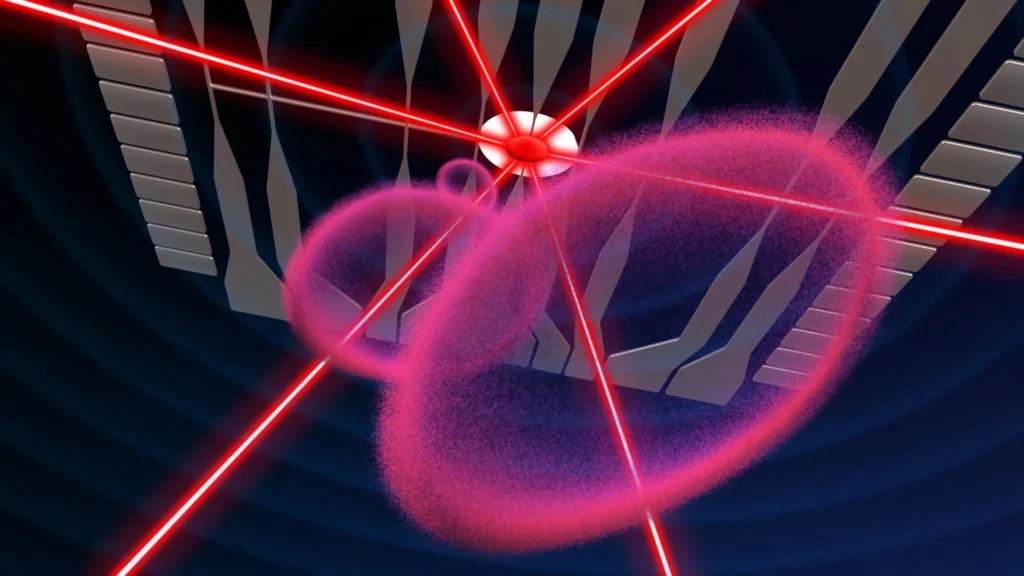
The process begins with tiny strips of rubidium or potassium metal, which are heated to temperatures as high as 750°F (400°C). This heating causes the metal to vaporize, releasing a gas of atoms into a vacuum chamber. This vacuum is crucial to prevent the ultracold atoms from colliding with other molecules and heating up.
Once the atomic gas is generated, a series of precisely tuned lasers are employed in the first stage of cooling, a technique known as Doppler cooling. The lasers are tuned to a frequency slightly below the atomic resonance, meaning atoms moving towards the laser beam absorb photons, slowing them down. As atoms lose energy, their velocity decreases dramatically, leading to a significant drop in temperature. This stage cools the atoms from hundreds of degrees Celsius to microkelvin temperatures.
Following laser cooling, magnetic fields are utilized to trap the atoms, keeping them contained and preventing them from drifting away. These magnetic traps, which are essentially invisible "bottles" for the atoms, are critical for maintaining the delicate ultracold clouds. The latest upgrade includes a redesigned magnetic trap, offering enhanced control over the shape and density of the quantum gas clouds. This new capability provides researchers with unprecedented opportunities to investigate the subtle properties and behaviors of ultracold atoms, allowing for more precise manipulation and observation.
Further cooling techniques, primarily evaporative cooling, are then applied. In this process, the highest-energy (hottest) atoms are allowed to escape the magnetic trap. As these energetic atoms leave, the remaining atoms re-equilibrate at an even lower temperature, analogous to how a hot cup of coffee cools as steam (the hottest molecules) escapes. This iterative process reduces the atomic cloud’s energy even further, bringing it close to a complete standstill and allowing scientists to maximize the amount of time it can be studied in microgravity. The redesigned metal atom sources introduced in this upgrade also play a crucial role, generating more stable and consistent gas clouds for experiments, which is vital for achieving reproducible results.
The Unparalleled Advantage of Space for Quantum Experiments
While terrestrial laboratories can indeed create and study ultracold gases, the space environment offers distinct and transformative advantages for quantum experimentation. The primary benefit is the near-elimination of gravitational forces.
On Earth, gravity constantly pulls on the ultracold atomic clouds, causing them to sag and limiting how long they can be observed before dispersing or colliding with the trap walls. This gravitational constraint restricts the achievable temperatures and the expansion time of the quantum waves. In microgravity, however, these limitations are largely removed. Quantum gases can be observed for significantly longer periods – up to 5 to 10 seconds, compared to milliseconds on Earth – and cooled to even lower temperatures, approaching pico-Kelvin levels. This extended observation time is critical for measuring subtle quantum phenomena and allowing the fragile Bose-Einstein condensates to expand and interact for longer durations.
Furthermore, the low-gravity environment allows for the formation of larger quantum waves. When atoms behave as waves, their wavelength is inversely proportional to their momentum. At ultracold temperatures, atoms move incredibly slowly, resulting in very long wavelengths. In microgravity, these matter waves can expand to sizes far greater than what is possible on Earth, interacting with gravity for extended periods without being pulled down. This allows for more sensitive measurements of gravity itself and opens doors for advanced quantum sensors that rely on the interference of these matter waves.
To make these complex experiments possible aboard the ISS, engineers at JPL faced the monumental challenge of compressing what would typically be a room-sized atomic physics laboratory, complete with an array of lasers, vacuum equipment, and optical systems, into a compact system that fits within a standard station experiment rack. This miniaturization, coupled with the ability to operate the facility remotely from Earth, represents a remarkable feat of engineering and automation.
Ethan Elliott, deputy project scientist for the Cold Atom Lab at JPL, highlighted the mission’s pioneering role. "As the first project to create Bose-Einstein condensates in orbit, we’re demonstrating that we can make quantum technology work reliably in space," Elliott said. He drew a parallel to past scientific revolutions, stating, "In the previous century, there was a quantum revolution that led to lasers, cellphones, and MRIs for medical imaging. We’re performing quantum 2.0 – direct manipulation of large quantum states – and we hope for similar gains in quantum tech by advancing this science in orbit."
Broadening Horizons: Implications and Future Applications
The restart and upgrade of the Cold Atom Lab carry profound implications for both fundamental scientific understanding and the practical development of next-generation technologies.
Fundamental Physics: CAL’s enhanced capabilities allow researchers to push the boundaries of our understanding of gravity and its interaction with quantum matter. Experiments involving ultracold atoms in microgravity can be used to test fundamental theories like Einstein’s general relativity with unprecedented precision. They could potentially shed light on elusive concepts such as dark energy, which is believed to be responsible for the accelerating expansion of the universe, or even help detect gravitational waves more directly by using atom interferometers. By observing quantum systems in an environment free from terrestrial noise and interference, scientists hope to uncover new physics that could redefine our understanding of the cosmos.
Advanced Quantum Technologies: The insights gained from CAL are directly transferable to the development of practical quantum technologies.
- Precision Navigation and Timing (PNT): The ability to create highly stable and long-lived Bose-Einstein condensates is crucial for developing ultra-precise atomic clocks. Such clocks, far more accurate than current atomic clocks, could revolutionize GPS systems, enabling centimeter-level positioning accuracy. For deep-space missions, they could significantly improve navigation capabilities, allowing probes to pinpoint their locations with extreme precision over vast distances.
- Enhanced Sensing and Metrology: The wavelike nature of ultracold atoms makes them exquisitely sensitive to minute changes in gravitational fields, acceleration, and rotations. This sensitivity can be harnessed to develop advanced quantum sensors for a wide range of applications. For Earth science, improved gravity sensors could provide more accurate measurements of ice sheet mass changes, sea level rise, and groundwater depletion, offering critical data for climate monitoring. In exploration, these sensors could be used on lunar or planetary missions to map subsurface structures and detect geological anomalies with unparalleled resolution.
- Quantum Computing and Information: While CAL doesn’t directly build quantum computers, its research into controlling and manipulating large quantum states provides foundational knowledge essential for the broader field of quantum information science. Understanding how these fragile quantum states evolve and interact in a pristine environment helps researchers on Earth design more robust quantum computing architectures and algorithms.
Kamal Oudrhiri, project manager of Cold Atom Lab at JPL, underscored the significance of the extreme cold achieved by CAL. "It’s the closest thing we have to controlling the boundary of the quantum world," Oudrhiri remarked, referring to those ultralow temperatures. "This new upgrade pushes that boundary even further." He further emphasized the strategic importance of CAL’s ongoing mission: "This new hardware demonstrates NASA’s ability to maintain U.S. leadership in space-based quantum technologies while maturing future quantum instruments, such as matter-wave interferometers for fundamental physics missions, positioning, navigation, timing, and gravity sensing of Earth, the Moon, and beyond."
The Cold Atom Lab’s mission is sponsored by the Biological and Physical Sciences (BPS) division within NASA’s Science Mission Directorate in Washington. The BPS division plays a pivotal role in supporting scientific discovery by utilizing the unique conditions of space to conduct experiments that are simply not feasible on Earth. By studying biological and physical processes in extreme environments, researchers not only gain knowledge that helps humanity travel farther and remain in space longer but also produce tangible benefits that improve life on Earth.
With its enhanced capabilities, the Cold Atom Lab is poised to deliver groundbreaking discoveries that will not only deepen our understanding of the universe’s most fundamental principles but also accelerate the development of transformative quantum technologies that will shape the future of science, exploration, and everyday life. The ISS continues to prove its worth as an unparalleled orbital laboratory, offering a window into realms of physics previously beyond our grasp.