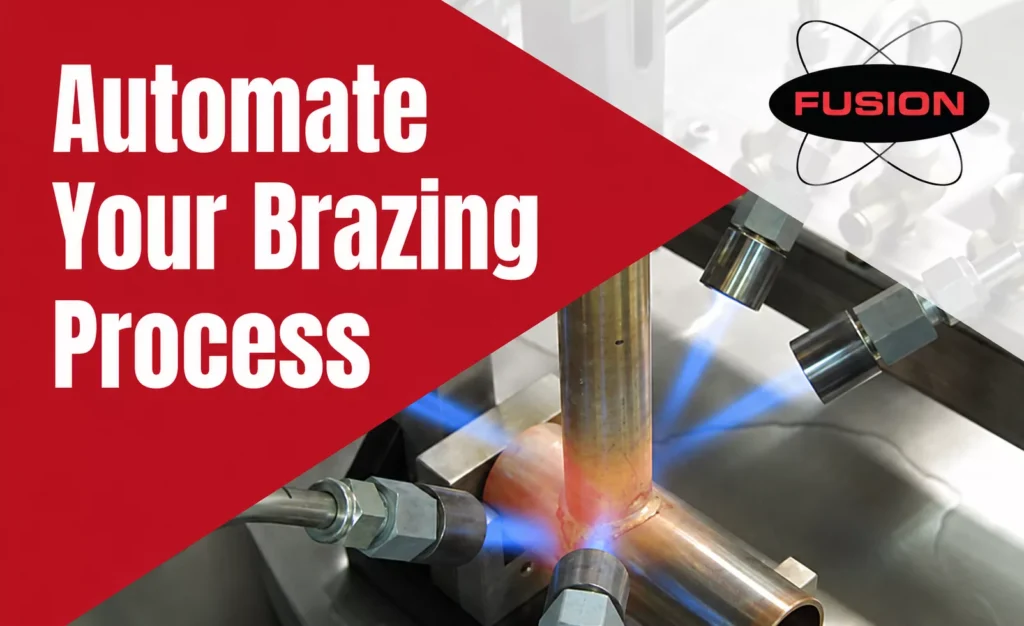
Fusion Incorporated is leading a significant transformation in industrial manufacturing processes by offering advanced turnkey automation systems designed to streamline brazing and soldering operations, converting labor-intensive manual procedures into highly efficient, cost-effective production lines. This strategic shift promises years of optimized output, substantial reductions in labor costs, and a marked increase in overall production capacity for a diverse range of industries. The company is actively inviting manufacturers to explore these capabilities, offering a free consultation to assess their current needs and demonstrate the potential for enhanced operational efficiency.
The Imperative for Automation in Brazing and Soldering
Brazing and soldering are critical metal joining processes fundamental to the production of countless goods, from automotive components and HVAC systems to intricate medical devices and electronic assemblies. Historically, these processes have been highly reliant on skilled manual labor, requiring significant operator dexterity, experience, and consistent attention to detail. While manual methods offer flexibility, they are inherently susceptible to inconsistencies, varying quality, slower production rates, and escalating labor costs. The global manufacturing landscape, characterized by increasing demands for higher quality, faster turnaround times, and competitive pricing, has created an urgent imperative for automation.
Manufacturers worldwide face persistent challenges including a shrinking pool of skilled labor, rising operational expenses, and the need to meet stringent quality standards imposed by regulatory bodies and discerning customers. Manual brazing and soldering, even when performed by highly skilled technicians, often struggle to achieve the repeatable precision necessary for modern complex assemblies. Furthermore, the inherent human limitations in terms of speed and endurance mean that manual lines often represent significant bottlenecks in an otherwise automated production flow. These factors collectively drive the manufacturing sector towards seeking advanced automated solutions that can not only mitigate these challenges but also unlock new levels of productivity and quality.
Fusion Incorporated’s Turnkey Approach to Precision Joining
Fusion Incorporated distinguishes itself by providing comprehensive, "turnkey" automation systems, meaning they handle every aspect of the transition from manual to automated processes. This holistic approach ensures that clients receive a fully integrated and operational solution tailored to their specific production requirements. The process typically begins with an in-depth assessment of the client’s existing manual operations, including an analysis of part geometries, material compositions, production volumes, and desired quality metrics. Fusion’s engineers then leverage this data to design a bespoke automation system.
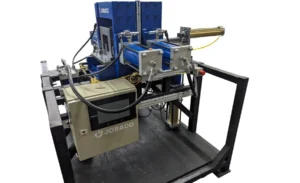
A turnkey solution from Fusion incorporates several key components: custom-designed part fixturing to ensure precise positioning and repeatability; sophisticated robotic or automated material handling systems for efficient loading and unloading; advanced filler metal dispensing mechanisms that ensure accurate and consistent application of brazing or soldering alloys; and state-of-the-art heating systems, which may include induction heating, flame heating, or resistance heating, selected based on the specific application requirements. Moreover, the "turnkey" aspect extends beyond hardware to include comprehensive software integration, programming, operator training, and ongoing technical support, ensuring a seamless transition and sustained performance. This end-to-end service minimizes disruption to existing operations and empowers manufacturers to quickly realize the benefits of automation.
Technological Underpinnings and Core Benefits
The core of Fusion’s automation prowess lies in its integration of cutting-edge technologies. Robotic arms, whether articulated or SCARA types, are often employed for their precision and repeatability in tasks such as part manipulation, flux application, and filler metal placement. Advanced vision systems are increasingly incorporated for pre-process inspection, ensuring correct part orientation and identifying potential defects, as well as for post-process quality verification. Programmable Logic Controllers (PLCs) form the brain of these systems, orchestrating the synchronized movements of all components and managing critical process parameters such as temperature profiles, dwell times, and cooling rates.
The benefits derived from these sophisticated systems are multi-faceted and directly address the pain points of modern manufacturing:
-
Labor Cost Reduction: By automating repetitive and precise tasks, companies can significantly reduce their reliance on direct labor for brazing and soldering. This translates into lower wage expenses, reduced training costs, and less exposure to labor-related liabilities. Existing skilled personnel can be reallocated to higher-value activities such as system monitoring, maintenance, or process optimization.
-
Increased Production Throughput: Automated systems operate with consistent speed and efficiency, often capable of 24/7 operation with minimal human intervention. This dramatically reduces cycle times per part and allows for significantly higher production volumes compared to manual methods. Manufacturers can meet aggressive production targets and scale operations more effectively in response to market demand.
-
Optimized Output and Quality: Automation inherently eliminates human variability, leading to superior joint consistency and quality. Precise control over process parameters—temperature, time, filler material quantity, and placement—ensures that every joint meets exact specifications. This results in fewer defects, reduced rework, and higher overall product reliability, which is crucial for industries with zero-tolerance for failure, such as aerospace and medical device manufacturing.
-
Enhanced Safety: Brazing and soldering processes often involve high temperatures, open flames, and fumes. Automating these tasks removes operators from hazardous environments, significantly improving workplace safety and reducing the risk of injuries.

-
Material Efficiency: Automated systems can precisely dispense filler metals and fluxes, minimizing waste and ensuring optimal material utilization, which contributes to overall cost savings and environmental responsibility.
A Historical Perspective: The Evolution of Joining Automation
The journey towards automated brazing and soldering is part of a broader narrative of industrial mechanization and automation that began in earnest in the post-World War II era. Early attempts at automating joining processes involved simple jigs and fixtures, often coupled with semi-automatic heating elements. The 1960s and 70s saw the introduction of more sophisticated mechanical systems, but true automation, characterized by programmable and adaptive machines, began to take hold with the advent of industrial robotics in the 1980s. These early robots, though rudimentary by today’s standards, offered unprecedented precision and repeatability for tasks like spot welding and material handling, paving the way for their application in brazing and soldering.
The 1990s and early 2000s witnessed significant advancements in sensor technology, control systems, and computational power. This era brought forth more intelligent automation, allowing for finer control over thermal profiles, more accurate filler placement, and integrated quality checks. The push for miniaturization in electronics and medical devices further spurred the development of micro-brazing and micro-soldering automation, demanding even higher levels of precision. Today, we are in the midst of Industry 4.0, where automation is not just about replacing manual labor but about creating smart, connected, and adaptive manufacturing ecosystems. Fusion Incorporated’s offerings are squarely positioned within this modern paradigm, leveraging data analytics, advanced robotics, and intelligent process control to deliver solutions that are not only efficient but also future-proof.
Market Dynamics and Industry Adoption Trends
The global market for industrial automation, encompassing various sectors including manufacturing, automotive, electronics, and healthcare, is experiencing robust growth. Projections indicate that the industrial automation market could exceed $350 billion by 2027, with a significant portion attributable to process automation solutions like those offered by Fusion. The adoption of brazing and soldering automation is particularly strong in industries where joint integrity is paramount and production volumes are high.
For instance, the burgeoning electric vehicle (EV) market relies heavily on precise and reliable battery pack assembly, which often involves complex brazing or soldering of busbars and cooling plates. Similarly, the aerospace industry, with its stringent safety and performance requirements, increasingly turns to automated joining for engine components, hydraulic lines, and structural elements. The medical device sector, driven by innovation and strict regulatory compliance, utilizes automated micro-soldering and brazing for implantable devices and surgical instruments, where consistency and biocompatibility are non-negotiable. Even in traditional sectors like HVAC and appliance manufacturing, the drive for energy efficiency and extended product lifespans necessitates higher quality, automated joining processes. This broad industrial uptake underscores the critical role that companies like Fusion play in enabling technological advancement and maintaining competitive edge across diverse manufacturing landscapes.
Strategic Insights from Industry and Fusion Leadership
Industry analysts consistently point to automation as a critical strategy for manufacturers seeking to navigate current economic headwinds and position themselves for future growth. "The pressure on manufacturers to reduce costs, enhance quality, and accelerate time-to-market has never been greater," notes Dr. Eleanor Vance, a lead analyst at Global Manufacturing Insights. "Turnkey automation providers like Fusion Incorporated are not just selling equipment; they are delivering strategic partnerships that enable companies to overcome skilled labor shortages, improve process control, and ultimately, build more resilient and competitive operations."
While no direct statements from Fusion’s leadership were provided in the original text, it can be logically inferred that the company’s vision aligns with these broader industry trends. A hypothetical statement from a Fusion Incorporated executive might emphasize their commitment to customer success and innovation: "At Fusion, we understand the immense pressures manufacturers face. Our mission is to empower them with intelligent, robust automation solutions that not only solve immediate production challenges but also lay the groundwork for long-term operational excellence. We believe in partnering with our clients, from initial consultation to post-installation support, to ensure their brazing and soldering processes are not just automated, but truly optimized for future success." Such a statement would underscore Fusion’s dedication to client-centric solutions and their understanding of the evolving manufacturing ecosystem.
The Broader Economic and Industrial Implications
The widespread adoption of automation in processes like brazing and soldering carries significant broader implications for the economy and industrial sector. Economically, it can lead to increased productivity, which is a key driver of economic growth. By reducing manufacturing costs and improving product quality, automated systems can enhance the competitiveness of domestic industries, potentially leading to reshoring of manufacturing operations previously moved offshore due to labor cost advantages. This can create new, higher-skilled jobs in areas such as robotics programming, system maintenance, and data analysis, even as some manual roles are reduced.
From an industrial standpoint, automation fosters greater supply chain resilience. Companies that can produce critical components domestically with high efficiency and quality are less susceptible to international supply chain disruptions. Furthermore, the data generated by automated systems can be leveraged for continuous improvement, predictive maintenance, and further process optimization, moving towards a truly ‘smart factory’ environment. The environmental benefits are also noteworthy; precise material usage and optimized energy consumption in automated processes can contribute to more sustainable manufacturing practices. As manufacturing continues its digital transformation journey, companies like Fusion Incorporated are not merely suppliers of equipment but facilitators of a more efficient, sustainable, and competitive industrial future.
In conclusion, Fusion Incorporated’s focus on delivering comprehensive turnkey automation systems for brazing and soldering represents a critical advancement for the manufacturing sector. By addressing the core challenges of labor costs, production efficiency, and quality consistency, these systems provide a robust solution for industries striving for operational excellence. The offer of a free consultation underscores their commitment to partnership, inviting manufacturers to explore how tailored automation can redefine their production capabilities and secure a competitive edge in an increasingly demanding global market.