The landscape of autonomous vehicle technology is experiencing rapid evolution, with significant developments from major players like Tesla and emerging leaders in specialized sectors. This analysis delves into recent expansions of Tesla’s self-driving fleet, juxtaposed with the global progress in autonomous freight and logistics, highlighting a diverse and increasingly sophisticated approach to driverless technology worldwide.
Tesla’s recent strategic move to effectively double its national self-driving Robotaxi fleet, achieved through regulatory means rather than a sudden surge in vehicle production, marks a pivotal moment in its ambitious pursuit of a fully autonomous future. This expansion, detailed in the latest episode of the "Quick Charge" podcast, signifies a substantial leap in the operational capacity of Tesla’s Autopilot and Full Self-Driving (FSD) software in a real-world taxi service context. While the exact number of vehicles added to the fleet through this regulatory maneuver remains proprietary information, the implication of a 50% increase underscores a significant scaling up of Tesla’s autonomous deployment strategy within its service areas. This move is not merely about adding more cars; it represents a calculated step towards gathering more data, refining algorithms, and proving the viability of its driverless ride-hailing service on a larger scale.
The comparison of Tesla’s autonomous deployments against the global backdrop reveals a dynamic and multifaceted industry. While Tesla is focused on passenger vehicles and a future vision of personal robotaxis, other companies are making significant inroads in commercial applications, particularly in freight and logistics. This divergence in focus highlights the varied pathways autonomous technology is taking to achieve commercial viability and widespread adoption.
Einride, a prominent player in the autonomous freight sector, has been steadily expanding its operations. The company has successfully deployed Level 4 autonomous heavy trucks in Europe, a significant achievement in a region with stringent regulatory frameworks. More recently, Einride has begun testing and operating its autonomous trucks in Ohio, marking its entry into the U.S. market. Level 4 autonomy, as defined by the Society of Automotive Engineers (SAE), means the vehicle can handle all driving tasks under specific conditions without human intervention. This is a critical distinction from lower levels of autonomy, signifying a higher degree of operational independence and safety. Einride’s presence in Ohio is particularly noteworthy as it represents a crucial step towards integrating autonomous freight solutions into established supply chains within the United States.

However, even Einride’s impressive achievements in Europe and Ohio are described as merely "scratching the surface" when contrasted with the sheer scale of autonomous operations in China. The report highlights that China possesses thousands of fully autonomous, ultra-heavy haul trucks operating in mining environments. This stark difference in scale underscores a global disparity in the adoption and implementation of autonomous technology, particularly in specialized industrial applications. These Chinese mining operations represent a mature and robust deployment of autonomous vehicles, operating in controlled, albeit challenging, environments. The success in these closed-loop systems demonstrates the potential for autonomous heavy-duty vehicles to significantly enhance efficiency, safety, and productivity in industrial settings.
The implications of these varying deployment strategies are profound. Tesla’s approach, focusing on a widely accessible consumer product and ride-hailing service, aims to normalize autonomous driving for the general public. Success here could revolutionize personal transportation and urban mobility. Conversely, companies like Einride and the extensive Chinese mining operations are demonstrating the immediate economic benefits of autonomous technology in industries where efficiency and cost-effectiveness are paramount. The sheer volume of autonomous trucks in Chinese mines suggests a more pragmatic, industry-driven adoption curve, where the technology is proving its worth in demanding, high-impact scenarios.
Tesla’s Regulatory Gambit and the Path to Robotaxis
Tesla’s recent maneuver to expand its Robotaxi fleet is rooted in its long-standing vision of a future where its vehicles operate autonomously as a service. The company has been investing heavily in its Full Self-Driving (FSD) software, which, while still requiring driver supervision in most jurisdictions, has been progressively enhanced. The expansion of the Robotaxi fleet, as reported, appears to be a regulatory enablement rather than an immediate expansion of FSD’s capabilities in a way that would allow for fully driverless operation in all public roads. This suggests that the vehicles added to the fleet may be designated for specific operational parameters or within geographical areas where Tesla has secured the necessary approvals for a higher level of autonomous operation, potentially in conjunction with human supervision that is less intrusive or mandated for shorter durations.
The history of Tesla’s FSD development has been marked by ambitious timelines and significant public interest. Initially, the company projected widespread autonomous capabilities much earlier. However, the complexities of real-world driving, edge cases, and regulatory hurdles have necessitated a more gradual approach. The expansion of the Robotaxi fleet indicates that Tesla believes it has reached a sufficient level of maturity and regulatory acceptance to deploy more vehicles into a service model. This is a critical step for Tesla, as it moves from selling a driver-assistance system to offering a genuine autonomous mobility service, which has the potential to generate recurring revenue streams and significantly alter the transportation economics.
Global Diversification in Autonomous Freight and Logistics
The advancements by Einride and the extensive deployments in China illustrate the diverse applications and varying stages of maturity for autonomous technology across the globe.

Einride’s European and U.S. Expansion
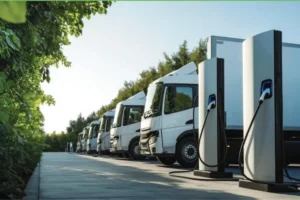
Einride’s strategy has focused on the electrification and automation of freight transport. Their autonomous electric trucks, often referred to as "S-Pods" for their unique cab-less design when operating autonomously, are designed for both short-haul and long-haul logistics. The company has achieved significant milestones in Europe, including operating on public roads under specific permits. Their expansion into Ohio signifies a strategic push into the North American market, a region with vast logistics networks and a strong demand for efficient freight solutions.
The operational success of Einride’s Level 4 trucks implies robust safety protocols and sophisticated sensor and software systems capable of navigating complex road conditions. The regulatory landscape for autonomous trucks in the U.S. is still developing, with states adopting different approaches. Einride’s presence in Ohio, a state actively exploring and facilitating autonomous vehicle testing, suggests a collaborative effort to integrate this technology into the existing transportation infrastructure. The implications for the U.S. logistics sector are substantial, potentially leading to reduced operational costs, increased delivery efficiency, and improved safety by mitigating human error.
China’s Mining Sector: A Leader in Heavy-Duty Autonomy
The report’s revelation of thousands of fully autonomous ultra-heavy haul trucks operating in Chinese mines provides a compelling counterpoint to the more visible, consumer-facing autonomous vehicle developments. This massive deployment highlights a different, yet equally significant, application of autonomous technology. In mining, where safety is paramount and operations often occur in remote and hazardous conditions, autonomous vehicles offer distinct advantages.
These trucks are likely operating under highly controlled conditions, optimized for specific routes and environments within mine sites. The sheer volume indicates a mature and cost-effective implementation, where the economic benefits of increased uptime, reduced labor costs, and enhanced safety have outweighed the investment in autonomous technology. This large-scale success in a demanding industrial sector suggests that autonomous heavy-duty vehicles are not a distant future prospect but a present reality in specific operational contexts. It also suggests that China may be leading the world in the sheer number of autonomous vehicles deployed in industrial settings, a fact often overshadowed by the focus on autonomous passenger cars.
The Hype vs. Reality: A Global Perspective
The "Quick Charge" episode encourages a comparison between the "hype" surrounding autonomous vehicles and their current "reality." This is a crucial exercise as the public perception of autonomous driving is often shaped by futuristic visions and ambitious marketing.

- Hype: The idea of fully autonomous vehicles seamlessly navigating our cities, offering on-demand robotaxi services, and eliminating traffic accidents is a powerful narrative. Tesla, with its ambitious FSD roadmap, often fuels this narrative. The dream of a driverless future where vehicles are constantly learning and improving is compelling.
- Reality: The reality is more nuanced and geographically diverse. Tesla’s expansion, while significant, is likely within defined operational domains and may still involve human oversight. Einride’s success in specific freight corridors demonstrates tangible progress in commercial applications. China’s mining sector showcases a mature, large-scale implementation in controlled industrial environments.
The disparity between these realities and the broader hype suggests that while the ultimate goal of widespread autonomous driving remains a powerful motivator, the path to achieving it is varied and complex. Different sectors and regions are progressing at different paces, driven by unique economic, regulatory, and technological factors. The mining example, in particular, demonstrates that autonomous technology can deliver significant value today, even if it’s not yet in the form of a personal robotaxi for every consumer.
Broader Impact and Future Implications
The continued development and deployment of autonomous vehicles across these diverse sectors carry significant implications:
- Economic Transformation: Autonomous freight could revolutionize supply chains, leading to reduced shipping costs and increased efficiency. The growth of Robotaxi services could alter urban mobility patterns and create new service economies.
- Safety Enhancements: While accidents can still occur, the long-term goal of autonomous driving is to significantly reduce human-error-related crashes, which account for a vast majority of traffic fatalities.
- Environmental Benefits: The increasing integration of electric autonomous vehicles, as seen with Einride, promises to reduce emissions and reliance on fossil fuels in transportation.
- Job Market Shifts: The rise of autonomous vehicles will inevitably lead to shifts in the labor market, particularly for professional drivers. This necessitates proactive planning for retraining and the creation of new roles in fleet management, maintenance, and oversight of autonomous systems.
- Regulatory Evolution: As autonomous technology matures, regulatory frameworks will continue to evolve. Collaboration between industry, government, and safety organizations will be crucial to ensure responsible deployment and public trust.
The podcast’s call to action for listeners to engage in discussions about the "hype vs. reality" is essential. Understanding the current capabilities and limitations of autonomous technology, as demonstrated by the varied progress of Tesla, Einride, and China’s mining operations, allows for a more informed and realistic perspective on the future of transportation. The journey towards a fully autonomous world is ongoing, marked by incremental advancements, strategic diversifications, and a continuous interplay between technological innovation and societal acceptance. The coming years will likely see further consolidation of these trends, with both passenger and commercial autonomous vehicles playing increasingly significant roles in our daily lives.
Sponsorship and Accessibility
The "Quick Charge" podcast, which brings these insights to a wider audience, is made possible by sponsors like GM Energy Pass, a feature designed to streamline the electric vehicle ownership experience by consolidating charging options and providing access to extensive charging networks. This reflects the broader ecosystem developing around electric and autonomous mobility, where user convenience and infrastructure are key components.
Furthermore, the availability of "Quick Charge" in audio-only formats across major podcast platforms such as Apple Podcasts, Spotify, and TuneIn ensures that this information is accessible to a broad audience, catering to different listening preferences. This commitment to accessibility underscores the importance of disseminating news and analysis on the rapidly evolving automotive industry.

The ongoing reporting by "Quick Charge" and its parent publication, Electrek, aims to keep the public informed about the latest developments, from regulatory shifts impacting Tesla’s fleet to the on-the-ground realities of autonomous technology in industrial settings globally. This continuous coverage is vital for navigating the complexities and excitement surrounding the future of transportation.