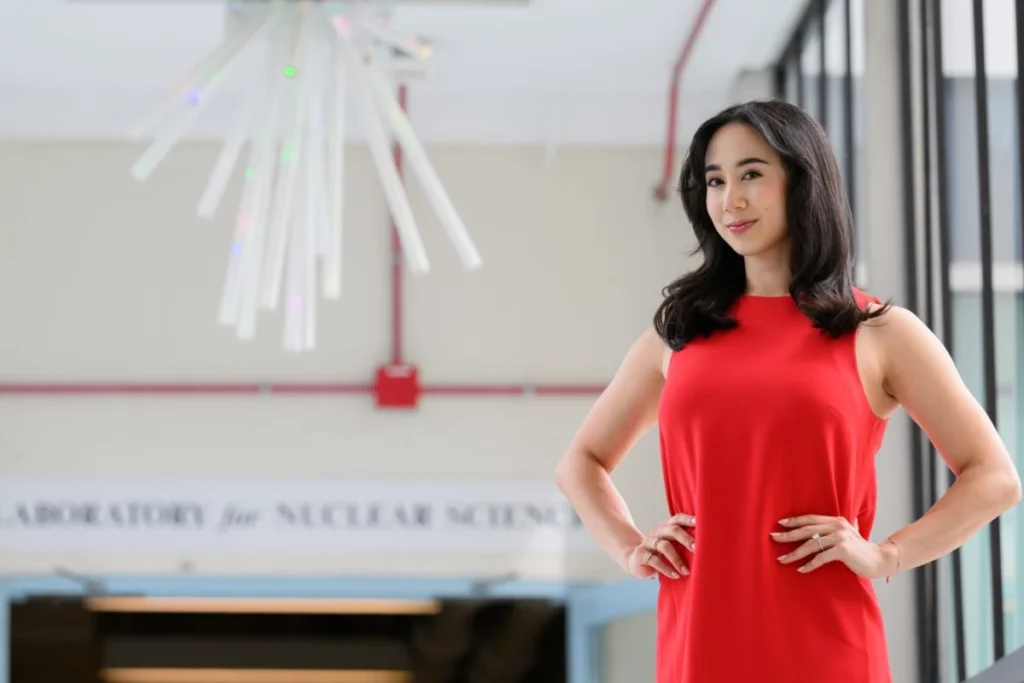
In the high-stakes world of particle physics, the search for dark matter represents one of the most significant challenges of the 21st century. While it is estimated that approximately 85 percent of the matter in the universe is "dark"—meaning it does not emit, absorb, or reflect light—it has never been directly observed. Jessica Fry, a fifth-year PhD candidate at the Massachusetts Institute of Technology (MIT) Laboratory for Nuclear Science (LNS), is currently at the forefront of this global hunt. Her journey to the pinnacle of nuclear physics is as unconventional as the particles she seeks, involving a professional career on Broadway and a lifelong dedication to the performing arts.
The Mystery of the Missing Universe
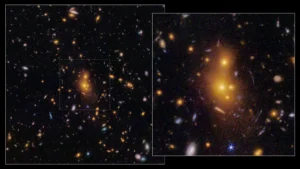
The scientific community has known for decades that the visible universe—the stars, planets, and galaxies we can see—accounts for only a small fraction of the total mass required to explain gravitational observations. Since the 1930s, when astronomer Fritz Zwicky first noticed discrepancies in the orbital velocities of galaxies in clusters, and later in the 1970s, when Vera Rubin provided robust evidence through galactic rotation curves, physicists have grappled with the existence of an invisible substance. This substance, termed dark matter, provides the "gravitational glue" that prevents galaxies from flying apart.
Despite its ubiquity, dark matter remains elusive because it interacts with the electromagnetic spectrum only through gravity, and perhaps through the weak nuclear force. Jessica Fry’s research focuses on a specific theoretical candidate: the axion. Unlike the more commonly discussed Weakly Interacting Massive Particles (WIMPs), axions are hypothetical ultralight particles. If they exist, they would be many orders of magnitude lighter than an electron. At such a scale, axions would behave less like individual "bullets" and more like a pervasive, coherent wave flowing through the galaxy.
A Chronology of Discovery and Performance
Fry’s path into the world of high-energy physics began in the San Francisco Bay Area, a region synonymous with technological and scientific advancement. Growing up near the SLAC National Accelerator Laboratory, Fry was exposed to the culture of "Big Science" from an early age. However, her early years were equally defined by her commitment to dance. Beginning at age three, she quickly ascended the ranks of competitive dance, eventually competing on national stages.
The intersection of these two worlds—rigorous physical discipline and intellectual curiosity—became evident during her high school years. When a teacher provided her with two decommissioned detectors from SLAC, Fry did not merely treat them as artifacts. She located a research paper from the 1960s that utilized similar equipment, successfully replicated the experiment, and documented her findings. This experience served as a catalyst, proving that the abstract philosophical questions of space and time could be addressed through tangible, physical experimentation.
Fry’s academic trajectory led her to Stanford University, where she pursued a double major in physics and theater and performance studies. This dual commitment was put to the ultimate test during her sophomore year. While preparing for midterm exams, she received a call from a talent agent regarding a Broadway revival of David Henry Hwang’s "M. Butterfly." In a whirlwind of activity, Fry flew to New York for auditions and returned to Stanford just in time for her examinations.
After a month of silence, during which she assumed she had not secured the role, Fry accepted a summer research position at CERN (the European Organization for Nuclear Research) in Switzerland. It was only then that she received the news of her casting. Following her research tenure in Geneva, she transitioned directly to the rehearsal rooms of New York City, taking a two-year hiatus from her studies to perform professionally. During this time, she expanded her repertoire to include ballet, contemporary dance, jazz, traditional Māori dance, and Peking opera-style movement.
The Shift from Stage to Laboratory
While Fry’s time on Broadway was a professional success, it also provided a moment of profound personal reflection. The performing arts industry, characterized by constant external judgment and frequent auditions, began to weigh on her sense of self. Fry noted that a significant occupational hazard of the theater is the tendency to value others’ opinions over one’s own. This realization prompted an aching but decisive choice: to return to Stanford, complete her degrees, and pivot toward a career in physics.
The decision led her to MIT’s Laboratory for Nuclear Science, an institution she chose for its "scientific energy" and the sheer scale of its research capabilities. The LNS is a cornerstone of MIT’s physics department, housing various groups dedicated to understanding the fundamental constituents of matter. It was here that Fry joined the Neutrino and Dark Matter Group, led by Professor Lindley Winslow.
Technical Methodologies: ABRACADABRA and DMRadio
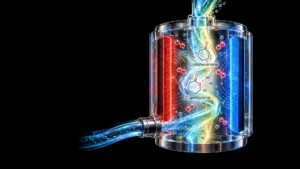
Fry’s current work involves two primary experimental efforts designed to detect the faint signature of the axion. These experiments operate on the principle that, in the presence of an extremely strong magnetic field, axions should convert into a very weak, oscillating electric current—a phenomenon known as the inverse Primakoff effect.
- ABRACADABRA (A Broadband/Resonant Approach to Cosmic Axion Detection with a Bayesian B-Ring Apparatus): This experiment, currently based at MIT, utilizes a toroidal magnet to create a magnetic field. If axions are present, they should induce a small magnetic flux in the center of the toroid, which can be detected by a superconducting quantum interference device (SQUID).
- DMRadio (Dark Matter Radio): Fry is currently assisting in the construction of this next-generation detector at Stanford. Much like a car radio is tuned to different frequencies to find a station, DMRadio is tuned across a range of frequencies to find the specific "mass" of the axion. Because the mass of the axion is unknown, researchers must systematically scan a wide spectrum of possible frequencies.
The primary challenge in these experiments is the "noise floor." The signals Fry is searching for are incredibly faint, often buried beneath thermal fluctuations and environmental electromagnetic interference. To combat this, the detectors are cooled to millikelvin temperatures—colder than outer space—and utilize quantum amplifiers to boost the potential signal. Fry likens the search to looking for a specific "rip current" created by colliding waves in a vast ocean.
Institutional Support and Mentorship
The collaborative environment at MIT has been instrumental in Fry’s development. Professor Lindley Winslow, who has overseen Fry’s work, observes a unique synergy between Fry’s background in performance and her approach to physics. Winslow notes that the discipline required to "deliver when the curtain rises" translates effectively to the fearlessness needed in experimental science. Fry’s ability to seek feedback and iterate on her methods is a trait Winslow identifies as essential for high-level research.
The Neutrino and Dark Matter Group at MIT fosters a cross-disciplinary environment where four principal investigators and their students collaborate. This structure has allowed Fry to gain expertise beyond her immediate subfield, contributing to a more holistic understanding of particle physics and cosmology.
Broader Implications and Future Outlook
The search for dark matter is more than just a quest for a new particle; it is an attempt to complete our understanding of the Standard Model of particle physics. The discovery of the axion would not only solve the dark matter mystery but also address the "Strong CP Problem" in quantum chromodynamics, which concerns why the strong force does not seem to violate charge-parity symmetry.
Jessica Fry’s contributions have already garnered significant recognition. She was recently named to the Forbes 30 Under 30 Science list for 2026, a testament to her impact on the field even before completing her PhD. As she nears the conclusion of her program, her focus remains on the data analysis for DMRadio and the eventual completion of the detector.
Fry remains optimistic about the timeline of discovery, asserting that dark matter will likely be detected within her lifetime. Her transition from the stage to the laboratory serves as a case study in the transferability of skills—discipline, storytelling, and the pursuit of excellence—across seemingly disparate fields. While she still dances in a studio near Harvard to maintain a connection to her physical self, her primary focus is now firmly set on the "fun hunt" for the particles that hold the universe together.
The quest for the axion continues to draw the attention of the global scientific community. As experiments like ABRACADABRA and DMRadio increase in sensitivity, the window for where the axion might be "hiding" continues to shrink. For researchers like Jessica Fry, the goal is clear: to keep tuning the "radio" until the universe finally speaks back.