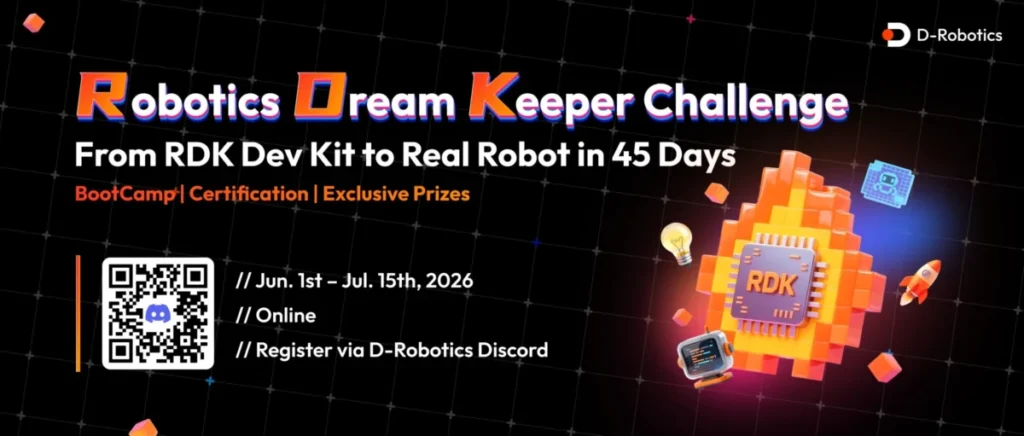
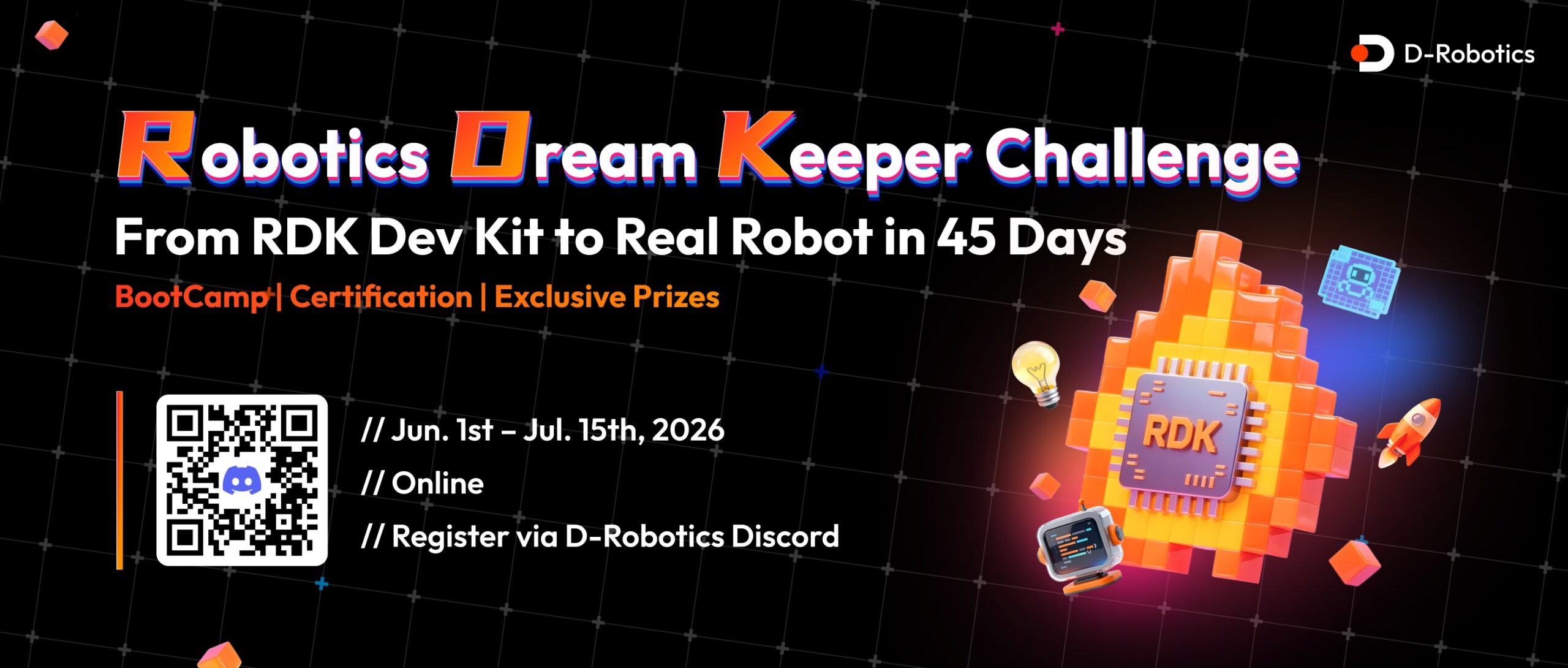
D-Robotics has officially launched the Robotics Dream Keeper Challenge (RDK Challenge), an ambitious initiative designed to empower innovators, students, hobbyists, and seasoned engineers to transform their latent robotic aspirations into tangible, intelligent creations. This program leverages the RDK X5, an advanced yet user-friendly edge AI development board, positioning it as a pivotal tool for democratizing access to complex artificial intelligence and robotics development. The challenge seeks to dismantle the traditional barriers of entry—such as intricate wiring, confounding software environments, and the daunting question of where to begin—that have long stifled creative exploration in robotics.
Background: Bridging the Gap in Robotics Development
For years, the dream of building autonomous robots, from simple snack-delivering rovers to sophisticated voice-controlled assistants, has remained largely aspirational for many. The technical complexities associated with integrating hardware, programming intelligent behaviors, and navigating diverse software ecosystems often proved insurmountable. D-Robotics recognized this critical gap, understanding that while interest in robotics and AI surged, the practical tools and structured support for accessible development lagged. The RDK Challenge emerges from this understanding, providing a guided pathway for individuals to not only conceptualize but also construct functional AI-powered robots.
The global robotics market, valued at approximately $40 billion in 2023, is projected to expand significantly, potentially reaching over $200 billion by 2030, driven by advancements in AI, automation, and increasingly accessible development platforms. Edge AI, where artificial intelligence processing occurs directly on the device rather than in the cloud, is a cornerstone of this growth, offering advantages in speed, privacy, and efficiency crucial for real-time robotic applications. The RDK X5 is specifically engineered to harness these edge AI capabilities, providing robust on-device AI performance without demanding extensive cloud infrastructure or complex computational setups. By focusing on a "hidden gem" like the RDK X5, D-Robotics aims to cultivate a new generation of developers capable of innovating at the cutting edge of embedded AI.
The RDK X5: Powering the Next Generation of AI Robots
At the heart of the Robotics Dream Keeper Challenge lies the RDK X5, an edge AI development board distinguished by its potent processing capabilities and streamlined developer experience. While specific detailed technical specifications were not provided, a powerful edge AI board like the RDK X5 typically integrates a high-performance system-on-chip (SoC) with dedicated neural processing units (NPUs) or BPU (Brain Processing Unit) acceleration, enabling efficient execution of AI models directly on the device. This architecture is vital for applications requiring low-latency responses, such as real-time object detection, gesture recognition, and complex motion control in robotics.
The RDK X5 is designed to simplify the development process, offering comprehensive software development kits (SDKs), intuitive programming interfaces, and extensive documentation. This approach significantly reduces the "wiring chaos" and "confusing software" often associated with embedded systems, allowing makers to focus on the creative and intelligent aspects of their projects. Its versatility supports a wide array of sensors, actuators, and communication protocols, making it suitable for diverse robotic applications, from autonomous navigation to interactive human-robot interfaces. The board’s ability to handle complex AI tasks locally minimizes reliance on internet connectivity and cloud computing, making robots more robust, secure, and responsive in various environments.
Early Demonstrations of RDK X5’s Potential
Even before the full launch of the RDK Challenge, a vibrant community of early adopters has showcased the RDK X5’s impressive versatility and performance. These initial projects underscore the board’s capacity to bring sophisticated AI concepts to life across a spectrum of applications:

-
OpenDuck Mini – RDK X5: This project, developed by AI Researcher and Robotics Developer Frank Fu, features a reinforcement-learning bipedal robot that achieves "real sim-to-real walking." This represents a significant achievement in robotics, where behaviors learned in simulated environments are successfully transferred to physical robots. Reinforcement learning enables robots to learn complex locomotion patterns through trial and error, adapting to various terrains and disturbances. The OpenDuck Mini demonstrates the RDK X5’s computational muscle to handle the intensive calculations required for advanced control algorithms and real-time sensory feedback, pushing the boundaries of dynamic bipedal movement.
-
An Arc Reactor That Beats With My Heart: Created by MateoTechLab, this project transcends conventional robotics, illustrating the RDK X5’s potential in creative, interactive installations. A glowing Arc Reactor, inspired by popular culture, synchronizes its pulsating light with the user’s heartbeat, detected via a smartwatch. This innovative application highlights the RDK X5’s capability to interface with external biometric sensors, process real-time data, and control dynamic outputs. It exemplifies how the board can be used for artistic expression and personalized interactive experiences, showcasing its flexibility beyond purely functional robotic tasks and tapping into the burgeoning field of bio-integrated design.
-
Valentine’s Day AI Robot With RDK X5: Pro Know’s adorable interactive companion showcases the RDK X5’s aptitude for creating emotionally engaging robots. Equipped with vision, touch, and sound reactions, this robot possesses a charming personality, responding to human interaction in a lifelike manner. Such projects are at the forefront of human-robot interaction (HRI), demonstrating the potential for AI to foster social connection and companionship. The RDK X5’s ability to integrate multiple sensory inputs and execute complex behavioral algorithms on-device is crucial for developing robots that can understand and respond to human cues effectively, making intelligent companions more accessible to developers.
These diverse projects serve as compelling proof points that the RDK X5 offers robust on-device AI performance while maintaining a highly maker-friendly interface. D-Robotics has further amplified visibility for the RDK X5, with live demonstrations showcased during live streams on Make: YouTube channel, allowing a wider audience to witness its capabilities firsthand.
The Three-Stage Build Path: A Structured Journey to Robotic Mastery

The Robotics Dream Keeper Challenge is meticulously structured into three progressive stages, designed to guide participants through the complexities of AI robotics development over approximately 35-45 days. This phased approach ensures a manageable learning curve, preventing burnout and maximizing the educational impact for participants of all skill levels.
-
Stage 1 – Ignite (5-10 Days): Power on your robot’s brain.
The initial phase focuses on foundational setup and basic functionality. Participants begin by unboxing their RDK X5, familiarizing themselves with the board, and successfully powering it on. Key activities include flashing the SD card, establishing SSH connectivity, configuring essential sensors, and deploying a simple AI demonstration. This stage is designed to be accessible, with the organizers noting that anyone familiar with basic embedded system setup, such as configuring a Raspberry Pi, is "already overqualified." The goal is to provide a swift, confidence-building entry point into the RDK X5 ecosystem. -
Stage 2 – Build (10-15 Days): Design your own intelligent robot system.
Building upon the foundational knowledge from Stage 1, participants transition from executing pre-made demos to conceptualizing and designing their unique robot projects. This involves defining the project concept, outlining the desired AI pipeline (e.g., specific AI models for vision, speech, or control), and finalizing the hardware setup. Mentors are available during this crucial phase to provide guidance, review project plans, and offer "sanity-checks," ensuring that participants embark on a well-conceived and achievable development path. This stage emphasizes critical thinking, problem-solving, and architectural design, allowing creativity to flourish within a structured framework. -
Stage 3 – Launch (20 Days): Ship a working, demo-ready AI robot.
The final and most intensive stage is dedicated to integration, optimization, and project finalization. Participants wire up all components, integrate their custom AI models, and optimize inference performance using the RDK X5’s BPU acceleration. The ultimate objective is to produce a polished, fully functional, and shareable AI robot. This "portfolio piece" is intended to be a high-quality demonstration of the participant’s skills, suitable for showcasing in various professional and academic contexts, such as YouTube demos, conference presentations, or job interviews. The extensive duration of this stage allows for thorough testing, debugging, and refinement, ensuring a high standard of project completion.
Comprehensive task guidelines for each stage are readily available on the D-Robotics GitHub repository, ensuring transparency and providing all necessary technical details for successful completion.

A Supportive Ecosystem: You’re Not Going It Alone
D-Robotics emphasizes that the RDK Challenge is not merely a high-pressure contest designed to identify a single winner but rather a supportive, community-driven journey focused on collective growth and learning. The program is built on a foundation of structured support, ensuring that beginners are not left behind and experienced developers can thrive. This ecosystem includes:
- Free Bootcamps: Offering intensive training sessions to equip participants with necessary skills.
- Dedicated Mentors: Providing personalized guidance, technical assistance, and project feedback.
- Weekly Events: Including workshops, Q&A sessions, and progress check-ins to foster engagement and address challenges in real-time.
- Abundant Open Resources: Access to extensive documentation, code examples, tutorials, and a vibrant knowledge base.
Central to this support structure is the Discord community, meticulously organized as a growth ecosystem: "Explorer → Builder → Creator → Core Developer." This tiered system allows individuals to progress through different levels of expertise and contribution, fostering a collaborative environment where knowledge sharing is paramount. Explorers can learn the basics, Builders actively work on projects, Creators innovate and share their work, and Core Developers contribute to the platform’s evolution. "We believe that innovation flourishes in a supportive environment," states a D-Robotics spokesperson (inferred). "Our Discord community is designed to be a living, breathing network where everyone, regardless of their starting point, has a clear path to becoming a proficient AI robotics developer. It’s about building together, not just competing." This collaborative ethos ensures that participants can focus on creation rather than getting stuck on technical hurdles.
Rewards and Incentives: Fueling Robotic Dreams
To further motivate and recognize the hard work and ingenuity of participants, D-Robotics has curated a compelling array of rewards and incentives, catering to both novices and seasoned developers:

- Full Cash Rebate: Participants who successfully complete all three challenge stages will receive a full cash rebate on their RDK X5 and accessory purchases, effectively making their development platform free upon successful completion. This significantly lowers the financial barrier to entry.
- $1,000 Grand Prize: The most outstanding project, demonstrating exceptional innovation, technical execution, and practical utility, will be awarded a $1,000 cash prize.
- $500 Community Advocator Reward: Recognizing the importance of community engagement and support, top community advocates who actively contribute to helping others, sharing knowledge, and fostering a positive environment will receive a $500 cash reward.
Beyond these immediate monetary incentives, D-Robotics has hinted at a series of "surprises" that will be gradually unlocked throughout the challenge. These include unparalleled opportunities such as:
- Collaboration with the D-Robotics Team: A chance for top performers to work directly with D-Robotics engineers and researchers on future projects.
- Interviews with Global Developers: Opportunities for participants to share their stories and insights with a global audience, gaining significant recognition within the tech community.
- Participation in the Annual D-Robotics Developers Conference: An exclusive invitation to attend and potentially present at D-Robotics’ flagship event, offering networking and learning opportunities.
- A Visit to the Robot Innovation Center in Shenzhen: A rare chance to experience the cutting-edge of robotics development in one of the world’s leading innovation hubs.
These incentives extend far beyond monetary compensation, offering invaluable career development opportunities, professional networking, and significant recognition within the burgeoning fields of AI and robotics. They are designed to not only reward achievement but also to cultivate long-term engagement and foster the next generation of robotics leaders.
How to Engage: Your Gateway to AI Robotics
For individuals ready to embark on this transformative journey into modern robotics and embodied AI, joining the Robotics Dream Keeper Challenge is a straightforward process:
- Join the Lively Discord Community: The primary hub for communication, support, and collaboration. Prospective participants are encouraged to join immediately to engage with the community and mentors.
- Submit the Quick Application Form: A brief form to register interest and provide D-Robotics with an understanding of participants’ backgrounds and aspirations.
- Download RDK Studio and Register: RDK Studio is the integrated development environment for the RDK X5, essential for programming and deploying AI models. Registration links directly to the D-Robotics developer ecosystem.
Participants will then need to acquire the necessary hardware to begin their projects. The RDK X5 and a comprehensive range of accessories are available through D-Robotics’ official partnered channels, ensuring authenticity and support. This direct access simplifies the procurement process, allowing makers to quickly gather the components needed for their innovative designs.

This challenge represents a unique confluence of opportunity, structured learning, and meaningful incentives. The RDK X5, still early in its market adoption cycle, offers a fertile ground for pioneering developers. Those who seize this moment will not only gain invaluable experience but also play a crucial role in shaping the future of the D-Robotics community, establishing themselves as early innovators with compelling stories to tell. The time to transition from passive observation to active creation is now. Embrace the challenge, connect with a vibrant community, and begin building the AI robots that previously only existed in dreams.