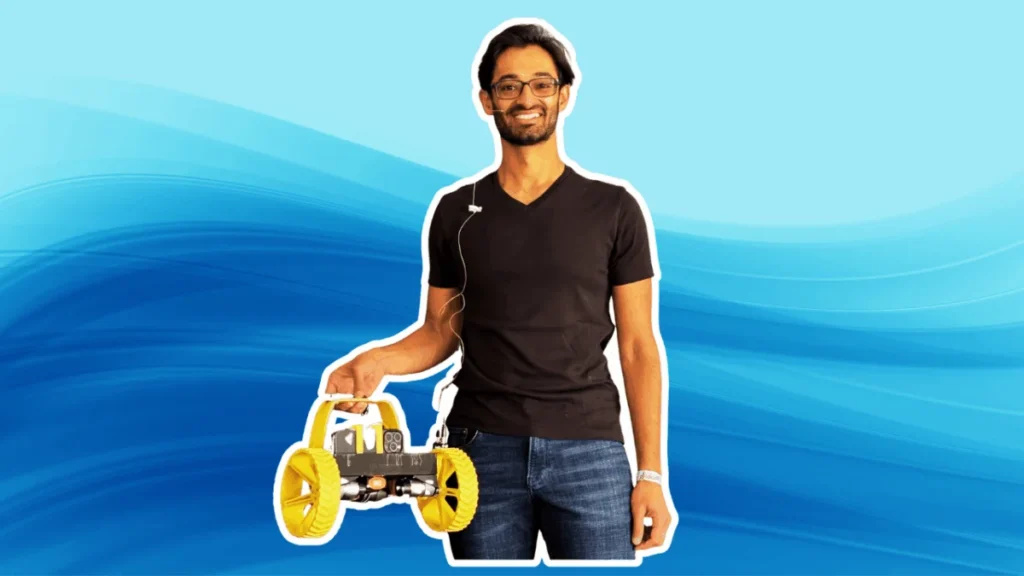
At the recent Maker Faire Bay Area, inventor Survy Vaish captivated audiences with a compelling demonstration of ingenuity, showcasing how an ordinary shoe box transformed into a sophisticated, phone-powered outdoor autonomous robot. His project stands as a testament to the democratization of advanced technology, illustrating that groundbreaking innovations can stem from accessible components and a steadfast commitment to iterative design, rather than solely from well-funded research laboratories. Vaish’s journey, which began with a simple, yet ambitious, desire to build an autonomous machine, culminated in a robot capable of navigating complex outdoor environments and identifying objects, all powered by readily available consumer electronics and open-source tools.
The Genesis of Innovation at Maker Faire Bay Area
The setting for this remarkable unveiling was the Maker Faire Bay Area, an event renowned globally as the flagship celebration of the Maker Movement. Established in 2006 by Make: magazine, Maker Faire serves as a vibrant platform where enthusiasts, educators, engineers, artists, and scientists converge to share their creations, learn from one another, and inspire future generations of innovators. The Bay Area iteration, in particular, is celebrated for its unique blend of Silicon Valley’s technological prowess and the grassroots creativity characteristic of the maker community. It is an environment where the ethos of "learn by doing" and "sharing is caring" thrives, making it an ideal venue for projects like Vaish’s, which embody the spirit of accessible innovation and practical problem-solving.
Vaish’s presentation resonated deeply with the Faire’s mission to foster creativity, curiosity, and a hands-on approach to technology. His project is a prime example of how complex engineering challenges can be tackled with resourcefulness, debunking the myth that robotics and artificial intelligence are exclusively within the domain of academic institutions or corporate giants. It underscores the powerful real-world process of translating a conceptual ambition—such as creating an autonomous robot—into a tangible, functional machine, proving that the most significant barrier to innovation is often not resources, but the courage to simply begin.
From Concept to Prototype: The Humble Shoe Box
Every significant technological leap often starts with a foundational, often rudimentary, prototype. For Survy Vaish, this journey commenced with what he candidly described as the "simplest possible point": a shoe box mounted on basic motors and wheels. This initial iteration, far from being aesthetically impressive or functionally sophisticated, served a crucial purpose in the early stages of design and engineering. It was not intended to demonstrate advanced capabilities but rather to validate the most fundamental premise: that a concept could translate into physical movement. This aligns with the principles of Minimum Viable Product (MVP) development, where the core functionality is tested before further complexities are introduced.
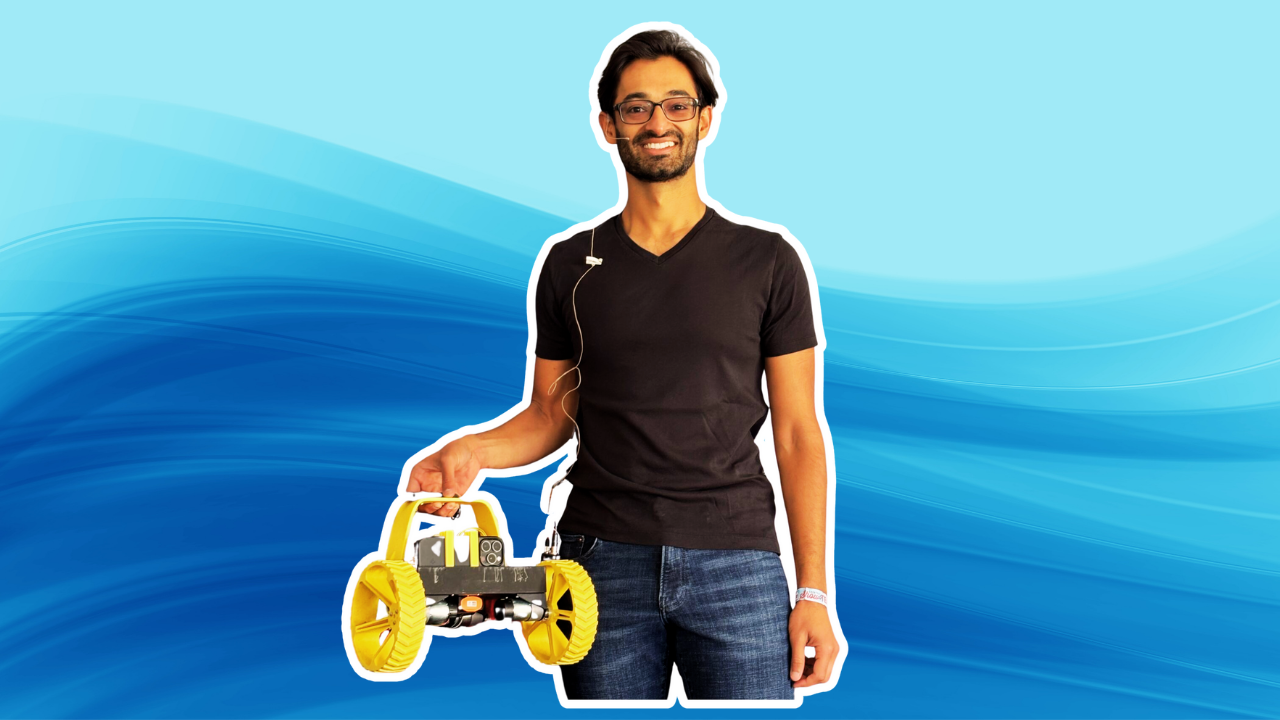
The decision to use a shoe box was deliberate, highlighting several key advantages prevalent in the maker community. Firstly, it represented an exceedingly low-cost, readily available material, significantly reducing the initial investment barrier. Secondly, its modular nature allowed for easy modifications and rapid prototyping, enabling Vaish to quickly assemble, test, and disassemble components. This initial, seemingly primitive stage is often overlooked in mainstream narratives of innovation, yet it is foundational to proving viability and identifying immediate practical challenges. For instance, even at this basic level, Vaish would have likely encountered issues related to motor power, wheel traction, battery life, and the structural integrity of the chassis, all of which would inform subsequent design decisions.
The Iterative Cycle: Test, Fix, Iterate, Evolve
The true essence of Vaish’s methodology, and indeed much of successful engineering, lies in the iterative cycle of "Test, Fix, Iterate." This systematic approach to problem-solving is vividly demonstrated in his robot’s evolution. Rather than striving for perfection in the initial design, Vaish embraced the inevitability of challenges and failures, viewing each setback as an invaluable learning opportunity. This process mirrors the scientific method and agile development principles, where continuous feedback and adaptation drive progress.
As the shoe box prototype encountered its limitations, Vaish systematically addressed each deficiency by integrating new components and functionalities. This incremental development can be broken down chronologically:
- Initial Movement Challenges: The basic shoe box on wheels, while proving mobility, likely struggled with directional control, speed regulation, and navigating even minor obstacles. This would have necessitated improvements in motor control and chassis stability.
- Environmental Awareness: For true autonomy, the robot needed to perceive its surroundings. This led to the integration of sensors. While the original article doesn’t specify types, a logical progression for an outdoor robot would include:
- Ultrasonic or Infrared Sensors: For short-range obstacle detection, preventing collisions.
- Inertial Measurement Units (IMUs): To understand the robot’s orientation, tilt, and acceleration, crucial for maintaining balance and navigating uneven terrain.
- Wheel Encoders: To precisely measure wheel rotation, enabling accurate odometry (estimating position based on wheel movement).
- Processing Power – The Brain: Raw sensor data is meaningless without a processing unit to interpret it and make decisions. This critical need was met by integrating a Raspberry Pi. The Raspberry Pi, a series of small single-board computers, has become a cornerstone of the maker movement due to its:
- Cost-effectiveness: Offering significant computing power at a fraction of the cost of industrial embedded systems.
- Versatility: Capable of running various operating systems (like Raspberry Pi OS, a Debian-based Linux distribution) and supporting multiple programming languages (predominantly Python for robotics).
- Connectivity: Equipped with GPIO pins, USB ports, Wi-Fi, and Bluetooth, allowing seamless integration with sensors, motors, and communication modules.
- Community Support: A vast online community provides extensive resources, tutorials, and troubleshooting assistance, invaluable for independent makers.
The Raspberry Pi would serve as the central control unit, processing sensor inputs, executing navigation algorithms, and sending commands to the motors.
- Advanced Navigation and Perception – The Smartphone Integration: Perhaps the most innovative aspect of Vaish’s design was the strategic employment of a smartphone. Modern smartphones are miniature supercomputers, packed with advanced sensors and processing capabilities that are often underutilized in conventional robotics. Vaish leveraged these features to provide:
- Global Positioning System (GPS): For accurate outdoor localization, allowing the robot to understand its position on a map and follow predefined routes. While GPS can have limitations in urban canyons or under dense foliage, it provides essential macro-level navigation data.
- High-Resolution Camera Vision: Critical for object identification and advanced environmental mapping. The smartphone’s camera, coupled with computer vision libraries (such as OpenCV, commonly used with Raspberry Pi), enabled the robot to "see" and interpret its surroundings. This capability is vital for tasks like detecting obstacles, identifying specific objects (e.g., litter, plants, or specific landmarks), and potentially performing Simultaneous Localization and Mapping (SLAM) for more robust navigation in unknown environments.
- Onboard Processing Power: Modern smartphone System-on-Chips (SoCs) are incredibly powerful, capable of running complex AI models for object detection and classification, offloading some computational burden from the Raspberry Pi or enhancing its capabilities.
- Existing Connectivity: Smartphones offer Wi-Fi and cellular capabilities, enabling remote monitoring, control, and data offloading, which is highly beneficial for outdoor operations.
The iterative process meant that each addition was a direct, pragmatic response to a real-world problem or a desired capability identified during testing. This methodical accumulation of features, driven by continuous feedback, is what ultimately transformed a simple concept into a sophisticated autonomous system.
The Thrilling Payoff: Autonomy in Action
The culmination of this rigorous iterative process was the final robot, a testament to thoughtful engineering and persistent problem-solving. The video presentation powerfully captured the "thrilling payoff" of seeing the sophisticated blend of hardware and software successfully execute its mission outdoors. This involved the robot autonomously navigating a park, demonstrating its ability to traverse varied terrain, avoid obstacles, and perform its core function of identifying objects.
Achieving autonomy in an outdoor environment presents a unique set of challenges that distinguish it significantly from controlled indoor settings. Outdoor conditions are inherently unpredictable, involving:

- Variable Lighting: Sunlight, shadows, and changing weather can drastically affect camera vision and sensor performance.
- Uneven Terrain: Grass, gravel, inclines, and declines demand robust mechanical design and sophisticated motor control.
- Dynamic Obstacles: Unforeseen elements like moving pedestrians, animals, or wind-blown debris require real-time detection and path re-planning.
- GPS Accuracy: Satellite signal interference can lead to inaccuracies, requiring sensor fusion with odometry and vision data for precise localization.
The successful execution of its mission in such a complex environment underscores the robustness of Vaish’s design and the effectiveness of his iterative approach. The ability to identify objects outdoors opens up a myriad of potential applications, from environmental monitoring (e.g., detecting pollution, tracking wildlife), to agricultural automation (e.g., crop inspection, weed detection), to urban services (e.g., litter collection, security patrolling). This practical demonstration validated the entire development cycle and showcased the potential of accessible DIY robotics.
Supporting Data and Context: The Democratization of Robotics
Vaish’s project is not an isolated incident but rather a prime example of a broader trend: the democratization of robotics. This movement is driven by several key factors:
- Affordable Hardware: The proliferation of low-cost microcontrollers (like Arduino), single-board computers (Raspberry Pi), and readily available sensors and actuators has drastically lowered the financial barrier to entry. A complete set of components for a robot similar to Vaish’s can often be assembled for a few hundred dollars, a fraction of the cost of commercial robotic platforms.
- Open-Source Software: The availability of powerful open-source software libraries and frameworks, such as OpenCV for computer vision, TensorFlow/PyTorch for machine learning, and especially the Robot Operating System (ROS), has empowered makers to implement complex algorithms without needing to develop them from scratch. ROS, for instance, provides a flexible framework for writing robot software, managing communication between different hardware and software components, and visualizing data.
- Community and Knowledge Sharing: Online forums, tutorials, platforms like GitHub, and events like Maker Faire foster a vibrant community where knowledge is freely shared, accelerating learning and collaborative problem-solving. This collective intelligence is a powerful catalyst for innovation.
A 2023 report by MarketsandMarkets estimated the global hobby robotics market size to grow significantly, driven by increasing interest in STEM education and the accessibility of robotic kits and components. Projects like Vaish’s directly contribute to this growth by demonstrating what is achievable with off-the-shelf parts and ingenuity, inspiring others to embark on their own robotics ventures.
Inferred Statements and Community Reaction
While direct quotes from Survy Vaish or Maker Faire organizers are not provided in the original text, the spirit of the article allows for logical inference regarding their perspectives. Vaish would likely emphasize the importance of perseverance and the value of incremental progress. He might state, "My journey demonstrates that every ‘failure’ is simply a step closer to success. The key is not to be discouraged by initial setbacks, but to learn from them and iterate." He would also likely highlight the accessibility of technology: "You don’t need a fancy lab or an unlimited budget to build something truly innovative. The tools and knowledge are more accessible than ever before; you just need the curiosity to start."
A spokesperson for Maker Faire Bay Area might comment on the project’s embodiment of the Faire’s core values: "Survy’s robot perfectly encapsulates the spirit of the Maker Movement – taking an everyday item and transforming it through creativity, engineering, and a passion for learning. It’s projects like these that inspire our attendees, especially younger generations, to see themselves as future innovators and problem-solvers." The broader maker community would likely react with enthusiasm, seeing Vaish’s work as both an inspiration and a practical guide, encouraging others to tackle their own ambitious projects with similar resourcefulness.

Broader Impact and Implications for the Future
The implications of projects like Survy Vaish’s extend far beyond the immediate thrill of seeing a robot navigate a park.
- Educational Empowerment (STEAM): Vaish’s work serves as a powerful educational tool, particularly within the Science, Technology, Engineering, Arts, and Mathematics (STEAM) fields. It provides a tangible, relatable example of applied engineering principles, making complex concepts like sensor integration, algorithmic decision-making, and computer vision accessible and engaging for students of all ages. This hands-on learning approach is crucial for developing critical thinking, problem-solving skills, and fostering a passion for innovation.
- Innovation and Entrepreneurship: The accessibility demonstrated by Vaish’s project encourages grassroots innovation. Individuals and small teams can now develop prototypes for real-world applications with minimal capital, potentially leading to new startups and solutions in areas such as environmental monitoring, assistive technology, or localized delivery services. This bottom-up innovation can complement and even challenge traditional research and development models.
- Ethical Considerations and Responsible AI: As robotics becomes more accessible, discussions around ethical considerations, data privacy (especially with smartphone integration), and the responsible deployment of autonomous systems become increasingly important. Makers are often at the forefront of these discussions, experimenting with and influencing the future trajectory of these technologies.
- Future of DIY Robotics: The trajectory of DIY robotics points towards increasingly sophisticated capabilities. As components become even smaller, more powerful, and cheaper, and as AI algorithms become more refined and easier to implement, the complexity of projects achievable by individual makers will continue to grow. We may see more robust, weatherproof designs, longer battery life, and more advanced AI for complex decision-making, all built from readily available parts.
While the "shoe box to smart robot" journey highlights incredible potential, it also implicitly reveals inherent challenges in DIY robotics. These include ensuring robustness and reliability for long-term deployment, adhering to safety standards, and scaling production beyond individual prototypes. However, these challenges are precisely what drive further innovation within the maker community, fostering a continuous cycle of learning and improvement.
In conclusion, Survy Vaish’s demonstration at Maker Faire Bay Area is more than just a showcase of a clever robot; it is a profound narrative about perseverance, ingenuity, and the transformative power of accessible technology. It provides a compelling blueprint for aspiring makers, reinforcing the idea that with curiosity, an iterative mindset, and a willingness to embrace the learning process, anyone can turn an ordinary item into a vehicle for extraordinary innovation, charting a course towards a future where advanced robotics is truly within reach for all.