The landscape of space exploration, scientific discovery, and commercial enterprise is undergoing a profound transformation, marked by ambitious technological breakthroughs and strategic advancements across multiple nations and private entities. Recent developments span the creation of advanced orbital infrastructure, the refinement of reusable launch systems, pioneering scientific missions, and critical efforts toward making space operations more sustainable and conducive to long-term human presence. These innovations signal a departure from traditional models, ushering in an era where space is not merely a frontier for exploration but a burgeoning domain for economic activity, defense, and fundamental scientific inquiry.
The Dawn of Orbital Infrastructure: Data Centers and Commercial Hubs
A significant leap forward in space commercialization is the emergence of plans for orbital data centers. An NVIDIA-backed US startup, for instance, is poised to construct data centers in space, potentially boasting an astounding 20 gigawatts (GW) of computing capacity. This endeavor aims to circumvent terrestrial limitations such as high energy consumption and cooling requirements, which are increasingly challenging for large-scale data processing on Earth. By leveraging the vacuum of space for passive cooling and potentially harnessing solar power more efficiently, these orbital data centers could offer unparalleled computational power for artificial intelligence, machine learning, and other data-intensive applications. The implications are vast, suggesting a future where critical data processing could be performed with reduced latency for global users and enhanced security, fostering a new dimension of the digital economy. This move reflects a broader trend of privatizing and industrializing space, moving beyond government-led initiatives to a robust commercial ecosystem.
Complementing this vision for orbital computing, NASA is actively funding projects like orbital hangars designed to streamline commercial space sample returns. These facilities aim to make the process of bringing scientific samples back to Earth cheaper and faster, thereby accelerating research and development in areas from astrobiology to material science. Such infrastructure points to a future where space-based operations are not only technically feasible but economically viable, opening avenues for diverse commercial ventures and scientific collaborations. The ability to efficiently collect, process, and return materials from space will be crucial for understanding extraterrestrial environments and developing new technologies on Earth.
Advancements in Access to Space: Reusable Rockets and Portable Launch Systems
The race for efficient and affordable access to space continues to intensify, with reusable rocket technology at its forefront. China’s space program has made significant strides in this domain, with its reusable rocket advancements potentially strengthening the People’s Liberation Army’s (PLA) space-based capabilities. The development of such technology by state-backed entities underscores the dual-use nature of space advancements, impacting both scientific exploration and national security. In a notable commercial triumph, China’s LandSpace recently outmaneuvered SpaceX by achieving the world’s first successful recovery of a stainless-steel booster. This landmark event, using their Zhuque-2 rocket, demonstrates a clear commitment to reducing launch costs and increasing launch frequency, mirroring and intensifying the competition initiated by companies like SpaceX. The use of stainless steel, while heavier than traditional aerospace composites, offers benefits in terms of cost and manufacturability, indicating diverse approaches to achieving reusability.
These advancements in reusability are complemented by innovations designed to increase launch flexibility. Rocket Lab’s GHOST (Global Horizontal Orbital Spaceport Technology), for example, is conceptualized as a portable rocket launch system. This technology aims to enable rocket launches from virtually anywhere on Earth, significantly reducing logistical complexities and enhancing responsiveness for deploying satellites. Such systems could democratize access to space, allowing a wider array of governmental and commercial entities to launch missions with greater autonomy and speed, particularly for rapid-response or specialized orbital insertions.
However, the inherent risks of spaceflight remain a stark reality. China’s Long March 7A rocket experienced a failure, exploding just 85 seconds after liftoff and resulting in the loss of the ChinaSat-4B satellite. This incident serves as a sobering reminder of the complex engineering challenges and high stakes involved in every launch, even as the industry pushes for greater frequency and reusability. Such failures underscore the need for continuous innovation in reliability and risk management within the rapidly expanding global space sector.
Looking back, the progress in rocket technology has been monumental. A review of "10 landmark rockets and the engineering breakthroughs behind them" highlights the continuous evolution of propulsion systems, materials science, and guidance technologies that have shaped humanity’s ability to venture beyond Earth. From the V-2 rocket to the Saturn V and modern reusable boosters, each generation has built upon previous innovations, pushing the boundaries of what is possible in space transportation. Further enhancing future capabilities, the world’s most powerful superconducting magnetic actuator has now been declared space flight ready. This represents a significant step towards more efficient and powerful propulsion or attitude control systems, potentially enabling spacecraft to traverse greater distances with less fuel or perform more precise maneuvers.
Pushing the Boundaries of Scientific Discovery and Exploration
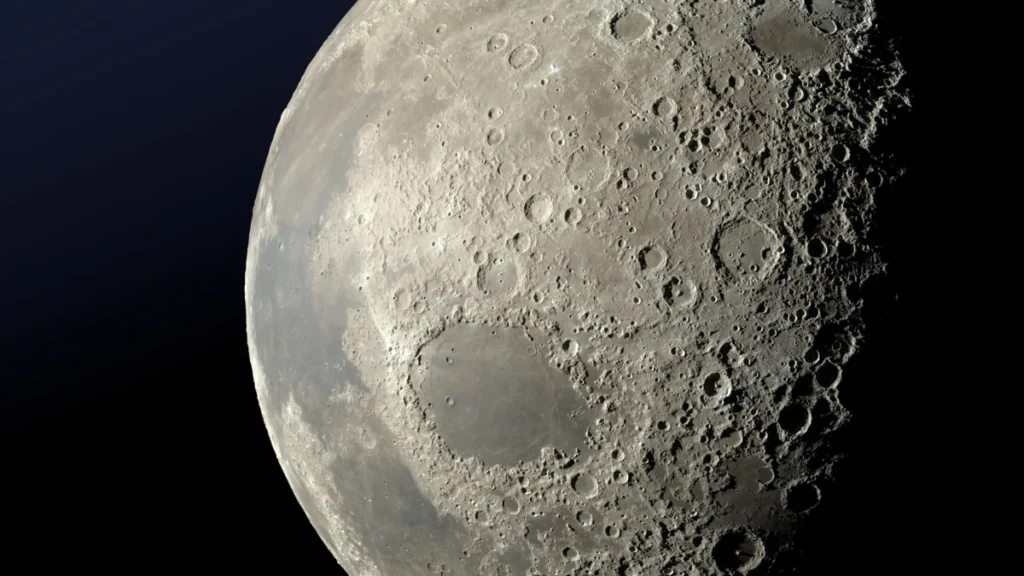
The scientific quest to understand the universe continues with ambitious new missions and groundbreaking discoveries. A new satellite, Cosmocube, is slated to search for a 13.5-billion-year-old signal from the far side of the Moon. This mission aims to probe the "Cosmic Dark Ages," a period shortly after the Big Bang when the first stars and galaxies were forming, offering insights into the early universe that are obscured by terrestrial radio interference. The far side of the Moon provides a uniquely radio-quiet environment, essential for detecting such faint and ancient signals.
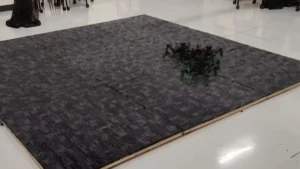
Planetary science is also reaching new frontiers with advanced exploration concepts. NASA is funding ion-powered flying drones designed to explore subsurface caves on Saturn’s largest moon, Titan. These silent robot swarms could map the complex terrain and search for signs of exotic life in Titan’s methane lakes and hydrocarbon-rich atmosphere. The development of ion propulsion for atmospheric flight in such a unique environment represents a significant technological challenge and a potentially revolutionary approach to planetary exploration, extending our search for habitable environments beyond Earth.
Astronomical discoveries continue to reshape our understanding of cosmic phenomena. Scientists have recently announced the discovery of the "first known black hole star," a celestial body fueled by processes described as "stranger than reality." This finding challenges existing astrophysical models and opens new avenues for research into extreme stellar evolution and the interplay between stars and black holes. Such discoveries, along with the "7 incredible telescope images that reveal the universe in extraordinary detail," consistently captivate public imagination and underscore the immense value of space-based observatories and advanced ground telescopes in unraveling the universe’s mysteries. Additionally, delving into "7 strange things that make our Solar System surprisingly weird" highlights the many peculiar and fascinating aspects of our immediate cosmic neighborhood, from gas giant anomalies to unusual moons.

While new missions are launched, others conclude their long service. NASA’s Swift Observatory, after years of significant contributions to gamma-ray burst astronomy, is expected to re-enter Earth’s atmosphere following a failed rescue attempt. The eventual decommissioning and uncontrolled re-entry of such a valuable scientific asset underscore the finite lifespan of space hardware and the ongoing challenge of managing orbital debris.
Ensuring Sustainability and Human Well-being in Space
As humanity ventures further into space, the sustainability of orbital environments and the well-being of astronauts become paramount concerns. The proliferation of satellites and space debris poses a growing threat to active missions. In response, a "3-orbit spacecraft" concept is being developed to help remove satellites nearing the end of their operational life. This innovative approach to active debris removal is critical for maintaining safe and usable orbital pathways, ensuring the long-term viability of space activities for all stakeholders. The challenge of space junk is a global one, requiring coordinated international efforts and technological solutions to prevent a cascading effect of collisions.
For future human missions, particularly to Mars, understanding and supporting astronaut psychological health is vital. US engineers are actively mapping "14 emotions to design healthier space habitats." This interdisciplinary research combines psychology, human factors engineering, and architectural design to create environments that mitigate stress, combat isolation, and promote overall well-being during long-duration spaceflight. Addressing the human element is as crucial as solving technical challenges for successful deep-space colonization.
Survival in extreme extraterrestrial environments also necessitates robust technological solutions. Nuclear-powered heaters are being developed to keep spacecraft alive through the Moon’s freezing two-week night. Such heaters, designed for missions like the Blue Ghost lunar lander, are essential for maintaining operational temperatures for sensitive instruments and electronics, thereby enabling extended lunar surface missions that can endure the extreme temperature swings characteristic of the lunar day-night cycle.
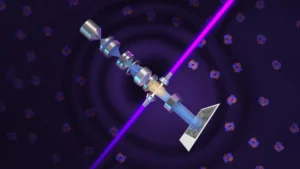
In terms of operational autonomy, NASA is testing a "first-of-its-kind spacecraft navigation system that works without GPS." This system, exemplified by the Starling mission utilizing a flock of small satellites, enhances the resilience and independence of spacecraft, especially for deep-space missions where GPS signals are unavailable. Such autonomous navigation capabilities are critical for future exploration, reducing reliance on constant ground control and increasing mission flexibility.
Looking to the future of space infrastructure, robots could play a pivotal role in constructing "giant metamaterial radars in space to track hidden threats." This concept involves autonomous assembly of large-scale structures, offering enhanced space situational awareness for defense, debris tracking, and monitoring of orbital traffic. In-space manufacturing and autonomous robotics are set to revolutionize how complex systems are deployed and maintained far from Earth.
Broader Implications and The Path Ahead
The confluence of these advancements points to a dynamic and increasingly complex space ecosystem. The rising prominence of private companies, often backed by significant investment, is rapidly accelerating technological development and pushing the boundaries of what national space agencies alone can achieve. This commercialization is driving down costs, fostering innovation, and creating new industries that were once the exclusive domain of governments.
However, this rapid expansion also brings challenges. The increased volume of launches and operational satellites exacerbates concerns about space debris and orbital congestion, necessitating advanced tracking, mitigation, and removal technologies. Geopolitical tensions are increasingly manifesting in space, with the development of reusable rockets and other advanced technologies having potential military applications, highlighting the need for international norms and responsible behavior in orbit.
The scientific endeavors, from probing the Cosmic Dark Ages to exploring Titan’s subsurface, continue to broaden humanity’s understanding of the universe and our place within it. These missions require not only cutting-edge technology but also meticulous planning and international collaboration. The focus on human factors in space habitat design underscores a shift from merely surviving in space to thriving there, laying the groundwork for sustainable off-world communities.
In essence, space is rapidly evolving from a realm of aspirational exploration to a critical domain for commerce, defense, and long-term human presence. The practical work of engineering resilient systems, managing environmental challenges, and fostering human well-being in extreme environments is defining this new era, ensuring that space remains both useful and usable for generations to come. The interconnectedness of scientific discovery, technological innovation, and geopolitical strategy means that developments in one area inevitably ripple across the entire space enterprise, collectively shaping humanity’s future beyond Earth.