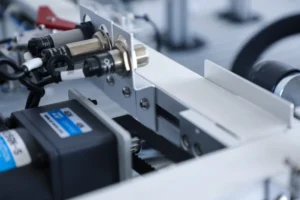
A significant advancement in industrial diagnostics is on the horizon, as Swiss precision-drive specialist maxon prepares to launch maxon MIND – an acronym for "motion insights and diagnostics." This innovative service is poised to equip machine builders and plant engineers with sophisticated condition monitoring and diagnostics capabilities for their equipment, transforming how industrial assets are maintained and managed. Set for an official release in 2027, maxon MIND leverages the inherent diagnostic potential of electric motors, turning their operational signals into actionable intelligence for the entire drive system and its connected mechanical components.
The Paradigm Shift in Industrial Maintenance: From Reactive to Predictive
The industrial landscape is in constant evolution, driven by the demands of Industry 4.0 for increased efficiency, reliability, and uptime. Traditional maintenance strategies, often reactive (repairing after failure) or preventive (scheduled maintenance), are proving insufficient in today’s highly competitive and automated environments. The cost of unexpected downtime can be staggering, with industry estimates suggesting billions of dollars lost annually due to equipment failures. This has spurred a global shift towards Condition Monitoring (CM) and Predictive Maintenance (PdM), where data-driven insights are used to anticipate potential failures before they occur.
However, implementing effective CM and PdM solutions has historically presented challenges. These often include the high cost of deploying numerous dedicated sensors, the complexity of analyzing vast datasets, and the need for specialized expertise to interpret diagnostic information. Many existing solutions require extensive data acquisition and computational power, making them resource-intensive and sometimes difficult to integrate into diverse industrial settings. Maxon MIND aims to address these pain points by offering a smarter, more data-efficient approach to diagnostics, fundamentally altering the economics and practicality of advanced monitoring.
Maxon, renowned for its high-precision DC motors and drive systems, brings decades of deep engineering knowledge to this new venture. Their expertise in the intricate dynamics of electric motors positions them uniquely to develop a solution that treats the motor itself as the primary sensor. This intrinsic understanding of mechatronic systems is the bedrock upon which maxon MIND is built, promising a robust and reliable diagnostic service that integrates seamlessly into existing industrial infrastructures.
Unveiling maxon MIND: Core Functionality and Unique Advantages
At its heart, maxon MIND operates on a deceptively simple yet profoundly powerful principle: electric motors are often the best sensors in a machine. The electrical signals a motor controller already reads inherently reflect the operational condition of the entire drive system – including the motor, gearbox, encoder, coupling, and all downstream mechanical components. Maxon MIND harnesses these existing signals, transforming raw data into meaningful diagnoses. This eliminates the need for extensive additional sensor arrays, significantly simplifying implementation and reducing hardware costs.
The service is designed to be scalable and compatible with standard components, ensuring rapid deployment across a wide range of industrial applications. Once integrated and operational, maxon MIND provides capabilities vital for modern industrial management, including sophisticated machine condition-based maintenance and advanced AGV (Automated Guided Vehicle) fleet management. These capabilities are crucial for preventing personnel injuries by anticipating equipment malfunctions and eliminating unexpected machine downtime, thereby boosting overall operational efficiency and safety.

A key differentiator of maxon MIND is its efficient use of data and computational resources. Unlike many machine learning systems that demand massive datasets for training, maxon MIND builds robust models with fewer than 100 reference cycles and can perform diagnostics on fewer than 20 cycles. This efficiency is achieved through the "integration of domain-specific expertise into the models" – a core aspect highlighted by maxon MIND program lead Claude Jaquemet. This means the system incorporates known physical relationships and the specific operating context of the mechatronic drive system. It leverages maxon’s extensive interdisciplinary application knowledge regarding the motor, controller, mechanical load, motion cycle, configuration, and relevant environmental conditions. Consequently, a model for a specific design, such as an AGV, can be created in less than 10 minutes, and a condition diagnosis can be rendered in under a minute. This speed and efficiency represent a significant leap forward in the practical application of AI in industrial settings.
The Development Journey and Implementation Timeline
The development of maxon MIND has been a multi-year effort, undertaken by an interdisciplinary team within maxon. This rigorous internal development underscores maxon’s commitment to delivering a thoroughly validated and reliable product. While the official release is slated for 2027, the path to implementation for machine builders wishing to leverage this service is already outlined.
The process begins with a crucial consultation phase, where machine builders collaborate with maxon experts. During this stage, they define and analyze their specific design load profiles, typical usage cycles, and environmental operating conditions. This detailed understanding forms the foundation for tailoring the maxon MIND solution to the unique requirements of each application.
Following consultation, a phased implementation approach is adopted. This includes rapid prototyping and early testing, allowing for initial validation and identification of potential adjustments. Subsequently, comprehensive system testing and validation are conducted under real operating conditions. This critical step ensures that the models are accurately calibrated and perform as expected in their intended environments. The iterative process of testing and validation informs necessary changes and refinements to the models. The final implementation phase involves optimization and fine-tuning of parameters and reference cycles, ensuring peak performance and accuracy for the end-user. This structured approach guarantees that maxon MIND is not merely a generic solution but a highly customized and optimized diagnostic tool for each specific machine.
Technological Underpinnings: AI, Cloud, and Robust Cybersecurity
The technological architecture of maxon MIND seamlessly integrates artificial intelligence, cloud computing, and stringent cybersecurity measures. The AI component is particularly noteworthy for its efficiency. By embedding deep domain-specific expertise, the system minimizes the data footprint typically associated with machine learning. This allows for rapid model creation and diagnosis, making advanced predictive capabilities accessible even in environments with limited data storage or computational resources. The cloud infrastructure supports fleet management capabilities, enabling centralized monitoring and analysis of multiple machines or AGVs, offering a holistic view of operational health.
Cybersecurity is a paramount concern in industrial IoT solutions, and maxon has engineered MIND with robust safeguards. Collected machine data is meticulously anonymized, ensuring that sensitive operational details are protected. Maxon’s internal privacy measures complement existing cloud and security services, creating a multi-layered defense against potential breaches. Critically, maxon MIND does not require knowledge of the end-user’s identity or the specific application running to function effectively. To uniquely identify the corresponding machine learning model, the system only needs easily anonymized data, such as a drive’s part and serial number. This privacy-by-design approach enhances trust and facilitates broader adoption across various industries where data confidentiality is crucial.
Insights from the Innovator: An Interview with Claude Jaquemet

To further illuminate the intricacies of maxon MIND, Claude Jaquemet, business development manager and program lead for maxon MIND, provided deeper insights into its operational mechanics and philosophical underpinnings.
When asked about the significance of "domain-specific expertise" in maxon MIND’s ability to operate with smaller data volumes, Jaquemet emphasized that it means "incorporating the known physical relationships and operating context of the mechatronic drive system into the model." This encompasses a profound understanding of the motor, controller, mechanical load, motion cycle, configuration, and relevant environmental conditions. He stressed that this is "interdisciplinary application knowledge, based on the long experience of maxon," allowing the system to build intelligent models that don’t rely solely on brute-force data collection.
Addressing how maxon MIND differentiates a real problem from slight and acceptable wear over time, Jaquemet explained that the system "doesn’t apply one universal wear threshold." Instead, it tracks the drive system relative to its application-specific initial state and visualizes the progression over time. This nuanced approach, combined with validation efforts alongside machine builders, allows for the precise calibration of model sensitivity and the establishment of clear boundaries between acceptable condition and an "action-required" state. This tailored approach directly supports effective condition-based maintenance decisions, minimizing unnecessary interventions while preventing critical failures.
Regarding the system’s ability to distinguish problems from normal operating conditions, especially in challenging environments like cleanrooms or those subject to vibrations and extreme temperatures, Jaquemet reiterated that "maxon MIND doesn’t rely on a universal definition of normal." A unique machine-learning model is created for each specific motor in its actual application, trained on an initial reference state. Subsequent measurements are continuously compared against this application-specific model to detect deviations and wear trends. Furthermore, various potential fault modes are considered during the training of this initial reference state. To ensure accuracy, Jaquemet noted that factors such as temperature effects, applicable payload, the reference cycle itself, and the drivetrain configuration must remain consistent during data acquisition to compensate for external variables. This comprehensive approach ensures high diagnostic fidelity even in complex operational settings.
On the target applications for maxon MIND, Jaquemet highlighted its suitability for "critical applications where an unexpected drive-system failure could affect personal safety, reliability, availability, process quality, or the user experience." This includes a broad spectrum of sectors such as medical devices (where patient safety is paramount), industrial and laboratory automation (ensuring throughput, quality, and avoiding downtime), and logistics (optimizing AGV fleets). Technically, he noted that the application "must allow repeatable diagnostic cycles under controlled and comparable load conditions," and that "maxon MIND generally performs best where high sensitivity of the condition indication is required."
Finally, addressing whether motor signals can reflect the condition of the whole powertrain and how engineers can localize problems, Jaquemet affirmed that "the electrical motor signals contain information influenced by the motor, gearbox, encoder, coupling, and driven mechanics." Therefore, maxon MIND assesses the condition of the complete drive system. While component-level detection of faults is generally feasible, its precision depends on the particular drivetrain. He added that "beyond general component failure patterns, application-specific validation against known faults, inspections, or service findings help with the interpretation of the condition indication," providing a practical framework for fault localization.
Broader Implications and Market Impact
The introduction of maxon MIND holds significant implications across multiple industrial sectors, promising far-reaching benefits beyond just technical diagnostics.
Economic Benefits: The most immediate impact will be on operational expenditure (OpEx). By enabling predictive maintenance, maxon MIND can drastically reduce unscheduled downtime, which, as mentioned, costs industries billions annually. Optimized spare parts management will minimize inventory holding costs and prevent the waste associated with premature component replacement. Extending the lifespan of expensive assets through timely, condition-based interventions further enhances return on investment. The ability to identify and address issues before they escalate into costly failures translates directly into significant financial savings for machine builders and end-users alike.

Safety Enhancements: In applications where equipment failure poses a risk to human operators or sensitive processes, maxon MIND offers a critical layer of safety. Anticipating and preventing catastrophic failures, particularly in medical devices, robotic systems, and AGVs, directly contributes to a safer working environment and minimizes the potential for personnel injuries.
Environmental Impact: By promoting optimized maintenance and extending the operational life of machinery, maxon MIND contributes to greater resource efficiency. Reducing the need for early replacement of components and minimizing waste from unexpected breakdowns aligns with sustainability goals and reduces the environmental footprint of industrial operations.
Competitive Advantage for OEMs: For machine builders, integrating maxon MIND into their offerings provides a powerful value proposition. It allows them to differentiate their products by providing advanced diagnostic services, enhancing customer loyalty and opening new revenue streams through service contracts. This capability strengthens their position in a competitive market by offering more reliable and intelligent machinery.
Evolution of Maintenance Practices: Maxon MIND further accelerates the shift towards data-driven predictive maintenance models, gradually reducing reliance on traditional scheduled maintenance or purely reactive approaches. This evolution encourages a more strategic and efficient approach to asset management, fostering a culture of continuous optimization within industrial organizations.
Future Outlook: The technology underlying maxon MIND, with its efficient AI and cloud integration, positions it well for future developments. It could potentially integrate with broader Industrial IoT (IIoT) ecosystems, contributing to more comprehensive smart factory solutions. As industrial processes become increasingly interconnected, maxon MIND could serve as a vital node for machine health monitoring, feeding critical data into larger operational intelligence platforms.
In conclusion, maxon MIND represents a significant leap forward in the field of industrial condition monitoring. By intelligently leveraging existing motor signals and integrating deep domain-specific expertise, it offers a scalable, efficient, and secure solution for predictive maintenance. Its anticipated release in 2027 is poised to empower machine builders and plant engineers with unprecedented insights into their equipment’s health, driving greater reliability, safety, and operational efficiency across a multitude of critical applications. Maxon’s commitment to innovation in precision drive technology continues to shape the future of industrial automation, making advanced diagnostics more accessible and impactful than ever before.