In a significant leap forward for military aviation technology, the Defense Advanced Research Projects Agency (DARPA), in collaboration with the U.S. Air Force, has initiated a groundbreaking program that allows artificial intelligence agents to pilot modified F-16 fighter jets under the precise same operational conditions as their human counterparts. This initiative, dubbed AI Reinforcements (AIR), marks a pivotal moment in the pursuit of highly capable autonomous software for complex combat scenarios, moving beyond simulations to real-world flight operations.
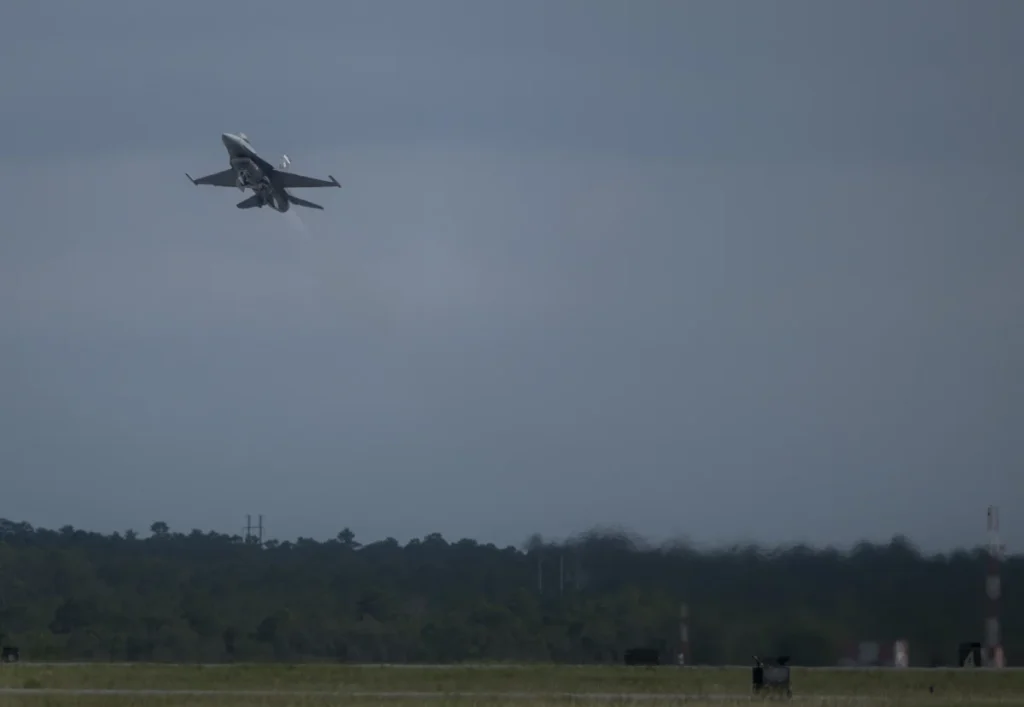
The inaugural autonomous flight of the AIR program occurred earlier this month at Eglin Air Force Base in Florida. During this historic sortie, a human test pilot took to the skies in a specially modified F-16. At a predetermined point, control of the aircraft was seamlessly transferred to an advanced AI agent installed onboard. The AI then expertly managed the flight, demonstrating its ability to operate the sophisticated fighter jet. Subsequently, the human pilot reassumed command to safely bring the aircraft in for a landing, underscoring the human-machine teaming aspect of this revolutionary endeavor.
Brig. Gen. James Valpiani, the DARPA program manager for AIR, emphasized the transformative nature of this program in a statement following the announcement. "What distinguishes this program from all the previous programs is that we are operating autonomy on operationally representative aircraft," Valpiani stated. This means the AI is not being tested in a controlled, simulated environment or on a bespoke testbed, but rather on aircraft that are fundamentally representative of the operational fleet, facing the same environmental factors, sensor inputs, and physical limitations as human pilots.
From Simulation to the Skies: The AIR Program’s Evolution
Prior to the AIR program, DARPA had engaged in extensive testing of AI agents using the X-62A VISTA, a highly modified F-16 specifically designed as a testbed for advanced flight control systems. While these earlier efforts provided valuable insights, Valpiani highlighted a critical distinction: "For these flights, the agents had ‘perfect’ information and engaged with simulations, not live sensors." This meant the AI was operating with a comprehensive, uncompromised data stream, often devoid of the ambiguities and challenges inherent in real-world combat.
The AIR program represents a fundamental shift by equipping a handful of F-16s with the Viper Experimentation and Next-generation Operations Model (VENOM) kit. Crucially, the VENOM kit enables AI-controlled flight without altering the original software of the jets. This design philosophy ensures that the AI agents must interact with the aircraft’s existing systems – "exactly the same sensors, exactly the same weapons flyout models, exactly the same dynamics and communication systems as every other aircraft that’s in the operational fleet," Valpiani explained. Moreover, the AI will be compelled to make decisions with the same limitations in knowledge and information that human pilots typically face.
"This really is a sea change," Valpiani declared, reflecting on the program’s departure from previous research. "All the previous research that DARPA has done and the Air Force has done up to this point with AI-based combat autonomy has involved some kind of white card – or some kind of simulation – standing in for what the real human experience is." The AIR program aims to bridge this gap by exposing AI to the unpredictable and dynamic realities of actual flight operations.
A Rigorous Training Regimen for AI Pilots
With the first autonomous VENOM flight successfully completed, DARPA and the U.S. Air Force are now focusing on the next phase of the AIR program: an extensive campaign of increasingly complex flight scenarios. This approach mirrors the rigorous training pathways established for human fighter pilots.
The initial stages of the AI pilot training will involve mastering "basic fighter maneuvers," commonly known as dogfighting. Following this foundational proficiency, the AI agents will progress to one-versus-one engagement scenarios. These engagements will gradually increase in distance, starting within the traditional visual range of a human pilot and then extending beyond it, pushing the AI’s ability to process information and react effectively at greater distances.
The complexity will escalate further with the introduction of multi-ship engagements. Two-versus-two scenarios will require the AI pilots to coordinate with wingmen, adding "a whole extra degree of complexity in communicating and deconflicting with another aircraft, targeting and managing weapons and abiding by safety and training rules," according to Valpiani. This aspect is crucial for developing AI that can function effectively within a squadron, a critical element of air combat doctrine.
The ultimate goal for this phase of training will be four-versus-four scenarios. Valpiani described these as "challenging" and estimated that it could take "perhaps one to two years to become proficient in as a new pilot" for human aviators. This benchmark highlights the ambition of the AIR program to equip AI with a level of tactical acumen comparable to experienced human pilots.
Beyond tactical maneuvering and air-to-air combat, the AI pilots will also be exposed to electronic warfare scenarios and will engage with simulated weapons and missiles. This comprehensive training regime aims to prepare the AI for the full spectrum of threats and operational demands encountered in modern air combat.
Investment, Development, and Future Transition
The AIR program represents a substantial investment in the future of autonomous aerial warfare. DARPA has allocated over $132 million to the program, according to available budget documents. The development and implementation of the VENOM autonomy kit took approximately three years, a period during which AI agents were simultaneously trained through thousands of hours of simulation and modeling. DARPA has not disclosed the specific contractors responsible for developing the AI agents involved in the program.
Upon successful completion of the AIR program, the advanced AI-based combat agents are slated for transition to the U.S. Air Force’s Collaborative Combat Aircraft (CCA) program. The CCA program envisions a future where manned and unmanned aircraft operate in tandem, with AI-powered drones providing enhanced capabilities and reducing risk to human pilots. The outcomes of the AIR program will be directly applicable to this ambitious future initiative.
The Ultimate Objective: Combat Autonomy in Realistic Conditions
The overarching goal of the AIR program is to develop "combat autonomy for beyond-visual-range multi-ship combat in realistic operational conditions." This ambitious objective seeks to explore how effectively combat agents can operate in environments characterized by "uncertainty, deception and degradation that normal human pilots operate under," Valpiani articulated.
This focus on realistic operational conditions is what sets AIR apart. Previous advancements in AI for aviation have often been confined to highly controlled environments or specific, limited tasks. The AIR program aims to validate AI’s ability to perform complex, dynamic combat missions, making life-or-death decisions under extreme pressure, with incomplete information, and in the face of adversarial actions.
"It’s really kind of the final step in proving out the technology," Valpiani concluded, underscoring the critical nature of live flight testing on operational platforms. The successful execution of this program could pave the way for a new era of air combat, where AI plays an increasingly integral role alongside human aviators, enhancing mission effectiveness and ensuring a strategic advantage in the face of evolving global threats. The implications extend beyond the military, potentially influencing advancements in commercial aviation, autonomous logistics, and other fields reliant on sophisticated AI decision-making in dynamic environments. The data gathered from these flights will be invaluable for refining algorithms, understanding AI behavior under stress, and ultimately building trust in autonomous systems for critical applications.